A $1 Billion Creator Fund Still Does Not Tell You the Pay Rate
TikTok’s billion-dollar Creator Fund pledge sounded like a wage announcement. Reading the eligibility rules, payout discretion and platform terms shows why it was never one.
August 23, 2026 · 8 min read
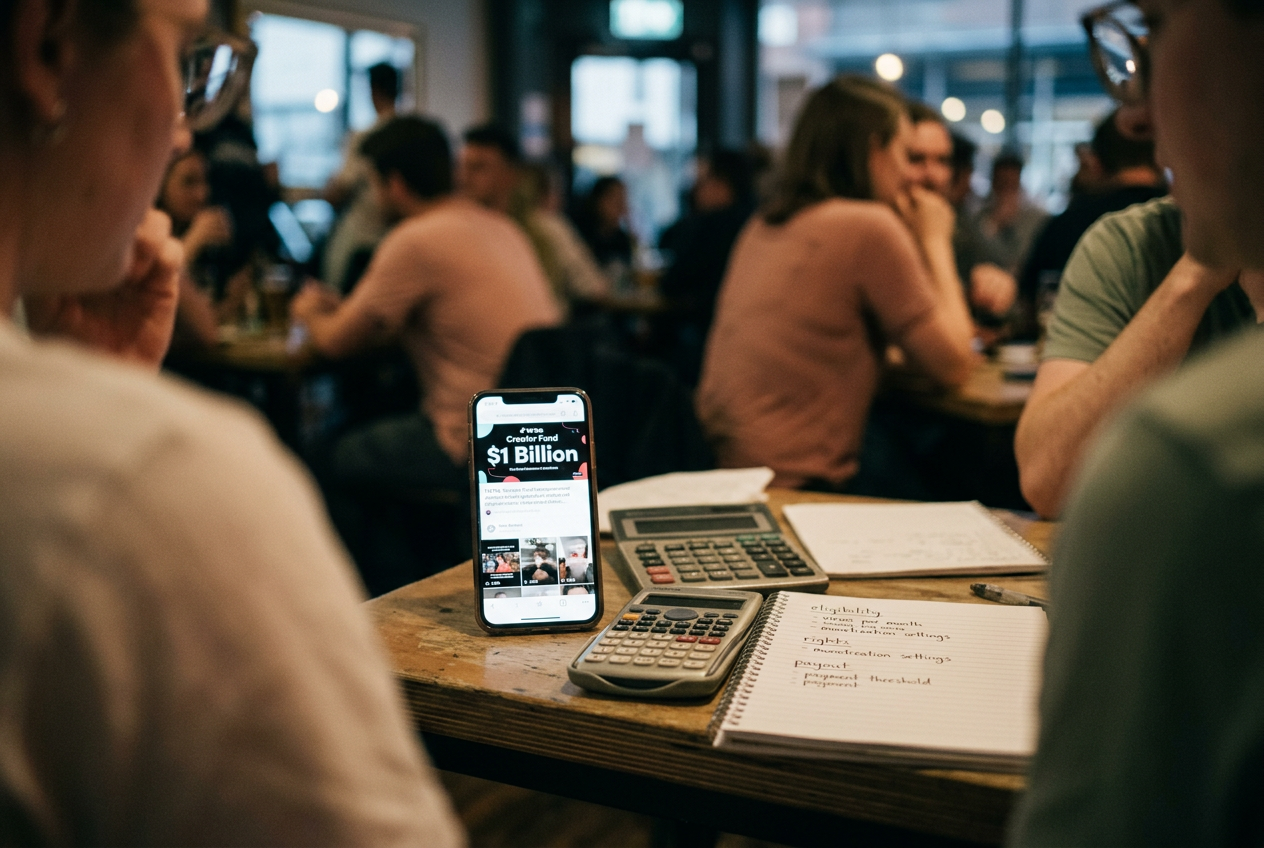
In 2020, TikTok put a large, clean number at the center of its Creator Fund announcement: a commitment that would grow to $1 billion in the United States over three years, with more allocated globally. The figure traveled well. It fit in headlines, screenshots and videos about finally getting paid for posting.
That line is the concrete object to keep in view. It did not state a rate per view, a minimum payment, an expected annual income or the number of creators who would divide the money. It described a pool across time. Everything a worker needed to estimate usable income sat elsewhere, if the documents disclosed it at all.
TikTok has since moved eligible creators in some markets toward other monetization programs, including its Creator Rewards Program. That makes the original Creator Fund useful as a worked example rather than a current enrollment guide. Program names change. The reading method survives.
Start with the unit, not the number
A fund total needs a denominator. Without one, the headline has no wage information.
TikTok’s $1 billion US commitment covered three years. That immediately made the annual pool smaller than the number circulating in headlines, before a single creator entered the calculation. The announcement still did not establish how many eligible accounts would participate, how much qualifying content they would publish, or how TikTok would divide the available amount among them.
A fixed pool can produce a variable payout. If more creators qualify, or existing participants generate more eligible views, each unit of activity may compete for a smaller share unless the platform increases the pool. A pro rata system, meaning participants receive a proportion of a shared amount, can therefore reward growth in aggregate while reducing what an individual earns for the same apparent performance.
Do not convert the headline into an imagined rate. Rewrite it first: total committed amount, covered period, eligible territories, participating programs and estimated number of recipients. Blank fields matter. They show which parts of the wage calculation the announcement has withheld.
That $1 billion line now looks different. It remains large, but it is not yet attached to an hour of labor, a video, a thousand views or a creator.
Read eligibility as unpaid work
TikTok’s published Creator Fund requirements included an age threshold, a minimum follower count, a recent-view threshold, residence in an eligible country, an account in good standing and compliance with platform rules. Eligibility did not mean payment for every person making videos. It meant reaching a gate before the platform considered the account for the program.
Those thresholds carry costs. A creator may spend months scripting, filming, editing, captioning, posting and moderating comments before becoming eligible. Equipment, software, props, travel and mobile data remain the creator’s responsibility. So does the time spent learning which formats the recommendation system currently favors.
Treat every threshold as labor performed before possible compensation. Write down what must be maintained, not just what must be reached. A recent-view requirement can force continued output; an account-standing rule can make moderation decisions economically consequential; an age or residency rule excludes workers regardless of audience demand.
Platform documentation also separates account eligibility from content eligibility. TikTok’s newer Creator Rewards documentation, for example, specifies requirements around original videos and minimum video length. A creator can qualify as a person while a particular post does not qualify as paid inventory. That distinction is easy to lose when a dashboard celebrates total views but compensation recognizes only a subset.
Find the verbs that preserve platform discretion
The crucial language is rarely the celebratory noun. It is the verb beside the payout.
Look for terms saying the platform may calculate, adjust, determine, withhold, suspend or terminate payments. Then look for a published formula. If the documents mention factors such as authentic views, engagement, location or compliance without assigning weights, the platform has described inputs while keeping the rate private.
TikTok’s Creator Fund materials said payments could vary based on factors including views, engagement and adherence to its guidelines. That is not a rate card. A rate card ties a defined unit of work to a stated payment; a list of variables tells creators which signals may matter without letting them reproduce the calculation.
This asymmetry works for the platform. It can tune the program, respond to fraud and control spending without renegotiating a public wage. The creator gets uncertainty. Two periods with similar visible performance may not produce similar payments because the denominator, qualifying-view count or internal weighting may have changed outside the creator’s view.
Record whether participants can audit the calculation, challenge an exclusion or download the underlying qualifying data. A dashboard total is not an audit trail when the platform alone defines which views count.
Mark the map and the payment route
“Global” usually needs inspection.
The original TikTok announcement separated US funding from a broader global commitment, while subsequent eligibility documentation named particular markets. A creator’s ability to watch the same videos, use the same editing tools and generate attention for the same platform does not establish access to the same compensation program.
Check residence rules, identity verification, tax documentation, supported payout services, currency conversion and minimum withdrawal conditions. These are not administrative footnotes. They determine whether a displayed balance can become money available for rent, food or production costs, and whether fees or delays reduce it on the way.
Geographic exclusions also distort public comparisons. A creator in an ineligible country may produce trends, sounds or formats that eligible creators monetize later. The platform still receives the attention and content supply. The fund draws a border through the labor after the feed has made that labor appear borderless.
Put the rights documents beside the fund page
The announcement page tells you why the program is generous. The terms tell you what the platform receives.
Read the fund rules with the platform’s general Terms of Service, intellectual-property policy and branded-content rules open beside them. TikTok’s general terms say users retain ownership of their content while granting the service permissions to use it under a broad license. Retaining ownership therefore does not mean the platform receives no rights.
Note whether participation requires additional licenses, exclusivity, permission to use a creator’s name or image in promotion, or continuing rights after a post is deleted. Also check whether sponsored posts, licensed music, reused clips or cross-posted material lose eligibility. A program can leave formal ownership untouched while narrowing the content that earns money or expanding how the platform may exploit it.
The practical calculation is larger than the payment shown in the dashboard. It includes rights granted, other commercial uses restricted and the risk that participation affects sponsorships or distribution elsewhere. The $1 billion line says nothing about that exchange.
Follow the pool to its ending
A commitment over a fixed period needs an end condition. Search for what happens when the period expires, the allocation is exhausted or the platform replaces the program.
Fund documentation may reserve the right to change eligibility, alter calculations, pause enrollment or terminate the program. If the platform promises no minimum payment and no continuing availability, creators have no documented basis for treating current receipts as a stable rate. Silence about depletion is not protection from depletion.
TikTok’s shift from the Creator Fund toward newer rewards programs in some markets demonstrates the basic employment problem without requiring a conspiracy theory. The platform owns the program architecture. It can retire one name, introduce new content requirements and move creators toward a different formula, while the worker carries the sunk cost of building an audience inside the system.
Archive the announcement, eligibility page, payout explanation and terms that applied when you joined. Documentation changes. A current help page may explain the new program perfectly while saying little about the conditions under which earlier work was performed.
Calculate usable income last
Only after reading the documents should the headline enter a personal income estimate.
Start with eligible output rather than total output. Remove posts that fail the program’s length, originality, music, location or policy requirements. Separate visible views from qualifying views if the platform supplies both. Subtract production expenses, payout fees and the unpaid hours required to maintain eligibility.
Keep taxes outside the platform’s displayed reward unless the documentation says they were withheld.
Then test volatility. A payment that arrives once, cannot be reproduced from a public formula and may disappear after a policy change is useful cash. It is not a pay rate. The distinction matters because platforms market the possibility of earnings to attract a steady supply of content, while preserving enough discretion to avoid promising a steady price for the labor that supplies it.
Return to the $1 billion announcement one final time. The number establishes that TikTok intended to spend a substantial amount over a defined period. It does not establish what one qualifying video was worth. The missing denominator is where the worker lives.
Questions people ask
Does a creator fund pay a fixed amount per view?
Not unless the platform publishes and guarantees that rate. A shared fund may divide a limited pool using qualifying views, engagement, location or other factors, which means the effective payment can change even when a creator’s visible view count looks similar.
Does joining a creator fund mean all of my videos earn money?
Usually not. Platform documentation often separates account eligibility from content eligibility, so videos may need to meet rules on originality, length, policy compliance, location or music use before their views count toward a payment.
What happens when a creator fund runs out?
The controlling documents determine whether the platform adds money, reduces payouts, closes enrollment or ends the program. If they promise no minimum and reserve broad amendment rights, the headline pool should not be treated as continuing income after its stated period.
Do creators keep the rights to funded videos?
A platform may say creators retain ownership while its general terms grant broad permission to host, distribute, modify or promote their content. Fund rules can add further conditions, so ownership alone does not describe the full exchange.
One update a day
Today's story, in your inbox
One story each morning — no hype, no filler, no algorithm deciding for you.