Gig Apps Want Their Debit Card Between You and Your Pay
Instant-pay cards solve a real cash-flow problem. They also turn every shift into a chance to capture a worker’s deposits, purchases, rewards, and attention.
August 19, 2026 · 7 min read
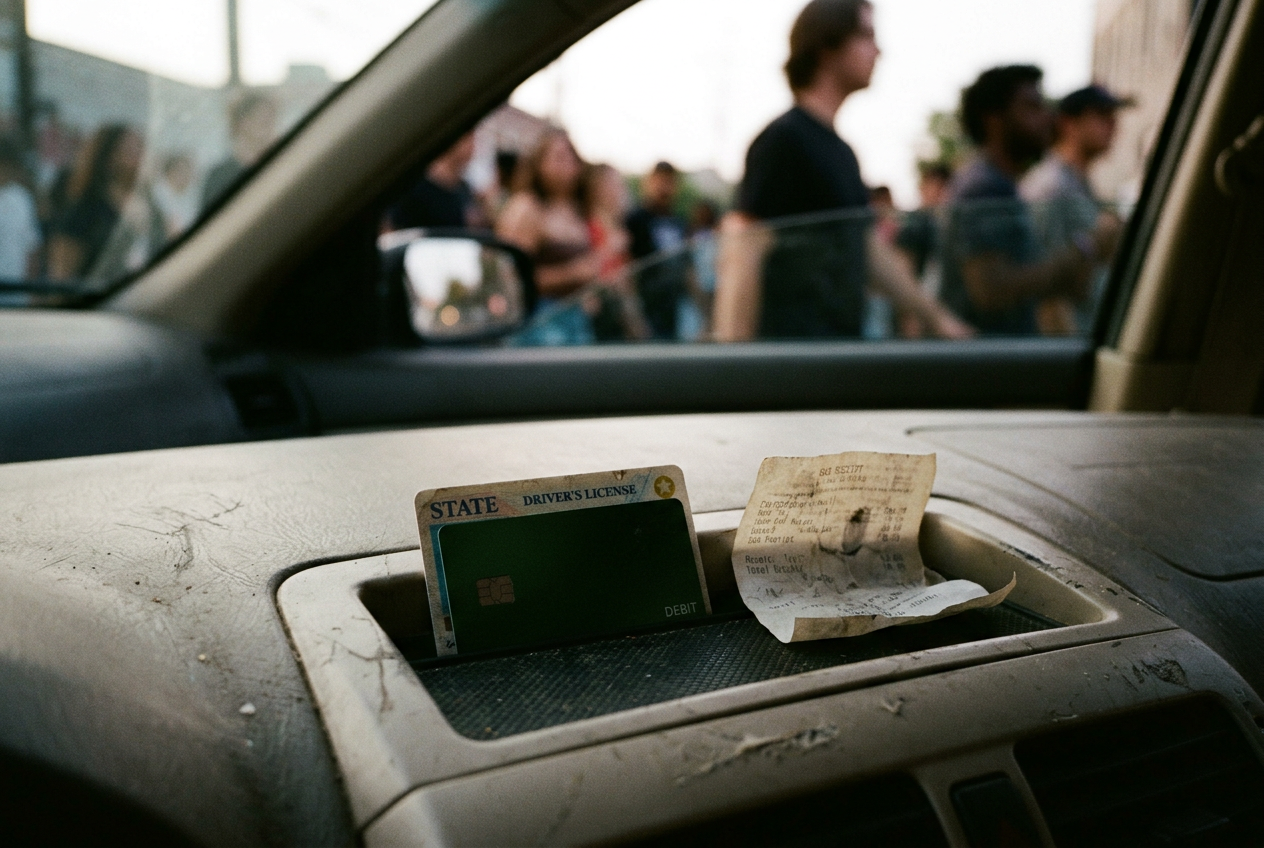
Take the Lyft Direct debit card tucked behind a driver’s license. Lyft’s product pages present it as the shortest route between completing a ride and using the money from that ride: eligible earnings can arrive after each trip, without the driver initiating a separate cash-out, and the card offers cash back at qualifying merchants. The account is issued by Stride Bank and managed with financial technology company Payfare. Lyft supplies the worker and the repeated reason to deposit.
That piece of plastic looks like a payment convenience. It is also an account-acquisition strategy built directly into the workplace.
Gig platforms once treated moving money to workers as the last administrative step. Now the payout can begin another commercial relationship. DoorDash offers Crimson, Uber has the Uber Pro Card, and Lyft has Lyft Direct. Product details differ, but the structure repeats: finish a job, receive earnings in a linked account, spend through the platform-branded card, and collect rewards that make the next purchase more likely to stay there.
The apps call the money earnings, not wages, because many gig workers are classified as independent contractors. Economically, the distinction does not change the immediate problem. Rent, fuel, food, and repairs do not wait for a bank transfer to clear.
The payout becomes a deposit
A standard payout sends earnings away from the labor platform and into an account the worker already controls. That is a dead end for the app. Once the transfer clears, the platform may know what it paid, but it does not sit between the worker and the next transaction.
Lyft Direct changes the direction of travel. The account is separate from Lyft in a formal banking sense, with a regulated bank issuing it, yet Lyft occupies the front door: the product carries its name, appears in the worker ecosystem, and receives money because driving for Lyft created the money. The platform does not need to persuade a stranger to open an account. It can offer the account at the exact moment a driver is thinking about access to pay.
That timing matters. Fast payout is useful to a driver who needs gas before the next shift or has a bill due before a conventional transfer would arrive. It also makes the card more persuasive than a generic checking account marketed through an email nobody asked for. The financial product arrives attached to a solved problem.
Automatic or near-immediate deposits create repetition. Every completed ride can reinforce the same route from work to account, rather than asking the worker to make a fresh decision about where earnings should go. A payout setting becomes financial infrastructure through habit, and habit is especially powerful when changing it could mean waiting longer for money.
Cash back closes the loop
Now put the Lyft Direct card into the payment terminal at a gas station. The purchase is ordinary. The loop is not.
Lyft’s documentation advertises cash back on eligible spending, with rewards depending on factors that can include the merchant, purchase category, location, and the driver’s rewards tier. The driver pays for an input required to keep working, while the card turns that expense into a reason to use the same account again. A small rebate can matter when fuel consumes a recurring share of gross earnings. It also directs attention toward the reward rather than the wider arrangement.
Card purchases can produce interchange, the fee a merchant’s bank generally sends to the card-issuing bank when a card is used. Some rewards may also be supported by participating merchants or offer partners seeking transactions. Public product pages explain what a worker can earn, but they do not provide the full private allocation among Lyft, Stride, Payfare, the card network, and merchants. It would be careless to assign each party a cut that the documents do not disclose.
The mechanism does not require Lyft to collect every swipe fee directly. A branded financial program can still lower payout friction, strengthen worker retention, create partner value, and keep the worker returning to Lyft-linked software. The bank and program manager gain accounts and card activity. Merchants buy access to a defined group of drivers.
The worker supplies the labor that made the balance possible, then supplies the transaction that makes the account commercially useful.
Cash back is therefore less a gift than a steering system. It can return real money while narrowing the path along which that money travels.
“No fee” has a boundary
Lyft describes Direct as a no-fee account, and the absence of a monthly account charge or a fee for qualifying instant deposits is meaningful. Workers have spent years being offered faster access to their own earnings in exchange for cash-out fees. Removing that toll is better.
Still, “no fee” describes selected interactions, not a life without costs. Cardholder terms distinguish the program’s charges from fees that an ATM owner or another third party may impose, and reward terms contain eligibility rules, exclusions, and changing offers. A worker may also incur the less visible cost of routing purchases through a card that is convenient for work but not best for every part of household finance.
The old choice was often bad: wait for a scheduled transfer or pay to move earnings sooner. The branded debit account adds a third route, free fast access if the worker accepts a new destination for the money. That is a genuine improvement inside a choice architecture, meaning the way available options are arranged to encourage one outcome. The platform has removed friction from the option that expands its ecosystem.
Returning to the card behind the driver’s license makes the bargain easier to see. Its physical convenience is inseparable from its position. It sits next to the documents needed to work, receives money generated by work, and offers rewards on expenses associated with continuing that work.
Financial life becomes platform activity
A debit account necessarily creates transaction records. Banks, program managers, card networks, merchants, and app providers handle different pieces of that information under their own agreements and privacy policies. Those documents matter more than the cheerful product screen because they define which company provides the account, services the card, processes transactions, evaluates rewards, and communicates with the user.
A platform-branded account also concentrates practical dependence even where corporate responsibilities remain divided. If a payout is delayed, a card is declined, or an account review blocks access, the worker may need to navigate boundaries among the labor app, the bank, and the financial technology provider. The brand on the card suggests one coherent service. The disclosures reveal several institutions, each controlling a different part.
This fragmentation is common in financial technology. It is particularly sharp in gig work because the account may hold money needed before the next shift, while the worker has little bargaining power and no payroll department to chase the problem. Faster access compresses time when the system works. It also raises the stakes of a failure because earnings and spending now share the same narrow channel.
The platform benefits from coherence on the way in and division on the way out. Enrollment can feel like one Lyft product. Troubleshooting may require learning who issued the account and who merely placed a logo above it.
Speed should not require enclosure
There is nothing inherently predatory about paying workers quickly. The defensible standard is much plainer: workers should receive earnings promptly into an account they choose, without paying a premium for speed or accepting a branded financial relationship as the easiest route.
Platforms could offer free instant transfer to an external bank or debit card, display the platform account and outside accounts with equal prominence, and explain reward funding, data handling, ATM access, and dispute responsibility before enrollment. Portability would weaken the commercial advantage of the branded card. That is precisely why it matters.
The current model treats urgency as an opening. A driver needs fuel, the Lyft Direct balance is available, and the card offers a rebate at an eligible station. Each element can help. Together they convert the period after work into another monetizable surface, with the worker’s own earnings providing the inventory.
At the gas pump, the driver is spending money from the last ride to make the next ride possible. The card remains between both.
Questions people ask
Why do gig apps offer debit cards?
Debit cards let gig apps and their banking partners turn recurring worker payouts into deposits and card activity. Instant access attracts workers who cannot wait for a conventional transfer, while rewards encourage them to keep spending through the linked account rather than moving earnings elsewhere.
Are instant-pay gig worker cards free?
Some platforms advertise no monthly account fee and no charge for eligible automatic payouts. That does not eliminate every possible cost: third-party ATM fees, transaction restrictions, reward exclusions, and the practical burden of resolving problems across the platform, issuing bank, and program manager can still matter.
Who makes money when a worker uses the card?
The card-issuing bank can receive interchange from purchases, while networks, program managers, and participating merchants may receive fees or commercial value under private agreements. Brand documentation rarely discloses the complete split, so it is not always possible to establish whether the gig platform receives direct card revenue.
Is faster pay still useful for gig workers?
Yes. Immediate access can cover fuel, food, repairs, and bills that cannot wait for a scheduled bank transfer. The problem is not speed. It is making a platform-branded financial account the easiest or cheapest way to obtain money the worker has already earned.
One update a day
Today's story, in your inbox
One story each morning — no hype, no filler, no algorithm deciding for you.