
New Jersey Can Buy a Film Shoot, Not a Lasting Crew Job
The state rewards production spending, then lets companies sell the resulting tax credits. Crew members get work while the cameras roll, with no guarantee that another call follows.
August 23, 2026 · 8 min read
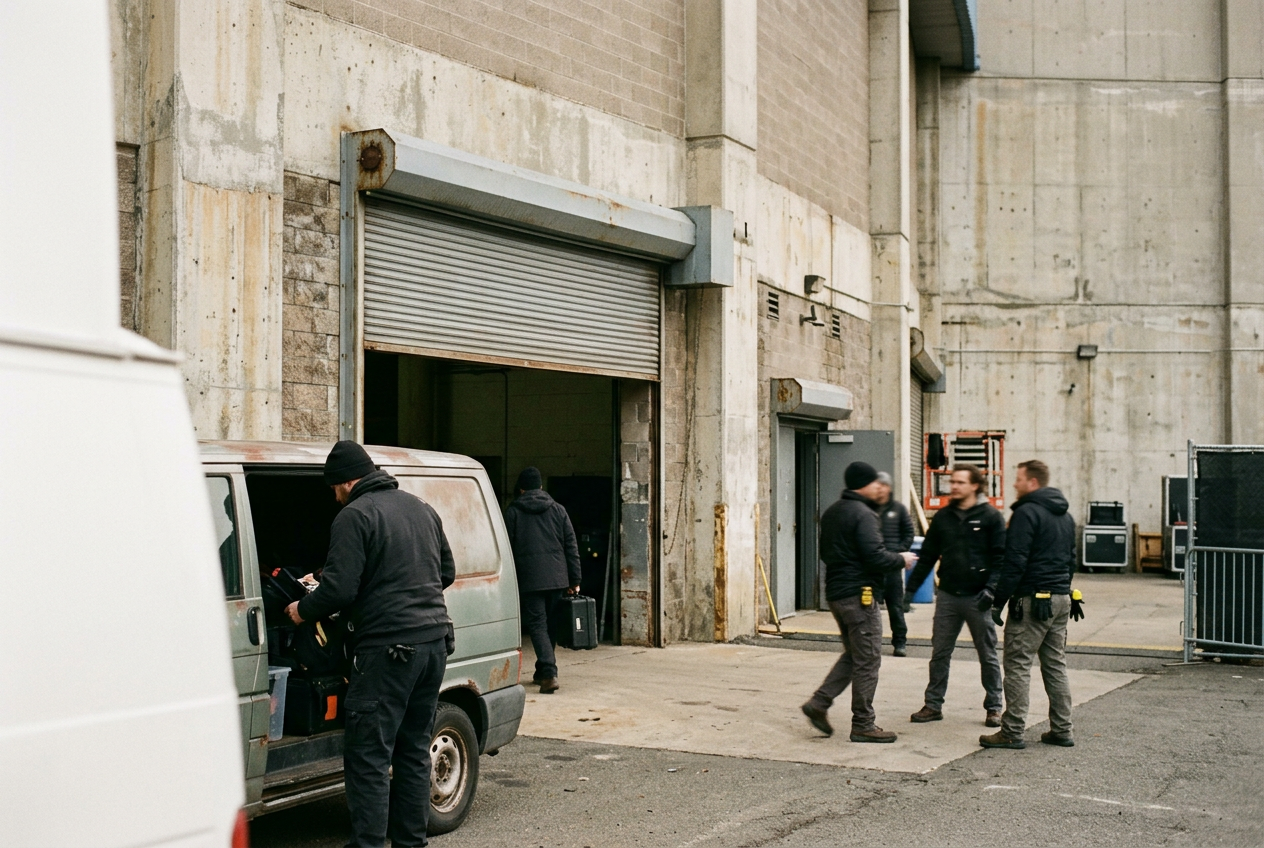
For the first season of AMC’s The Walking Dead: Dead City, the dormant Meadowlands Arena in East Rutherford became part of a ruined Manhattan. The production used the building’s vast interior for sets and stages, putting a conspicuously New Jersey shell around a television version of New York.
Then the series moved. Its second season filmed in Massachusetts.
That does not make the first season’s New Jersey work imaginary. Carpenters built walls. Set decorators filled them. Grips, electricians, drivers, painters, production assistants and location workers collected paychecks.
Nearby vendors sold materials and services. A production landing in an underused arena is precisely the image state officials want attached to the New Jersey Film and Digital Media Tax Credit Program.
The arena also clarifies what the program buys. It can make one production choose New Jersey for one production cycle. It cannot, by itself, guarantee that the crew member leaving Meadowlands Arena will receive another call after wrap, or that the next show will arrive before health coverage, savings and professional momentum run thin.
The award follows spending, not employment continuity
New Jersey’s basic offer is straightforward. An eligible film or television production can receive a credit calculated as a percentage of qualified spending in the state, generally 30 percent, with a higher rate available for work in specified counties. A diversity plan can support an additional bonus. Qualified spending means approved production costs tied to New Jersey, including eligible payroll and purchases from vendors.
A company applies through the New Jersey Economic Development Authority, usually before principal photography. Approval reserves access to the program, but it is not the final certificate. After production, the company documents what it spent, supplies the required cost report and goes through review. The eventual credit rests on verified eligible expenses rather than a producer’s opening budget announcement.
That sequence matters. The incentive rewards a completed block of economic activity. It does not primarily reward what happens to workers six months later.
A set carpenter hired for several weeks counts toward production activity because the production paid eligible wages during those weeks. The carpenter does not need to become a permanent employee for the expense to qualify. A costume worker can move from prep to shooting to wrap, complete the contracted period and disappear from the company’s payroll while the credit remains fully earned. The state bought the work attached to the project.
It did not buy the next contract.
This is normal for screen production, an industry organized around temporary entities and finite schedules. A production company assembles labor, rents space, makes the thing and closes its books. Even established crew members with union coverage often move from employer to employer. The policy problem is not that a limited series fails to employ everyone forever.
It is that New Jersey markets project spending as workforce growth without making repeat employment, annual hours or movement into higher-skilled classifications central conditions of the subsidy.
Meadowlands Arena was useful because it was available, large and adaptable. The crew was useful under the same project logic. The building stayed. The call sheet did not.
A tax credit can become somebody else’s tax cut
Many production companies cannot use the full value of a New Jersey tax credit against their own state tax bill. The project company may be temporary, may record little taxable profit in New Jersey or may sit inside a larger corporate structure that does not need the certificate where it lands.
Transferability solves that problem for the owner of the credit. A transferable tax credit is a certificate that its recipient can sell to another taxpayer, which then uses it to reduce taxes owed to the state. New Jersey permits these transfers under program rules, subject to an approved price floor below face value.
The production gets cash, minus the discount and transaction costs. The buyer gets a larger reduction in its New Jersey tax liability than the amount it paid for the certificate. The state forgoes revenue at the certificate’s usable value. A broker or tax specialist may arrange the transaction.
The buyer does not need to hire a grip, rent a stage or watch the finished film. Its role is financial. This separates the cultural object from the final beneficiary of the tax instrument: a television season creates the credit, but an unrelated company can consume it.
Public debate tends to linger on the face value of an award and the volume of production spending associated with it. Less attention goes to the discount between the certificate and the cash received, or to the basic asymmetry built into the transfer. The production owner controls an asset created by public policy. Crew members receive wages only for approved days worked.
They do not receive a continuing share of the credit, and the certificate does not follow them when the production crosses a state line.
A crew call is not a career ladder
Film work has always been mobile. Tax-credit competition makes that mobility a negotiating tool. A studio or producer can compare incentive rates, stage availability, labor depth and location needs across states, then move a season even after one jurisdiction helped establish the show’s physical world.
Workers cannot relocate with the same ease. A production designer or department head with national relationships may travel. Many crew members have leases, children, caregiving obligations and union jurisdictions rooted where they live. Moving for a temporary contract can mean paying for housing while maintaining a home, without any promise that the production will survive cancellation or return for another season.
This is where headline job counts become slippery. A production can generate a large number of hires while producing far fewer stable livelihoods. One worker may appear on several payrolls during a healthy year. Another may receive a handful of days.
Announcements that count positions, hires or payroll checks do not necessarily reveal the number of unique New Jersey residents employed, their total annual hours, how many returned for another project or whether trainees moved into sustained union work.
Those distinctions are not accounting trivia. A person needs enough qualifying hours to maintain benefits, enough consecutive work to turn training into competence and enough predictable income to remain in the industry during a slow quarter. A state can report rising production expenditure while individual workers absorb the gaps between subsidized projects.
The first season’s Meadowlands Arena build showed genuine local capacity. The second season’s relocation showed who retained the option to leave.
Soundstages change the bet, but ownership still matters
New Jersey has tried to make production less itinerant by offering enhanced treatment to large studio partners and encouraging permanent facilities. Netflix’s planned Fort Monmouth complex and the Lionsgate-branded Newark studio represent the larger wager: once owners commit capital to stages, offices and support space, productions should have reasons to return.
Fixed infrastructure helps. A soundstage cannot be moved to Massachusetts between seasons, and a cluster of occupied stages can support rental houses, fabricators and experienced crews. Yet a building is not a production slate. Stages can sit dark, owners can alter schedules, and a company with facilities in several jurisdictions can route projects according to financing and release strategy.
The program gives large companies a way to aggregate qualified spending at a scale unavailable to an independent producer, while ownership of the durable asset remains private. New Jersey carries the tax expenditure. The studio owner holds the real estate, the production relationships and the power to decide which project enters the building.
Crew members still sell time one contract at a time. Training programs can add workers to the available labor pool, but training without enough paid hours can leave entrants competing for intermittent calls while officials cite enrollment as workforce development. A stable career ladder requires repeated chances to advance, not a certificate and a group photo.
Count the hours the subsidy leaves behind
New Jersey does not need to pretend that film production will resemble employment at a hospital or utility. It can demand a clearer return from an industry asking the public to absorb part of its costs.
Award reporting should distinguish unique resident workers from total hires and publish their paid hours by job classification, without exposing personal information. The state should show how many workers return on another subsidized production, how much of an award was transferred and what the buyer paid for it. A face-value certificate and a temporary payroll total are not enough to evaluate durability.
Part of the benefit could depend on outcomes that producers and studio partners influence over time, including paid apprenticeship hours, advancement into higher classifications and sustained use of New Jersey facilities. Large beneficiaries could contribute to portable benefits that remain with workers between employers. If a studio receives preferential access based on a long-term commitment, missed occupancy or employment targets should reduce later benefits rather than becoming another detail buried beneath cumulative spending.
None of this would stop a show from leaving. It would make departure less painless for the company and less costly for the public, while directing more of the subsidy toward the workers expected to keep New Jersey production-ready after the trailers pull away.
Meadowlands Arena could hold Manhattan for a season. New Jersey’s current credit can help pay for that transformation. What it does not purchase is the next date on a crew member’s calendar.
Questions people ask
How does New Jersey’s film tax credit work?
Eligible productions apply through the NJEDA and document qualified New Jersey spending. After review, the state issues a credit based on approved costs, generally at a 30 percent rate with higher or bonus rates available in specified circumstances. The award rewards completed spending, not permanent employment.
Why do production companies transfer film tax credits?
A project company may not owe enough New Jersey tax to use its certificate. It can sell the credit at a discount to another taxpayer, receiving cash while the buyer applies the certificate against a larger tax liability. Crew members are paid through production payroll and receive no ownership stake in that transferable asset.
Do film tax credits create crew jobs?
They can attract productions that hire local crews and vendors, so the work is real. The weakness is duration: a subsidized shoot may last days or months, and the program does not guarantee another contract, enough annual hours to maintain benefits or advancement into a higher-paid classification.
What would make the subsidy more useful to workers?
New Jersey could publish unique resident-worker counts, paid hours, repeat employment and credit transfer prices, then tie part of large awards to paid apprenticeships, advancement and sustained facility use. That would measure whether a production leaves careers behind, rather than treating every temporary call as proof of a durable industry.
One update a day
Today's story, in your inbox
One story each morning — no hype, no filler, no algorithm deciding for you.