Your Podcast Feed Does Not Leave When the Network Dies
A host may own the voice and still lose the archive, show name and subscriber feed. Bankruptcy makes that split easier to see and harder to fix.
August 24, 2026 · 8 min read
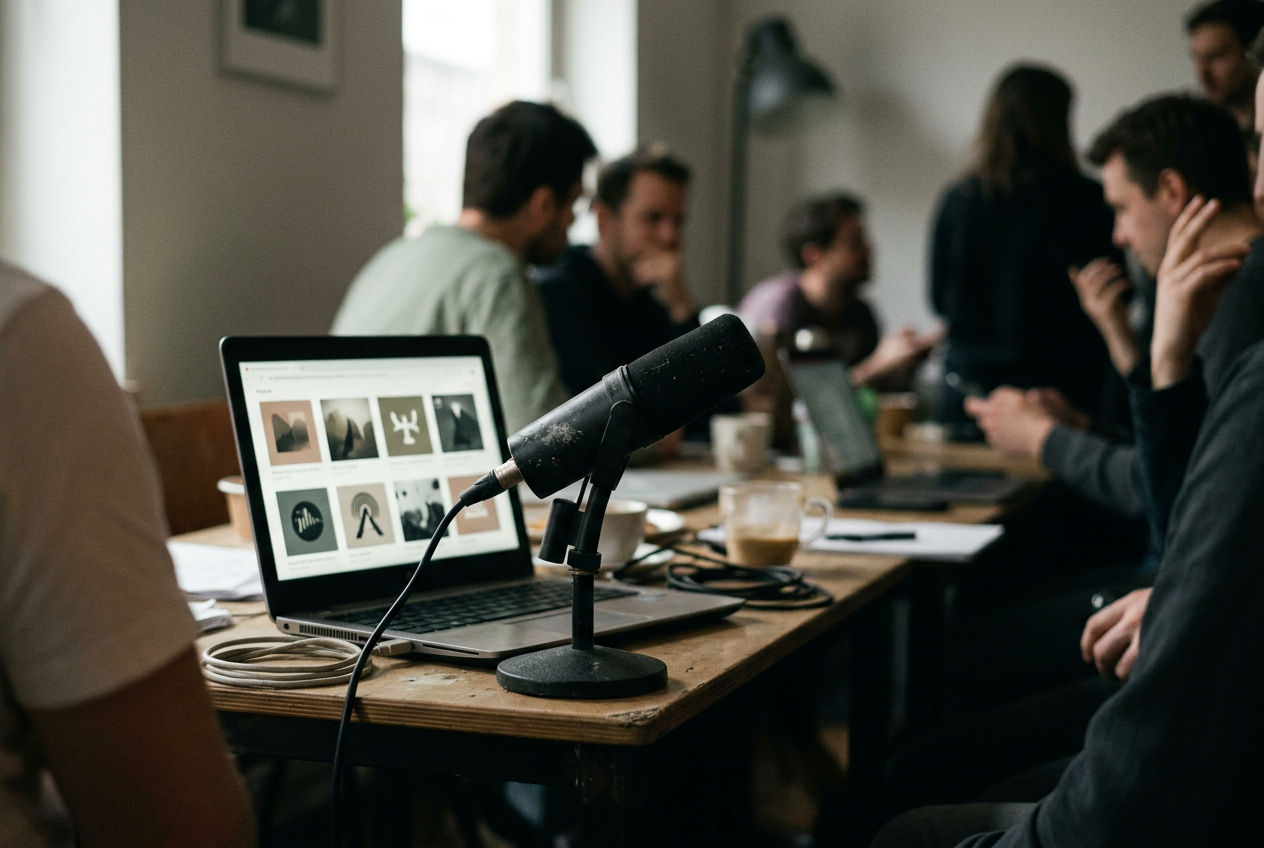
Look at the square cover tile for Gone South in a podcast app. The investigative series came through Cadence13, the podcast studio owned by Audacy, which entered Chapter 11 bankruptcy in January 2024. The tile still looks like a show. Tap it and episodes appear.
Nothing on that screen explains who can sell the archive, authorize a new season or redirect its subscribers somewhere else.
That omission is the business model.
Podcast apps make a show feel like one object. Legally and technically, it is a bundle: recorded audio, scripts, music licenses, artwork, trademarks, advertising rights, listener data and an RSS feed, the file that tells podcast apps where to find each episode. Those pieces can belong to different parties. When a network closes, they do not snap back to the person whose voice is in your headphones.
The microphone may belong to the host. The audience usually sits behind somebody else’s login.
The feed is the valuable part nobody sees
An RSS feed is an address, not an audience in itself. Apple Podcasts and many other apps read that address, copy its episode information into their directories and check it for updates. Listeners press follow inside the app, but the publisher controlling the feed can usually replace the audio, add an episode or point the feed toward a new hosting provider.
That last move is a redirect. Done properly, it lets a show change hosts without asking every subscriber to follow again. Control the redirect and you control the least painful route to the audience.
Platform terms reinforce this arrangement. Apple’s podcast terms require the person submitting a show to hold the necessary rights, but Apple does not adjudicate every private dispute over those rights. Spotify for Creators likewise requires uploaders to have permission and takes a license broad enough to distribute the material. The platforms do not generally seize the creator’s copyright merely because an episode was uploaded.
That sounds reassuring until the network, rather than the host, owns the account that made the submission.
A host can own a recording while lacking the password, verification email and authority needed to move its feed. Conversely, a network might control distribution while the host retains the underlying format or personal brand. Apps display whichever party successfully operates the plumbing. They are directories and distributors, not title registries.
Return to Gone South. Its cover tile cannot tell a listener whether Audacy owns the master recordings, licenses them from a production company or controls only distribution. It also cannot show which corporate account supplies the feed. The smooth interface conceals the split because exposing chain-of-title paperwork would make listening unbearable.
It also makes ownership disputes look like technical glitches.
Bankruptcy does not set creators free
Audacy’s Chapter 11 case is useful because the public filings show the corporate mechanism without publishing every show contract. Chapter 11 lets a company reorganize under court supervision while continuing to operate. Audacy’s podcast businesses, including Cadence13 and Pineapple Street Studios, sat inside a larger company whose assets and contractual rights remained available to the reorganized business.
A bankruptcy filing does not declare that every host now owns their podcast. Intellectual property enters the bankruptcy estate if the debtor owns it. Contracts may be assumed, meaning the reorganized company keeps performing them, or rejected, which bankruptcy law generally treats as a breach rather than a magical erasure of everything that happened before. Assets can also be sold, sometimes under a court order that transfers them free and clear of specified claims.
The host’s position depends on the paper signed before the company ran out of road. If the agreement says the network owns the show name, masters and feed, those assets can remain with the reorganized company or move to a buyer. If the host owns the intellectual property and granted only a limited distribution license, the network may have less to transfer. Termination clauses, insolvency provisions and rights of first refusal can matter, though bankruptcy law may limit how some insolvency-triggered clauses operate.
Then there is unpaid money.
Take an illustrative campaign that generated $100,000 under a 50-50 net split. If the network collected the full amount before filing but never sent the host’s $50,000 share, the host may be an unsecured creditor, meaning they stand in line without collateral backing the debt. A hypothetical recovery of ten cents on the dollar turns that $50,000 claim into $5,000. Meanwhile, the estate may still own or sell the feed that generated the bill.
That is the ugly asymmetry. The creator’s unpaid compensation can become a discounted claim while the audience remains an asset.
Audacy emerged from bankruptcy after reducing its debt and transferring control to its lenders. The important point for podcast labor is not the size of the balance-sheet cleanup. The shows did not automatically walk out with their hosts. Corporate ownership changed above them.
“My show” is not a contract term
Most podcast talent agreements are private, which is convenient for companies that market intimacy while negotiating ownership one creator at a time. Public acquisition documents and bankruptcy schedules usually identify categories such as intellectual property, content agreements and trademarks, not a clean ownership chart for each title. Even public union contracts tend to focus on pay, working conditions, credit and severance rather than resolving every show’s chain of title.
Reported disputes make the missing clauses visible. During the Call Her Daddy fight at Barstool Sports, control of the show’s intellectual property became a central bargaining chip, and Alex Cooper eventually secured ownership as part of her exit arrangement. The lesson was not that a popular host naturally owns her show. She had enough leverage to negotiate for it.
A contract can split ownership several ways. A work-made-for-hire clause may treat recordings produced within the job as belonging to the company. An assignment transfers ownership. A license leaves ownership with one party while allowing another to exploit specified rights for a period, territory or medium.
Those words sound adjacent in a pitch meeting. They are nowhere near adjacent when the network’s office closes.
The clauses worth money are often operational rather than glamorous. Who registers the trademark? Who owns raw tape and final masters? Who controls the hosting account?
Can the host compel an RSS redirect after termination? May the network keep selling archive ads, and for how long? Does ownership revert if no new episodes are produced? Who can approve a television adaptation?
A promise that the creator “retains creative control” answers almost none of this. Creative control may cover editing while the company owns the title, feed and recordings. Approval rights are not ownership. Revenue participation is not ownership either.
A person can receive half the profit from an asset they cannot move, sell or continue using.
The archive can survive as inventory
Closed networks rarely produce a clean funeral. Their websites decay, staff leave and new episodes stop, while old feeds continue generating downloads from search, recommendations and listeners working through a back catalog. Dynamic ad insertion, which places current ads into old audio when it is downloaded, can keep that archive commercially useful long after the production team disappears.
A buyer does not need to revive the editorial operation to value the catalog. It can acquire masters, distribution rights or ad inventory, then leave the feed exactly where it is. The audience experiences continuity. Workers experience a locked room.
Music and guest permissions can complicate any sale. A network may own an episode master without holding perpetual rights to every song, clip or underlying work inside it. Licenses can expire or restrict reuse in another medium. A buyer therefore acquires a chain of permissions, not just a folder of MP3 files, and weak paperwork can turn an apparently durable archive into material that cannot safely be repackaged.
The Gone South tile remains useful here because it looks settled. It is not proof of ownership, solvency or a host’s ability to make another season. It proves only that an app can still locate audio at the address it has been given.
What creators can realistically control
The cleanest arrangement is host ownership of the title, underlying format, masters and feed, with the network receiving a time-limited license to distribute and monetize them. Networks resist that structure because the portable audience is the asset they are funding. A company paying production salaries, marketing costs and sales staff wants something it can keep if the relationship ends.
Smaller creators often lack the leverage to demand the clean version. They can still distinguish between ownership and access before signing, preserve copies of final and raw files, and establish what happens to the feed after termination. None of that guarantees a painless exit, especially in bankruptcy. It at least identifies the locked door before the building changes hands.
Owning a microphone is cheap. Rebuilding a subscriber base one listener at a time is not.
Questions people ask
Does a podcast host own the show automatically?
No. Hosting or appearing on a podcast does not by itself establish ownership of the name, recordings or feed. The employment or production agreement may assign those rights to the network, leave them with the host or divide them across several parties.
Can a creator take podcast subscribers to a new network?
Usually only if the creator controls the RSS feed or has a contractual right to require a redirect. Starting a new feed preserves the ability to publish, but followers attached to the old feed will not automatically move with it.
What happens to podcast episodes during bankruptcy?
Episodes and related rights owned by the debtor can remain in the bankruptcy estate, pass to a reorganized company or be sold. A host who is owed revenue may have a creditor claim without gaining control of the archive that produced it.
Do
Apple or Spotify decide who owns a podcast?
Their terms require publishers to possess the rights they upload, but the platforms generally distribute content rather than settle private ownership disputes. In practice, account credentials, feed control and written contracts determine who can keep publishing while the parties argue elsewhere.
One update a day
Today's story, in your inbox
One story each morning — no hype, no filler, no algorithm deciding for you.