
A Binder Size Chart Cannot Tell You About Hour Eight
Compression is the easy part to sell. A useful binder test tracks breathing, heat, seam pressure and recovery across an ordinary day, without treating pain as proof that it works.
September 5, 2026 · 7 min read
The line that matters is the split result: your chest measurement points to one size, while the measurement around your ribs points to the next one up. A chart usually tells you to follow the larger measurement. Dysphoria, product photography and the promise of a flatter profile may tell you otherwise.
Follow the chart.
That conflict is the concrete case for this guide because it exposes what binder sizing does and does not measure. The chart sorts bodies into saleable units. It cannot model a crowded train, four hours folded over a laptop, sweat trapped under a compression panel or the pressure that arrives under one arm after the fabric has warmed and shifted.
A binder can fit at 9 a.m. and become the wrong garment by late afternoon. That is still a fit problem.
Endurance is part of fit.
Compression is not the whole test
A typical pull-on binder combines stretch fabric with a less elastic front panel. The panel limits how far the chest can project forward, while the stretch sections hold the garment close enough to redistribute tissue. Compression means pressure applied across the torso; it should not mean forcing the ribs into a smaller circumference.
Retail pages are built around the first mirror check because that is where a buyer can see a result. The commercial incentive favors a clean before-and-after image, maximum apparent flattening and copy about confidence. Hour seven photographs badly. A damp neckline, a rolling hem and a seam pressing into the same patch of skin do not move stock.
This is why an established binder should be judged as clothing worn over time, not as a transformation captured immediately after dressing. The useful question is whether the garment lets you move through an ordinary day without bargaining against your body for the silhouette.
Start with the split result on the chart. Take the measurements the manufacturer requests, using its own instructions rather than borrowing a size from another brand, then choose the larger size when measurements cross categories. Binder sizes are not standardized. A medium in one pattern says nothing reliable about a medium in another, and sizing down to intensify compression turns a garment test into an endurance contest.
Try it first on a low-stakes day at home. Keep the first wear short. Raise both arms, reach across your body, sit against a chair back and take several ordinary breaths without performing exaggerated test breaths. The point is not to prove that air can still enter your lungs.
You are checking whether normal breathing remains unremarkable.
Test the boring parts of the day
A serious wear test needs sitting because sitting changes the torso. The abdomen and lower ribs meet the binder differently, the hem may push upward, and a front panel that looked smooth while standing can buckle near the sternum. Spend time in the chair you use most. Notice whether you start pulling your shoulders forward to escape the armholes or sitting unusually straight to avoid pressure at the hem.
Posture compensation matters. If the garment requires you to hold yourself in one guarded position, the apparent fit depends on muscular effort that will become harder to maintain as the day goes on. The binder has not passed because you can tolerate that arrangement for twenty minutes.
Commuting adds heat, bags and involuntary movement. A backpack strap can drive an armhole seam inward. A shoulder bag can drag one side of the neckline down. Walking to a platform raises body temperature before the train or bus removes much chance to adjust clothing discreetly.
Test a familiar route rather than designing an athletic challenge, and carry a loose layer plus an alternative top so removing the binder is logistically possible.
Light daily movement should stay light. Put away groceries, walk around the block or complete the ordinary tasks your day already contains. Exercise needs different consideration because exertion increases breathing demand and heat; a casual wear test does not establish that a binder is suitable for a workout. Follow the manufacturer’s activity guidance and use purpose-designed alternatives where appropriate.
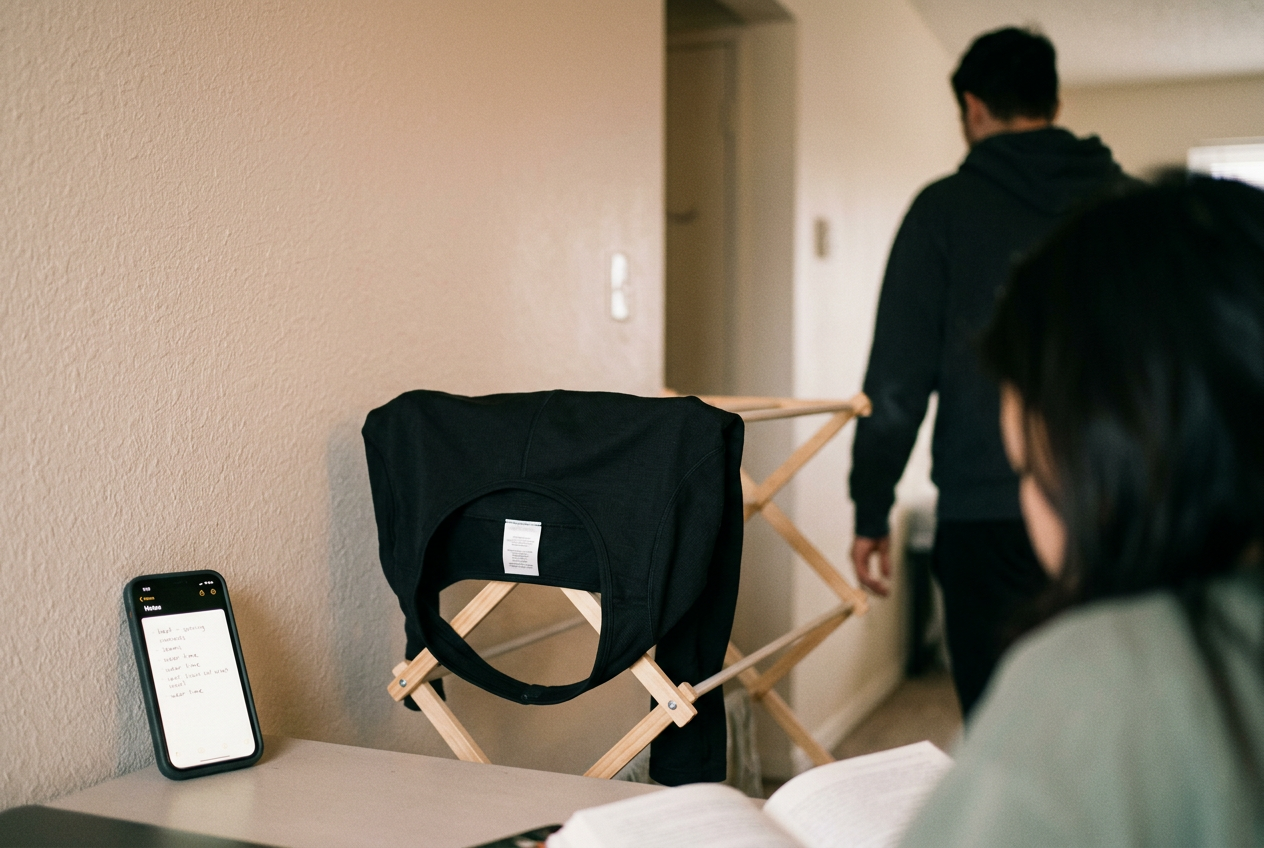
Record the fit at intervals without turning yourself into a laboratory specimen. A note on your phone can cover elapsed time, heat, breathing, skin pressure and whether you keep touching one area. Repeated adjustment is data. So is the moment you stop noticing the binder, though absence of attention does not override marks, numbness or breathing changes.
The eight-hour mark is not a prize. Many harm-reduction guides treat eight hours as an outer limit rather than a target, and individual tolerance can be shorter. A workday also hides extra time: dressing before leaving, delays on the trip home and the errand added afterward. Count the whole wear period.
Know the stop signs
Remove the binder if you develop pain, shortness of breath, dizziness, numbness, tingling, weakness, broken skin or pressure that keeps intensifying. A sharp sensation does not become safer because it sits beneath a gender-affirming garment. Neither does chest pain.
Persistent symptoms, breathing difficulty or pain that continues after removal deserve attention from a qualified health professional. People with respiratory, musculoskeletal or skin conditions may need individualized guidance before binding. This article is harm-reduction information, not medical advice.
Skin tells part of the story. Temporary light impressions from clothing can happen, but deep marks, swelling, abrasions or a hot patch under one seam mean the load is not spreading well. Check beneath the armholes, along the lower edge and wherever the stiff front panel meets stretch fabric. Those transitions carry force, especially once sweat increases friction.
Do not defeat a poor fit with extra compression. Layering two binders, adding elastic bandages or using tape not designed for skin and binding can create concentrated pressure and make removal harder. If the larger size from that split chart result fails to provide the look you need, the useful alternative is another cut, another length or a different binding method used according to its instructions. A smaller label is not a technical solution.
Mental health belongs in the wear test without becoming a reason to dismiss physical discomfort. Binding can reduce dysphoria, the distress some people feel when their body or social treatment conflicts with their gender, and removing a binder may carry its own cost. Build an exit plan before discomfort starts: a private place, a backup shirt and enough time to change without negotiating with yourself on a station platform.
Washing changes the fit
The first wear is only half a test. Sweat, body oils and stretched fibers alter how a binder behaves, while washing can restore some elasticity or change the hand of the fabric. The care label is part of the engineering, not decorative legal text.
Follow the manufacturer’s washing instructions. Many binders require cool or gentle washing and air-drying, but the label on the garment wins over generic advice. High heat can damage elastic fibers, and aggressive cycles can stress seams. A binder that demands hand washing also charges in time, privacy and drying space, costs a product page rarely places beside the flattening claim.
After washing, let it dry fully. Then repeat the short home test before committing to a full day. Check whether the armholes feel sharper, the hem grips differently or the front panel sits higher. Inspect the stitching for popped threads, puckering and areas where the elastic looks thin.
A seam failure under tension is not a cosmetic defect.
Recovery matters too. Note how your torso feels after removal and the next morning. Mild awareness of having worn close clothing is different from lingering soreness, restricted breathing or pain with movement. If recovery extends into the following day, do not treat another long wear as the next stage of conditioning.
Rest, reassess the size and seek professional care for symptoms that persist.
Return to the split size-chart line one last time. It looked indecisive because the garment industry prefers one label to describe a torso with several relevant dimensions. Your body did not fail to fit the chart. The chart ran out of information.
Questions people ask
How tight should a chest binder feel?
A binder should feel snug and supportive without causing pain, numbness, dizziness or difficulty taking an ordinary breath. You should be able to move your arms and sit naturally. If you must change posture, restrict breathing or endure increasing pressure to keep it on, the fit is too demanding.
Can I wear a chest binder for eight hours?
Eight hours should not be treated as a required goal or proof of correct sizing. Tolerance varies, and the full wear period includes time before work, commuting and delays afterward. Build up gradually, take breaks when possible and remove the binder earlier if discomfort or any stop sign appears.
Should I size down for more compression?
No. Use the manufacturer’s current measurement instructions, and choose the larger size when your measurements fall across categories. Sizing down can increase pressure without improving how evenly the garment redistributes tissue. A different cut or length is a better response when the recommended size does not provide a workable shape.
How do I know when a binder needs replacing?
Retire or reassess it when elastic no longer recovers after washing, seams split, the panel warps or the garment starts producing pressure in places that were previously comfortable. Replacement timing depends on wear and care. The useful evidence is a change in the garment’s behavior, not an arbitrary anniversary.
One update a day
Today's story, in your inbox
One story each morning — no hype, no filler, no algorithm deciding for you.