
Hair-Loss Subscriptions Make the Exit Harder Than the Signup
Hims, Keeps, and Ro make recurring treatment easy to begin. Leaving means separating the next shipment, the prescription, and access to a clinician.
September 6, 2026 · 8 min read
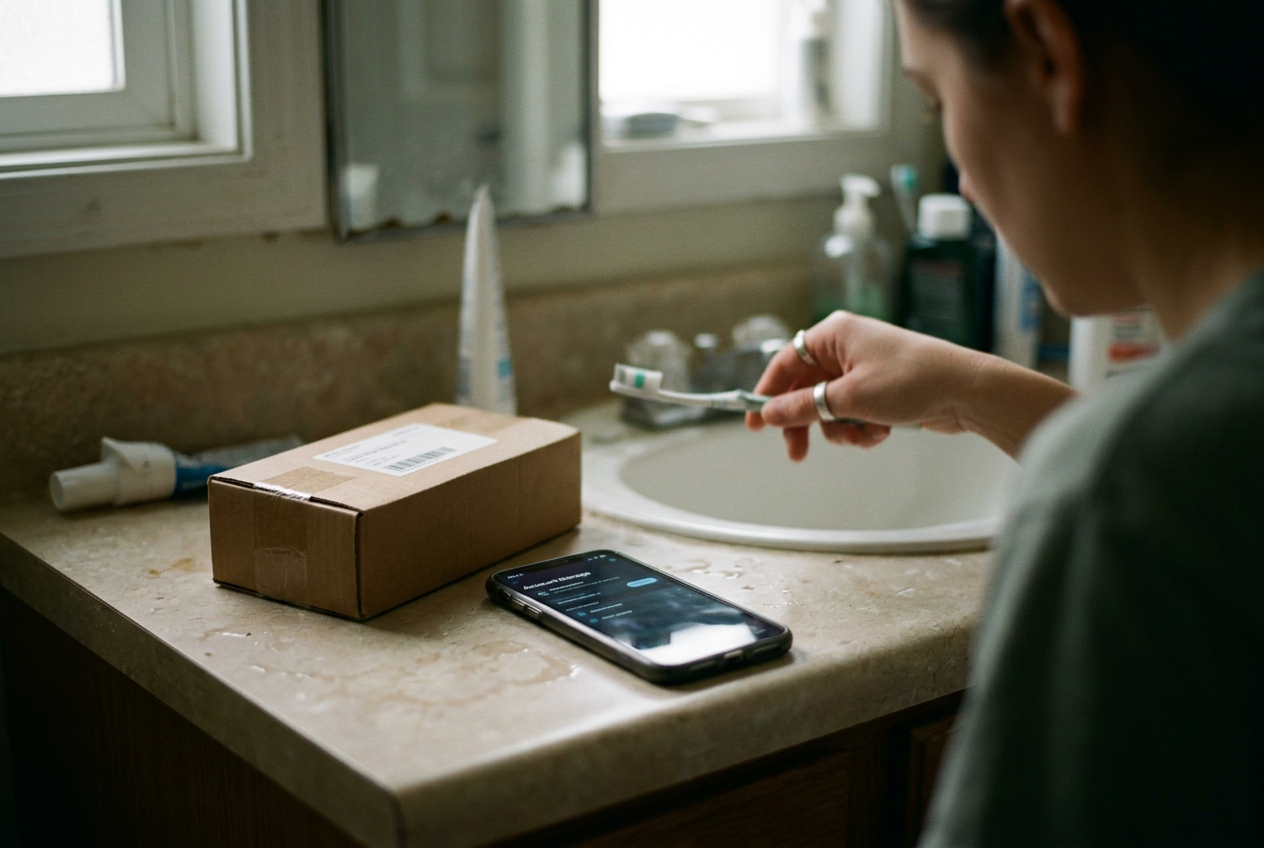
The most important object in a hair-loss subscription is not the bottle. It is the line in your account marked `next shipment`.
That line looks administrative, almost beneath notice. It may sit beside an order status, a treatment plan, or an auto-refill control. Yet it governs the part of telehealth that becomes expensive through inattention: another package, another charge, and another stretch of treatment arriving before you have decided what comes next.
I traced the signup, refill, cancellation, and contact routes at Hims, Keeps, and Ro, stopping before any action that would place an order, submit medical information, or alter an active prescription. The exact interface varies by product, account status, and whether a clinician has approved a prescription, so a permanent click-by-click ranking would be dishonest. These companies revise menus. Accounts expose different controls.
What remained consistent was the structure.
Joining was presented as one continuous task. Leaving required several decisions that the interface did not always treat as related.
One account contains several different relationships
A telehealth hair-loss account can hold a retail order, a recurring shipment, a prescription, and a communication channel with a clinician. They appear together because that is convenient for the provider. They do not necessarily stop together.
This distinction matters most around prescription products, including treatments containing finasteride, although the same billing problem can affect nonprescription products such as topical minoxidil. A subscription controls commercial fulfillment, meaning whether the company prepares and sends another order. A prescription records a clinician’s authorization for a medication. A message thread handles care questions.
Customer support handles the account and its money.
The dashboard compresses those functions into one branded treatment experience. That compression is the product.
It works well during signup, when the user wants the company to coordinate an intake form, clinician review, payment, and delivery. The same compression becomes friction during cancellation because the user may want to stop one part without understanding what happens to the others. A delayed shipment may leave billing active. A canceled refill may not answer a clinical question.
A message to a clinician may produce no change to the next order.
Recurring billing and continuity of care become adjacent controls, sometimes inside the same menu, even though they are not the same decision.
This is not an argument against seeking treatment. It is not medical advice about starting, stopping, or changing any product. It is an argument for reading a telehealth account as a bundle of contracts and channels, rather than as a single treatment switch.
Start with the next-shipment line
Before touching `pause`, `delay`, or `cancel`, find the next-shipment line and take a screenshot. Record the displayed order status too. Do this before contacting support, because an account screen can change after an agent or automated system applies an adjustment.
The shipment date is often more useful than the day you remember receiving the previous package. Subscription systems work forward from their own fulfillment schedule, and a provider may begin processing an order before a carrier has scanned it. The practical deadline can therefore arrive earlier than the date that looks like delivery day.
Next, open the treatment or order details and identify what recurs. A telehealth plan may combine medication with shampoo, supplements, or other products sold under the same account. Canceling one item does not prove that every recurring item has stopped. A plan name can also survive after a shipment is delayed, which is why `paused` deserves to be read literally.
It is a delay, not an exit.
At Hims, Keeps, and Ro, the useful test was not how attractive the dashboard looked or how many clicks a route required. It was whether the account made the commercial consequence explicit before the final action: no future shipment, no future automatic charge, or only a changed date. Click counts are theater if the last screen leaves the recurring status unclear.
Return to the next-shipment line after every change. If it still shows an upcoming order, the work is not finished.
Do not use the clinician inbox as a cancellation desk
Telehealth makes a clinician feel close because the message function sits inside the same account as payment. Operationally, the clinician and the billing system remain separate.
A message saying that you want to stop receiving a product may become part of a care conversation without canceling the commercial subscription. The reverse is also true. Turning off automatic fulfillment does not guarantee that a clinician has reviewed a concern, explained an existing prescription, or answered what the change means for the treatment plan.
Use the account controls or customer-support route for billing. Use the designated clinical channel for medical questions. If a service routes both through one inbox, state the task plainly and ask for separate confirmation of the account action. Do not assume that a courteous reply about treatment has altered a charge.
This split is where the subscription model protects itself. The provider can accurately say that care remains available while the refill engine continues according to its own schedule. No one needs to deceive the customer. Each department only has to complete the task assigned to it.
The user supplies the missing coordination.
Make the cancellation prove itself
A usable cancellation path ends with evidence. Look for a final status inside the account, an email confirmation, or both. Save the screen that identifies the affected product or plan. A generic acknowledgment that a request was received is weaker than confirmation that recurring fulfillment has ended.
Then check the payment area. Removing a card, where the interface even permits it, is not a substitute for canceling an agreement to bill. It can turn the next renewal into a failed-payment dispute while leaving the subscription marked active. The cleaner record is a canceled recurring order with a confirmation attached to it.
Watch for retention screens. An offer to ship less often, delay the next box, or change the treatment does not complete the cancellation unless the final status says it does. These offers are not inherently sinister. Some people want them.
They still introduce ambiguity at the exact moment the company has a financial reason to preserve the account.
If an order already shows as processing, separate that order from later ones. One request concerns the package currently moving through fulfillment. The other concerns future automatic orders. Support policies vary, and the company may treat those requests differently, so keep both in the same written record without assuming that success on one resolves the other.
The next-shipment line returns here. After cancellation, it should no longer behave like a countdown to another charge. If a date remains, capture it and contact account support through a channel that produces a transcript or email.
Test contact before you need it
The most useful time to inspect clinician contact is shortly after joining, not during an urgent account problem. Find the clinical inbox. Find customer support. Note whether replies remain visible inside the account and whether the system sends an email notification without exposing sensitive information in the subject line.
This takes minutes and exposes a basic quality of the service: whether it tells you which person can do which job.
The better route is not necessarily live chat. Speed matters less than authority and a durable record. A support agent who can see billing but cannot address care should say so. A clinician who can discuss treatment but cannot stop an order should not be presented as the person who controls the subscription.
The interface should make those limits legible before the next refill is close.
Hair-loss services benefit from continuity. Recurring treatment can reduce the effort of obtaining another supply, while predictable orders give the company repeat revenue and lower the chance that a customer wanders off between purchases. Those interests can overlap. They are not identical.
The problem begins when the service uses the language of care to soften a billing mechanism, or uses the convenience of billing to imply that care will remain coherent without a separate conversation. The account feels unified. The responsibility is fragmented.
Keep a small exit file
You do not need a dossier. Keep the screenshot of the next shipment, the cancellation confirmation, the order status at the time of cancellation, and any support transcript concerning a pending charge. Save the provider’s relevant cancellation or refill policy as it appeared when you acted, since help pages and account menus can change.
Do not put more medical information into a customer-service message than the billing task requires. The support channel may not be the clinical channel, even when both live behind the same login. State the product, the recurring order you want addressed, and the account action you need confirmed.
Finally, sign back in after receiving confirmation. The account page is the working state of the subscription; the email is your record of what the company said. They should agree.
A stopped shipment is a commercial fact. A treatment decision is a clinical matter. Hair-loss subscriptions become difficult to leave when the interface encourages you to experience both as one button, then requires you to disentangle them after the refill engine has started.
Questions people ask
Does canceling a hair-loss subscription cancel the prescription too?
Not necessarily. The subscription controls recurring billing and fulfillment, while a prescription reflects a clinician’s authorization. Account structures vary, so check the final subscription status and use the service’s clinical channel for questions about the prescription or treatment plan.
Is pausing a refill the same as canceling it?
No. A pause or shipment delay usually preserves the recurring plan and moves a future order. Read the confirmation screen for the new date, then return to the account’s next-shipment line so a temporary delay does not become an unexpected renewal.
Can a clinician cancel the next charge?
Do not assume so. A clinician may handle treatment questions without access to billing controls, while customer support may handle charges without authority to discuss care. Use the designated account or support route for cancellation and ask for written confirmation that future automatic fulfillment has ended.
What should I save after canceling?
Keep the displayed next-shipment status, the cancellation confirmation, any pending-order status, and the relevant support transcript. The useful record shows which product was affected and whether future recurring charges stopped, rather than merely proving that someone received your message.
One update a day
Today's story, in your inbox
One story each morning — no hype, no filler, no algorithm deciding for you.