
A Cheap UGC Video Can Put Your Face in Ads Forever
Creators hired to film ads without posting them are selling more than a clip. Broad usage, revision, exclusivity, and paid-media clauses can turn a small production fee into a sweeping rights transfer.
August 20, 2026 · 8 min read
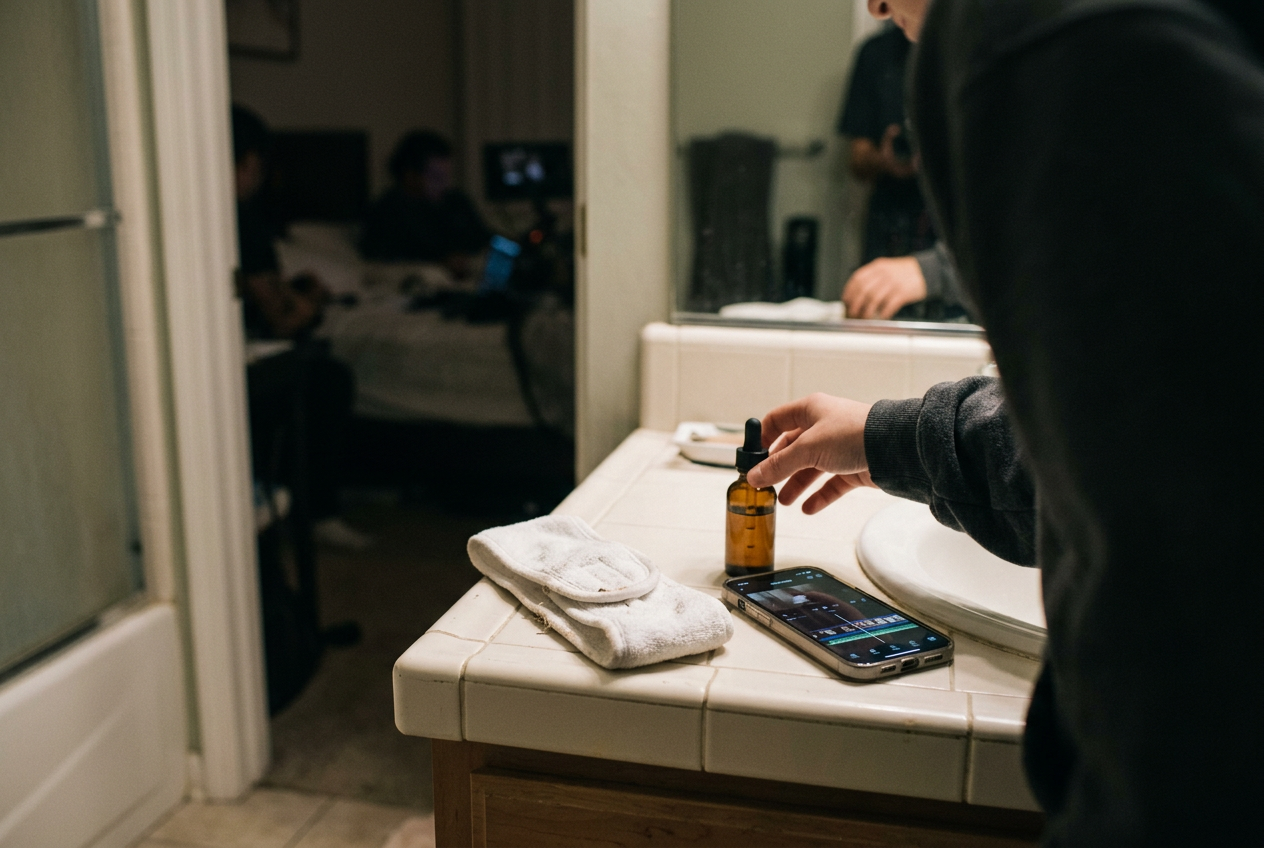
Consider an illustrative skincare assignment. A creator puts on a white terry spa headband, holds an amber serum bottle beside her cheek, and records a vertical testimonial in her bathroom. She sends the file to the brand and never posts it herself. On paper, the job looks smaller than influencer work because no audience comes with it.
That distinction makes the category attractive to advertisers. User-generated content, or UGC, once meant material people made without being commissioned. In advertising, the label now also covers paid performances designed to resemble ordinary posts. The creator supplies a face, voice, room, lighting, wardrobe, camera, editing labor, and enough informality to keep the result from looking like an ad produced by people who make ads.
The brand does not need her followers. It needs her credibility in the frame.
The deliverable is the decoy
The visible transaction is easy to price: one edited video, perhaps with alternate openings and some supporting footage. The hidden transaction sits several pages deeper, where the contract describes who can use the result, for how long, in which countries, on what channels, and with what freedom to cut it apart.
A filming fee pays for production labor. Usage rights govern what happens afterward. Treating those as one purchase lets a client acquire both cheaply, particularly when a creator sees the flat fee at the top of the email and assumes the video will live on an organic social account for a few weeks.
The white headband clip can travel much farther. The brand may run it from its own Instagram account, place it between Stories, crop it for TikTok, add captions for YouTube Shorts, put a still on a retail product page, or hand it to an agency working across several markets. None of that requires the creator to have an audience. Her face has become an advertising input.
A contract may describe the rights as perpetual, worldwide, transferable, sublicensable, and valid in all media. Each word widens the exit. Perpetual removes the end date. Worldwide removes geographic limits.
Transferable and sublicensable allow other entities to receive the rights. All media can reach beyond the platform named in the original brief, including formats that were never discussed during filming.
Sometimes the agreement also contains a work-made-for-hire clause, which claims the client owns the commissioned work from creation. Whether that language operates as intended depends on the work, the drafting, and applicable law, so contracts often add a separate assignment transferring copyright as backup. A likeness release does a different job: it authorizes commercial use of the creator’s face, voice, name, or persona.
The creator can therefore lose control in two directions. The client may own the file, while also holding broad permission to use the person inside it.
Revisions can reopen the whole shoot
Revision language sounds administrative. It determines how much labor the fee buys.
A bounded revision might cover one round of edits to the submitted file. A loose clause can cover reshoots, new scripts, altered claims, wardrobe changes, different product handling, or requests from an agency that entered the chain after approval. The difference matters because video cannot always be repaired on a timeline. If the serum label faced the wrong direction, the creator may need to rebuild the bathroom setup, match the daylight, apply the same makeup, and put the white terry headband back over hair that no longer falls the same way.
“Reasonable revisions” leaves the buyer room to define reasonable. “Until approved” gives it something close to an open meter, except the creator is not the one running the meter. Approval can also depend on multiple parties, including a brand, agency, retailer, or platform team, each able to discover a fresh problem after the previous one has been fixed.
Raw-footage clauses extend the exposure. Raw footage means the unedited recordings captured during production, including alternate takes and material that never appeared in the approved version. Once delivered, those files let the buyer construct new edits without commissioning another performance. A discarded sentence can become the opening hook.
A silent reaction can be paired with copy the creator never read.
Exclusivity charges the creator for work she cannot take
Category exclusivity bars a creator from working with competing products for a stated period. That can be valuable to a brand. It can also be wildly disproportionate to a small UGC job.
A narrowly written restriction might cover a defined serum category for the weeks when the ad runs. A broad one may reach skincare, beauty, wellness, or any company the client considers competitive, even though the creator never posted the original video and her own audience never saw the endorsement. The brand has purchased private production labor, then reserved part of her future labor market.
This is where the low fee starts doing expensive work. A creator who makes several commissioned clips each month depends on moving between clients. Blocking a whole category can remove better-paid assignments during the restriction, while vague conflict language forces her to guess which offers might breach the deal. The white headband remains in a folder at an agency.
Its contractual shadow follows her into the next inbox.
Exclusivity also interacts with usage. If the client can run the ad for a year but the restriction has no clear end, the creator may remain commercially attached to a campaign she cannot see, measure, or stop. A defined usage term creates a clock. A perpetual license does not.
Paid media is where the clip becomes inventory
Organic use means the brand posts the video without paying the platform to distribute it. Paid media means the brand buys placement, allowing the ad to reach audiences selected through an advertising system rather than the account’s existing followers.
This is the clause that turns a home-recorded testimonial into scalable inventory. The brand can test several openings, send the strongest version more budget, stop weak variants, and keep buying impressions as long as the ad performs. The creator receives the filming fee once. The platform receives money whenever the campaign runs.
The advertiser keeps the upside from an effective face.
Some arrangements use whitelisting, an industry term for permission to run ads through a creator’s social identity or account access. Meta calls its version partnership ads, while TikTok’s Spark Ads can amplify eligible posts with authorization. These formats can make paid distribution look closer to a creator recommendation because the ad carries a recognizable handle or post format.
That is different from a brand running the white headband clip through its own account, but both require precise contract language. The relevant details include whose handle appears, whether the creator must post first, how long authorization lasts, which edits may run, and whether the advertiser can change captions or calls to action. Platform permission does not replace a contract, and a contract does not make an endorsement truthful.
The Federal Trade Commission’s Endorsement Guides make advertisers and endorsers responsible for clear disclosure of material connections and for claims that reflect honest experience. A polished disclosure cannot rescue a scripted product claim the creator cannot support. The casual bathroom setting does not change the ad’s status. That is the point of the setting.
The price belongs next to the rights
There is no universal fair rate because a file licensed briefly for one organic channel is not the same product as a performance assigned forever, available for paid ads, retail pages, derivative edits, and transfers to unnamed partners. Bundling them under “one UGC video” hides the difference that matters.
A legible deal separates production from exploitation. It states the usage term, channels, territory, paid-media permission, edit scope, raw-footage treatment, revision limit, exclusivity category, and renewal mechanism in language tied to the campaign being purchased. Broader rights carry more value because they replace future bookings, reduce the creator’s control, and let the buyer keep testing the asset after the original labor is finished.
The creator economy likes to describe this work as accessible because a person can begin with a phone and a bathroom. The phone is not the scarce asset. Neither is the headband. The useful asset is a believable person whose performance can be made to feel unbought while the contract quietly makes it reusable.
Questions people ask
Do UGC creators need followers to get paid?
No. In many UGC assignments, the creator delivers the video directly to a brand or agency and never posts it. The buyer pays for production, performance, and a style that resembles ordinary social content, while distribution comes from the brand’s account or advertising budget.
What are usage rights in a UGC contract?
Usage rights set where, how, and for how long a client may use the content. A limited license might cover one platform and a fixed campaign term; broad language can permit worldwide paid advertising, retail use, sublicensing, derivative edits, and continued use without another payment.
What does paid usage mean for a UGC video?
Paid usage allows the client to spend advertising money to distribute the video beyond organic followers. That can turn one clip into a long-running, repeatedly tested ad asset, which gives the usage clause economic value separate from the time spent filming and editing it.
Can a brand edit UGC after the creator delivers it?
That depends on the agreement’s editing, raw-footage, and derivative-work clauses. Broad permission may let a client recut takes, replace captions, change the opening, or combine footage with new material, while a narrower license can limit use to the approved edit and campaign.
One update a day
Today's story, in your inbox
One story each morning — no hype, no filler, no algorithm deciding for you.