A Dating-App Verification Badge Does Not Mean They Are Safe
Photo badges confirm a face completed a prompt. ID badges go further, but none of the major apps’ checks certify that a match is trustworthy or safe to meet.
August 11, 2026 · 8 min read
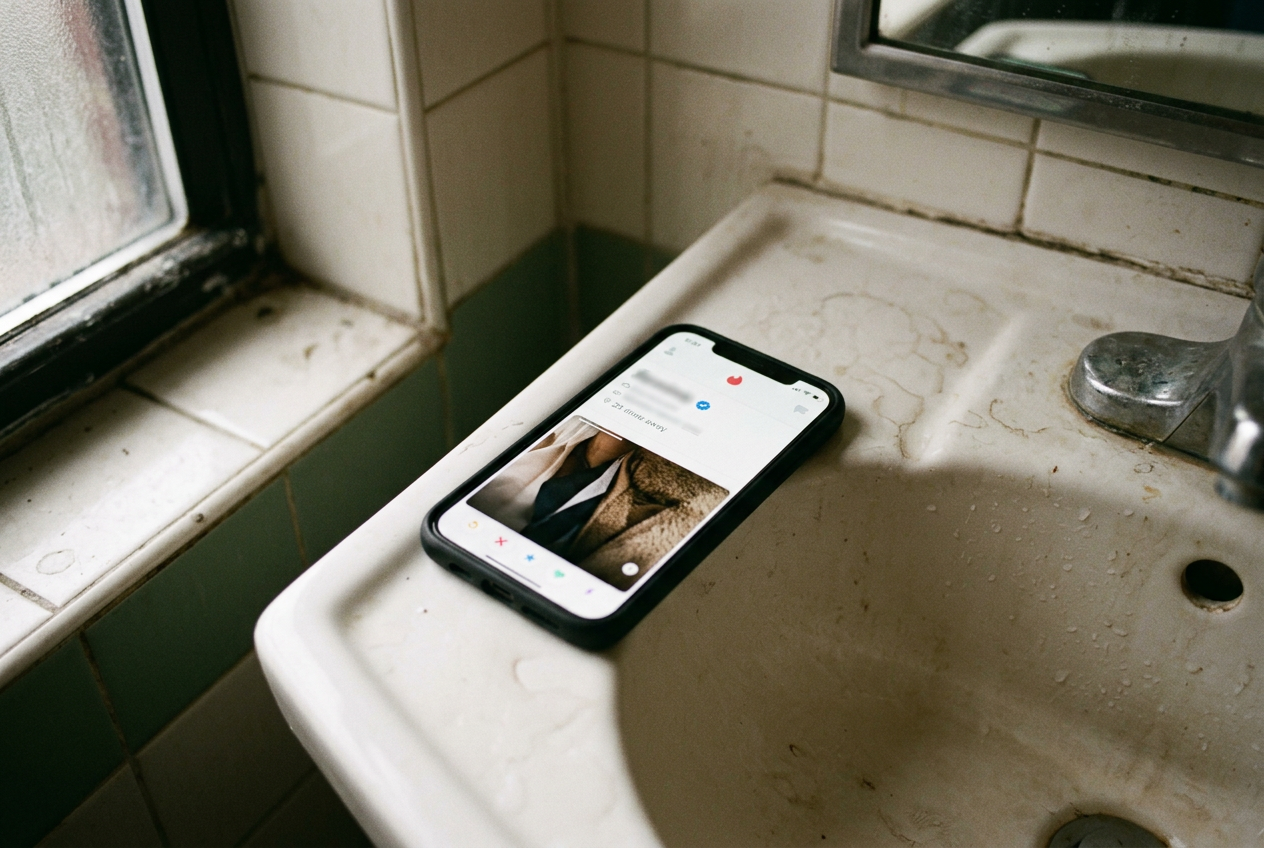
The object doing the work is tiny: Tinder’s blue check, fitted beside a profile name like a stud earring. It carries no explanation on the profile itself. There is just the icon and the conclusion a hurried thumb is invited to draw from it.
The check is earned through Photo Verification. Tinder asks the user to record a short video selfie, then uses a liveness check, which tests whether the submission appears to come from a person present at that moment, and facial comparison against profile images. Pass, and the profile receives the badge.
That is a real check. It is also a narrow one. The badge means the app found enough agreement between the submitted face and the face shown in the profile. It does not mean Tinder checked the person’s character, relationship status, employment, address, criminal history or plans for Friday night.
The blue check is evidence about a completed platform procedure. Its placement encourages a much larger reading.
This distinction matters because dating apps sell access to strangers while placing most of the physical risk outside the product. The date happens in an apartment, bar or parked car. The company supplies the introduction, some reporting tools and a badge small enough to let everyone feel the machinery has done more than it has.
One icon can conceal several kinds of proof
Photo verification on Tinder, Bumble and Hinge starts from roughly the same practical problem: a person can build a profile with somebody else’s photographs. Each platform’s documentation describes a check that asks the user to produce a fresh image or video under the app’s direction.
Hinge’s Selfie Verification uses a video selfie. Its system checks for liveness and compares facial geometry, a mathematical representation of facial features, with the photographs on the profile. A successful comparison produces a verification badge. Hinge explicitly warns that the badge does not guarantee a member’s identity or safety.
Bumble’s Photo Verification asks a person to take a selfie while copying a pose shown by the app. Bumble says automated tools and human review may assess whether the selfie matches the profile. The pose is useful because it makes the user respond to a prompt rather than upload a prepared image, though a successful response still establishes only that someone resembling the profile photographs could complete it.
Tinder’s video method makes a similar claim with slightly different machinery. Its documentation separates liveness from face matching: first determine that a live person appears to be completing the prompt, then determine whether that person resembles the images attached to the account. The blue check compresses both judgments into one mark.
These systems can raise the cost of crude impersonation. A scammer relying on a folder of stolen photographs has another obstacle to clear, and a date can ask an unverified match to use the feature. That is useful. It is not an inspection of the person behind the face.
The same person can also behave differently over time. A video selfie recorded during verification says nothing about who is typing months later if an account has been shared, sold or taken over. Platforms may ask users to verify again after certain profile changes or suspicious activity, but the badge remains visually present-tense. It looks like a live condition even when it records a past event.
That blue check beside the profile name therefore proves something closer to presence than virtue. A face appeared. The software accepted the match. The rest is inference.
An
ID badge makes a stronger but different claim
Government-ID verification moves one rung higher because it introduces a document issued outside the dating app. Where available, Tinder’s ID and Photo Verification asks for an accepted identity document and a video selfie. Tinder’s documentation says the system checks the document and compares its portrait with the person completing the selfie step. Availability, eligible documents and the resulting profile treatment vary by market.
Bumble also documents ID Verification in supported locations. Its system asks for a government-issued document and a live selfie, then checks details such as age and whether the document photograph corresponds with the person submitting it. A profile can receive an ID-related badge after approval.
This is more substantial than copying an on-screen pose. It can connect an account to a document and make casual age falsification or stolen-photo impersonation harder. Yet identity verification is often mistaken for identity disclosure. A dating app may confirm information without displaying a legal name, home address or document number to matches, which is sensible from a privacy standpoint but leaves the badge carrying a claim the viewer cannot independently inspect.
An authentic document also cannot establish that every profile field is true. Dating apps permit nicknames, broad location settings and self-described jobs. The person can be legally identifiable while misrepresenting whether they are single, what they want or why they are asking for money. Identity is one attribute.
Safety is a pattern of conduct.
There is another limit hiding in the ID frame. Government documents are not distributed evenly or experienced neutrally. Some people lack a current accepted document. Others have documents whose name, gender marker or photograph no longer fits how they live and appear.
A platform can call the process optional, but once users treat the badge as the normal price of credibility, people who decline facial analysis or cannot satisfy document rules inherit suspicion.
The stronger check brings a larger surveillance bargain too. Photo and ID systems can require facial images, biometric-derived measurements and document data to pass through a platform or its verification provider. Brand privacy pages describe what is retained, deleted or shared, and those rules differ by product and location. The relevant cost is not limited to the minute spent turning toward a camera.
A user must trust the app’s data handling in order to ask future matches to trust the badge.
A background check is not a safety certificate
Background-related features belong in a separate category because they search records rather than compare a live face with an image. Match Group previously integrated access to Garbo, a nonprofit background-check service, across parts of its dating portfolio, beginning with Tinder in the United States. Garbo later ended its consumer background-check service, so old coverage and platform announcements should not be read as descriptions of a universal current badge.
Even while such tools operated, a background search did not establish that somebody was safe. It could return certain records associated with the identifying information supplied, subject to the service’s sources, exclusions and matching rules. Records can be incomplete. Harm often produces no conviction or public record.
Common names and inaccurate details complicate matching, while the criminal legal system reflects unequal policing rather than a clean map of interpersonal danger.
This is why “background checked” requires more scrutiny than it usually receives in interface copy. The meaningful questions concern who supplied the identity, which jurisdictions and record types were searched, how recently the search ran, and what result the badge is meant to represent. Without those details, the label can encourage confidence while concealing a much messier mechanism.
The major swipe apps’ familiar photo badges should not be mentally upgraded into background checks. Tinder’s blue check is not a criminal-record clearance. Hinge’s Selfie Verified badge is not one either. Bumble’s photo and ID checks do not certify future behavior.
The brands’ own safety documentation generally preserves these distinctions, even when the interfaces benefit from users skimming past them.
Ambiguity works for the platform
Dating apps need strangers to believe that meeting through the product is manageable. Too little trust and people leave. A fully explicit badge, reading “a face resembling these photos completed our prompt at an earlier time,” would be accurate and visually hopeless. The check mark is cleaner.
That compression works commercially because verification becomes a trust feature without turning the company into a guarantor. The platform can reduce some impersonation, encourage more conversations and point to a safety intervention, while its documentation limits the promise to the technical procedure. Users supply the emotional remainder. We see the check and translate it into real person, lower risk, probably fine.
The incentive does not make photo verification worthless. It explains why the badge’s most important limitation lives in a help center rather than beside the icon. Precision slows the swipe.
A useful reading keeps the claim at its documented size. Photo verification suggests that a person resembling the profile images responded to an app prompt. ID verification suggests that the responding person also presented an accepted document that passed specified checks. A background search, where offered, reports what a particular records system found under its own rules.
None can test coercion, sobriety, respect for boundaries or what happens after the phone goes face down.
So keep the blue check in view, but make it carry only its own weight. Use in-app calling if available. Keep first meetings public when that fits the situation. Tell someone where you are going.
Treat requests for money, abrupt platform-switching and pressure around sex as information about behavior, which is still the part no badge can pre-clear.
The icon beside the name remains useful in the same limited way a peephole is useful. It gives one narrow piece of information before the door opens. It does not know who should come inside.
Questions people ask
Does a blue check mean a dating profile is real?
It usually means the account passed that app’s photo or selfie-verification procedure. The check can make stolen-photo impersonation harder, but it does not confirm every biographical claim, prove who controls the account now or guarantee that the person will behave safely.
Do
Tinder, Bumble or Hinge run criminal background checks for verification?
Their standard photo-verification badges do not represent criminal background checks. Match Group previously offered access to Garbo through parts of its portfolio, but Garbo ended its consumer background-check service; that former feature should not be confused with Tinder or Hinge selfie badges.
Is
ID verification better than photo verification?
ID verification makes a stronger identity claim because it checks an accepted government document as well as the person submitting it. It can deter some impersonation and age deception, but it still cannot confirm relationship status, intentions or future conduct, and it requires users to hand over more sensitive information.
Can someone dangerous still have a verification badge?
Yes. A person can pass a face or document check and still lie, pressure a date, ignore consent or commit harm. Read the badge as evidence that a defined check was completed, then judge behavior separately and use whatever meeting precautions fit your circumstances.
One update a day
Today's story, in your inbox
One story each morning — no hype, no filler, no algorithm deciding for you.