A Rejected At-Home STI Sample Is Not a Negative Result
The tube can be collected, mailed and still produce no answer. Here is how to document the failure, press for a retest or refund, and avoid letting customer service delay clinical care.
August 13, 2026 · 8 min read
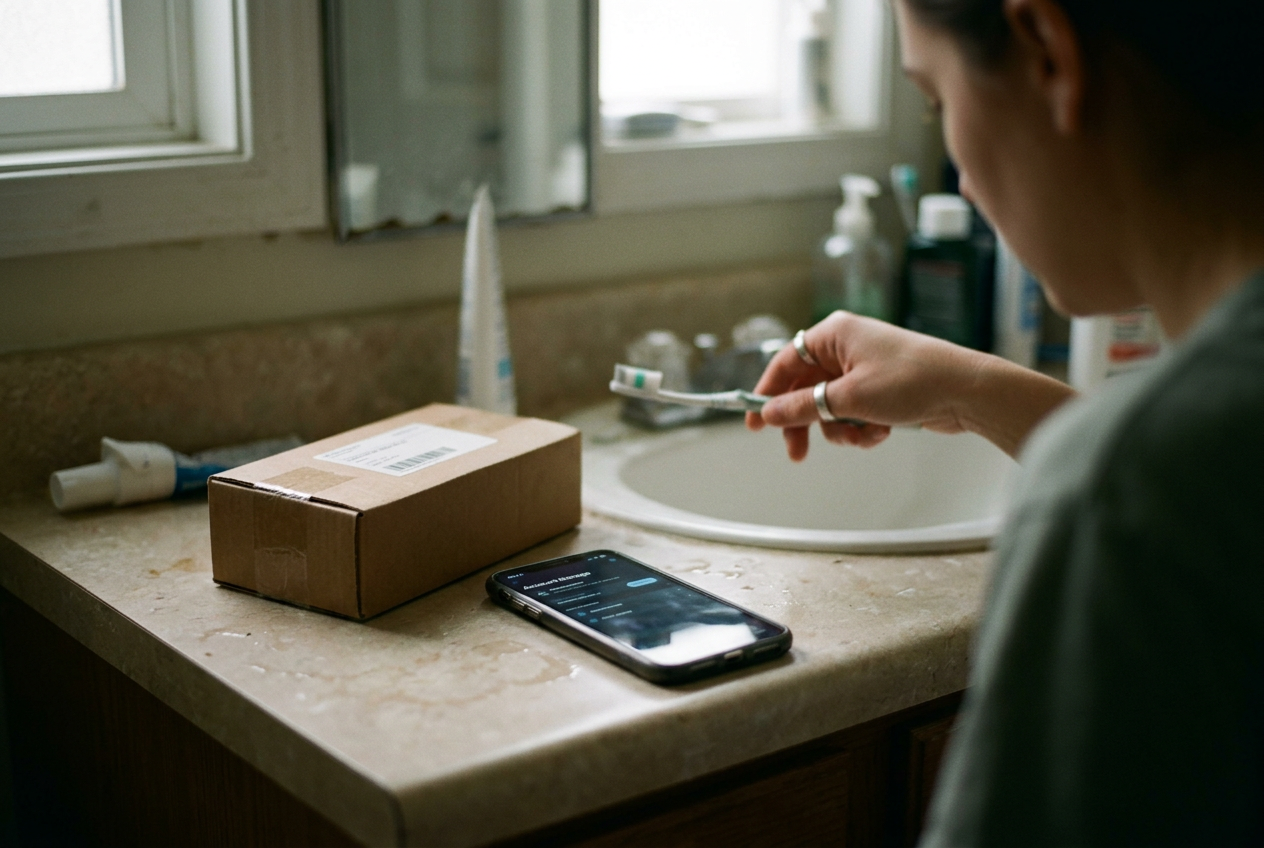
At-home STI testing is sold as a private transaction between you and a small cardboard box. Collect. Seal. Mail.
Check the portal. That tidy sequence leaves out the part where a laboratory receives a specimen it cannot use, while the company already has your money and the unanswered health question remains yours.
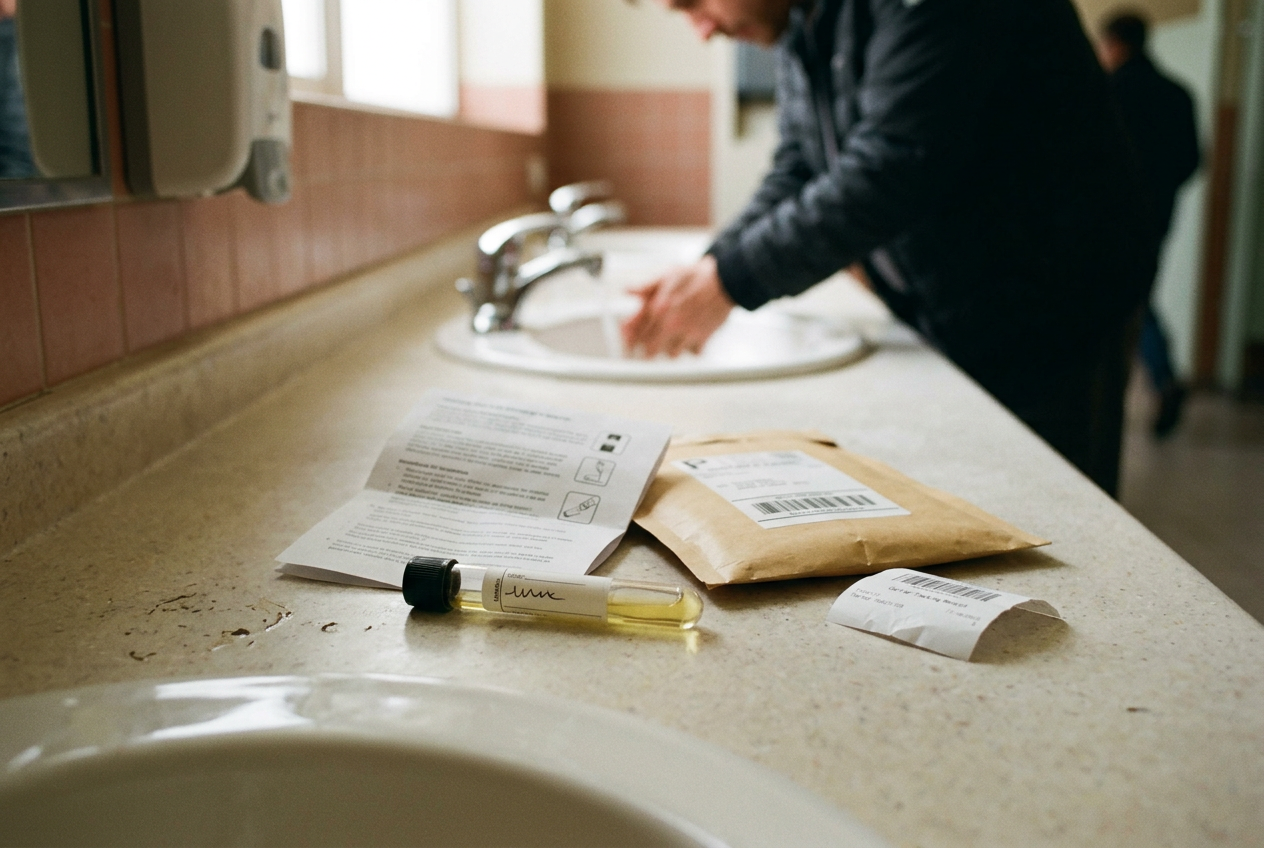
Take the clear urine tube found in many mail-in kits. It may have a narrow acceptable fill range, a screw cap and a barcode label that connects the specimen to an online account. That tube is the useful object here because every stage can look finished from the bathroom: urine collected, cap tightened, label attached, package posted. The lab can still reject it for insufficient volume, leakage, identification trouble, contamination or arrival outside its validated handling conditions.
This is reporting, not professional medical advice. A failed mail-in test should not postpone clinical care, particularly after a recent exposure, during pregnancy, when symptoms are present or when time-sensitive HIV prevention may be relevant.
Understand what the laboratory rejected
“Insufficient sample” is often used as a broad customer-facing label. Inside a laboratory, the problem may be more specific. Quantity not sufficient, sometimes shortened to QNS, means there was not enough usable material to run the ordered test. An invalid result means the laboratory attempted analysis but its quality checks did not support reporting a positive or negative answer.
A rejected specimen may never reach the testing stage at all.
These categories matter because the remedy can differ. A tube below its fill line points toward recollection. A barcode that cannot be matched to an activated order points toward an account or labeling failure. Leakage raises questions about the container, packaging and transport.
A specimen that arrived too late may expose a shipping arrangement that was never realistic for the day it entered the mail.
None of them means “negative.” The laboratory has declined to make that claim.
The distinction gets blurred by interface design. Portals built around result delivery tend to give prominent space to completed findings and much less space to operational failure, so an inconclusive status can sit beside reassuring colors, generic wellness copy or an invitation to buy another product. Ignore the mood of the screen. Save the exact status language.
Build the record before the tube leaves
The best time to prepare for a rejected sample is before collection, when every component is still dry and visible. Photograph the kit identifier, expiration information, unopened collection device and return label. Save the instructions as supplied, including any web page or app screen that states how much urine to collect, how long to swab, when to ship and what the company promises if the lab cannot test the specimen.
Activation deserves its own screenshot. Many services require the user to register a kit or specimen barcode before mailing it, creating the digital link between the order, the sample and the person expecting a result. A specimen can be physically intact and still become unusable if that link fails. Entering a code is easy.
Proving later that the system accepted it is harder.
Then read the collection instructions as laboratory requirements, not lifestyle packaging. If the kit asks for first-catch urine, it means urine collected at the beginning of the stream rather than midway through it. If the tube shows a fill range, more is not automatically better; the laboratory validated the container for a particular amount and may depend on the correct ratio between the specimen and any preservative already inside.
The same logic applies to swabs. Collection site matters. A genital sample does not automatically answer questions about a throat or rectal exposure, and a kit that offers only one collection site may be convenient precisely because it is testing less of the body. The list of infections on the box cannot tell you whether the included specimen types match your exposure.
Return to the clear tube. Photograph it after collection without exposing identifying information you do not want stored in your camera account. The image should show the fill level, closed cap and attached label. Do not reopen a sealed specimen for a better picture.
The point is a record, not interference.
Treat shipping as part of the test
The laboratory tests what arrives, not what left your bathroom.
Use the supplied packaging exactly as directed, including any absorbent material, specimen bag or rigid container. Keep the tracking number and photograph the sealed return package. Record when it entered the carrier’s system. If instructions warn against mailing before a weekend or holiday, that warning reveals an important limit: the service depends on a transport schedule the customer does not control.
Specimen stability is the period during which a sample remains suitable under validated storage and transport conditions. Once a package is delayed, exposed to conditions outside those limits or delivered after the laboratory’s accepted window, the company may have no defensible result to report. That caution is appropriate. The unresolved issue is who absorbs the failure.
The customer has paid for more than a tube. The purchase typically bundles the collection materials, logistics, laboratory work, result portal and some form of follow-up. When the sample fails before analysis, the service has saved or lost different costs depending on where the breakdown occurred, but the user has still spent time, disclosed personal information and delayed another testing route. A replacement kit is often cheaper for the company than a refund.
It is not always the better remedy for the person waiting.
Read the failure notice like a contract
When the portal reports an unprocessed sample, capture the full page and any email or text alert. Note the wording, the time the company says it received the package and whether the notice identifies a reason. Download any available report, even if it contains no result. A disappearing portal message is poor evidence during a billing dispute or clinical visit.
Compare the notice with the company’s published insufficient-sample policy. Look for four things in prose, not marketing icons: whether recollection is free, whether shipping is included, whether a refund is available and whether the company sets a deadline for requesting either. Also check whether a second failed specimen changes the remedy.
Contact support through a channel that leaves a record. State the order identifier, specimen identifier, tracking history and exact failure language. Ask whether the laboratory rejected the sample before testing or produced an invalid run, what reason code applies, and whether the available remedy is a replacement, refund or both. Do not send more medical history than the problem requires.
If support offers only a replacement, decide based on time rather than sunk cost. Another clear tube means another collection, another carrier journey and another wait for accession, the laboratory step where staff receive and log a specimen. The replacement may be reasonable when timing is not clinically important and the instructions can be followed. It is weak compensation when the first failure came from transit, unclear labeling or a product design likely to repeat itself.
Ask for the refund policy in writing if you no longer want to rely on the service. A chargeback through a card issuer may exist as a consumer option when a seller does not deliver what was promised, but eligibility depends on the transaction and issuer. That is a separate consumer dispute, not a route to diagnosis.
Do not let customer service become triage
A support agent can explain an order. They should not become the gatekeeper between you and time-sensitive care.
Symptoms, a known exposure, pregnancy, sexual assault or concern about recent HIV exposure can change how quickly evaluation matters. Contact a clinician, sexual health clinic, public health service or urgent-care setting appropriate to the situation rather than waiting for a replacement parcel. If severe pain, heavy bleeding, fever or other acute symptoms are present, seek urgent medical assessment.
Bring the failed-test record if you attend in person. The collection date, specimen type, rejection wording and infections ordered can help a clinician understand what was attempted, although the rejected tube itself provides no diagnostic evidence. Do not mail or carry the specimen to another laboratory unless instructed; laboratories use their own validated collection systems and acceptance rules.
Cost matters here. An at-home kit may have been chosen because a clinic visit felt expensive, exposed or difficult to schedule. A failure can force the user to pay twice, miss work or repeat an intimate collection with no guarantee that transport will cooperate. Companies that advertise access should be judged on whether they provide a funded, readable route out of that failure, not whether their box fits through a mail slot.
The clear tube makes this plain. Its fill lines tell the user exactly where responsibility sits during collection. The rest of the service rarely draws such a clean boundary around laboratory handling, carrier delay, platform errors and refund decisions.
What a competent remedy looks like
A good insufficient-sample process starts with an unambiguous statement that no result was obtained. It gives a specific reason where the laboratory can disclose one, separates recollection instructions from medical guidance and offers a visible way to reach a person. The company should say who pays for the replacement and return shipping, what happens after repeated failure, and how a customer can request money back.
Timing should be concrete without pretending to control the carrier. The service can state when it will dispatch a replacement, how users track it and when they should stop waiting and contact support again. It should also direct people toward clinical care when symptoms or exposure make delay risky. A coupon for another kit is not follow-up care.
That is the actual product test. Collection instructions show whether the company can obtain a sample under ideal conditions. The rejection process shows whether it understands the body on the other side of the transaction, where uncertainty has a cost and a blank result is still a result for the business.
Questions people ask
Does an insufficient at-home STI sample mean I tested negative?
No. It means the laboratory could not produce a reportable answer from the specimen. The cause may involve volume, labeling, leakage, transport or the test’s internal quality controls, but none of those outcomes establishes that an infection is absent.
Should
I accept a replacement kit or ask for a refund?
Use the timeline and the cause of failure to judge the offer. A free replacement may be useful if delay is not clinically important and collection can be repeated. A refund may be more appropriate when shipping failed, instructions were unclear or you need faster testing through a clinic.
What evidence should I save after a sample is rejected?
Keep the order and specimen identifiers, activation confirmation, collection instructions, return tracking, rejection notice and written support messages. Photographs of the tube’s fill level, attached label and sealed return package can help distinguish a collection problem from a shipping or account dispute.
Can
I wait for the replacement if I have symptoms or a recent exposure?
Do not treat a replacement shipment as clinical triage. Contact an appropriate clinician or sexual health service when symptoms, pregnancy, assault, a known exposure or concern about recent HIV exposure makes timing important. The rejected sample cannot guide treatment because it produced no usable answer.
One update a day
Today's story, in your inbox
One story each morning — no hype, no filler, no algorithm deciding for you.