Charlie Gets Bit. The Uploader Gets the TV Check.
A viral clip reaches television through a chain of owners, agents and producers. The person on screen may receive nothing, even when everyone else calls the segment a win.
August 25, 2026 · 8 min read
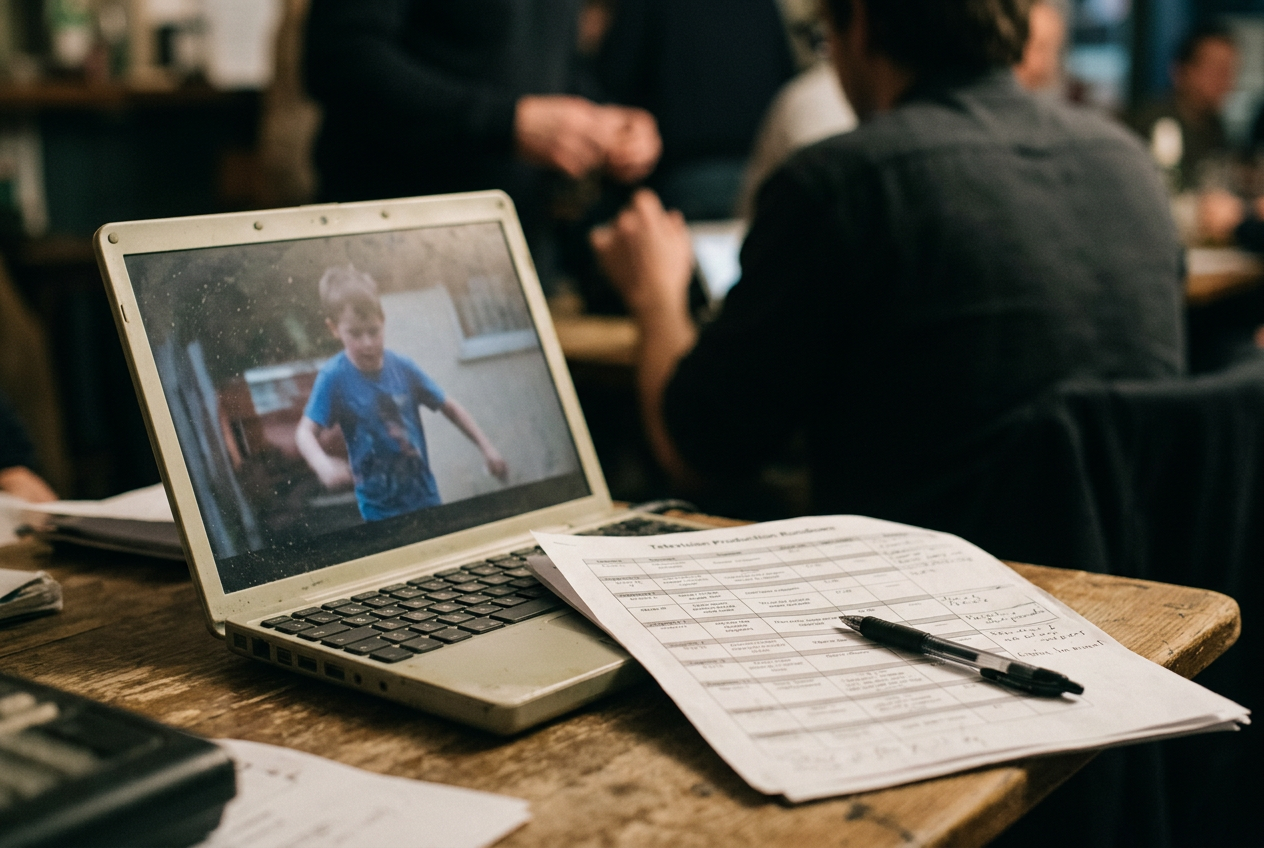
Harry Davies-Carr wore a blue T-shirt and held his baby brother Charlie on his lap. Charlie bit his finger. Their father, Howard Davies-Carr, recorded the moment and uploaded it to YouTube in 2007 so relatives could see it.
The children supplied the performance, although nobody called it that. Their father supplied the camera, the file and the upload. That distinction became the business.
“Charlie Bit My Finger” moved from a family video to an internet landmark, then through television segments, advertising opportunities and licensing arrangements. Public reporting has described substantial revenue for the family from YouTube advertising and commercial use. Viral Spiral, a company that represented popular user-generated videos, handled licensing and brand opportunities around the clip.
The blue T-shirt remained the same. The claimant changed shape. To a viewer, the asset was two children being funny. To a producer clearing footage for broadcast, the asset was a copyrighted video controlled by an adult who could sign paperwork.
That gap explains who gets paid when a viral clip becomes television.
The camera creates the first claim
Copyright generally attaches to the person who records an original video, unless employment, a contract or a later transfer puts ownership somewhere else. Appearing in the frame does not by itself make someone the copyright owner. Uploading the file does not usually hand ownership to YouTube, TikTok, Instagram or X either; platform terms instead grant the service a broad license to host, distribute and promote the material.
In the Davies-Carr case, the family unit makes the split feel academic. The father filmed his sons, managed the upload and could make decisions on their behalf. Put the same mechanics around a stranger filming a dancer, a customer recording a worker or a passenger capturing somebody’s worst five minutes, and the division becomes less cozy.
The uploader may not even own the recording. A person can repost somebody else’s clip, add a caption, accumulate millions of views and still have no clean right to license the underlying footage. Producers therefore ask for the original file, details about who filmed it and confirmation that the signer controls the copyright. A visible watermark is evidence of an account.
It is not a deed.
The person in the footage may hold other claims involving privacy, publicity or performance, depending on the context and jurisdiction. Those rights concern how someone’s identity or participation can be used; they are separate from copyright in the recording. News reporting also receives more latitude than an advertisement, which is why a broadcaster may show a disputed clip in a report about the event while a brand would demand signed releases before placing the same face beside a product.
For children, producers and agencies usually want a parent or guardian involved. The paperwork is not sentiment. It reduces the chance that the segment arrives with a rights dispute attached.
The agency turns a post into inventory
A clip agency watches public platforms, contacts uploaders and offers to represent the video. Companies including ViralHog, Newsflare, Storyful and Jukin Media have operated in this market, though their business models and contract terms differ. The pitch is administrative relief: the agency will verify ownership, market the clip, negotiate licenses and chase unauthorized uses.
The contract can grant exclusive rights, meaning one agency becomes the authorized seller for defined uses or territories. In return, the agency keeps a share of licensing revenue and passes the remainder to the owner under its reporting schedule. Exclusivity matters because a clip cannot function as dependable broadcast inventory if several people are selling overlapping permissions at different prices.
Once represented, the video enters a catalog that producers can search by subject, location, mood or news value. A morning show that needs ten seconds of a runaway lawn mower does not want to spend half a day tracing a username through repost accounts. It wants a downloadable file, a license stating where and how long the footage may run, and somebody contractually responsible for saying the rights are clear.
That convenience is what the agency sells. The video happens to contain a lawn mower.
A television producer may pay a one-time license for a particular program and set of broadcasts. Wider permissions, such as international use, promotional use or long archival availability, can raise the cost because the buyer receives more ways to exploit the clip. Fees are negotiated and are rarely visible to viewers. The producer pays the agency, the agency deducts its commission, and the remaining share goes to the party named as rights holder.
Digital enforcement can extend the arrangement after broadcast. Content ID, YouTube’s automated system for matching uploads against registered reference files, lets eligible rights holders monetize or block copies. Agencies and specialist rights managers can use such tools to collect advertising revenue from reposts that the original uploader would struggle to find manually.
The useful service and the sharp edge are the same. An owner gains enforcement capacity but gives up control, sometimes under a long or restrictive agreement that covers uses the uploader did not understand when the clip was merely a post climbing a feed. Virality creates urgency. Contracts enjoy urgency.
Television can pay, clear or take the risk
Not every television appearance produces a licensing check.
A producer can license the clip directly from the owner. The producer can clear it through an agency. A news program may also rely on fair use, a fact-specific copyright doctrine that permits some unlicensed use for purposes including reporting, criticism and commentary. There is no automatic safe number of seconds.
The analysis turns on context, amount used, transformation and market harm, among other factors.
This gives broadcasters leverage. A segment discussing the social meaning of “Charlie Bit My Finger” can argue that a short excerpt is necessary to identify and analyze the subject. A compilation show using the entire payoff because it is entertaining has a weaker story. Between those poles sits a production schedule, a legal budget and an editor who needs the package finished before air.
Large broadcasters often have standards teams and lawyers. Smaller productions may ask for permission in a direct message, offer an on-screen credit or use an embed in a web article while leaving broadcast rights unresolved. Credit identifies a source. It does not pay rent, and it does not replace permission unless the owner agrees that attribution is the bargain.
Exposure enters here as a substitute currency. A producer invites the person in the clip for an interview, covers travel or points toward the account name, while treating the footage as part of the news event rather than a separately compensated asset. News organizations commonly resist paying interview subjects because payment can compromise editorial independence. That policy does not require them to pretend a reusable video file has no commercial value, but the two categories are often collapsed when doing so is convenient.
The guest booking and the clip license are different transactions. One pays, if anyone pays, for rights in the recording. The other secures a person’s presence and cooperation. A subject can appear on television without owning the video shown behind them; an uploader can license a clip without appearing in the studio; both can watch a broadcaster sell advertisements around the segment.
The face is not the asset on the invoice
The blue T-shirt helps reveal the trick. Harry is the recognizable center of the clip, Charlie supplies the bite, and their father controls the recording. In that family, revenue could remain within one household. The licensing system does not require that happy ending.
Consider footage recorded by a bystander. The subject may endure identification, mockery and repeated broadcasts while the camera operator signs with an agency. If the use is editorial and legally defensible, the subject may have little power to demand a share. Their embarrassment creates attention, but attention is not an ownership category.
The reverse failure also occurs. A subject may build interviews, sponsorships or a following from a clip while the original filmer receives little, especially when repost accounts strip attribution and television researchers contact the most visible participant rather than the rights holder. Virality separates provenance from fame. Licensing staff then try to join them again, usually under deadline.
The party with the best claim is the party that can produce the original file, explain who recorded it, document transfers and sign warranties, which are contractual promises that the information is accurate. Agencies prefer that person because broadcasters prefer fewer unresolved risks. Moral importance does not appear in the chain unless a contract puts it there.
This is why the next viral television segment should be read as a rights package rather than a spontaneous celebration. Look for an agency watermark. Check whether the credit names a person, an account or a licensing company. Notice whether the on-screen subject is being interviewed while somebody else receives the footage credit.
Those small labels show the payment route more reliably than the presenter’s praise.
By the time Harry’s blue T-shirt appears in a television archive, the ordinary family file has become several products: a licensed excerpt, a guest story and a searchable piece of cultural history. Only one of those products begins with copyright ownership. That is the one producers know how to put on an invoice.
Questions people ask
Who owns a viral video?
The person who recorded the original footage generally starts with the copyright, unless a job, contract or transfer assigns it elsewhere. The person shown on camera does not automatically own the clip, and the account that reposted it may have no licensing rights at all.
How do television shows license viral clips?
A producer contacts the owner or searches a clip agency’s catalog, then buys permission covering specified programs, territories and uses. When an agency represents the video, it collects the fee, deducts its contractual share and remits the balance to the rights holder.
Can a television show use a viral clip without paying?
Sometimes. A broadcaster may rely on fair use for reporting, criticism or commentary, but the doctrine depends on the specific use and has no fixed safe duration. A show may also receive free permission from an uploader who accepts credit or exposure instead of money.
Does the person in the video receive a share?
Only if that person owns the recording, shares ownership, has a contract granting compensation or negotiates a separate payment. Privacy and publicity rights may affect some uses, particularly advertising, but being the face that made a clip valuable does not automatically create a claim to its licensing revenue.
One update a day
Today's story, in your inbox
One story each morning — no hype, no filler, no algorithm deciding for you.