A Viral Street Interview Can Pay Everyone but the Stranger
One answer can feed repost accounts, reaction channels, licensing agents and advertisers. The person who gave it may own none of the footage and receive none of the revenue.
August 25, 2026 · 8 min read
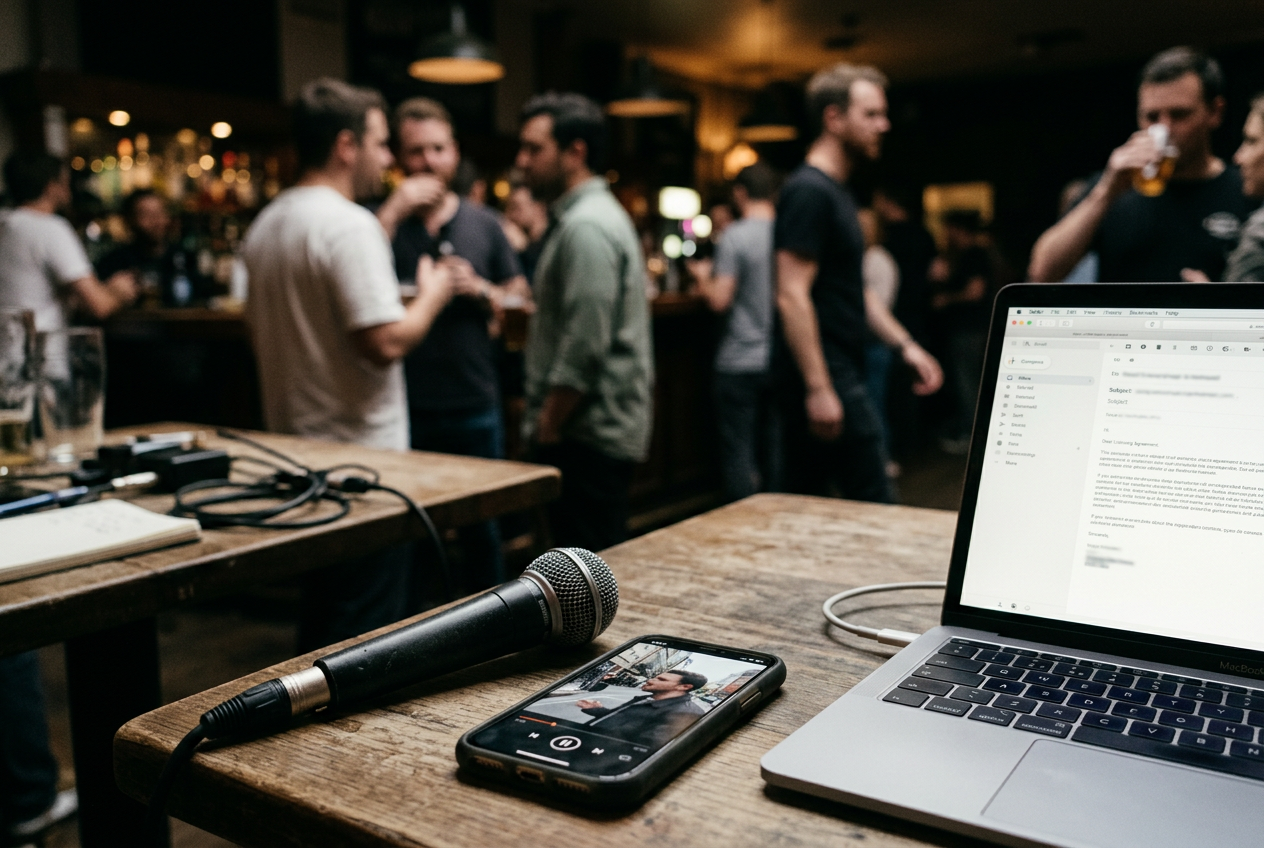
A handheld microphone turns toward Haliey Welch on a Nashville street. She gives the answer that became the “hawk tuah” clip. Tim & Dee TV posted the footage in June 2024, other accounts cut out the useful seconds, and the answer escaped its original container.
That escape looked spontaneous. The business built around it was not.
One copy became reaction material. Another entered a compilation. Commercial pages attached captions, products or their own logos. Welch’s identity became valuable enough to support merchandise and a podcast, while the original recording remained a separate asset with its own owner, permissions and possible licensing income.
This distinction is the mechanism. A viral street interview does not create one pot of money. It creates several assets that can be controlled by different people: the video file, the subject’s identity, the catchphrase, the reposted edit and the audience gathered around each upload. Platforms then pay, suppress or redirect those assets according to rules that have little interest in who produced the memorable moment.
The camera usually owns the first asset
Copyright generally attaches to an original recording when it is made. Unless a contract, employment arrangement or later assignment says otherwise, the person or company responsible for creating the video usually controls the footage. The stranger on camera does not automatically own the recording because their face, voice or answer made it popular.
A release is the document that grants permission to use someone’s likeness, voice or performance under stated conditions. Street interview producers may collect one before filming, after filming or through a recorded exchange. Some rely on visible consent and the fact that the interview happened in public. That may help establish permission to record and publish, but permission is not one universal switch.
Recording law, privacy claims and the right of publicity, which restricts unauthorized commercial exploitation of a person’s identity, vary by jurisdiction and use.
The handheld microphone in the Welch clip therefore points at two businesses. The producer may control the master video. Welch controls neither that copyright nor every copy made from it merely because she is recognizable, but her name, likeness and commercial identity can support separate claims and deals.
This is why “the viral person got a merch deal” does not settle who earned money from the clip. Merchandising a phrase or persona is not the same transaction as licensing the recording. A subject can build a lucrative business without owning the master. A producer can license the master without owning the subject’s broader career.
Both can happen while dozens of repost accounts earn attention from copies they never cleared.
A platform license is not a transfer of ownership
Uploading a video requires granting the platform a license under its terms of service. That license is typically broad and nonexclusive, meaning the platform can host, distribute and display the work without becoming its sole owner. Native tools such as TikTok stitches, YouTube Shorts remixes and Instagram remixes may let users reuse material inside the product under platform rules.
That does not mean every user received permission to download the clip, remove the watermark and post it elsewhere.
The difference is routinely flattened because enforcement is uneven. A clip can travel through screen recordings, cropped copies and subtitle-heavy edits faster than its owner can identify them. Recommendation systems reward the version that holds attention, not the version with the cleanest chain of title, meaning the documented sequence of ownership and permissions behind a media asset.
The original account may receive platform revenue if it qualifies for monetization and if that specific format, audience and territory produce eligible views. A copied version may also earn money for its uploader until a claim arrives. A reaction channel may receive advertising revenue because it added enough commentary to satisfy a platform review, even though the copyright owner could still dispute the use.
Views are not pooled. If the original earns gross platform revenue of G, the subject’s contractual share is s, and no subject agreement exists, then s is zero. Ten times more views on unauthorized copies do not make the original uploader ten times richer. They can make the clip more famous while moving the payable viewing to accounts that contributed nothing to the recording.
That is the first bad trade: reach rises while control falls.
Licensing agents turn the clip into inventory
Viral video licensing companies such as Jukin Media, ViralHog and Newsflare built businesses around finding popular footage, signing rights holders and selling authorized use to publishers, broadcasters and brands. The agent may also monitor copies, submit copyright claims and collect revenue, depending on the agreement and platform.
The arithmetic is less mystical than the pitch. If a buyer pays license fee L and the agent’s contractual commission is c, the owner receives L × (1 − c), before any taxes or other contractual deductions. The subject receives a share only if a release, participation agreement or later deal provides one. Fame is not a royalty category.
Exclusivity matters. An exclusive agent may control licensing within the contracted scope, while a nonexclusive arrangement leaves the owner able to make other deals. Rights may also be divided by territory, medium, duration and purpose. A television compilation needs one package.
A brand placing the clip inside an advertisement presents a different use, with greater reason to clear the person’s likeness as well as the recording.
Anyone selling a course that describes licensing as passive income has skipped the labor. Someone must verify ownership, preserve the original file, document permissions, answer buyers, review proposed uses, find infringements and contest platforms that frequently treat the newest upload as if it were the source. The clip may be seven seconds. The paperwork is not.
For the “hawk tuah” footage, the valuable unit was the short answer into the microphone, not necessarily the surrounding interview. Every crop made that unit easier to reuse and harder for viewers to trace. The cleaner the meme became, the less visible its ownership history was.
Reaction is a legal position, not a visual style
Reaction channels often rely on fair use, a US doctrine that can permit unlicensed use after courts weigh factors including purpose, amount used and market harm. Commentary, criticism and transformation can support the argument. A face in the corner nodding while the complete clip plays is not a magic exemption.
Compilations have a similar problem. A licensed compilation pays or secures permission. An unlicensed one may claim that selection, editing or commentary transformed the source material, but stitching together complete viral clips mainly because they are entertaining can substitute for the licensing market those clips already have.
Platforms do not issue final fair-use judgments. They operate private enforcement systems. YouTube’s Content ID, for example, matches uploaded material against reference files supplied by eligible rights holders; a match can lead to tracking, blocking or monetization for the claimant. A disputed claim may be released, upheld or escalated.
Meta has Rights Manager. Other platforms offer combinations of forms, detection and takedown tools, often with less transparency than creators need.
Background music can add another claimant. The street interviewer may own the video but not the song audible outside a bar. The subject may control commercial uses of their likeness but not the recording. An editor may own new commentary without gaining ownership of the embedded clip.
Viral video is sold as one object while behaving like a stack of overlapping permissions.
Commercial pages take the weakest shortcut
A meme page reposting the clip for audience growth already captures value, even without direct platform payments. It acquires followers, raises its rate for sponsored posts and builds a page that can later promote products. The clip’s owner and subject subsidize that growth with footage and personality.
A commercial page has more exposure when it uses the clip to sell something. Copyright clearance addresses the recording. Likeness permission addresses the apparent endorsement or commercial exploitation of the person shown. Music, logos and location-specific material may require further review.
Cropping out the original watermark resolves none of this; it mainly removes attribution evidence.
Yet the incentive favors posting first. The expected return is the revenue or audience gained before removal, minus the chance of enforcement and its cost. Small rights holders face the inverse calculation: expected recovery minus agent commission, administrative time and the possibility that a platform rejects the claim. When the likely recovery is low, infringement becomes rational for the reposter.
The stranger with the good answer sits furthest from every dashboard. They may not know which account recorded them, what release governs the upload, whether an agency licensed it or which commercial pages are earning from their face. By the time public attention creates negotiating power, the footage has already become inventory elsewhere.
Welch managed to turn recognition into businesses beyond the original clip. Most street interview subjects do not. Their answer supplies the product, while ownership follows the camera and revenue follows the upload account.
The useful contract happens before virality
A fairer model would state the commercial terms while the microphone is still in view. The producer can identify the account, explain where the footage may appear and specify whether the subject receives a flat payment, a share of licensing receipts or nothing. A short written release can distinguish editorial posting from paid advertising and third-party licensing.
Revenue sharing adds accounting work, which is precisely why producers avoid promising it. The subject needs a definition of gross or net receipts, a reporting schedule and a way to verify statements. Without those terms, “we will take care of you if it goes viral” is sentiment, not an obligation.
The alternative costs the producer minutes on the street and ongoing administration later. That is real friction. It is also small compared with the value of having clean permissions when a broadcaster, agency or advertiser wants the clip. Good paperwork is not generosity.
It makes the asset easier to sell while giving the person who created its memorable substance a stated position in the deal.
The microphone points toward the stranger. The contract usually points back toward the camera.
Questions people ask
Who owns a viral street interview clip?
The person or company that created the recording usually owns its copyright unless employment terms, an assignment or another contract changes that. The interview subject may have separate rights involving privacy, publicity or commercial use of their likeness, but appearing in the video does not automatically make them owner of the footage.
Do people in viral street interviews get paid?
Only if payment is promised through a fee, revenue share, licensing participation or later agreement. Platform revenue normally goes to the eligible account that uploaded the monetized video. A subject can become famous, launch merchandise or make separate sponsorship deals while receiving no share from the original clip’s views or licenses.
Can reaction channels use street interview footage for free?
They can argue fair use when the footage supports real criticism, commentary or another transformative purpose, but no reaction layout guarantees protection. Using the whole clip with minimal interruption can still draw claims. Platforms may temporarily decide who monetizes or hosts the upload, while courts retain the final authority over fair use.
Why do commercial pages repost clips without permission?
Enforcement often arrives after the page has captured attention, followers or sales. The owner must locate the copy, prove rights and pursue a claim, while the reposter bears little upfront cost. That imbalance makes unauthorized reuse profitable even when the legal position is weak, especially for short clips whose subjects lack contracts or representation.
One update a day
Today's story, in your inbox
One story each morning — no hype, no filler, no algorithm deciding for you.