Naloxone Belongs in Your Bag, Not a Parked Car
A label-based stress test of common ways to carry Narcan through a New Jersey summer. Heat matters, but the daily bag switch may be the bigger failure point.
August 11, 2026 · 7 min read
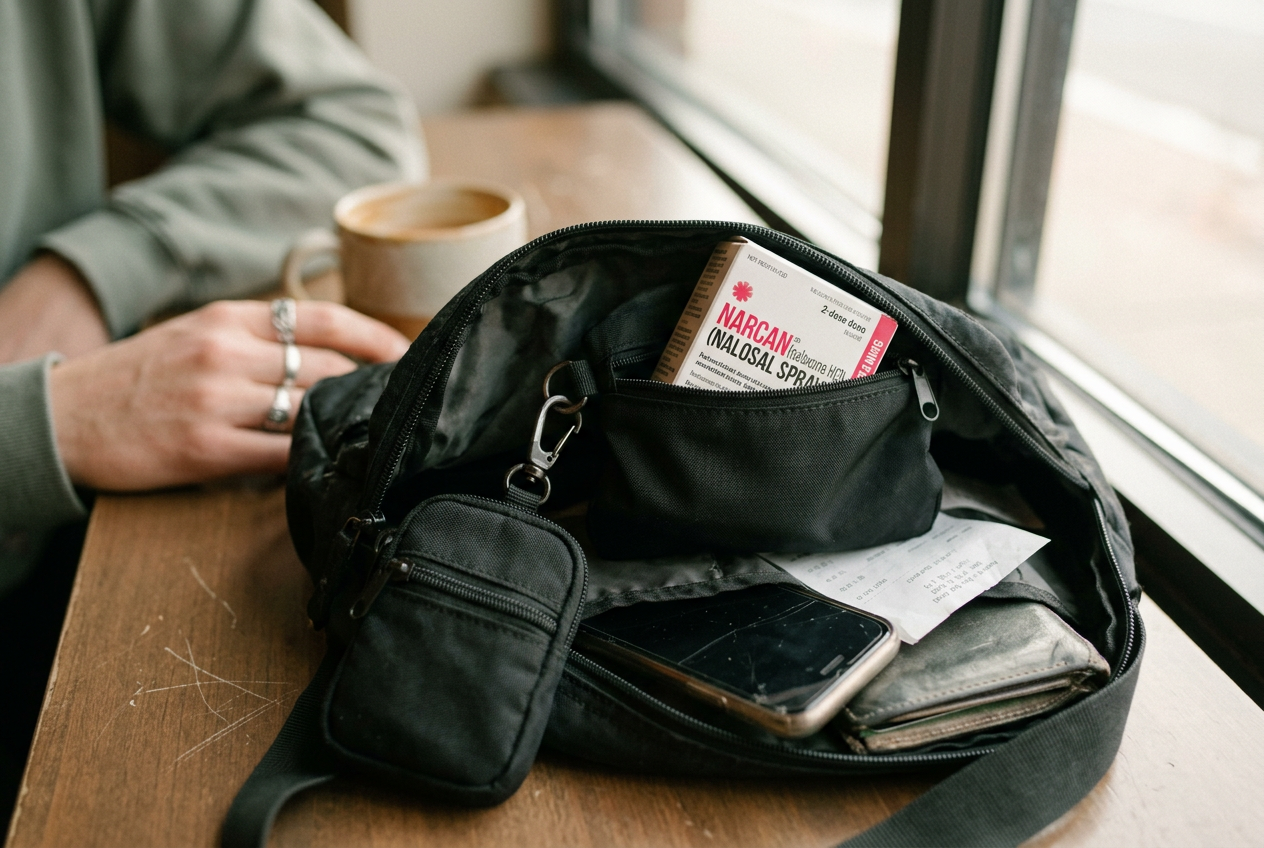
The object here is one sealed two-dose carton of NARCAN 4 mg nasal spray, tucked inside a black nylon zip pouch and clipped to the key leash of a crossbody bag. Nothing tactical. Nothing refrigerated. The pouch holds the medication, a pair of gloves and no elaborate overdose-response theater.
That setup matters because naloxone only works as rescue medication when somebody can reach it, recognize it and administer it. The perfect storage location is useless if it is across town. The most accessible location can still fail if it is a glove compartment baking through a New Jersey afternoon.
This is a failure-mode test, meaning an assessment of how an ordinary setup is likely to break, rather than a laboratory test of the drug itself. The black pouch goes up against three pressures: summer heat, physical damage and the small acts of forgetting that structure daily life. Manufacturer storage instructions set the boundaries. They do not certify any particular bag or promise that medication exposed outside those boundaries remains effective.
This is reporting and harm-reduction information, not medical or pharmaceutical advice. Product instructions differ, so check the label for the naloxone you carry.
Start with the carton
Emergent BioSolutions’ instructions for NARCAN Nasal Spray say to store it at room temperature from 68°F to 77°F, with permitted excursions from 41°F to 104°F. An excursion is a temporary movement outside the preferred range, not a new everyday storage target. The company also says not to freeze the product or expose it to excessive heat above 104°F, to protect it from light and to keep it in the blister and cartons provided until use.
That language makes the first carrying decision easy. Do not strip a nasal-spray device from its blister to save space. The packaging is part of the storage system. It blocks light, keeps grime away from the nozzle and gives the plastic device some structure when keys, chargers and metal water bottles begin moving around the bag.
The carton also carries instructions that a bystander may need under stress. Familiarity helps, but an overdose is not the moment to discover that the tiny loose object at the bottom of a tote is single-use, or that a second dose requires a second device. Each NARCAN device contains one dose and cannot be reused.
The branded carton is bulky compared with the spray inside it. That is annoying. It is still less annoying than a damaged blister whose history nobody can reconstruct.
Heat is the hard boundary
A crossbody bag worn into a store, train or apartment generally moves through the same environments as its owner. That does not guarantee room-temperature storage, especially during an outdoor shift or a long day at the shore, but it avoids the most obvious summer heat trap: leaving medication inside a parked vehicle.
A car is not storage. Sunlight can drive its interior beyond the outdoor temperature, and the center console does not become climate-controlled because it has a lid. The glove compartment has the same problem. Both methods score well for remembering where the naloxone is, then fail when the person leaves the car or the cabin heats beyond the product’s labeled limit.
The black nylon pouch adds no cooling. An insulated pouch adds no cooling either unless it contains a safe cooling source, and improvising with ice creates another problem because NARCAN’s instructions also say not to freeze it. A soft case can shade the carton and slow short temperature changes, but it cannot hold medication within a specified range through hours in a hot vehicle. Insulation delays heat transfer.
It does not cancel summer.
This is where manufacturer language can mislead without saying anything false. “Excursions permitted” sounds forgiving, and it is more forgiving than a rigid 68°F cutoff, but 104°F remains a ceiling in the labeled instructions. The range is not permission to store the carton wherever it happens to fit.
For the black-pouch setup, the practical rule is that the bag leaves the car when the person does. If that habit is unrealistic, the carrying method has failed even though the pouch itself is fine.
Crushing is a packaging problem first
Loose carry looks efficient. One spray slides into a jeans pocket, jacket pocket or wallet-sized compartment with almost no friction. It also separates the device from the carton, puts pressure directly on the blister and makes the package easier to puncture, bend or discard by mistake.
The manufacturer does not publish a consumer crush rating for the carton. There is no honest basis for claiming that a particular pouch makes it crush-proof. The useful distinction is more modest: a sealed blister inside its carton has layers between the device and ordinary bag contents, while a bare device does not.
A rigid case can add protection, but it has costs in bulk and attention. If the case looks like a hard-shell electronics box, somebody responding to an overdose may not know what is inside. If opening it requires a zipper, latch and inner strap, each layer consumes time while the medication remains technically pristine and practically unavailable.
The black nylon pouch is a compromise. It keeps the two-dose carton together, prevents direct contact with keys and can be opened with one pull. Clipping it high in the crossbody keeps it from settling beneath a bottle. The original carton still does the important work.
Inspecting the package periodically is more useful than trusting the pouch forever. Check whether the carton is soaked, torn or badly compressed, whether the blister appears open, and whether the expiration date has passed. Appearance cannot reveal whether heat changed the medication, so a spray that looks normal does not erase a known temperature problem.
Forgetfulness beats expensive gear
Heat gets the warning label. Forgetfulness gets the rescue medication left in yesterday’s tote.
The weakest carrying method is often a good bag used inconsistently. A backpack may protect the carton from crushing and keep it out of direct sun, but it fails on the evening when the backpack stays home. A coat pocket works until the coat changes. A bathroom cabinet preserves a stable location for the household while doing nothing for the person outside it.
The crossbody works only because it is the default bag. Clipping the black pouch to its key leash makes the medication visible whenever the keys move, which turns a vague intention to carry naloxone into a repeated cue. This is less glamorous than a temperature-monitoring gadget. It also targets a failure that no premium case can fix.
People who rotate bags can move the naloxone with another object they refuse to leave home without, or keep more than one kit if access and cost allow. Duplication is the strongest answer to forgetting because it removes the transfer step, but it shifts the burden onto the carrier: another kit must be obtained, checked and replaced when needed. A public-health system that relies on individual preparedness often makes individuals pay for redundancy in money, time or both.
A prominent label on the pouch helps other people find it. “NALOXONE” is better than a symbol only the owner understands. Tell regular companions where it is. Rescue medication hidden for privacy can remain hidden during the emergency it was meant to address.
The setup that endures
The carrying method that survives this paper stress test is ordinary: keep the two NARCAN devices sealed in their original blister and carton, place that carton in a clearly marked protective pouch, and attach the pouch inside the bag that reliably stays with you. Keep the bag out of parked vehicles and away from direct, sustained heat.
A loose pocket loses on packaging. A glove compartment loses on heat and reach. A rotating collection of totes loses on memory. The clipped black pouch does not defeat New Jersey weather, but it ties the medication to a routine while preserving the manufacturer’s packaging, which is more than most carrying accessories can honestly claim.
If the carton has been exposed above the labeled limit, frozen, opened or seriously damaged, the packaging cannot tell you whether the dose remains dependable. Contact the manufacturer or a pharmacist about replacement rather than running a home experiment. Do not spray a dose into the air to test it. Each device contains one rescue dose.
During a suspected opioid overdose, the NARCAN instructions say to give a dose, call 911 and provide another dose with a new device every two to three minutes if the person does not respond or responds and then relapses. Stay with the person until emergency help arrives. Storage planning matters before that moment. Once the moment begins, use the available rescue medication according to its instructions and get help.
Questions people ask
Can I keep Narcan in my car during summer?
NARCAN’s instructions permit temporary temperature excursions up to 104°F and warn against excessive heat above that point. A parked car can become much hotter than the surrounding air, so a glove compartment or console is not reliable summer storage. Carry the carton with you instead.
Should
I remove the nasal spray from its box to save space?
The manufacturer says to keep NARCAN in the blister and cartons provided until use. Removing it saves room but gives up protection from light, dirt and direct pressure, while also separating the device from instructions that another person may need during an emergency.
Does an insulated pouch keep naloxone cool enough?
An insulated pouch can slow temperature change, but it does not refrigerate its contents or guarantee the manufacturer’s storage range. Adding ice without product-specific guidance risks freezing or moisture damage. The dependable move is to keep the pouch with you rather than leaving it in a hot vehicle.
How often should I check the naloxone I carry?
Check it whenever you move it between bags and periodically while confirming that the carton is sealed, readable and within its expiration date. Replace packaging that is open or badly damaged, and seek manufacturer or pharmacist guidance after known exposure outside the labeled storage conditions.
One update a day
Today's story, in your inbox
One story each morning — no hype, no filler, no algorithm deciding for you.