‘Old Town Road’ Went Viral Before Its Sample Was Cleared
The banjo-like loop beneath “Old Town Road” shows how a cheap beat can become an expensive rights negotiation once millions of listeners remove the option to walk away.
September 5, 2026 · 8 min read
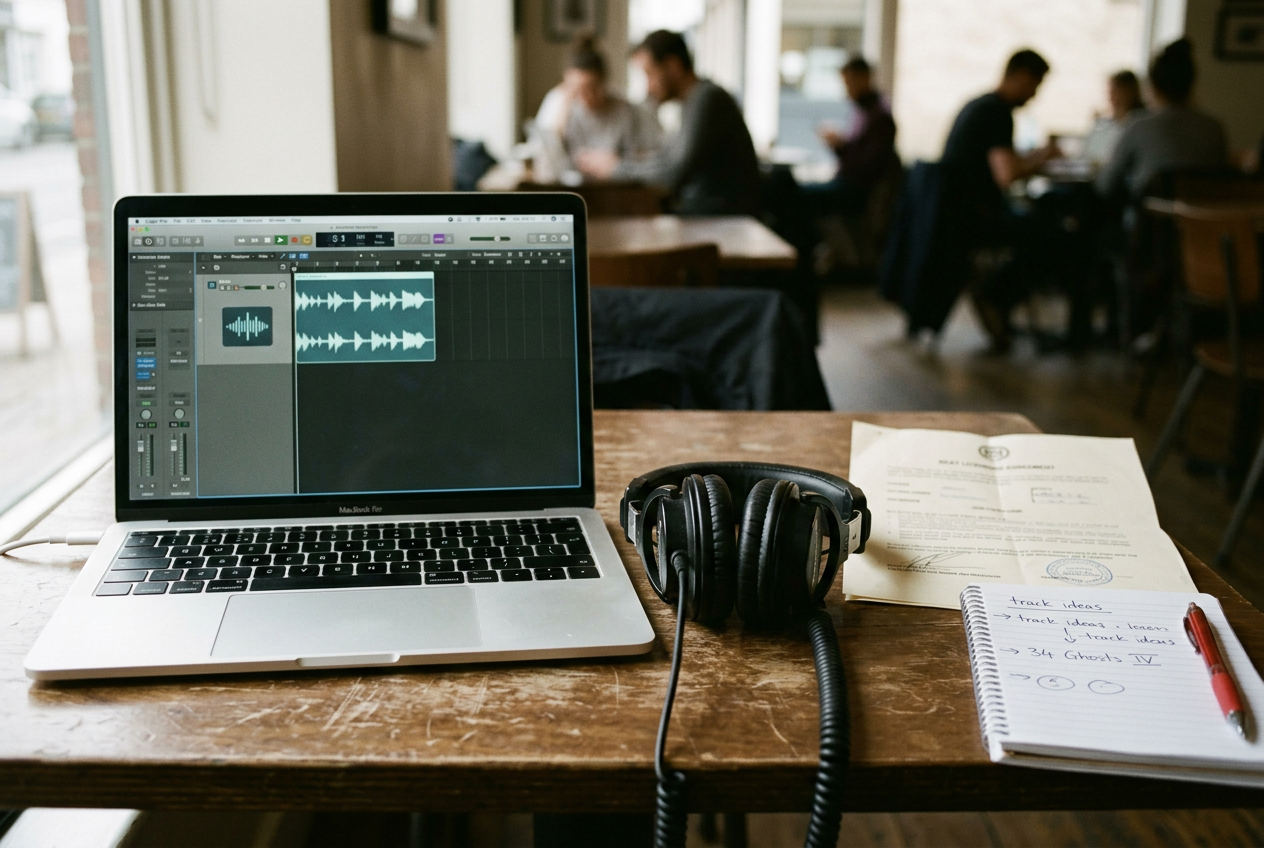
The important sound in “Old Town Road” arrives before Lil Nas X does: a clipped, banjo-like figure taken from “34 Ghosts IV,” an instrumental by Nine Inch Nails. Producer YoungKio placed that fragment beneath trap drums, Lil Nas X bought the resulting beat through BeatStars, and the track escaped into short-form video before the rights paperwork caught up.
That sequence matters more than the familiar story about a genre argument, a cowboy meme or Billboard chart classification. “Old Town Road” demonstrated a newer release order for underground music: publish first, let users turn the song into a format, then bring in lawyers once the audience has supplied proof of demand.
The song survived. Trent Reznor and Atticus Ross approved the sample and received writing credit, according to public reporting. A less cooperative owner could have blocked the release, demanded more money or forced the recording to change after listeners already knew every second of it.
Virality did not clear the Nine Inch Nails loop. It converted a manageable licensing task into a negotiation conducted beside a running cash register.
Two rights live inside one loop
A commercially released recording usually contains two relevant copyrights. The composition covers the underlying music and lyrics; the master covers the particular recorded performance. Sampling “34 Ghosts IV” meant using part of the Nine Inch Nails master while also reproducing part of its composition, so commercial clearance potentially required permission from the owners controlling both.
This is where bedroom-scale production meets paperwork built for an industry with departments. A producer can download a file, cut several seconds from it and upload a finished beat before lunch. The licenses may require publishers, record companies, administrators, lawyers and several rounds of approval. Software made sampling immediate.
Copyright did not follow.
A compulsory mechanical license, which lets someone release a conventional cover after meeting statutory requirements, does not grant permission to copy audio from another recording. There is no automatic sample license at a posted government rate. The owner may say yes, no or yes on terms that absorb much of the new song’s economics.
The “34 Ghosts IV” fragment is especially instructive because Nine Inch Nails released Ghosts I–IV under a Creative Commons license allowing certain reuse but restricting commercial use. That made experimentation easier. It did not hand every future hit a free commercial sample clearance. Once “Old Town Road” became a business, separate permission still mattered.
The beat lease does not erase the sample
Beat marketplaces made production searchable and cheap. They also separated the person buying an instrumental from the decisions made inside it.
Public accounts place the initial “Old Town Road” beat purchase at about $30. That bought Lil Nas X access under the lease terms offered through BeatStars; it did not make an embedded third-party recording disappear. If a producer samples someone else’s work without permission, a contract between producer and artist cannot bind the absent copyright owner.
Many beat agreements require producers to disclose samples, promise that they control the material or shift responsibility through an indemnity clause, meaning one party agrees to cover certain losses suffered by another. Those clauses decide who may chase whom after a claim. They do not stop the claimant at the door.
The artist is exposed because the released track bears the artist’s name. The distributor is exposed because it delivers the file. A label considering a deal will inspect the rights chain, which is the paper trail showing who owns each contribution and who authorized its use. If that chain breaks at the banjo loop, the label can delay the release, hold money back or make clearance a condition of signing.
The producer may face contractual liability later. The urgent call still lands with whoever needs the song to remain online today.
Attention changes the price
Before release, the artist has options. The sample can be replaced, replayed, cut or abandoned. A rights owner evaluating a modest underground track also knows there may be little money to collect, which can support a modest license or no negotiation at all.
After virality, those options become expensive. Replacing the “34 Ghosts IV” figure would have altered the part listeners recognized, while removing the original upload could have broken links, split streaming totals and interrupted the short-form videos carrying the song. Even a technically close replay would address only the master right; if it reproduced the underlying composition, publishing permission could still be required.
The sample owner can now see leverage in public. View counts, chart movement, label interest, press coverage and fan uploads establish that the artist has something worth protecting, while every extra day adds revenue and promotional momentum that can be interrupted. Negotiations may cover an upfront fee, a share of publishing, royalties from the master, formal credit or some combination set by private contract.
Success can give the artist leverage too. A rights owner may prefer participation in a hit over forcing it offline, and a label can supply lawyers, relationships and money that an unknown artist lacked. “Old Town Road” reached an agreement because the parties found terms they could accept. That is an outcome, not a rule.
The central asymmetry remains. The artist needs permission for the existing recording; the owner does not need the artist’s consent to keep saying no.
The hold arrives between upload and payment
An uncleared sample does not trigger one universal red warning light. Problems can surface at several points, usually after different companies have already started treating the track as inventory.
A distributor may pause delivery while asking for licenses or other proof of rights. A label may freeze a planned release during due diligence, its review of ownership and contractual risk. A platform can remove a track after receiving a copyright complaint under its procedures, while automated matching systems may divert or block monetization when uploaded audio resembles a registered recording.
Money can continue accumulating without reaching the artist. Distributors and labels commonly reserve the contractual power to withhold royalties connected to a dispute, anticipated refund or legal claim. Platform revenue may be redirected to a claimant. The artist can therefore possess a viral song, visible demand and no dependable access to the income those signals appear to promise.
Short-form video makes the timing worse because the marketing event often starts before the commercial release operation is ready. A sped-up edit, dance format or joke can circulate through user uploads, sending listeners toward a recording whose credits, split sheets and sample permissions remain unfinished. A split sheet records how songwriters divide ownership; it is mundane until six people remember the studio session differently.
The platform rewards immediate repetition. Clearance rewards patience before publication. Guess which timetable the aspiring artist sees on the screen.
Virality becomes evidence
Once a sample-driven track is public, every successful clip documents the scale of the potential claim. The same analytics used to attract a label can show a rights owner how urgently the artist needs a deal. A viral chart is an audience report and a bargaining file.
Labels can still benefit from this arrangement. They avoid funding many early failures because independent artists test songs with their own labor, their own accounts and often their own legal exposure. When one record breaks through, the label can offer distribution, marketing and clearance resources in exchange for a stake in an asset whose demand has already been demonstrated.
Platforms benefit earlier. They receive the clips, watch time and advertising inventory while ownership remains someone else’s problem. Beat marketplaces earn from access to production tools and licenses, though the buyer may not have the expertise to distinguish a producer-owned melody from a commercially restricted sample buried inside the same file.
The artist pays for the gap. Payment may mean a reduced publishing share, an upfront clearance cost, delayed royalties or the loss of a release window. It also means time spent reconstructing who touched the track after the public has started treating it as complete.
The “34 Ghosts IV” loop stayed in “Old Town Road.” That clean ending can obscure the mechanism. Its owners had the right to negotiate after the song had become difficult to alter, and the artist’s success supplied both the money and the urgency required to close the deal.
The cheaper order is less exciting
The safer release order is procedural: identify every borrowed recording, locate the owners, request permission, negotiate the terms, document the writing splits and release only when the chain is intact. It costs time before anyone knows whether the song will earn attention. For an independent artist releasing quickly, that can feel like paying to insure a room no one has entered.
Yet post-viral clearance charges for certainty after uncertainty has disappeared. The owner knows the sample mattered enough to survive into the hit. The label knows a takedown could damage its investment. The artist knows replacing the recognizable fragment may ruin the recording that listeners selected.
A replay, an original interpolation or a cleared sample library can reduce some risk, though each option changes the sound and none excuses copying a protected composition without permission. The relevant alternative for “Old Town Road” was not a generic banjo. It was a new opening figure without the exact grain and phrasing of “34 Ghosts IV,” chosen before that figure became attached to millions of people’s idea of the song.
That decision would have been cheap early. Once the loop went viral, cheap had left the room.
Questions people ask
Can a distributor remove a song over an uncleared sample?
Yes. A distributor or platform may pause delivery, remove a release after a complaint, request proof of licensing or withhold related revenue under its terms. The precise response depends on the company and the claim, but an upload remaining live is not evidence that its samples were cleared.
Does crediting the original artist make a sample legal?
No. A credit identifies a source or recognizes negotiated ownership; it does not replace permission. Commercial sampling may require agreements covering both the underlying composition and the copied master recording, with terms set by the owners rather than by a standard attribution rule.
Why does a viral sample become more expensive to clear?
Virality proves the song has value while making delay or replacement more damaging. The rights owner can see the audience, revenue potential and label interest, and knows the artist may need permission quickly to preserve momentum. That does not guarantee an extreme demand, but it moves the negotiation away from a speculative release.
Who pays when a leased beat contains an uncleared sample?
The artist or label may pay first to keep the release moving, then rely on contracts to pursue the producer or allocate the loss. A beat lease can shift responsibility between its signers, but it cannot authorize material owned by a third party who never agreed to the lease.
One update a day
Today's story, in your inbox
One story each morning — no hype, no filler, no algorithm deciding for you.