That “Sample Video” in the Creator Brief Is Unpaid Work
Brands increasingly ask creators to develop campaign-ready material before offering a contract. The trick is to decline the free asset without withdrawing from consideration.
August 27, 2026 · 7 min read
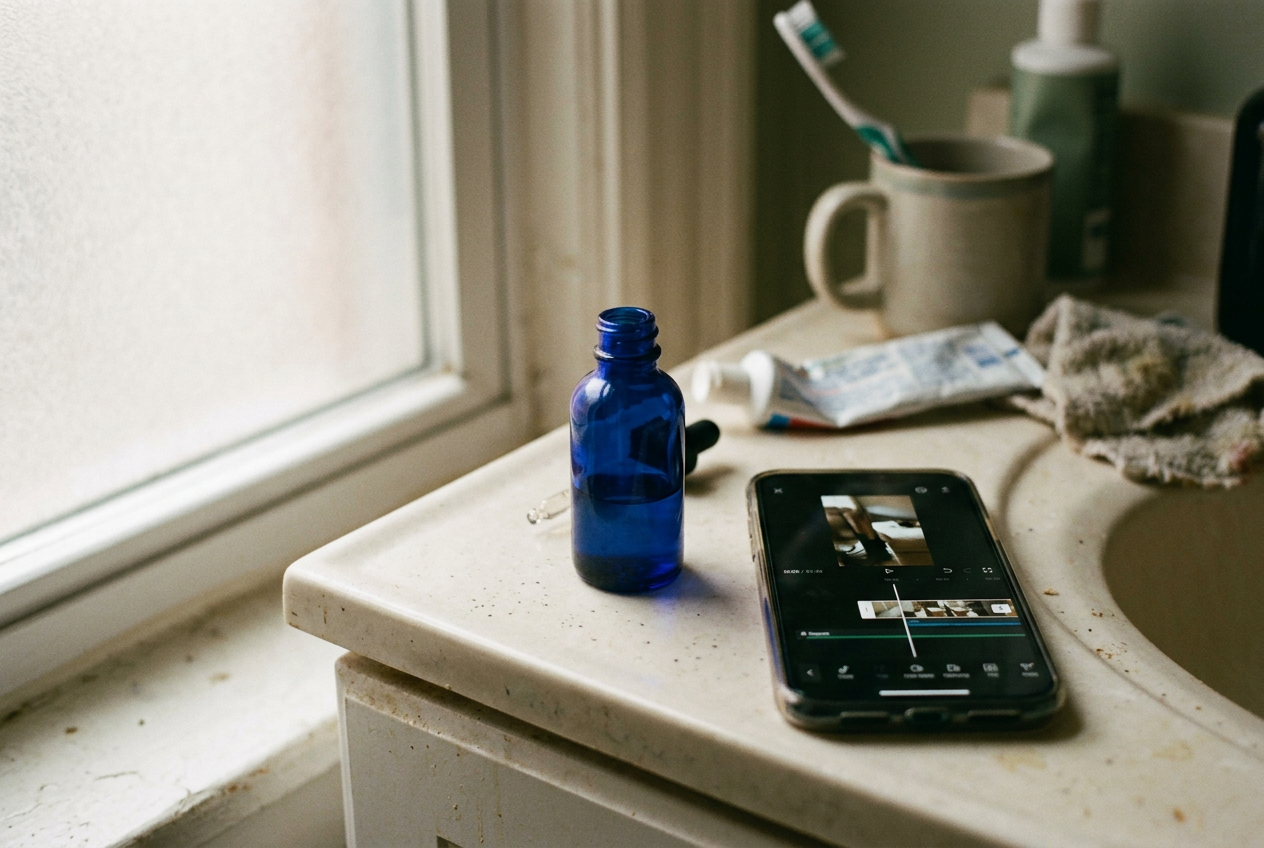
Start with a cobalt-blue serum bottle.
The representative brief says the brand wants a short vertical video. Before discussing a fee or sending a contract, it asks the creator to propose several opening hooks, write a full script, and film a rough sample with the product centered beside a bathroom mirror. The footage will not be posted, the brief explains. It is only for evaluation.
That last sentence is doing serious payroll work.
The creator still has to study the brand’s feed, identify which claims can safely be made about the serum, write copy, clear a corner of the bathroom, set the light, record multiple takes, add captions, export the file, and deliver it. Calling the result a sample does not return the afternoon. It only makes the afternoon easier to exclude from the campaign budget.
The serum bottle is an illustrative composite, drawn from a familiar structure in publicly posted creator calls rather than a claim about one named campaign. Its details matter because the extraction hides inside details. A request to discuss your audience is a pitch. A request to make the ad is production.
The deliverable is hiding in the audition
Speculative labor, often shortened to spec work, means producing work in hopes of being hired rather than under an agreement to be paid. The practice predates influencer marketing. AIGA, the professional association for design, has long opposed contests and pitches that require finished creative because clients receive a field of options while participants absorb the cost.
Creator campaigns make the same arrangement look casual. A brand manager or agency can invite a wide pool of people to interpret one brief, then compare hooks, visual setups, scripts, and on-camera delivery without commissioning any of them. Even if nobody directly reposts a rejected sample, the buyer has learned which approaches are available, which claims sound natural, and which opening line makes the serum feel less like a bottle of expensive glue.
That information has value. The candidates funded it.
The mechanism works because creator labor combines casting and production. A conventional performer may audition with provided material. A creator is often asked to invent the material, perform it, furnish the location, operate the camera, and demonstrate an edit. The brand calls this checking fit, but it is also testing a miniature production company at the owner’s expense.
Platforms deepen the imbalance. Creators depend on recurring brand access, while agencies can replace one applicant with another pulled from a database, marketplace, or crowded inbox. Nobody needs to threaten the creator. The possibility of being labeled difficult does the administrative work.
A legitimate pitch stops before production
Brands need a way to choose collaborators. A portfolio, prior sponsored posts, audience information, availability, and a conversation about tone can establish whether someone can do the job. A treatment, meaning a short document describing the proposed approach, may also be reasonable when it stays broad and does not hand over campaign-ready copy.
The line is not whether the brand asks for effort. All pitching takes effort. The line is whether the requested material can reduce the work the buyer would otherwise pay someone to perform after selection.
Return to the serum. Describing a video in which the bottle moves from a cluttered shelf to a clean close-up gives the brand a direction. Writing the exact voiceover, shot order, on-screen captions, and alternate hooks gives it a production plan. Filming that plan gives it an asset.
The label changes from pitch to audition to test, yet the work keeps becoming more useful.
A paid test is different. The brand sets a limited scope, states what it will pay, restricts use, and explains what happens if the creator gets the larger campaign. The fee may be smaller than the full commission because the deliverable is narrower. It is still a purchase rather than a lottery ticket.
SAG-AFTRA’s public Influencer Agreement offers one visible model for treating influencer production as contracted labor, with compensation and usage addressed in writing. It does not cover every creator or settle every negotiation. It does make the supposed informality of a free sample look less inevitable.
Count what the brand can keep
The cleanest test is usefulness. Look at every item requested before the contract and ask whether the campaign team can retain knowledge, language, or footage that advances the project.
A full script can circulate internally even if your name disappears from it. A concept deck can shape the final creative without any frame being copied. Raw footage gives the buyer editing options. Usage, the permission governing where and how content may appear, matters here because a vague submission release can turn an evaluation file into material the brand claims permission to display.
Copyright is an incomplete shield. The U.S. Copyright Office distinguishes an unprotected idea from the original expression of that idea once it is fixed in a script or recording.
That may protect a particular text or video, but it does not make a general concept easy to fence off, and enforcing rights can demand more time and money than the lost job was worth. This is a negotiating framework, not legal advice. The practical defense comes earlier: do not deliver a finished object under unclear terms.
The serum brief may also contain exclusivity, a restriction on working with competing brands, before it contains compensation. That sequence is particularly generous to the buyer. The creator is being asked to reserve part of the market while the brand reserves the right to choose somebody else.
Decline the asset, not the opportunity
A refusal does not need to become a manifesto about labor history. Keep it procedural.
Confirm interest in the campaign. State that custom scripts and filmed samples begin after scope, compensation, and usage are agreed. Then offer material that already exists: a relevant portfolio link, an earlier video demonstrating delivery style, or a brief description of the proposed direction that stops before executable copy.
For the serum bottle, that means you can explain that the video would open on the texture and move into a routine-based demonstration. You do not need to supply the opening sentence, caption sequence, shot map, or bathroom footage. The brand gets evidence that you understood the assignment. It does not get the assignment completed.
If the team says a new sample is mandatory, propose a paid test with a narrow deliverable and evaluation-only use. A watermark can discourage casual reuse, though it cannot protect the underlying concept. Lower-resolution footage also limits utility, but neither tactic repairs an agreement that grants broad rights. The document matters more than the visual obstacle.
Some buyers will walk. That does not prove the boundary cost you a legitimate campaign, because the missing contract was the original problem. A company that needs finished custom work before it can discuss payment may be selecting for creators willing to finance its preproduction.
Put the commercial order back in order
Before developing the serum video, the creator needs enough information to price it: the required deliverable, revision expectations, posting account, usage period, paid-media plans, deadlines, and any competitor restriction. Paid media means the brand will spend advertising money to distribute the creator’s content beyond its ordinary audience, which usually makes the asset more valuable to the buyer.
The FTC’s endorsement guidance also requires clear disclosure of material connections between advertisers and endorsers. That compliance duty belongs in the campaign plan, but it does not justify obtaining free creative in advance. A disclosure label tells viewers about the relationship. It does not create a fair one.
Ask for the agreement before custom development. If procurement needs an internal concept first, the agency can write its own, pay a creator to develop one, or commission a limited test. Those are ordinary business costs. Moving them onto a rotating group of hopeful applicants does not eliminate the cost.
It spreads it among people whose invoices never exist.
The cobalt-blue bottle should remain unopened until somebody has defined the job. That is not preciousness. It is the small procedural distinction on which the whole arrangement depends: your portfolio proves you can make an ad; a contract is what tells you to make this one.
Questions people ask
Is every unpaid creator pitch exploitative?
No. A short conversation, portfolio review, or high-level treatment can help both sides decide whether the work fits. The pitch crosses into spec labor when the brand requests custom material useful enough to guide or supply the campaign, especially a finished script, newly recorded footage, or detailed production plan.
Can
I refuse a sample video without losing the campaign?
You can keep the conversation open by confirming interest, declining unpaid custom production, and offering existing work that demonstrates the same skills. The buyer may still reject that boundary. If a finished free sample is mandatory, however, the campaign was already conditioned on labor performed without an agreement.
What should a paid test include?
A paid test should identify the limited deliverable, compensation, evaluation purpose, revision limit, and whether the brand may publish or adapt the work. It should also separate the test from the larger campaign, so completing a small assignment does not quietly grant broad usage or create an unpaid round of additional concepts.
Can a brand use an idea from a rejected pitch?
Ideas receive less copyright protection than a creator’s fixed script or recorded video, and proving that a later campaign copied protected expression can be difficult. The safer practical boundary is to pitch the direction without supplying executable language, shot-by-shot planning, or footage that the campaign team can retain and develop.
One update a day
Today's story, in your inbox
One story each morning — no hype, no filler, no algorithm deciding for you.