The Podcast Interview Is Now a Product Sold to the Guest
On pay-to-play shows, the guest funds the episode, promotes it and may still look independently chosen. The booking form reveals who the real customer is.
August 27, 2026 · 8 min read

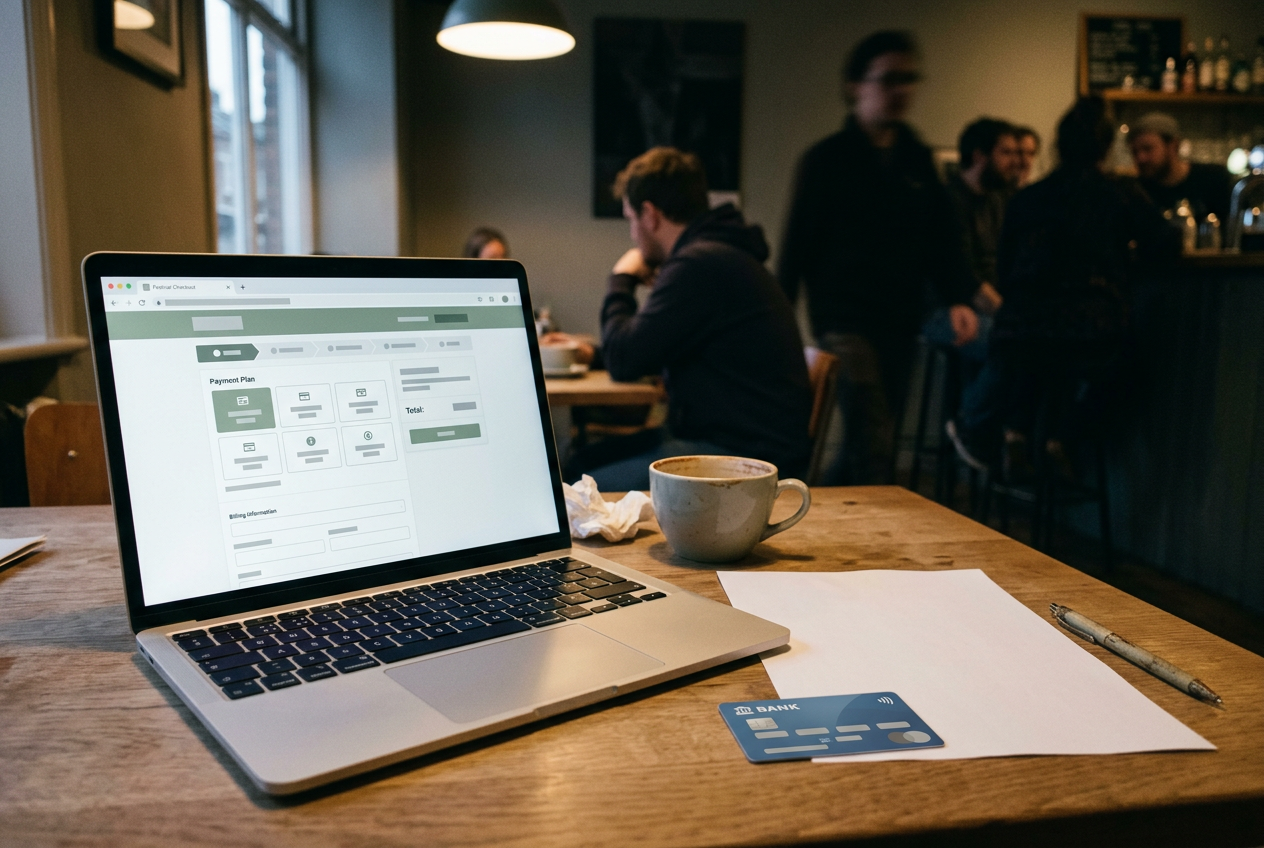
The revealing object is not a microphone. It is the booking-fee field on Guestio, a marketplace that connects podcast creators with prospective guests and allows creators to attach a price to an appearance.
That field settles a question the finished episode may leave artfully unresolved. The host appears to have selected a person because their work merits attention. The guest speaks in the grammar of an interview rather than an advertisement. Yet the transaction began closer to a checkout page: the person receiving the exposure was also the customer.
Guestio is unusually legible because it turns the arrangement into a product. Its public materials describe a marketplace where creators can offer paid bookings and promotional options. Elsewhere, the same exchange is softened through production charges, membership programs, required bulk purchases or packages that combine an interview with clips and distribution. The vocabulary changes.
The direction of payment does not.
Paying for media is ordinary. Ads fund much of what people watch and hear. The trouble starts when a sale borrows the authority of editorial selection without carrying the disclosure that would let the audience understand what it is hearing.
The guest is buying more than airtime
The immediate product is access to the host's microphone, but the useful product is implied judgment. An interview says that somebody with an audience found the guest worth calling. That inference survives even on small shows, especially when the episode sits beside conversations with people who were booked through ordinary editorial outreach.
Marketers call this earned media, meaning attention secured through editorial interest rather than purchased placement. A paid interview sells the appearance of earned media while removing the condition that made it valuable. The guest did not necessarily earn the host's interest. The guest cleared a payment requirement.
This is why the booking-fee field matters. It does not merely price recording time. It prices the transfer of credibility from show to guest, and it does so while the episode can continue to resemble a normal conversation in a podcast app. Cover art, an introduction and a familiar question about the guest's origin story perform the laundering.
The payment disappears into the format.
For a coach, consultant, author or small-business owner, that can still be a rational purchase. A long interview creates material that can be clipped, quoted and placed on a sales page. The podcast's name becomes a logo in an “as featured on” strip. Search results acquire another favorable page.
None of this requires a large audience. Sometimes the audience is secondary to the artifact.
That distinction is central. A weak show can sell a strong credential if the buyer's customers do not inspect its reach.
One customer, several subsidies
A conventional advertiser pays for access to an audience the publisher assembled. In the pay-to-play interview, the guest can pay for access and help assemble the audience afterward.
The show records an episode, then hands the guest shareable assets or an episode link. The guest posts it to LinkedIn, sends it to a mailing list and asks clients to listen. That promotion lowers the show's customer-acquisition cost, the amount spent to bring in each new listener or buyer. The guest supplies both revenue and distribution.
Promotion packages deepen the arrangement. A creator may charge for social posts, newsletter placement, edited video or additional exposure around the appearance. A required bulk purchase does similar work through another door: the guest buys a quantity of books, magazines or other goods as a condition of participation, giving the host guaranteed sales before the interview exists. The accounting category differs.
The leverage is the same.
The labor moves outward too. Guests often arrive with talking points, biographies, headshots and links. They may prepare suggested questions, provide promotional copy and spend hours circulating the result. A host can therefore sell an episode whose research and marketing have been partly completed by the buyer, while an editor or freelance producer is left to make that sales collateral sound like a program.
This is a tidy business. One side carries most of the risk.
If the interview produces no leads, the guest has paid in money and time. If the episode performs well, the show gains listens, reusable content and a more valuable catalog. The platform that arranged the booking may collect subscription or transaction revenue. The audience contributes attention without being told that the interview began as a purchase.
The booking-fee field is the cleanest version of the mechanism because nobody behind the transaction needs to misunderstand it. The ambiguity is reserved for the listener.
Why the format works so well
Podcast interviews are unusually good containers for native advertising, paid promotion designed to resemble the surrounding editorial material. They are intimate, loosely structured and full of first-person claims that hosts are rarely equipped to verify in real time. A forty-minute conversation can deliver a founder story, a product pitch and a redemption narrative without ever pausing for the hard edge of an ad break.
Hustle culture supplies the buyer pool. Its participants are trained to treat visibility as an investment and skepticism as a personal limitation, which makes an interview package easy to frame as authority-building rather than media buying. The expense can then be folded into a course launch, speaking business or consulting funnel, where a single high-value customer might justify several appearances.
The host does not need to promise a specific return. Exposure carries no stable unit of measurement, and podcast download figures are generally invisible to listeners. A buyer may receive screenshots, estimates or platform analytics, but the public artifact cannot tell a genuine audience from a thin one. It can only show that the episode exists.
That opacity protects the sale. A traditional advertisement looks successful or unsuccessful against a defined campaign. A podcast appearance can be credited with reputation, search visibility, confidence or future opportunities. Nearly any outcome can be narrated as progress.
The arrangement also exploits a real wound in media labor. Independent podcasters work in a market where advertising is concentrated among larger networks, discovery is controlled by platforms and listeners often resist subscriptions. Charging guests can look like a practical way to pay an editor or keep a show alive. Sometimes it is.
Labor still deserves wages.
But scarcity does not turn a commercial booking into editorial coverage. It explains why the seller wants the money, not why the listener should be denied the terms.
Disclosure changes the product
The Federal Trade Commission's guidance on endorsements and native advertising centers material connections, relationships that could affect how an audience evaluates a recommendation or presentation. Its standard is functional: disclosure should be clear enough that an ordinary person can understand the commercial relationship. A label buried in show notes does little for somebody listening in a car.
Podcasting has no universal visual frame where such a label must sit. Apps display descriptions differently, episodes travel through embedded players and clips circulate without their original notes. A spoken disclosure near the beginning is harder to separate from the interview, while a plain label in the title and description can follow the audio across more surfaces.
Clear disclosure costs the seller something. “Paid appearance” tells the audience that the host's curiosity was available for purchase. It weakens the borrowed credibility that made the package valuable, which is precisely why vague phrases such as partner content or featured guest are attractive. A disclosure that preserves every commercial advantage is probably not explaining much.
This does not make every paid interview worthless. Trade publications sell sponsored webinars that contain useful information. Branded podcasts can employ excellent reporters and producers. The workable distinction is visible governance: the audience knows who paid, the commercial buyer cannot dictate unmarked editorial conclusions, and workers are not instructed to disguise sales material as independent judgment.
A show could separate paid conversations into a clearly named series. It could publish the booking terms, disclose required purchases and identify promotional add-ons. It could refuse medical, financial or other high-risk claims that cannot be checked. These choices would reduce the package's aura, but the aura is what the buyer was purchasing.
Without that separation, the host occupies two incompatible roles. The host appears to test the guest's claims while depending on the guest's satisfaction as a customer. Hard follow-ups threaten renewals, referrals and package upgrades. The interview may remain pleasant.
Pleasantness is part of delivery.
The real inventory is trust
The common defense of pay-to-play podcasting is that listeners can judge the guest for themselves. That assumes the format contributes nothing. In practice, the host's introduction, tone and decision to publish all shape credibility before the guest makes a claim. An interview is not an empty pipe.
Media owners have always sold access to attention. This model goes further by selling access to editorial posture, then recruiting the buyer to distribute the result. It converts the guest's professional anxiety into revenue and the guest's network into audience growth. The host gets an episode.
The marketplace gets a transaction. A producer gets another sales-led recording to clean up.
The listener gets the booking-fee field only if somebody remembers to show it.
Questions people ask
Do podcast guests normally pay to be interviewed?
No. Many podcasts book guests through editorial outreach without charging them. Payment becomes relevant when a show, booking marketplace or intermediary requires an appearance fee, bulk purchase, membership or promotional package as a condition of recording or publication.
Is a paid podcast interview an advertisement?
It can function like one when payment influences the guest's appearance or the surrounding promotion. The crucial issue is whether listeners can recognize the material relationship, rather than whether the host calls the episode an interview, partnership or feature.
Who makes money from a pay-to-play podcast appearance?
The show or network may receive the booking payment and sell promotional extras, while a marketplace or agent can earn subscription or transaction revenue. The guest pays cash, contributes preparation and often promotes the episode to an existing network, giving the show additional distribution.
What should a clear disclosure say?
A useful disclosure states plainly that the guest paid for the appearance or purchased the package, and it appears where listeners will encounter it before evaluating the interview. Euphemisms that conceal who paid preserve the sales value while withholding the fact that matters.
One update a day
Today's story, in your inbox
One story each morning — no hype, no filler, no algorithm deciding for you.