The Podcast Interview Was Paid for Before the Mic Turned On
Booking agencies and marketplaces sell founders a route into podcast conversations. By the time the clip reaches your feed, the invoice has usually disappeared.
August 11, 2026 · 8 min read

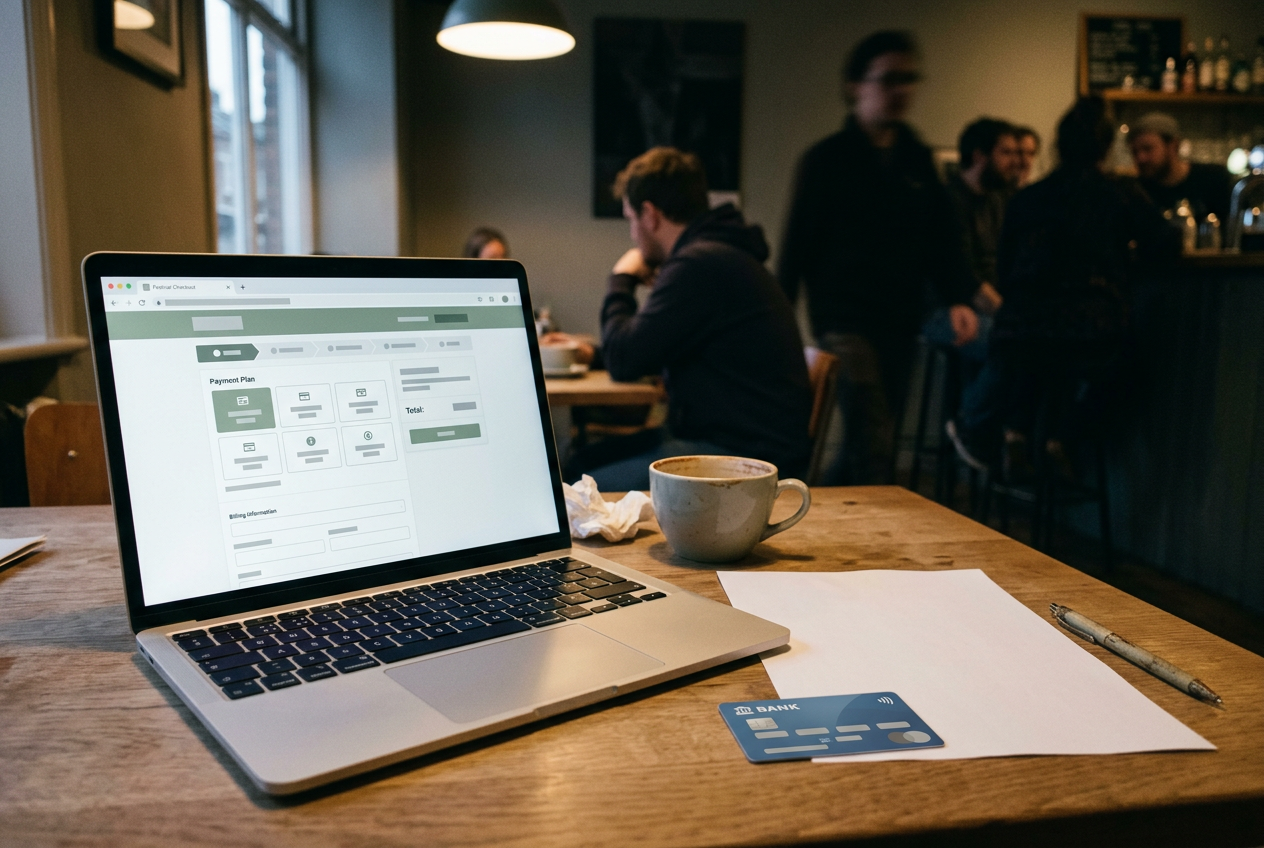
The useful object is a booking card.
On Guestio, a marketplace built to connect hosts and guests, a profile can place a price beside the prospect of an appearance. The interface uses familiar ecommerce grammar: browse, select, request, pay. Nobody has to pretend that access fell from the sky. At this stage, the transaction is legible.
Then the guest puts on headphones.
The resulting episode may arrive with the visual and verbal furniture of an ordinary interview: a host introduction, a founder origin story, a few questions about adversity, perhaps a detour through morning routines. The guest’s company has not purchased a thirty-second ad read. It has purchased proximity to editorial form, which is more useful because listeners have learned to lower their defenses around conversation.
The booking card is gone. The headphones remain.
The agency sells a path, not necessarily an ad
Paid podcast access covers several businesses that should not be collapsed into one allegation. Traditional public relations firms charge clients to identify shows, pitch producers and coordinate appearances. The client pays for labor, while the show may receive nothing and retain the right to say no. That is ordinary publicity, even if the resulting founder interview is tedious enough to qualify as workplace furniture.
Podcast booking agencies narrow that service to audio and video shows. Public-facing firms such as Interview Valet sell campaigns that include positioning, outreach, preparation and repurposing. Their value proposition is not mysterious. A founder lacks time, contacts or the patience to send dozens of pitches, so an agency packages the founder’s biography into subjects a host might accept.
Some services expressly avoid guaranteeing placement because payment buys pitching rather than airtime.
Marketplaces alter the mechanism. Guestio allows creators and talent to arrange bookings through a platform, including paid opportunities. Here the possibility of compensation sits closer to the appearance itself. PodMatch uses a different structure: guests and hosts join a matching service, while its public materials describe payments to qualifying hosts through a host-support program.
The money may therefore reach the host through platform rules rather than a guest handing over an envelope marked NICE QUESTIONS, which would at least have the virtue of clarity.
Other arrangements bundle an interview with sponsorship, production support, event access or a package of clips. A company may sponsor a show, then supply an executive as a guest. A guest may pay an intermediary that shares revenue with participating podcasts. A network may classify the episode as branded content while the host performs it in the same register used for unpaid conversations.
These distinctions matter at the invoice. They matter much less in the feed.
Disclosure gets lost by design
The payment chain can contain four separate judgments about what has been purchased. The guest thinks it bought placement. The agency says it sold outreach. The host thinks it accepted a booking fee or sponsor package.
The producer sees a viable episode with someone willing to arrive prepared, promote the release and generate no scheduling trouble.
Each participant can describe one part of the arrangement truthfully while the audience misses the whole.
That fragmentation explains why disclosure vanishes without requiring a secret meeting. The agency’s contract is not attached to the audio file. The host’s show notes may identify a sponsor without explaining that sponsorship influenced the guest booking. A marketplace can disclose payment at checkout, where only buyer and seller see it, while the public episode page presents the interview as another item in the archive.
The founder’s social team removes even more context. A long episode becomes a vertical clip with captions and a show logo. The clip begins after the introduction, omits the notes and travels through LinkedIn, Instagram, TikTok or YouTube Shorts as evidence that an independent host found the founder worth hearing. This is where the booking card completes its transformation into earned attention.
“Earned media” means coverage secured without purchasing the placement itself. The paid guest economy borrows its appearance while declining its central condition.
The most valuable deliverable may not be the audience of the original podcast, which could be modest or difficult to verify. It is the portable proof of access: the host’s face in a split screen, the microphone, the waveform, the sentence fragment that can be placed on a sales page. An obscure show can still produce a highly respectable rectangle.
Conversation launders intent
Podcasting is unusually good at softening commercial purpose because the medium treats duration as evidence of seriousness. An advertisement announces its compression. An interview can run for an hour, include mild disagreement and wander through personal history, all of which makes the exchange feel too loose to have been bought.
The host does not need to praise the company outright. A founder benefits from being framed as a person with ideas rather than a vendor seeking customers, investors, speaking engagements or authority in a crowded category. The questions can remain technically independent while the decision to create the conversation was commercial.
That difference is the product.
Public reporting on paid podcast appearances has shown how entrepreneurs can buy access through agencies and intermediaries while listeners receive little indication that money shaped the booking. The practice survives because podcasts occupy an unstable category. They are entertainment products, advertising vehicles, creator businesses and sometimes journalism. A host may switch among those roles during one episode without changing the lighting.
Video made the ambiguity more profitable. The studio now manufactures clips that resemble television interviews but circulate without television’s stronger visual conventions for sponsored programming. A branded desk sign may remain outside the crop. Disclosures placed in an episode description do not automatically travel with downloaded audio, embedded players or reposted video.
The transaction becomes less visible at every export.
The host has an inventory problem
The supply of podcasts is enormous. Reliable guests are not.
A booking service offers hosts people who will answer email, own a functional microphone, accept the calendar invitation and promote the finished episode. For small shows with limited production labor, that administrative relief has value before any payment enters the picture. Add a fee or platform reward and the host can turn an empty slot into revenue.
Founders have the inverse problem. They need repeated public proof that they are credible, but recognizable editorial outlets have limited space and stronger filters. Podcast agencies create a middle tier where credibility can be assembled appearance by appearance, then detached from the size or business model of each show.
The intermediary gets paid for reducing friction on both sides. The host gets content, money or operational support. The guest gets recording time and reusable media. The audience pays in attention while being denied the information needed to classify what it is hearing.
This does not make every purchased appearance false. A paid guest can know the subject, a host can ask useful questions, and a sponsored episode can contain accurate information. Disclosure is not a verdict on quality. It is routing information.
It tells the listener why this person entered this particular room.
Without it, the audience has to infer commercial intent from the founder’s polished anecdote and the promotional link waiting below the player. That is a poor substitute for a label.
The rules meet the format badly
The Federal Trade Commission’s endorsement guidance says material connections that audiences would not expect should be disclosed clearly and conspicuously. A material connection is a relationship, including payment, that could affect how people evaluate an endorsement.
A paid interview does not fit neatly into every endorsement scenario. The host may insist that payment bought access rather than approval, especially when the conversation contains criticism or no explicit product recommendation. Still, once a host endorses the guest’s business, repeats marketing claims or presents the booking as an independent discovery, the undisclosed financial connection becomes harder to dismiss as administrative detail.
“Sponsored” hidden at the bottom of show notes is weak disclosure for an audience consuming a clip elsewhere. A practical label has to accompany the content people encounter, in audio and on screen, using language that explains the relationship. “Paid guest appearance” conveys more than a generic partnership tag, which could refer to the microphone, hosting platform or protein powder stacked behind the camera.
Platforms could require creators to mark paid guest bookings, then preserve that label across clips generated through their tools. Marketplaces could make public disclosure a condition of payment. Networks could distinguish paid access from conventional sponsorship in episode metadata, the information attached to a media file. None of this requires banning the transaction.
It requires keeping the booking card attached to what it bought.
That attachment is precisely what reduces the product’s value. Founders are paying for the appearance of selection, not merely the right to speak. A permanent label would turn a borrowed editorial signal back into advertising.
The next time a founder posts a handsome studio clip, look for the missing object. Somewhere before the headphones, there may have been a booking card with a price on it.
Questions people ask
Do podcast guests really pay to be interviewed?
Some do. Payment may go directly to a host, through a booking marketplace, or to an agency selling outreach and placement-related services. Paying a publicist to pitch is different from buying airtime, but the distinction becomes difficult for listeners to see when neither arrangement is disclosed with the episode.
Who gets paid from a paid podcast appearance?
The booking agency or marketplace usually takes money for access, matching, campaign management or production work. Depending on the arrangement, the host or network may also receive a fee, sponsorship revenue or platform compensation. The guest’s company pays, while listeners supply the attention that makes the resulting clip commercially useful.
Are paid podcast interviews required to be disclosed?
FTC guidance calls for clear disclosure when a material connection could affect how an audience evaluates an endorsement. Whether a particular interview triggers that standard depends on what the host says and how the arrangement works, but vague show-note language can fail once an undisclosed clip travels separately from the episode.
How can I spot a paid podcast guest?
Check the episode description, spoken introduction and on-screen labels for phrases such as paid appearance, sponsored episode or branded content. Then inspect the guest’s reposted clip. A polished interview is not proof of payment, but a promotional segment with no portable disclosure should not be treated automatically as independent editorial attention.
One update a day
Today's story, in your inbox
One story each morning — no hype, no filler, no algorithm deciding for you.