The Viral Street Interview Is a Production Company Without an Office
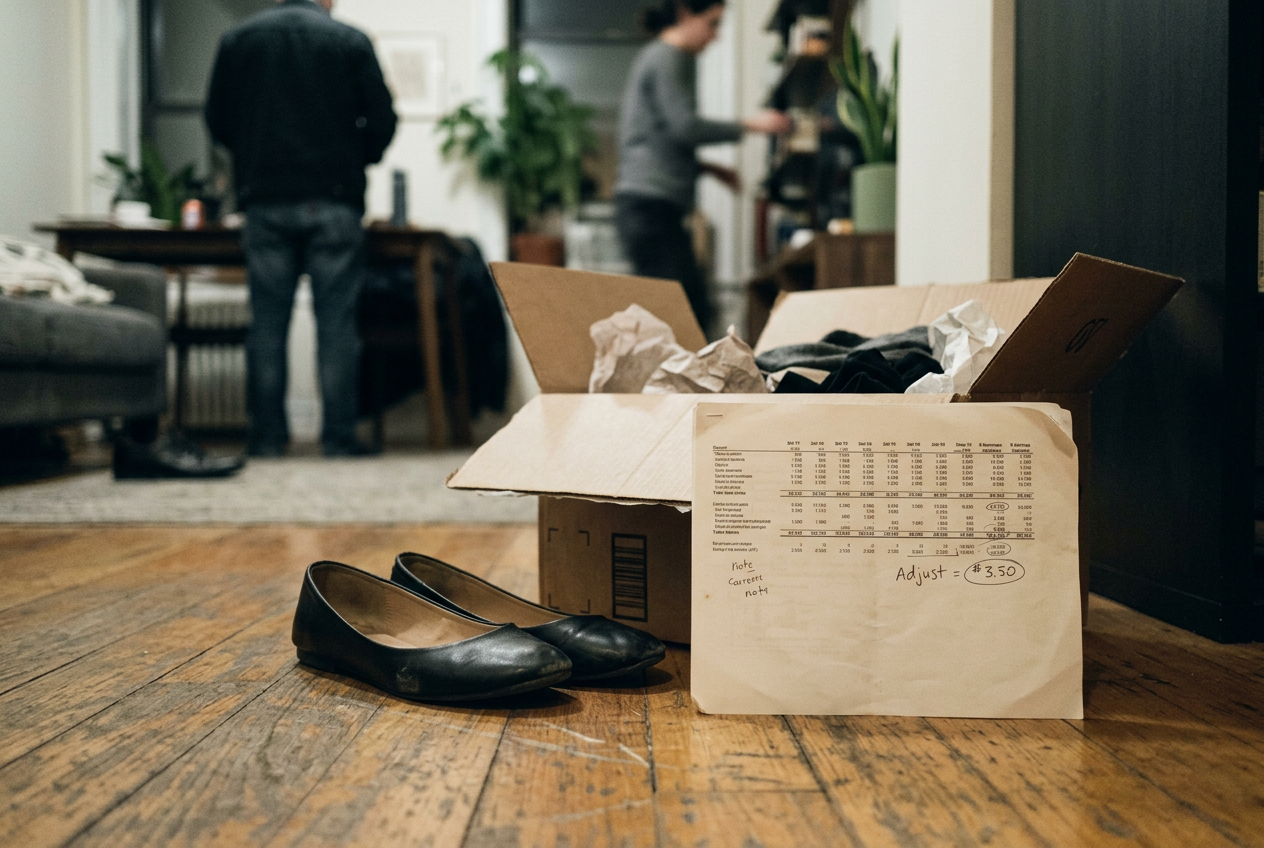
The loose, one-mic look hides booking, releases, editing, sponsorship sales and moderation. Freelancers and on-camera participants carry much of the risk.
September 5, 2026 · 8 min read
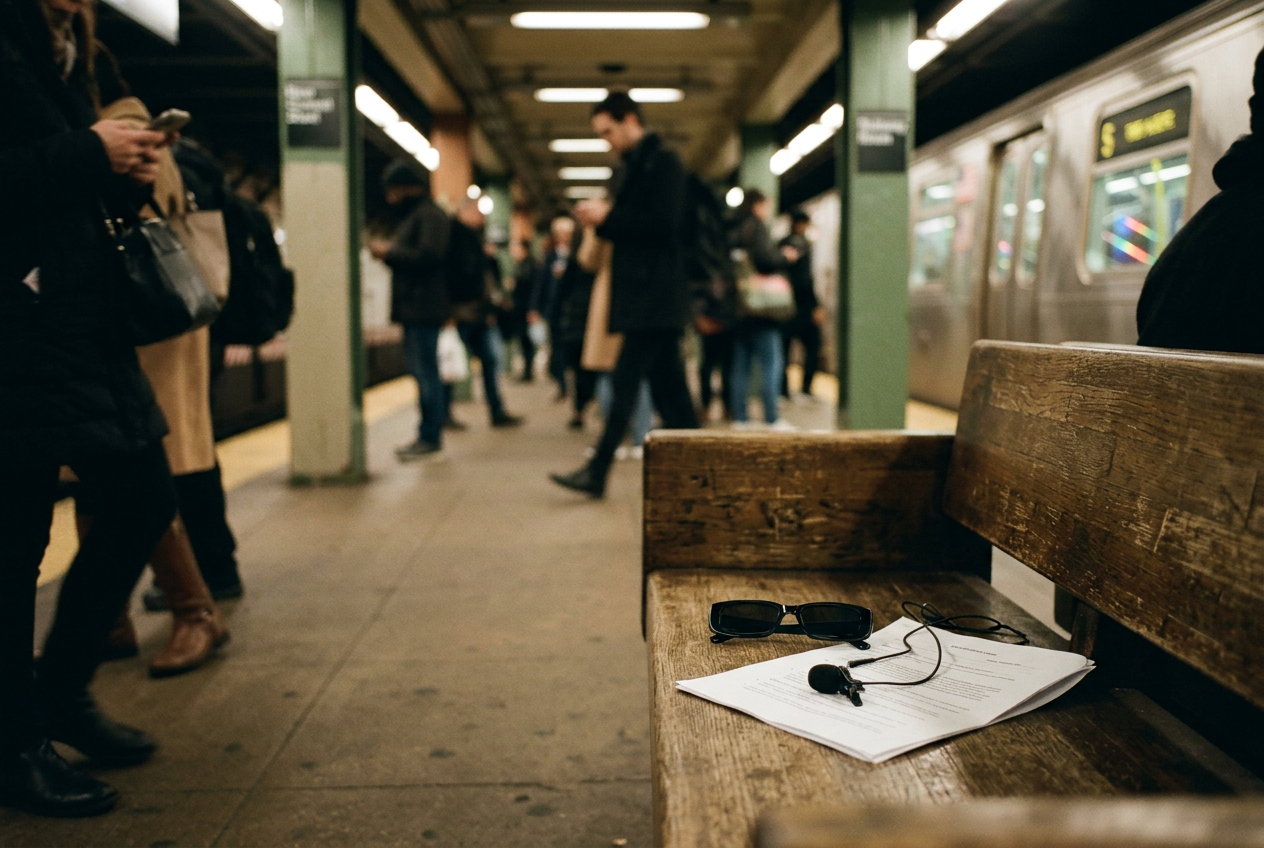
Across many episodes of SubwayTakes, host Kareem Rahma wears slim black rectangular sunglasses underground. The lenses stay dark under fluorescent subway lights. They are a continuity device: the host is recognizable before he speaks, the frame looks composed before the premise arrives, and footage made on different days can belong to the same repeatable product.
The glasses also help sell the central fiction of the viral street interview. This just happened. Two people sat down, someone pressed record, and the feed received a clean little unit of personality. The subway car, sidewalk or folding chair stands in for a studio, while the recurring wardrobe detail replaces a set wall bearing the channel’s logo.
Public profiles of SubwayTakes make clear that it is an authored entertainment format, with booked guests alongside its street-level setting. The series is unusually visible because Rahma is an established comedian and media founder. Smaller channels use the same industrial logic with less leverage: build a recognizable package, publish often enough to satisfy platforms, then turn attention into sponsorship inventory.
The result is a freelance production company whose office is a group chat, whose payroll may be a stack of invoices, and whose raw material includes people who did not necessarily leave home expecting to become content.
The costume is continuity
A recurring street-interview channel needs repetition without looking repetitive. The question changes. The stranger changes. Weather, traffic and background noise refuse direction.
Something else must hold.
For SubwayTakes, the black sunglasses help do that work. Other formats rely on a branded microphone, a fixed opening line or a host dressed more sharply than the location requires. These details are cheap compared with a set, yet they make separate shoots legible as episodes of one property. They also make imitation easier, which is why a successful format quickly produces cousins with the same framing and cadence.
The casual surface is commercially useful. A conventional interview announces production and asks the viewer to commit. A street clip arrives disguised as an encounter. That lowers the attention barrier, but it does not remove the production work.
It hides it outside the frame.
The interview starts before the question
Recurring channels must find people who can deliver a usable answer, appear on the scheduled day and fit whatever audience or sponsor the account is trying to reach. Booking can mean direct messages, email chains, calendar holds, background research and reminders sent by a producer whose name never appears in the caption.
Cold approaches create a different workload. Someone scouts a location, judges foot traffic, watches for security or permit problems and approaches enough people to survive rejection. A short finished clip can sit on top of many conversations that went nowhere, along with travel and waiting time that a flat day rate may fail to recognize.
Then comes consent. Permission to answer a question in public is not automatically the same thing as permission for a person’s image to appear in paid advertising, platform promotions or licensed compilations. Laws vary by place and use, but producers often seek an appearance release, a document granting specified rights to use a participant’s voice and image. Someone must explain it, collect it, store it and match it to the right footage.
That task gets harder when the format depends on speed. A person may agree while a camera is rolling, then understand the scale only after strangers begin forwarding the post. Minors, intoxicated people and anyone discussing employment, immigration, health or relationships require more caution than a feed optimized for volume is built to provide. The channel gets an asset.
The participant gets exposure in the literal sense.
The clip becomes inventory in the edit
Raw street footage is rarely ready to post. An editor must find the opening seconds that stop a swipe, remove dead space without falsifying the exchange, repair uneven sound and choose reaction shots. Vertical framing may require repositioning faces for each platform. Music and archival inserts introduce rights questions.
A joke that works in context can become cruel after twenty seconds disappear.
Captions are part of the product, not clerical garnish. Someone transcribes the speech, corrects names, breaks sentences into readable bursts and keeps text clear of platform buttons. Automated transcription can accelerate the first pass, but street noise and overlapping voices make it unreliable precisely where wording matters most.
The editor also creates versions. TikTok, Instagram Reels and YouTube Shorts reward overlapping but distinct packaging, and a sponsor may require another cut with a product mention, disclosure or approved ending. A single encounter can produce the public clip, a shorter teaser, sponsor assets and unused footage that still needs secure storage.
Those black sunglasses survive each cut. The editor changes pacing around them, but the recurring visual tells the viewer that this fragment belongs to the channel. Continuity has been outsourced to an accessory because everything else is unstable.
The sponsor buys control around the spontaneity
Advertising turns a popular format into a business, but the sale happens well before the host holds a microphone. Someone builds a pitch deck, answers agencies, negotiates usage rights and specifies deliverables, the contracted posts and related assets a creator must supply. They may also discuss category exclusivity, which prevents the channel from promoting a competitor for an agreed period, and make-goods, replacement work demanded when a post misses contractual requirements.
The sponsor is purchasing informality with paperwork attached. It wants the recommendation to feel native to the channel while retaining approval over claims, brand safety and timing. The Federal Trade Commission requires clear disclosure of material relationships between advertisers and endorsers, while platforms impose their own branded-content labels and music restrictions. Compliance becomes another production job, often assigned to whoever is already managing the calendar.
Payment does not necessarily travel down the workflow at the same speed. The creator or production entity may invoice an agency, which is billing a brand through its own approval system. Contractors can finish the edit long before the campaign clears payment. If revisions multiply, the person cutting captions at night may be financing the sponsor’s indecision with unpaid time.
Risk moves toward the smallest party
The office-free company has low fixed overhead because workers supply the office. Freelance producers use their own phones and laptops. Camera operators maintain gear and travel to locations. Editors pay for software, storage and internet access.
Unless contracts provide otherwise, they also absorb gaps between assignments and the administrative time required to chase invoices.
Worker classification depends on the facts and the jurisdiction, not the label on a contract. Still, creator businesses have strong incentives to call recurring labor freelance because contractors generally do not receive employer-funded benefits, paid leave or the same payroll protections as employees. The channel keeps flexibility. The worker keeps the volatility.
On-camera participants occupy an even stranger position. Booked celebrities may treat the clip as promotion. A passerby may receive no payment while supplying the face, confession or opinion that makes the post valuable. The exchange can be consensual and still unequal, especially when the producer understands distribution, editing and commercial reuse better than the person who was stopped outside a train station.
The platform carries less risk than either side. TikTok, Meta and YouTube distribute the clip, sell advertising around attention and reserve broad power to remove or limit content under their rules. They do not book the guest, verify the release, pay the editor’s revision fee or answer the participant whose workplace has found the video.
Moderation is unpaid postproduction
Publication begins another shift. Comments must be filtered for slurs, threats, doxxing and invasive speculation. A moderator may hide replies, block accounts, report impersonation and decide whether criticism is ordinary disagreement or coordinated harassment. Removing the original post cannot reliably retrieve downloads, reposts or reaction videos already circulating elsewhere.
Small channels often leave this work to the host or producer, which means the person responsible for growth must also suppress the engagement that growth produces. Platforms offer keyword filters and reporting tools, but they place the judgment and emotional exposure on account operators. The participant usually has no dashboard at all.
The sunglasses remain recognizable through reposts after the original caption, sponsor label and context have fallen away. Branding survives distribution better than consent does.
A fairer clip costs more
A less extractive operation would budget paid prep and revision time, use written scopes, set payment dates and assign moderation before publication. It would distinguish editorial permission from advertising reuse, give vulnerable participants a reachable contact and avoid treating every technically lawful upload as an obligation to post.
That raises the cost of a supposedly cheap format. Good. The low price was produced by leaving labor off the budget and pushing consequences onto people with less control. The subway bench may be free.
The production is not.
Questions people ask
Who gets paid when a street interview goes viral?
The channel owner can earn sponsorship fees, platform revenue or licensing income. Producers, shooters, editors, captioners and sales workers may receive salaries or freelance fees, but arrangements vary widely. People appearing in the clip are often unpaid unless they were booked under a separate agreement or negotiated compensation.
Do street-interview channels need release forms?
Requirements depend on jurisdiction, location and how footage will be used. Producers commonly seek appearance releases when identifiable people feature prominently, especially if clips may enter advertising or licensed campaigns. A person agreeing to speak on camera does not necessarily understand every later commercial use.
Why do these videos look spontaneous if guests are booked?
Spontaneity is part of the format’s design. Public locations, compact equipment and recurring visual cues such as Rahma’s black sunglasses make planned production feel like an encounter. Booking reduces uncertainty while the setting preserves the impression that the viewer has arrived at an unguarded moment.
What labor is easiest to miss?
Booking, release management, caption correction, sponsor revisions and comment moderation largely happen off camera. Contractors can spend more time coordinating, exporting versions and handling fallout than the host spends recording, yet the finished post compresses that work into a clip that appears to have cost almost nothing.
One update a day
Today's story, in your inbox
One story each morning — no hype, no filler, no algorithm deciding for you.