A Fentanyl Test Strip Cannot Make a Club Bathroom Safe
A strip can flag fentanyl in a prepared sample. In a dark, crowded restroom, preparation and interpretation matter as much as the small piece of paper.
August 11, 2026 · 8 min read
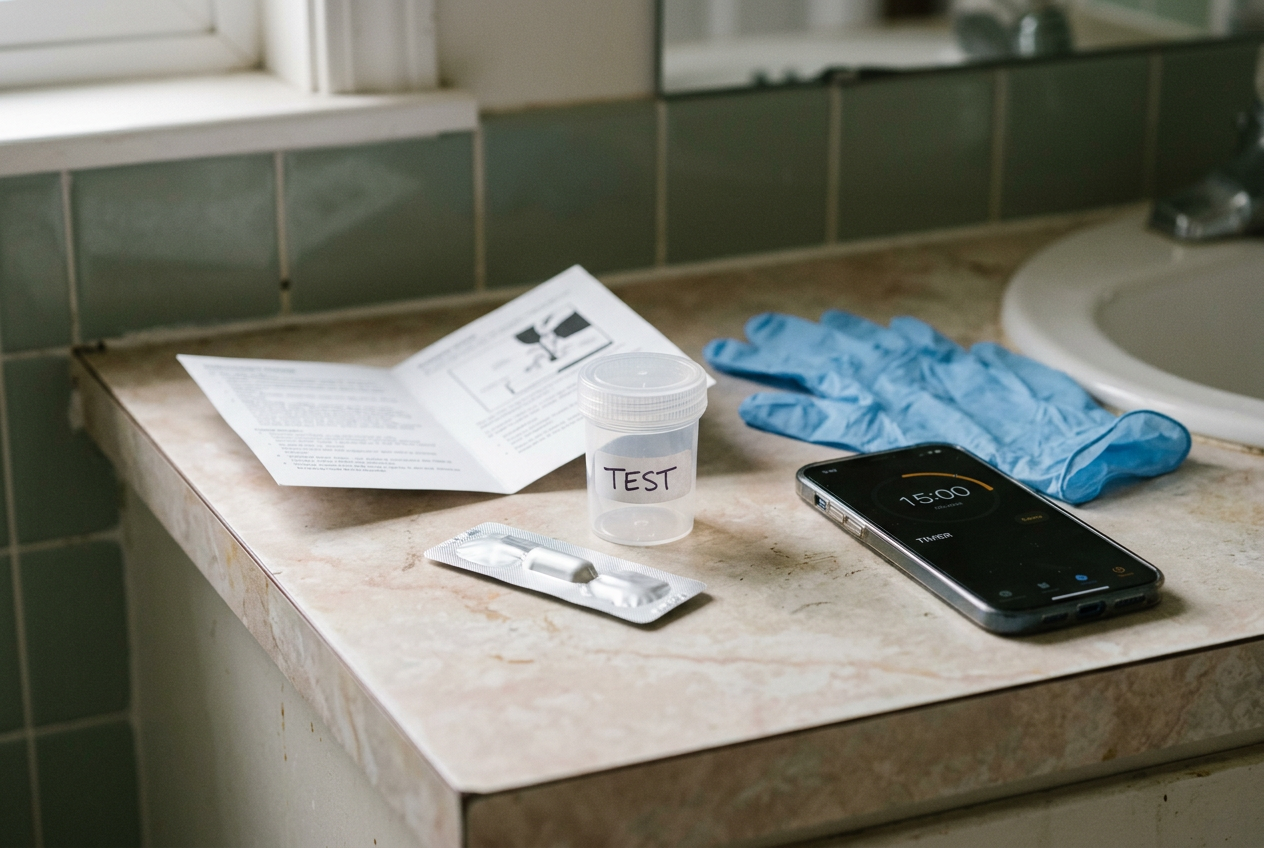
The object at the center of this walkthrough is a clear screw-top condiment cup with TEST written across the lid in black marker. It is cheap, unglamorous and small enough to carry inside a sealed plastic bag with a test strip, the strip’s instructions and disposable gloves. In the fantasy version of nightlife harm reduction, none of this is necessary. The bathroom is bright.
The counter is dry. Nobody is pounding on the door. The person testing has steady hands and all the time required.
The real room has bass coming through the wall, a line outside and a sink coated in water of uncertain origin. Someone has removed the soap dispenser. The overhead light catches half the strip and leaves the other half in shadow.
That difference is the story. A fentanyl test strip is a lateral-flow test, meaning liquid travels through a paper membrane and produces lines when the test’s chemical components react. It does not inspect a bag by proximity. It tests the liquid placed on it, under the conditions described by its manufacturer or the harm-reduction program distributing it.
The little cup matters because the result begins before the strip enters the water.
Prepare before the bathroom starts making decisions
Read the enclosed instructions somewhere quiet. Different strips and local programs may specify different amounts of water, immersion times and reading windows, particularly for different substances. Memorizing a ratio from a social post and applying it to every strip is the kind of efficiency that produces bad information.
A local syringe service program, drug-checking service or health department can demonstrate the product it distributes and explain its current guidance. That professional contact is not decorative caution. Some strips were originally designed for urine testing, while harm-reduction workers adapted them for checking drug residue or solutions; the instructions attached to a particular program therefore carry more weight than a screenshot detached from its brand and context.
The clear cup labeled TEST creates one clean boundary. Use potable water and a clean vessel rather than water from a club sink, toilet or abandoned bottle. Keep the strip dry until the sample is ready, avoid touching its absorbent end, and do not let powders from a counter, key, card or damp hand migrate into the cup. Cross-contamination can turn a test into evidence about the bathroom rather than the sample.
Preparation also determines what the strip can claim. Fentanyl may be distributed unevenly through a powder or pressed pill, sometimes described as the chocolate-chip effect: one portion can contain fentanyl while another portion from the same supply does not. Testing a few grains can therefore miss contamination elsewhere. Many harm-reduction programs recommend testing the entire amount when feasible, following their instructions for dissolving and handling it, because a larger, more representative sample reduces that sampling problem.
That approach can raise practical questions about what happens to the tested material. Do not improvise from this article. Ask the distributing program how its method handles the full sample, whether its guidance covers recovery after testing, and what precautions apply. The strip is one part of a protocol, not permission to invent chemistry beside a hand dryer.
The timer is part of the test
Once the sample is prepared according to the instructions, set a phone timer. Do not count bass drops. Dip only the specified end, no farther and no longer than directed, then place the strip on a clean, flat surface if the instructions call for it.
The marked condiment cup returns here as a piece of crowd control. Its lid keeps the prepared liquid from being knocked across a shared counter while the strip develops, and the black label reduces the chance that somebody mistakes it for drinking water. Put the phone on flashlight mode before dipping, not while holding a wet strip between two fingers. If the restroom cannot offer a clean surface, enough light or the required waiting time, stop and move to a safer place.
A rushed result is not more useful because it arrived before the next track.
Read the result only during the window stated by the manufacturer. Lines can change as a strip dries, so a photograph taken much later cannot reliably restore the original reading. Most fentanyl strips use a counterintuitive pattern in which two lines, even when the test line is faint, indicate a negative result, while one control line indicates a positive result. Products differ.
The diagram supplied with the strip settles the matter.
An absent control line usually means the test is invalid. So can streaking, a flooded membrane or a result that never resolves into the pattern shown in the instructions. High concentrations of some substances can also interfere with certain strips and produce misleading results; program guidance may recommend diluting and retesting in that situation. Dilution should follow that guidance rather than guesswork, because changing the sample changes what reaches the membrane.
Ambiguity is a result. It means unresolved.
Do not hold a questionable strip under three colors of club lighting until it gives the preferred answer. Photograph it within the proper reading window under white light if that helps with a later conversation, label the image so it is not confused with another test, and contact a harm-reduction service that can advise on the specific product. Where available, professional drug checking using instruments can identify a wider range of substances and sometimes provide more detailed information than a strip.
A negative line has a narrow jurisdiction
A negative result means the strip did not detect fentanyl in that prepared sample above the test’s detection threshold. It does not prove that the remaining supply contains none. It does not measure potency. It cannot tell how a person’s body will respond, identify every fentanyl analog, detect unrelated hazards such as xylazine unless a separate appropriate test is used, or make mixing substances safe.
The clear cup labeled TEST is useful precisely because it limits the claim. This liquid was tested, with this strip, at this time. The result does not travel backward through an entire supply chain or forward into a person’s metabolism.
That limitation matters in nightlife, where a negative result can acquire social authority far beyond its evidence. One person tests one portion, then a room treats the strip as certification for everybody. The tool becomes a tiny private regulator inside a market with no ingredient labels, batch controls or recall system. Venues and public agencies can then praise individual vigilance while leaving guests to conduct chemical screening beside overflowing trash cans.
The better response to uncertainty is layered risk reduction. Keep naloxone, the medication that can temporarily reverse an opioid overdose, accessible and tell people where it is. Avoid using alone; if local services offer an overdose-prevention hotline or virtual spotting service, learn how it works before the night begins. Mixing substances can increase risk, and tolerance may be lower after any period of abstinence.
Start from the premise that a test reduces one unknown rather than removing danger.
Know the signs of an opioid overdose, including breathing that is slow, irregular or absent, inability to wake and blue or gray lips or skin, with color changes varying by skin tone. Call emergency services, administer naloxone and provide rescue breathing if trained, following dispatcher and product instructions. More than one naloxone dose may be needed. Good Samaritan protections vary by state, which is another reason to check local guidance before an emergency rather than litigating it on a bathroom floor.
Disposal belongs to the protocol
A used strip, cup and leftover liquid may contain drug residue. Keep them away from bare skin, food, drinks, children and animals. Do not abandon the condiment cup on the sink, where its contents can spill or be mistaken for something harmless, and do not assume flushing or pouring it away is appropriate everywhere.
Put used materials back into the sealable bag and follow the disposal instructions from the strip supplier or local harm-reduction program. Wash hands with soap and water after handling the test setup; alcohol hand sanitizer does not reliably remove every contaminant from skin. If the setup includes any sharp object, it belongs in an approved sharps container rather than ordinary restroom trash.
Then write down the result while it is fresh, including whether the line was faint, the strip product used and whether anything disrupted the test. That record will not turn the strip into laboratory analysis. It can prevent the next person from relying on a vague recollection delivered over music.
The cup ends the night sealed inside its plastic bag, not displayed as a badge of responsibility. Harm reduction works through repetition and infrastructure: free supplies, trained staff, clear instructions, naloxone, professional checking and spaces where people can use them without being rushed or punished. A strip helps. The bathroom still sets the conditions under which help can fail.
Questions people ask
Does a faint second line mean the test is negative?
On many fentanyl test strips, any visible second line within the specified reading window indicates a negative result, but products can differ. Compare the strip with its own instruction diagram under clear white light. If the pattern remains uncertain, treat it as unresolved and ask the distributor about retesting.
Can one strip prove the whole bag has no fentanyl?
No. A strip reports on the prepared liquid that reached its membrane, and fentanyl may be unevenly distributed through a supply. A negative result cannot guarantee that an untested portion is free of fentanyl, identify every analog or show how potent another substance may be.
What should I do after a positive or invalid result?
Do not treat the material as cleared. Avoid using it and contact a local harm-reduction or drug-checking service for guidance on confirmation and disposal. Keep naloxone available, and if anyone shows signs of an opioid overdose, call emergency services and follow naloxone and dispatcher instructions.
Are club bathrooms good places to use fentanyl test strips?
Usually not. Poor lighting, contaminated surfaces, interruptions and missing clean water can undermine preparation and interpretation. Bring the instructions and a sealed testing setup, but move elsewhere if the room cannot provide enough light, time and clean space to follow the protocol.
One update a day
Today's story, in your inbox
One story each morning — no hype, no filler, no algorithm deciding for you.