A Roblox Earring Sale Pays Its Maker 30 Percent in Robux
A Marketplace sale is only the first gate. Before a Roblox item creator reaches dollars, the platform takes its share, holds the Robux and decides whether those earnings qualify for cash-out.
August 28, 2026 · 8 min read
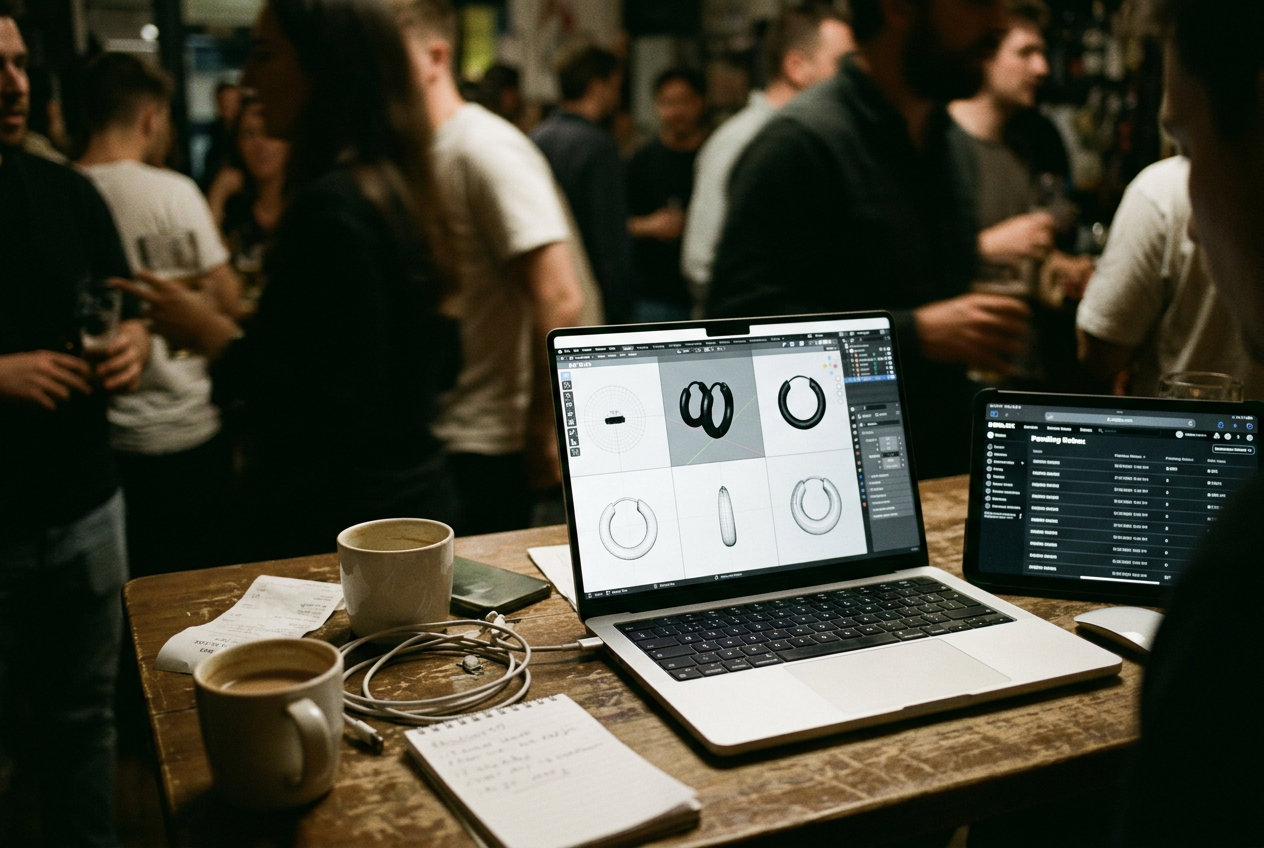
Take a pair of black hoop earrings built as a 3D avatar accessory. The mesh has to sit correctly on Roblox’s supported avatar heads, the textures must survive moderation, and the listing needs an image that persuades someone to spend Robux on a detail their physical body will never feel. The item can sell. It can appear successful.
Its maker can still be a long way from receiving dollars.
That distance is designed into the system.
Roblox controls every conversion point: dollars into purchased Robux, Robux into an item sale, gross spending into a creator share, pending proceeds into an account balance, and eligible Earned Robux into money outside the platform. Each stage uses different rules. The number displayed beside the earrings is therefore not a wage, a royalty statement or even a promise that the maker can cash out.
The buyer’s Robux are not the creator’s Robux
A buyer first acquires Robux from Roblox or receives them through another platform-sanctioned route. The dollar cost of each Robux varies with the package and purchase channel; Roblox has also offered more Robux for purchases made through channels where it avoids mobile app-store commissions. There is no single consumer exchange rate that runs backward.
Once the buyer spends Robux on the black hoops, Roblox applies the commission structure for that kind of transaction. Under its Marketplace documentation for 3D avatar items, the item creator receives 30 percent of a sale completed in Marketplace. Roblox retains the remaining 70 percent while performing the platform and distribution roles.
So, for every 100 Robux spent in this worked example, the earrings’ maker receives 30 Robux before any dollar conversion. This does not mean Roblox later deducts 70 percent from the creator’s account. It means most of the customer’s spending never enters that account at all.
The split changes if the earrings sell inside an experience. Roblox’s documented structure assigns 30 percent to the item creator, 40 percent to the owner of the experience where the sale happened and 30 percent to Roblox. If the same creator made the earrings and owns the experience, that creator can capture both creator and experience-owner shares, receiving 70 percent in total. If someone else owns the experience, the earrings’ maker remains at 30 percent.
Placement is therefore part of pay. A creator who can build an item and operate a destination where people discover it has access to revenue that an accessory specialist does not, even when both produced the same mesh. Roblox calls the extra portion an experience-owner commission. In labor terms, it rewards control over distribution.
Publishing starts with costs, not earnings
The hoops need to reach Marketplace first. Roblox’s current documentation requires creators publishing eligible 3D Marketplace items to meet account requirements that include identity verification, an appropriate Premium subscription and a record that satisfies the platform’s compliance standards. Roblox can change access requirements, category limits and publishing conditions.
Premium is a recurring cash expense. Publishing also carries a Robux-denominated advance for eligible Marketplace items, with the amount set by Roblox and capable of varying by item type and market conditions. The company describes this as a publishing advance rather than a fee because qualifying sales can earn it back over time. That distinction offers little comfort to a creator whose item does not sell enough copies.
Robux left the account either way.
The black hoops have other costs that Roblox does not put in its checkout ledger: modeling software, hardware, reference work, revisions, thumbnails, moderation failures and the hours spent correcting a fit that clips through hair or an avatar head. Those hours receive no guaranteed rate. A rejected item pays nothing. A weak listing can pay less than its publishing advance.
Roblox gets a growing catalog without employing the people filling it.
Access to publishing is not access to liquidity. It is permission to assume the risk.
A completed sale enters another waiting room
Robux generated by a sale can appear as pending before becoming available in the creator’s balance. Roblox uses this holding period to process transactions and account for fraud, abuse and refunds. Its documentation tells creators to inspect pending sales through the transaction pages rather than treating the visible sale as immediately spendable income.
Pending Robux cannot yet be used as though they have cleared. Once released, they can fund platform expenses, pay collaborators through eligible systems or remain in the account while the creator works toward the cash-out threshold. The earrings may have sold days or weeks ago, while the money-equivalent value remains under Roblox’s control.
Even released Robux are not automatically cashable. Roblox distinguishes ordinary Robux from Earned Robux, the category that can qualify for its Developer Exchange program, usually shortened to DevEx. Broadly, Earned Robux come from compliant creation and monetization activity on the platform. Robux bought directly, received through a Premium allotment or obtained through disallowed or ineligible transactions do not become cash merely because they sit beside sales revenue in the same account.
Group payouts require their own paper trail. Roblox’s rules look through the transfer to the source of the group’s funds, so moving purchased Robux through a group does not turn them into Earned Robux. Trading or reselling items a user did not create also does not necessarily produce DevEx-eligible earnings. The platform decides which Robux count, and it can review that history when a creator submits a request.
DevEx is an eligibility test, not a cash register
To request a payout, a creator must meet Roblox’s minimum balance of 30,000 Earned Robux, be at least 13, hold a verified email address, maintain an eligible DevEx portal account and remain in good standing under Roblox’s terms. The creator must also submit tax and payment information through Roblox’s payment provider.
At Roblox’s published DevEx rate of $0.0035 for each eligible Earned Robux, the minimum 30,000-Robux request converts to $105 before payment-provider charges and any applicable taxes. The rate is set by Roblox. It is far below what a customer generally pays to acquire the same nominal quantity of Robux because the purchase rate and cash-out rate are separate prices serving opposite sides of the platform.
Return to the 100 Robux spent on the black hoops in Marketplace. The item creator’s documented 30 percent share produces 30 Earned Robux if the transaction qualifies. At the published DevEx rate, those 30 Robux convert to $0.105, or ten and a half cents, before external payment fees and taxes.
The customer’s exact dollar cost cannot be inferred from that sale alone because purchase packages and channels differ.
If the creator also owns the experience where the same earrings sell and receives the combined 70 percent share, 100 Robux of spending can yield 70 Earned Robux. At the same DevEx rate, that converts to $0.245 before the final deductions. Owning the shop floor more than doubles the payout without changing the earrings.
Those small fractions cannot be withdrawn one sale at a time. The creator must accumulate enough eligible Robux to cross the threshold, request DevEx and pass review. Roblox says participation is not guaranteed merely because the numerical requirements appear satisfied. Good standing covers conduct across the account, including compliance with platform rules and the legitimacy of the earnings.
A creator can therefore hold a balance above the threshold and still lack the unilateral right to convert it. The platform is buyer, marketplace operator, bookkeeper, eligibility judge and exchange counter. The worker supplies the asset.
The last conversion still has deductions
An approved DevEx request moves from Roblox’s internal ledger to its payment provider. The creator selects from available payment methods, which can carry transaction or currency-conversion charges depending on location and method. Required tax forms also determine how the payment is documented. The amount approved by Roblox is gross income, not guaranteed take-home pay.
This is where the language of virtual success becomes least useful. A popular item can generate visible sales while its maker remains below the DevEx floor. A creator above the floor can wait through review and payment processing. Someone paid in another currency can lose more in conversion.
None of these costs appears on the earrings when a buyer turns an avatar sideways to inspect them.
Roblox’s documentation describes each stage separately, which makes operational sense and obscures the combined effect. The publishing advance lives on one page. Marketplace commissions live on another. Pending Robux, DevEx eligibility, exchange rates and payment fees each have their own rules.
The creator experiences them as one narrowing pipe.
The black hoops do not become dollars when they sell. First they become a minority share of the buyer’s Robux. Then they become pending Robux. Then, if their source survives review, they become Earned Robux.
Only after enough eligible sales accumulate can the maker ask Roblox to convert them at Roblox’s rate.
Questions people ask
How much does a
Roblox creator make from a Marketplace item sale?
For a documented Marketplace sale of a 3D avatar item, the item creator receives 30 percent of the Robux spent. If the item sells inside an experience, the experience owner can receive another 40 percent; the item creator gets that portion only when they also control the experience.
Can any Robux be exchanged for dollars?
No. DevEx accepts eligible Earned Robux generated through compliant creation and monetization activity. Purchased Robux, Premium allotments and funds from ineligible transfers or trading do not become cashable merely because they appear in an account balance.
What is the minimum Roblox DevEx cash-out?
Roblox requires at least 30,000 Earned Robux for a DevEx request. At its published rate of $0.0035 per eligible Robux, that converts to $105 before payment-provider fees and any applicable taxes, subject to account eligibility and Roblox’s review.
Why can a
Roblox item sell without paying its creator cash?
A sale first produces a commission in Robux, often after a pending period. The creator must then accumulate the DevEx minimum, prove that the balance came from eligible activity, maintain good standing and complete payment and tax requirements before Roblox authorizes an external payout.
One update a day
Today's story, in your inbox
One story each morning — no hype, no filler, no algorithm deciding for you.