A Store’s Face Alert Can Get You Removed With No Appeal
Retail facial recognition turns a similarity score into a private ruling at the entrance. Most store policies disclose data collection without explaining how a mistaken flag gets cleared.
August 22, 2026 · 8 min read
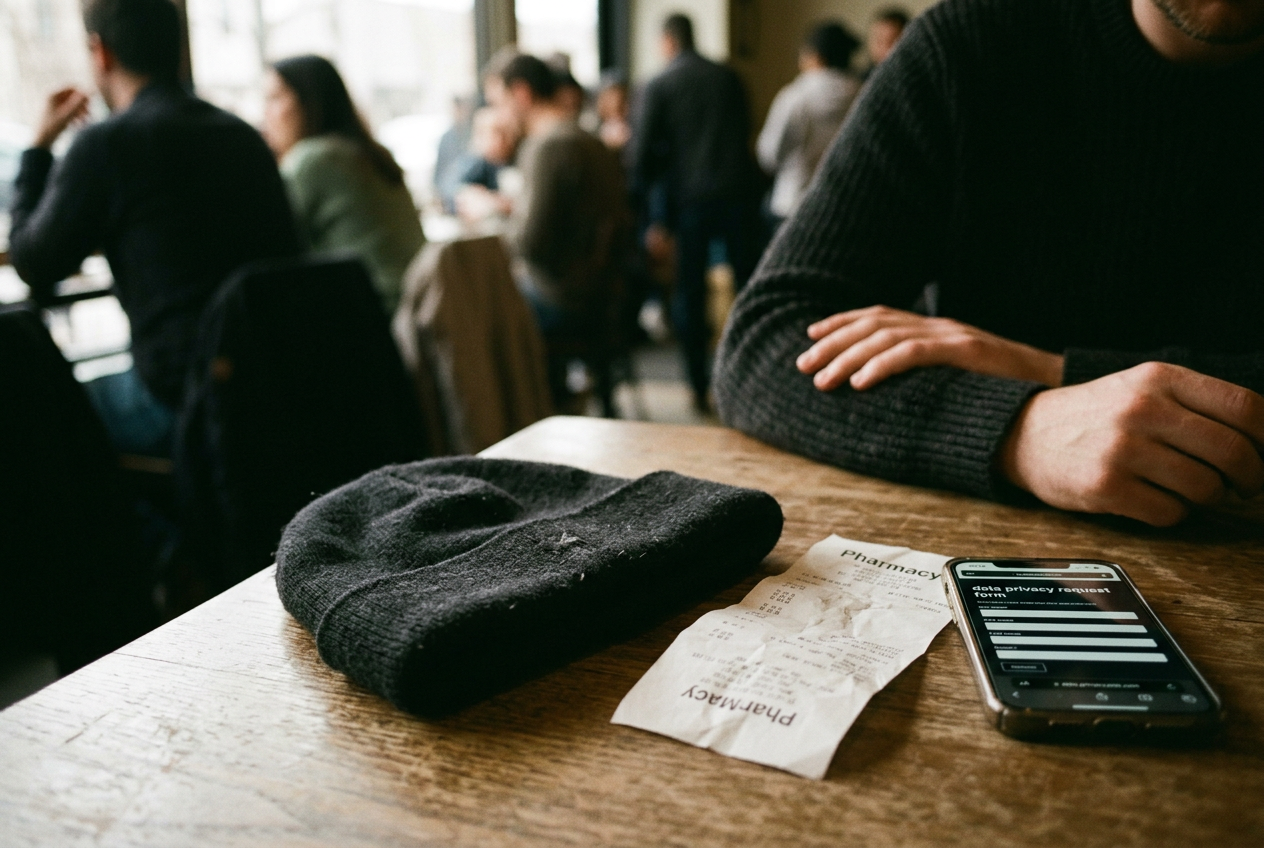
Start with an ordinary black knit cap, cuffed once and worn low over the eyebrows. It is winter clothing, not a disguise. A shopper wearing it passes a camera near the entrance, and software converts the visible parts of the face into a numerical template, meaning a mathematical representation used for comparison rather than a normal photograph.
The system checks that template against a watchlist assembled by the retailer or its vendor. A similarity score crosses a preset threshold. An alert appears on a store-issued phone, often beside a reference image and an accusation inherited from an earlier incident. An employee now has a decision to make while the shopper is still carrying nothing but the cap, a wallet and whatever assumptions entered with the alert.
This is the mechanism beneath retail facial recognition. The software does not establish identity. It ranks resemblance. The store then turns that ranking into a practical ruling: watch this person, question them, remove them, call security or call police.
The Federal Trade Commission’s case against Rite Aid showed how badly that sequence can fail. According to the agency’s public complaint, the pharmacy chain used facial-recognition surveillance in hundreds of stores over several years, receiving alerts that wrongly identified shoppers as people associated with alleged theft or other misconduct. Employees followed some people, searched them, ordered them out or involved police. The FTC said the failures fell disproportionately on people of color.
The final FTC order bans Rite Aid from using facial-recognition surveillance for five years and requires safeguards around any later biometric system, including notice, testing and a complaint process. That is binding on Rite Aid. It is not a national appeals system, and it does not automatically govern the retailer across the street.
The ruling happens at the door
A court case begins with stated allegations, rules about evidence and some route to challenge the result. A retail face alert begins with a camera angle. Its watchlist may contain images taken from prior security footage, incident reports or material supplied through a vendor, while the shopper usually cannot inspect the source image, the matching threshold or the notes attached to it.
The black knit cap matters at the capture stage because any obstruction, lighting change or camera position can affect the image available for comparison. It should not matter to the final judgment unless the system and the employee can establish identity through something stronger than a score. Yet the alert arrives with institutional weight. The employee sees a machine-generated match before seeing the shopper as an unknown person, which makes the requested human review vulnerable to confirmation bias.
Private adjudication is a useful name for what follows. A company creates the watchlist, chooses the software, sets or accepts the threshold, trains the employee and controls the premises. It then decides whether the match is persuasive enough to restrict someone’s access. No judge has ruled.
No criminal charge is required. The immediate sanction is exclusion from a place selling groceries, medicine, clothes or household basics.
Retailers have legitimate reasons to address violence and theft. That does not make every technical shortcut reliable, or every person entered into a watchlist guilty. A loss-prevention file can encode an unresolved suspicion, a mistaken identity or a previous intervention that never produced a charge. Once copied into a face system, that old judgment becomes portable.
The next branch receives the accusation without relitigating it.
This arrangement works for the retailer because speed is the product. A system that pauses every alert for disclosure, evidence review and correction costs more in staff time and weakens the instant deterrence vendors sell. The burden therefore moves outward. The shopper has to discover that facial recognition was involved, identify the responsible company and contest a record they have never seen.
The privacy notice is not an appeals desk
Public privacy notices from major chains including Macy’s and Lowe’s describe categories such as biometric information, facial imagery or data drawn from security footage, often under purposes broad enough to cover fraud prevention, safety and loss prevention. The wording varies, and a policy’s reference to biometric data does not prove that facial recognition is operating at every entrance. It establishes permission and describes possible processing. It rarely publishes a store list, vendor name, matching threshold, false-positive rate or intervention script.
That distinction matters. A disclosure can be legally useful while remaining operationally evasive. It tells the shopper that information may be collected but not whether a particular removal came from an automated match, who approved the underlying watchlist entry or how long that entry will follow them.
Retail policies commonly direct privacy requests to a web form, email address or toll-free number. Those channels are built to handle access, deletion and marketing choices across enormous customer databases. Loss prevention may sit elsewhere inside the company, while a vendor may host the face templates. A shopper can submit an accurate request and still receive a generic answer because the privacy team does not treat an entrance alert as an appeal from a security judgment.
Vendor separation also blurs responsibility. The retailer can point to software output while the vendor says its customer chose the watchlist and response. Neither position changes who stopped the shopper. The store made the consequential decision, even if several companies handled the data behind it.
The Rite Aid order is revealing because it requires some of the machinery that was missing: notice when biometric surveillance drives an action, a way to complain, investigation of complaints and deletion or correction connected to false alerts. Regulators did not discover a mysterious technical cure. They imposed basic administrative work after the system had already operated without enough of it.
The law is a patchwork, not due process
The United States has no general federal biometric privacy law giving every shopper the same rights. The FTC can treat deceptive or unfair practices as violations of federal law, but an FTC case produces relief against the named company. It does not create a courthouse-style appeal available at every retailer.
Illinois’s Biometric Information Privacy Act is stronger than most state laws. It requires covered private entities to give notice, state the purpose and duration of collection, obtain a written release and maintain a retention schedule; it also allows private lawsuits. Other state privacy laws may provide rights to access, delete or correct personal data, though exemptions and enforcement rules differ.
Local rules add another layer. New York City requires commercial establishments to post signs when they collect, retain, convert, store or share biometric identifier information and prohibits selling that information for value. Portland, Oregon, broadly bans private use of facial recognition in places of public accommodation. Neither approach has become the national baseline.
Constitutional due process generally restrains government, not a private store deciding whom to admit. A retailer can often order someone to leave, subject to civil-rights laws and other limits, and refusing can create a separate trespass issue. If police become involved, government rules enter the picture, but the original face match does not become reliable merely because an officer received it.
State law may also let merchants briefly detain someone they reasonably suspect of theft, often called the shopkeeper’s privilege. Its boundaries depend on the jurisdiction and circumstances. A similarity score is not a conviction, and whether it supports a detention is a different legal question from whether the software vendor considers it a match.
Building the record the store failed to provide
After a mistaken intervention, the first useful distinction is between the live encounter and the later paper trail. During the encounter, a shopper can ask whether the action rests on facial recognition, whether the store is issuing a formal exclusion and where the written notice or incident number can be obtained. The aim is not to win an algorithm argument beside the checkout. It is to stop the basis for the decision from disappearing.
Time, location and the exact words used matter. So do a receipt, a screenshot of an app purchase or another record showing why the person was present. If the shopper wore the black knit cap, that detail belongs in the account, along with how it was worn, because the store’s footage may later show the same ordinary clothing that the alert treated as suspicious context.
A privacy request can ask whether the retailer holds biometric information about the person, where it came from, why it was used, whom it was shared with and how long it will be kept. Depending on local law and the company’s policy, the shopper may also request access, correction or deletion. Sending the same factual account to the retailer’s privacy office and corporate loss-prevention department reduces the chance that each will assume the other owns the problem.
A useful complaint identifies the intervention rather than demanding every security secret the company possesses. It asks the retailer to preserve relevant video and alert records, review the source image, correct any false watchlist entry, confirm whether the correction reached its vendor and explain whether an exclusion remains active. Written responses create something a regulator, civil-rights agency or attorney can assess later.
If police were called, incident reports, dispatch records or body-camera procedures may create a separate public record, depending on local law. State attorneys general, the FTC and local consumer or civil-rights offices accept complaints within their jurisdictions. None guarantees quick relief. Their existence still matters because the store’s internal inbox is not independent review.
The cost is mostly pushed onto the person who was flagged: time spent identifying the right entity, discomfort recounting the encounter, possible legal expense and the practical loss of a nearby store. The retailer paid for instant recognition. The shopper pays for slow correction.
Questions people ask
Can a store ban me based only on a facial-recognition alert?
A private retailer can often direct a person to leave, but civil-rights laws, local rules and the facts of any detention still apply. A face alert is company evidence, not a court judgment. The store should be pressed to state whether it issued a formal exclusion and how that decision can be reviewed.
Can
I demand to see the image that matched me?
That depends on the retailer’s policy and the privacy law where the collection occurred. An access request can seek biometric data, source information and sharing details, but security exemptions may limit disclosure. Ask separately for correction of the watchlist entry and written confirmation that the retailer notified any vendor holding the same record.
Does a posted biometric notice mean the store uses facial recognition?
Not necessarily. Some privacy notices reserve broad rights across many locations and technologies, while an entrance sign may indicate active biometric collection under local law. Neither document alone explains whether a specific intervention came from facial recognition. The retailer should identify the system used in the incident and the company responsible for the data.
What should
I save after a mistaken store intervention?
Keep the receipt or purchase record, store location, approximate time, employee or security details, any exclusion notice and every privacy-request response. Record ordinary clothing too, including that cuffed black knit cap, because later review may depend on comparing the store’s footage, alert image and written account rather than accepting the original score.
One update a day
Today's story, in your inbox
One story each morning — no hype, no filler, no algorithm deciding for you.