A Vanishing Instagram Story Can Still Be a New Jersey Record
Instagram removes Stories from public view after 24 hours. New Jersey records law may require government agencies to preserve them much longer, if their content documents official business.
August 11, 2026 · 8 min read

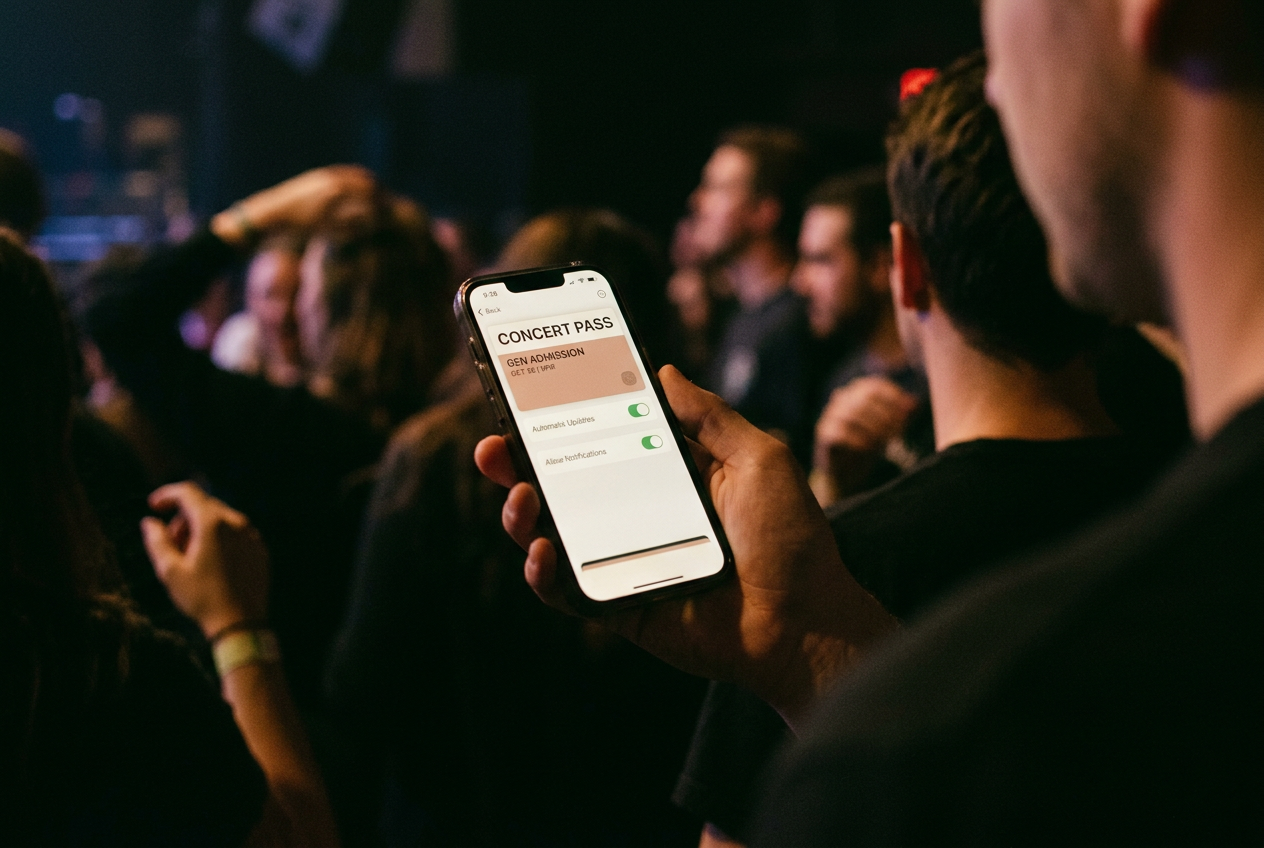
Take one ordinary artifact: a vertical Instagram Story slide announcing that a street will close for utility work. It carries a municipal seal, a map and a line telling drivers to use another route. The colored ring around the account disappears the next day. The government communication may not.
Instagram’s interface trains viewers to treat that slide as temporary. New Jersey records law starts somewhere else. Under the state’s Open Public Records Act, commonly called OPRA, a government record can include information stored electronically that was made, maintained or kept in the course of official business. The format does not decide the status.
The content and the agency’s use of it do.
That leaves a gap large enough for a public body to lose an inconvenient record without ever staging a dramatic deletion. The platform performs the disappearance on schedule. Unless the agency has enabled an account archive, exported the material, captured it with separate software or preserved the original file and associated information elsewhere, the custodian answering a later request may have little to search.
The Story was public. Then it was gone. The paper trail depends on what happened behind the screen.
The platform clock is not the retention schedule
The street-closure slide looks disposable because Instagram gives most Stories a public life of 24 hours. That is a product rule, not a records-management rule. Meta controls how long viewers can tap through the post; New Jersey controls how public bodies may retain and destroy records documenting government work.
New Jersey’s Destruction of Public Records Law requires public agencies to follow approved retention schedules and obtain authorization before disposing of covered records. A retention schedule is the state-approved timetable that says how long a category of record must be kept. It may assign different periods to public-information files, emergency communications, administrative material and duplicate copies.
Classification therefore matters. A Story repeating a road notice already preserved in an official alert system may be treated differently from a Story that contains the only government-issued map, a correction never published elsewhere or a response posted during an unfolding emergency. The first may be a convenience copy. The second may document a decision or communication that exists nowhere else.
The distinction is not visible to the resident watching it. Both slides vanish in the same way.
A records custodian cannot solve that problem after receiving an OPRA request. OPRA generally reaches records an agency possesses; it does not require the government to recreate a vanished Story from memory or build a new document explaining what it once said. If the account owner let Instagram’s public display expire and no retrievable copy remains, access law and retention law split apart. The requester may receive no responsive record even if the agency should have preserved one.
That is the mechanism underneath the disappearing post. A failure to retain can defeat the later right to inspect, while the absence produced by that failure becomes the reason inspection cannot occur.
Archiving is a choice, not a feature of publicity
Government social-media archiving does not require a screenshot ritual every morning. Agencies can preserve posts through account-level archives, exports, records-management systems or commercial services that capture social content outside the platform. Vendors including ArchiveSocial and Pagefreezer market this work to public bodies, promising to retain posts, edits, comments and other contextual data in searchable form.
The expense is not limited to a software subscription. Someone must decide which accounts belong to the agency, connect them to the archive, monitor failed captures, apply retention categories and respond when a request covers a post that has been edited or deleted. Livestreams increase the burden because the record may include a long video, its caption and audience responses, each with different storage and review demands.
Manual preservation costs less in procurement and more in staff time. Saving the original image used for the street-closure Story preserves the graphic, but it may not preserve when it was posted, which account posted it, whether a later slide corrected it or what text was added inside Instagram. A screenshot catches appearance but can omit links, timestamps and interactive elements. An account-data export may provide another layer, though its contents and structure remain subject to Meta’s tools.
None of these methods is neutral. The agency selects what it captures and what it calls a record before a member of the public knows there is anything worth requesting. That choice can determine whether a deleted police livestream remains reviewable, whether replies to a mayoral announcement survive and whether an edited public-health post can be reconstructed after the official account presents the replacement as if it had always been there.
The municipal slide returns here as a test. Preserving only the map file proves that the artwork existed. Preserving the Story with posting data shows that the municipality used it to direct the public at a particular stage of the closure. Those are different records of government conduct.
Deleted does not mean exempt
Deletion is not an exemption under OPRA. A public agency cannot make a record confidential by removing it from Instagram, and a platform’s label does not override statutory protections or disclosure duties. If a preserved copy exists and no exemption applies, its former status as a Story does not place it beyond a records request.
That does not mean every item connected to an official account must be released without review. New Jersey law contains exemptions, and agencies may redact protected information. Livestream comments and direct messages can also raise questions about privacy, security and whether the material was made, maintained or kept as part of official business. The agency still has to identify the legal basis for withholding a responsive government record.
“It was deleted” is a description of the interface, not that basis.
Account ownership can complicate the search. A municipal communications office may control the password while a department supplies the media and an outside consultant schedules posts. If each participant assumes somebody else holds the archive, the public-facing account can produce records that sit outside the systems searched by the records custodian.
The official badge and government seal create the appearance of one institutional speaker. Behind them may be a loose chain of phones, shared credentials, cloud folders and vendor dashboards. Public access fails at the handoff.
Request the record around the Story
A request for “all deleted social-media posts” can be broad enough to trigger delay, fees or a denial for insufficient specificity, especially if it spans several accounts and years. A stronger request identifies the account, a limited period, the subject and the record types likely to show how preservation works.
For the street-closure Story, that could mean seeking the Story image or video, the version retained in the account archive, export files, posting logs, deletion records and any approved retention schedule applied to the account. A requester investigating the system rather than one slide could seek the agency’s social-media policy, its records-management policy, a list of official accounts and a contract or statement of work for any archiving vendor.
Those records expose more than whether a single post survives. The contract can show which platforms the tool covers and whether it captures edits or comments. The policy can show who may delete material. Retention documents can reveal whether the agency has classified social posts by their content or treated the entire feed as promotional material with little lasting value.
Responses should also be read for the boundaries of the search. An agency may say it found no responsive records without saying whether it checked Instagram’s account archive, an employee’s device, a communications vendor or a separate content-management system. OPRA does not turn every request into an audit, but the description of where records are kept determines what the custodian can reasonably locate.
The cleanest alternative is mundane. Every New Jersey public body using ephemeral formats can publish its account list, retention policy and capture method, then preserve posts in a system the records staff can search without borrowing the social-media manager’s phone. That costs storage, staff attention and, in many cases, vendor money. Government chose the platform because publishing was cheap.
Keeping the evidence is the part that was deferred.
The street-closure slide may never become controversial. That is not the point. Records rules are built before anyone knows which ordinary notice will later establish what officials said, when they said it and what they changed after the public began looking.
Questions people ask
Is an
Instagram Story automatically a public record in New Jersey?
No. Its status depends on its content and whether it was made, maintained or kept in the course of official business. A Story issued through an agency account to announce a closure, policy or emergency instruction is more likely to qualify than material unrelated to government work.
Can an agency deny a request because the Story expired?
Expiration does not create an OPRA exemption. If the agency retained a responsive copy, it must review that record under the same disclosure rules that apply to other electronic material. If no copy remains, OPRA generally does not require the agency to reconstruct one, though improper disposal may present a separate records-management problem.
What records show whether an agency archives social media?
The useful records include social-media policies, approved retention schedules, account inventories, archiving contracts, export procedures and deletion logs. Together, they show who controls each account, what the agency captures and whether a post remains searchable after Instagram removes it from public view.
Do screenshots preserve everything in a Story?
Usually not. A screenshot can preserve the visible slide but omit posting data, links, edits, adjacent slides and other context. For the municipal street-closure notice, the underlying graphic proves what the image contained; an archived Story record can also establish how and when the government presented it.
One update a day
Today's story, in your inbox
One story each morning — no hype, no filler, no algorithm deciding for you.