At Ketamine Clinics, “Integration” May Mean a Check-In
US telehealth providers sell “integration” as therapy, coaching, group support or software. The word sounds clinical, but the labor and access behind it vary sharply.
August 14, 2026 · 8 min read

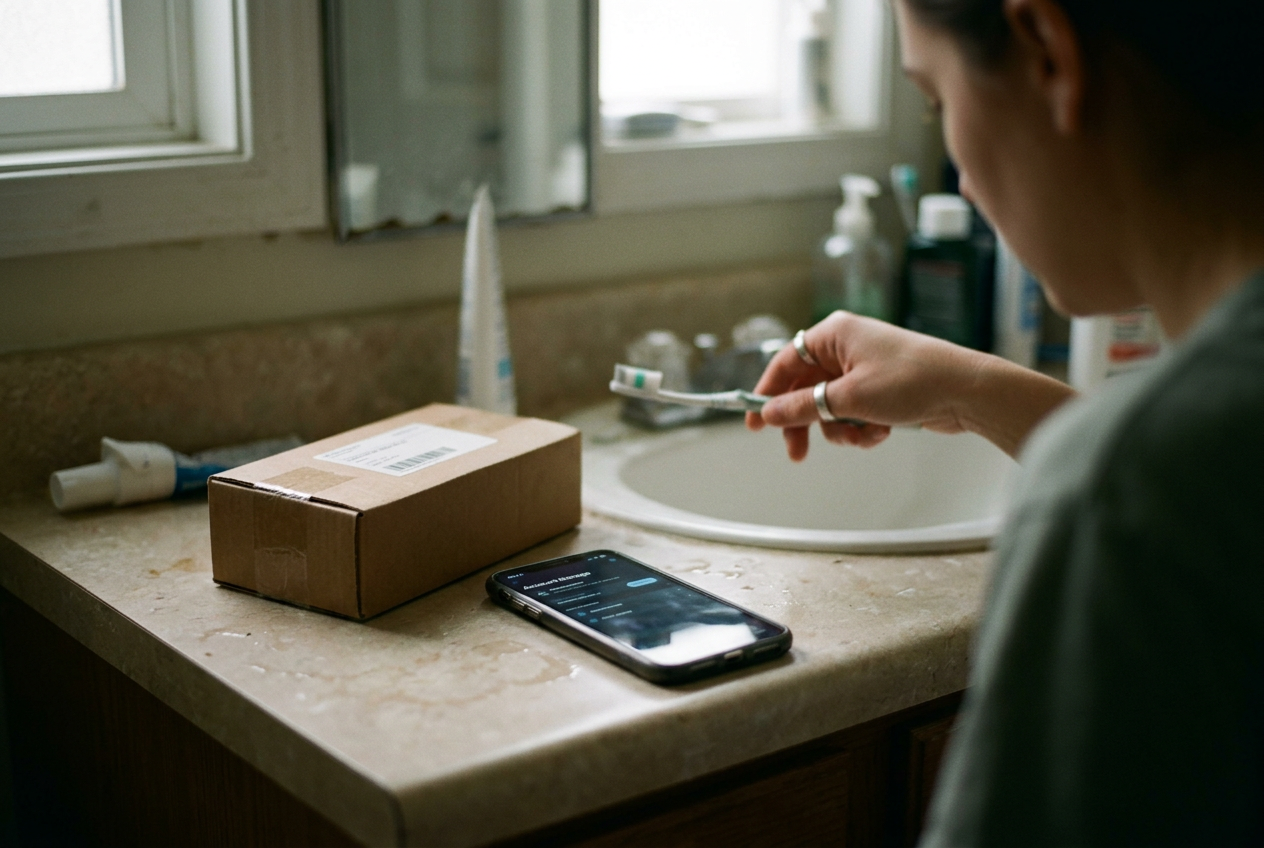
The concrete object at the center of this market is not a therapy couch. It is the daily Joyous check-in, completed on a phone after the company’s low-dose ketamine treatment begins.
Joyous says these digital check-ins help its medical team monitor treatment and personalize dosing. That is follow-up. It may also prompt reflection. Yet it illustrates the problem with “integration,” a soothing word that online ketamine companies use for services with different purposes, credentials and levels of human contact.
Across public materials from Joyous, Mindbloom, Better U and Innerwell, integration can describe app prompts, journaling, educational exercises, peer groups, coaching or sessions with a licensed therapist. These services are not interchangeable. A worksheet cannot assess an emerging psychiatric symptom. A coach cannot automatically perform the work of a psychotherapist.
A daily symptom report may reach a clinical system without giving the patient a substantial conversation with a clinician.
This is reporting based on public brand documentation, not medical advice. Provider offerings and eligibility rules can change, while the glossy overview page rarely settles what happens when someone needs more help than the standard pathway anticipates.
The check-in sets the boundary
Ketamine is a dissociative anesthetic, meaning it can alter perception and a person’s sense of separation from their body or surroundings. Some telehealth companies prescribe compounded ketamine for psychiatric use at home, an off-label use that has not been approved by the Food and Drug Administration. Compounded drugs also do not pass through the FDA approval process applied to a finished branded medicine.
That distinction matters because “online ketamine therapy” can sound like one standardized treatment. It is a commercial category containing different dosing models, screening systems and support structures. Spravato, the branded nasal form of esketamine approved for specific depressive conditions, follows a separate model involving administration in a certified healthcare setting and required observation.
Joyous organizes its public pitch around frequent low-dose treatment and frequent digital feedback. Its daily check-in is concrete: the patient reports how things are going, and the system uses those reports as part of monitoring and dose adjustment. Joyous also describes medical consultations and access to its care team, but the check-in itself should not be mistaken for a psychotherapy session merely because it arrives after ketamine.
That phone screen is useful as a test. Whenever a provider says integration, replace the word with the specific interaction being purchased. If the answer is a form, call it a form. If it is a moderated group, identify the moderator.
If it is therapy, the patient materials should name the clinician’s license and explain whether the session is included.
One word, several kinds of labor
Mindbloom’s public materials place integration inside a broader program of preparation, ketamine sessions, educational content and support. The company distinguishes its guides from licensed medical providers and describes group integration circles as a source of shared reflection. That can offer structure and human contact, but a guide or peer group occupies a different clinical position from an individual therapist.
Better U presents integration through a mixture of app-based material, journaling, coaching or specialist support, and community programming. Its materials frame the work after a ketamine experience as a way to reflect and turn insights into changes in ordinary life. The practical value depends on the service attached to the label: whether contact is individual or group-based, scheduled or on demand, included or sold at another tier.
Innerwell’s materials make psychotherapy more explicit. The company advertises treatment plans that can combine psychiatric oversight with sessions involving licensed therapists, while other plans may emphasize medical care and self-guided resources. That clearer use of credentials is meaningful, although a therapy-forward homepage still does not tell a prospective patient how much therapist time their selected plan contains.
Joyous is the useful edge case. Its daily check-in performs a recognizable monitoring function without needing to carry the full cultural promise of psychedelic integration. The patient reports information. The company reviews or processes it.
Clinical contact may follow when appropriate. This narrower mechanism can be easier to understand than a program that places a journal, a coach and a therapist beneath the same expansive word.
None of these formats is inherently pointless. Journaling may help someone remember an experience that became difficult to articulate. A group can reduce isolation. Coaching can create accountability around sleep, relationships or routines when it stays within the coach’s scope.
Therapy can address distress and recurring patterns with a licensed professional. Trouble begins when the sales language smooths away those boundaries.
Why the language stays loose
“Integration” has no single regulated definition across this market. It comes from psychedelic practice, where it broadly refers to making sense of an experience and carrying any useful material into everyday life. Telehealth companies can therefore apply it to a broad range of post-session products without making the same concrete promise as “individual psychotherapy with a licensed clinician.”
The looseness works commercially. Licensed one-to-one care requires credentialed labor, scheduling and state-specific authorization. Software lessons, asynchronous messaging and groups can support more patients with less clinician time. A company can surround medication delivery with a feeling of continuity while reserving expensive professional attention for selected appointments, higher service levels or escalation.
That does not prove the lighter-touch services are cynical. It explains why the word appears so often. Integration lets a clinic describe the part of treatment after dosing without committing, in the headline, to who performs that work or how quickly a person can reach them.
The structure also divides responsibility. A prescriber may evaluate eligibility and medication concerns. A guide may help with preparation and reflection while disclaiming medical or mental health advice. A therapist may enter only if the purchased plan includes therapy.
The patient sees one brand, one portal and one treatment narrative, but the people inside it may hold sharply different duties.
Return to the Joyous check-in. Its strength is repetition and low friction. Its limitation is also visible: a person can submit information without receiving a sustained human exchange at that moment. The more a provider relies on asynchronous care, meaning communication that does not happen live, the more important its response rules and escalation pathway become.
Reading the package without the mood lighting
Patient materials should make four distinctions legible in ordinary language. The first is credentials: prescriber, licensed therapist, coach, guide or peer moderator. The second is format, including individual video appointments, groups, messaging and self-guided exercises. The third is allocation: how much live access comes with the purchased program and what requires another payment.
The fourth is escalation: who responds to worsening symptoms, unusual behavior, severe anxiety or a medication problem.
Marketing pages often describe access with words such as “ongoing,” “personalized” or “unlimited.” Those terms need operational detail. Unlimited messaging may mean a patient can send any number of messages, rather than that a clinician will answer immediately. Personalized content may mean software changes prompts after a questionnaire.
A care team can include people with several roles, only some of whom can diagnose or provide psychotherapy.
Follow-up access also has a time cost. Group circles occur on a schedule. Therapy requires appointments. Worksheets require a patient to do unpaid reflective labor when they may already feel depleted.
The daily Joyous check-in asks for less time, but it gathers a thinner slice of the patient’s experience than a live conversation can.
No worksheet or coach should be treated as emergency coverage. Ketamine can carry risks including sedation, dissociation, increases in blood pressure, impaired judgment and misuse; individual risk depends on health history, other substances and the treatment model. FDA communications have warned about compounded ketamine products used for psychiatric conditions, particularly where at-home administration lacks onsite monitoring.
A provider’s safety materials should state what requires urgent help, how patients contact the clinical team and what happens if treatment appears unsuitable. That information matters more than whether the journal looks considered.
Integration may be worthwhile. The label alone is worthless. On the next provider page, find the equivalent of that daily phone check-in and identify exactly who is on the other side.
Questions people ask
What does integration mean after ketamine treatment?
It generally means reflecting on the experience and deciding whether anything from it belongs in everyday life. At an online clinic, however, the actual service may be psychotherapy, coaching, a group meeting, messaging, journaling or an app exercise, so the provider’s concrete description matters more than the label.
Is an integration coach the same as a therapist?
No. A licensed therapist has regulated training and a defined professional scope, although the exact license and permissions vary by state. “Coach” and “guide” can describe useful support roles, but patients should not assume those workers can diagnose conditions, provide psychotherapy or manage medication.
Does a daily digital check-in count as clinical follow-up?
It can form part of follow-up when a medical team uses the answers to monitor symptoms, side effects or dosing. It does not automatically provide real-time assessment or a therapeutic conversation, so patients need clear information about response times, clinician access and escalation.
What should patient materials say about integration?
They should identify the worker’s credentials, the format of contact, how much live support the package includes and where urgent clinical concerns go. If those details remain vague until after payment, the reassuring word “integration” is doing more work than the disclosed service.
One update a day
Today's story, in your inbox
One story each morning — no hype, no filler, no algorithm deciding for you.