Check the Blank Before You Buy the Basement-Show Shirt
A merch table can fund the night and still sell a bad garment. Inspect the blank, print and fit before you turn scene loyalty into another shirt you avoid wearing.
August 11, 2026 · 8 min read
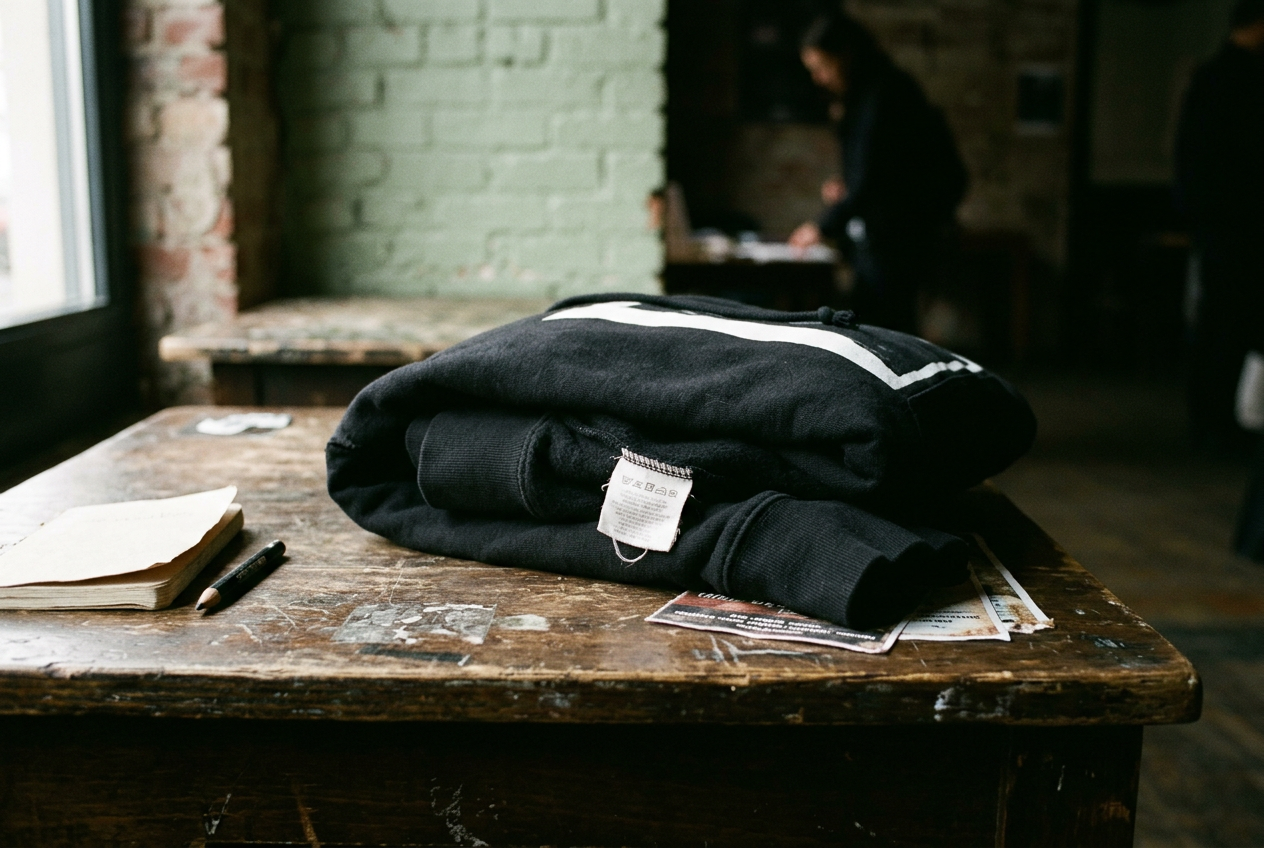
Use one common object as the test case: a black pullover hoodie with a large white back print, bought one size up to wear over a T-shirt. It is the sort of purchase made under poor lighting while another band moves amplifiers past your ankles. The design is good. The room is hot.
The decision gets perhaps 40 seconds.
That is enough time, if you know where to put your hands.
Merch has become more important to touring artists as the costs of moving people and equipment have risen while the dependable income available from recorded music remains thin. This does not make every object on the table sacred. It makes the table a compressed retail operation, often run by somebody who was loading the van an hour earlier, with choices shaped by cash flow, storage space, minimum orders and whatever could arrive before the tour started.
The result can be a durable shirt printed nearby by people who know their press. It can also be a thin blank carrying a plastic-feeling transfer that begins lifting after a few washes. Both may have the same band name across the front.
Start underneath the artwork
The blank is the undecorated factory-made garment onto which the artist or printer adds a design. Bands rarely sew their own T-shirts. They select from blank suppliers, choose colors and sizes, then pay a printer or fulfillment company to decorate them.
On the black hoodie, ignore the white back print for a moment. Hold the body up to the light. Dense fabric blocks more light and usually feels less vulnerable to twisting, though weight alone does not guarantee comfort or decent construction. Rub the inside against your forearm.
A heavily brushed fleece can feel luxurious at the table, then shed and flatten quickly; a tighter, less theatrical interior may age better.
Find the fiber label. Cotton tends to breathe and absorb moisture, while polyester adds resilience and can help a hoodie hold its shape. A blend is not evidence of fraud. It is information about how the garment may feel, dry and retain odor.
If the label is missing, cut out or unreadable, you are being asked to take the material on faith.
Now pull gently across the side seam, then release it. The fabric should return without the seam rippling into a small topographic event. Check whether the front and back panels hang square. Twisted construction becomes more obvious after washing, when one side seam begins migrating toward your stomach and the hoodie develops a private opinion about where your torso ends.
The cuffs deserve attention because they take abuse first. Stretch one just enough to fit your hand through, then see whether it recovers. Loose ribbing at the table will not become firmer at home. On a T-shirt, inspect the collar the same way and look at the shoulder tape, the narrow stabilizing strip inside the seam.
A collar that already waves under fluorescent light has shown you the future.
Read the print with your fingers
Most basement-show merch uses one of several decoration methods, and each asks something different of the garment.
Screen printing pushes ink through a mesh stencil onto the fabric. A well-cured screen print can survive years of ordinary wear, but a thick deposit may feel stiff, especially across a large back design like the one on our black hoodie. Bend the printed area gently. Fine surface texture is normal.
Existing cracks, loose edges or ink that flakes under a fingertip are not.
Direct-to-garment printing, usually shortened to DTG, applies ink to fabric through a specialized printer. It can handle detailed, multicolor artwork without requiring a separate screen for each color. On dark garments it often needs a white underbase, which can leave the design feeling heavier than expected. Look for uneven coverage and pale areas where the image should be solid.
A heat-applied transfer bonds a printed film or transfer layer to the garment under pressure. Direct-to-film, or DTF, is a common version with a smooth, slightly raised feel. Transfers can produce sharp colors at small quantities, which helps artists avoid ordering boxes of unsold sizes, but broad panels may feel clammy and can fail at the edges if application or care is poor.
Do not perform a destructive test at somebody else’s table. Fold the fabric around the image, feel its flexibility and inspect the perimeter under the brightest light available. The goal is not to identify a morally superior print method. It is to spot bad execution.
That white back print changes the wash plan. Turn the hoodie inside out so the design rubs against less hardware and fabric, use cold water, avoid aggressive drying and follow the care label when it gives stricter instructions. Heat is useful when a printer cures ink; repeated high dryer heat at home can be rough on decorated garments, elastic ribbing and cotton-rich fabric. Air drying costs time and space, which counts as part of ownership even if the merch table declines to mention it.
Size the garment, not your identity
A merch-table large is not a stable unit. Blank manufacturers use different body widths, sleeve shapes and grading, the way dimensions change between sizes. Artists may also switch suppliers between print runs when stock disappears or a tour deadline wins.
The fastest useful preparation happens before the show. Measure a shirt or hoodie you already wear. Lay it flat and record the width from armpit to armpit, the body length from high shoulder to hem and, for a hoodie, the sleeve from shoulder seam to cuff. Keep the numbers in your phone.
At the table, ask whether you may compare the garment against them.
If no tape measure exists, align the merch hoodie with the shoulder width of the hoodie you wore into the venue. It is crude, but better than trusting a letter printed on a sticker. Check the neck opening and hood depth too. A body can fit while a shallow hood pulls the collar backward all night.
Our black pullover was meant to sit over a T-shirt, so buying one size up sounds sensible. The trap is assuming width, length and sleeve volume all increase in the proportion you want. Some blanks get longer without becoming much roomier; others add a wide body while leaving the cuff and upper sleeve tight. Hold the garment against yourself, place the shoulder seams where your shoulders are, and look at the hem.
Mirrors are optional. Geometry is not.
Ask about exchanges before paying. Independent merch operations may lack spare inventory, staff or a practical way to process returns after the van leaves town. That constraint is real. It does not make an unusable size less wasteful.
The sale is support, minus everybody in the middle
The amount on the card reader is gross revenue, not the artist’s profit. From it may come the cost of the blank, printing, freight, sales tax, payment processing, staffing and a venue merch cut. Some venues take a share of sales for allowing merchandise inside the building, which means the room can earn from the same hoodie after already earning through tickets, drinks or rent.
Production method changes the risk. Ordering a larger batch can lower the cost per garment, but it ties up money and creates leftover sizes. Smaller runs reduce dead stock while raising unit costs. On-demand fulfillment avoids carrying boxes between cities, though the outside company takes its share and the artist gives up some control over print consistency, packing and delivery.
Rights can complicate the picture further. A self-released local band selling shirts it financed may retain most of what remains after direct costs. An artist working through a label, management company, merch licensee or tour agreement may have additional parties attached to the sale. You cannot infer the contract from the folding table.
Buying direct from the artist usually creates a shorter payment chain than buying an unofficial copy from a marketplace seller who scraped the artwork. Still, purchase is not automatic scene support. A badly chosen hoodie can become waste while the venue takes a cut and the band absorbs the production risk. The slogan remains emotionally convenient because it turns shopping into virtue and removes the need to inspect the cuff.
If the garment is poor, buy music directly where possible, pay the door, add money without taking an object if the setup allows it, or come back for a better item later. Support does not require accepting every material decision made under a deadline.
Run the home test before buying again
Treat the first wash as reporting. Photograph the black hoodie’s care label, hem and print before it enters the machine. Wear it over the same kind of T-shirt you intended, noting whether the sleeves bind, the hood drags at the collar or the ribbed hem climbs when you sit. Then wash it according to the label and dry it using the method you can maintain in real life.
Afterward, lay it flat. Compare the side seams, print edges, cuff recovery and body length with the earlier photos. A little cotton shrinkage or surface change does not condemn a garment. A sharply twisted body, separating transfer or collar that loses its shape after one compliant wash tells you not to buy the same blank again, however good the next design is.
Keep the blank label in your phone beside the measurements. At the next show, you are no longer buying a mysterious medium or large. You are deciding whether this manufacturer, cut and print method earned another place in the rotation.
Questions people ask
How can
I tell whether a merch shirt is good quality?
Check the fiber label, collar recovery, seam alignment and print edges before focusing on the design. Dense fabric and a famous blank name do not guarantee longevity, but loose ribbing, twisted panels, flaking ink and unreadable care information give you concrete reasons to leave the shirt folded.
Does buying merch always support the band more than streaming?
A direct merch sale can put meaningful money into a touring operation, but the artist pays production costs and may also lose shares to venues, processors or licensing partners. Streaming and merchandise follow different contracts, so there is no universal comparison. The shortest visible payment chain is usually the better clue.
Which merch printing method lasts longest?
A properly cured screen print has a strong durability record, but workmanship and washing matter as much as the method. DTG and film transfers can also last when prepared and applied well. Inspect the print you can buy, follow its care label and avoid treating the dryer’s hottest setting as neutral.
Should I size up in a band hoodie?
Size up only after checking garment dimensions against a hoodie you already wear, especially if you plan to layer it. The larger size may add unwanted length without enough room through the shoulders. Hold the black hoodie at its shoulder seams, inspect the cuff, and check the label before the lights go down.
One update a day
Today's story, in your inbox
One story each morning — no hype, no filler, no algorithm deciding for you.