Instagram Trial Reels Make Strangers Test Your New Niche
Trial Reels reduce the follower backlash that can greet an experiment. In return, Instagram gets a stream of content tested against strangers before creators commit it to their feeds.
August 18, 2026 · 7 min read
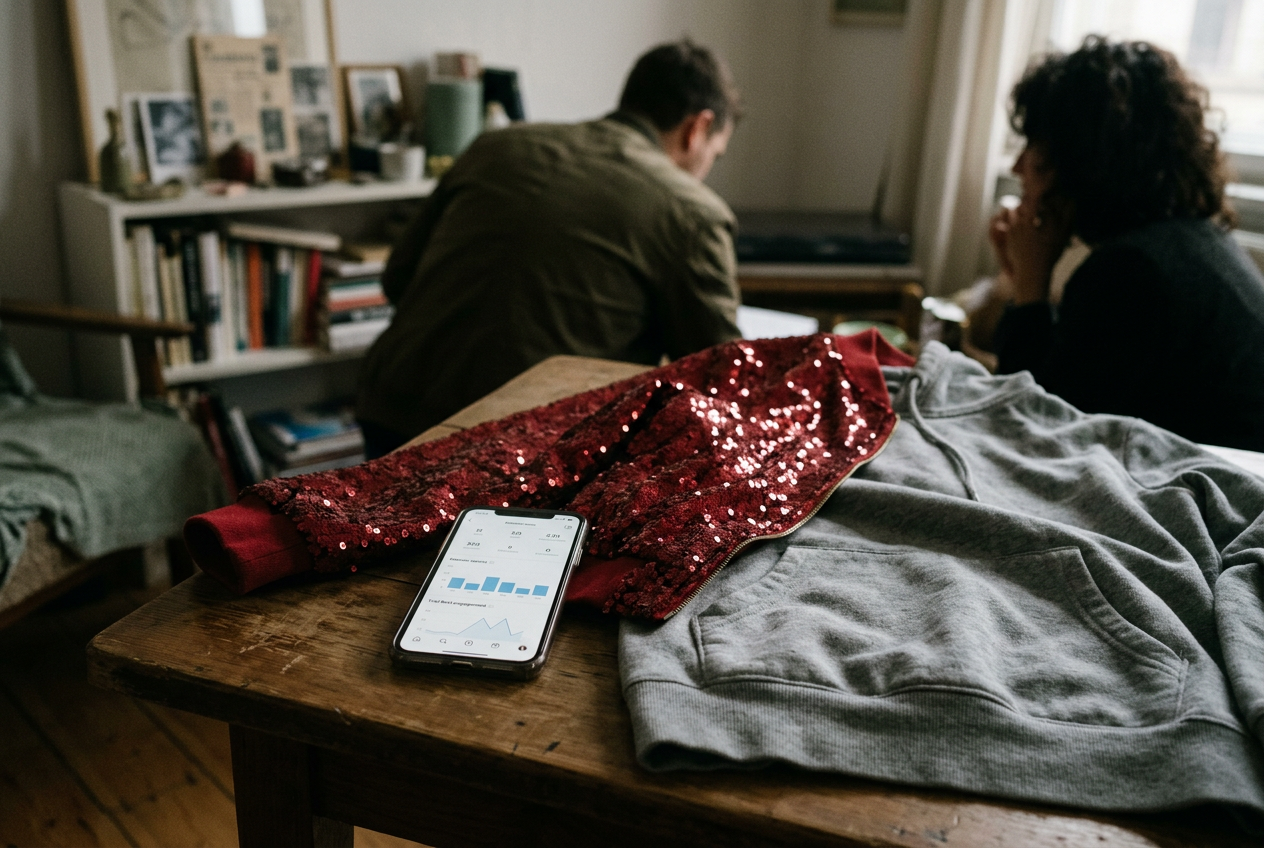
Keep one hypothetical Reel in view. A creator known for restrained office outfits films a red sequined jacket over a gray cotton hoodie, with the jacket open and the hoodie sleeves pushed past its cuffs. It is brighter and less polished than the posts her followers usually receive. The clip took an evening to style, shoot and edit.
Posting it normally would mean asking an established audience to accept a sudden change in taste.
Posting it as a Trial Reel changes that first audience. Instagram sends the video to people who do not follow the account, collects their reactions and reports a narrow set of results to the creator. The red jacket gets an audition before it gets a place on the profile.
That is the creator pitch: experiment without alarming the regulars. It is useful. It is also a new division of labor, in which creators supply speculative videos, strangers perform the testing through their attention and Instagram keeps the most valuable part of the experiment, which is the behavioral data used to decide what travels.
Who sees a Trial Reel
Meta announced Trial Reels in late 2024 and later expanded access more broadly. Availability can still depend on account and rollout status, so the relevant proof is the control appearing in the Reel composer rather than a creator’s follower count or professional self-description.
Once posted, a Trial Reel is shown to non-followers first. It does not initially appear on the creator’s main profile grid or Reels tab, and followers are not supposed to receive it through the ordinary feed or Reels recommendation path. The creator can see it and knows it is marked as a trial. Viewers are not presented with the clip as a survey or told they have joined a product test.
The separation is not absolute. Meta’s documentation says followers may encounter a Trial Reel if someone sends it to them in a direct message, or if they find it through a page connected to the same audio, location or filter. Trial means withheld from normal follower distribution, not private, anonymous or sealed away from the people whose judgment made the feature attractive.
Our red jacket can therefore escape the lab. A follower might receive it from a friend and recognize the account immediately. The creator has lowered the likelihood of an awkward niche collision, not purchased immunity from it.
That distinction matters because Trial Reels are often described as a way to post without followers seeing. The more accurate version is less comforting: Instagram does not proactively distribute the Reel to followers in the usual places, but the post still exists inside a network built for copying, forwarding and resurfacing media through shared metadata.
What Instagram tells the creator
About 24 hours after a Trial Reel is published, Instagram provides key engagement metrics including views, likes, comments and shares. It may also compare the Reel’s performance with previous Trial Reels from the same account. These are response signals, meaning recorded viewer actions that the ranking system can use as evidence of interest.
The dashboard does not turn strangers into a focus group in the traditional sense. Nobody explains that the jacket looked wrong with the hoodie, that the first second felt slow or that the styling was good but belonged on another account. A view says the clip played. A like marks a tap.
A share suggests somebody thought another person should receive it, although the reason could range from admiration to private ridicule. The creator gets totals, not motives.
Instagram offers two routes after the test. The creator can manually share the Reel with everyone, moving it onto the profile and making it eligible for ordinary follower distribution, or enable automatic sharing. Under the automatic option, Instagram can release a trial more widely if it judges the Reel to have performed well based on views gathered during its first 72 hours.
“Performed well” is doing heavy work. Meta does not give creators a universal public threshold that guarantees release, and a view-based decision still sits inside Instagram’s own distribution choices. The platform selects which non-followers receive the test, observes how that selected group behaves, then evaluates the outcome of the exposure it arranged.
If the red jacket reaches people who already watch maximalist styling videos, it may produce a clean result. If it reaches viewers who swipe past fashion clips, the weak response can look like a verdict on the idea when it is partly a verdict on the test audience. Creators see the score. Instagram controls the room.
The niche becomes less social and more computational
An established niche is not just a subject. It is an agreement formed through repetition. Followers learn what an account supplies, creators learn which deviations trigger indifference, and both sides settle into a pattern that may become commercially useful. A beauty creator who starts discussing labor conditions, or a film account that begins posting cooking clips, risks lower engagement and follower loss even when the new work is good.
Trial Reels reduce that social risk because the first judgment comes from people with no established expectation of the account. The creator does not have to spend follower goodwill on every experiment. For anyone whose income depends on maintaining a recognizable feed for sponsors, clients or subscribers, that buffer can make a meaningful difference.
The risk does not disappear. It moves.
Instead of asking whether existing followers will tolerate the sequined jacket, the creator must make the clip legible to strangers and to a recommendation system, software that selects which posts each viewer is likely to watch. The Reel needs to communicate its category quickly enough for an unfamiliar person to stay. It needs visual and audio cues that Instagram can connect with prior viewing behavior. Experimentation becomes safer at the level of personal reputation while remaining constrained by machine-readable familiarity.
That can favor a particular kind of novelty: a new topic packaged in an old vertical-video grammar. The subject may change, but the opening frame still has to declare itself, the pacing still has to resist the swipe, and the payoff still has to arrive before a viewer who owes the creator nothing leaves. Trial Reels let creators move outside a niche more easily, provided the new material can survive a cold audience.
The red jacket is allowed to be unexpected. The Reel explaining it cannot afford much confusion.
Instagram gets the cleaner experiment
Every new Reel has a cold-start problem, which means the system has little response data about that specific video when ranking begins. Follower distribution usually helps solve it, but followers are a biased sample. They may watch because they recognize the creator, like out of loyalty or ignore a post because it violates an expectation built over months.
A Trial Reel removes some of that history from the first round. Instagram can place the video among non-followers whose past behavior suggests possible interest, then measure whether the content works without relying as heavily on the creator’s existing social graph. That does not make the experiment scientifically neutral. Account history, recommendation eligibility, topic classification, audio, moderation decisions and the composition of the selected audience still shape the result.
It does make the test cleaner for Instagram’s ranking purposes.
The platform also gets more candidate material. Creators who would have buried an odd draft can publish it as a trial, adding fresh inventory without immediately cluttering follower feeds. The creator absorbs the production cost and the uncertainty. Non-followers spend the attention.
Instagram receives evidence about both the video and the viewers who encountered it.
This is why the focus-group comparison only goes so far. In a conventional focus group, the organizer recruits participants to answer defined questions. Trial Reels recruit people silently through recommendation, record what they do and treat behavior as the answer. The creator receives enough information to decide whether to publish more widely, while Instagram retains the richer context of who was shown the Reel, what else they watch and how the candidate ranked against competing clips.
None of that makes the feature useless. A creator may prefer a partial test to throwing every experiment at followers, especially when the alternative is maintaining a niche that has become creatively exhausting. The red sequined jacket can fail quietly enough that the next post returns to navy tailoring without a public explanation.
But Trial Reels do not free creators from optimization. They offer a second gate, managed by the same company that controls the first one. The experiment feels lower-risk because Instagram has separated the audiences. The price is that experimentation now arrives preformatted as ranking research.
Questions people ask
Can followers see an Instagram Trial Reel?
Instagram does not initially distribute a Trial Reel to followers through the creator’s main grid, Reels tab or ordinary recommendation paths. Followers can still encounter it if somebody sends it to them or through pages associated with the same audio, location or filter, so a trial should not be treated as private.
What metrics do creators get from Trial Reels?
Instagram reports views, likes, comments and shares, generally beginning around 24 hours after posting, and may compare performance with earlier trials. Those numbers show actions rather than reasons, so they cannot explain whether viewers liked the subject, the editing, the creator or the joke made in the comments.
When does a Trial Reel get shown to everyone?
A creator can manually share a trial with everyone after reviewing its results. Creators can also enable automatic sharing, which allows Instagram to release the Reel more widely when the platform judges its view performance during the first 72 hours to be strong enough.
Do Trial Reels help creators change niches?
They reduce the immediate social cost by testing a new subject among non-followers rather than an audience trained to expect something else. They do not remove ranking pressure. The new material still has to hold strangers quickly, fit recommendation rules and earn distribution from an audience selected by Instagram.
One update a day
Today's story, in your inbox
One story each morning — no hype, no filler, no algorithm deciding for you.