That AI Strawberry Cake Cannot Come From That Batter
A glossy clip promised a tall strawberry layer cake from one thin bowl of batter. Reconstructing the recipe exposed missing leavener, missing fat and an impossible amount of cake.
September 7, 2026 · 8 min read
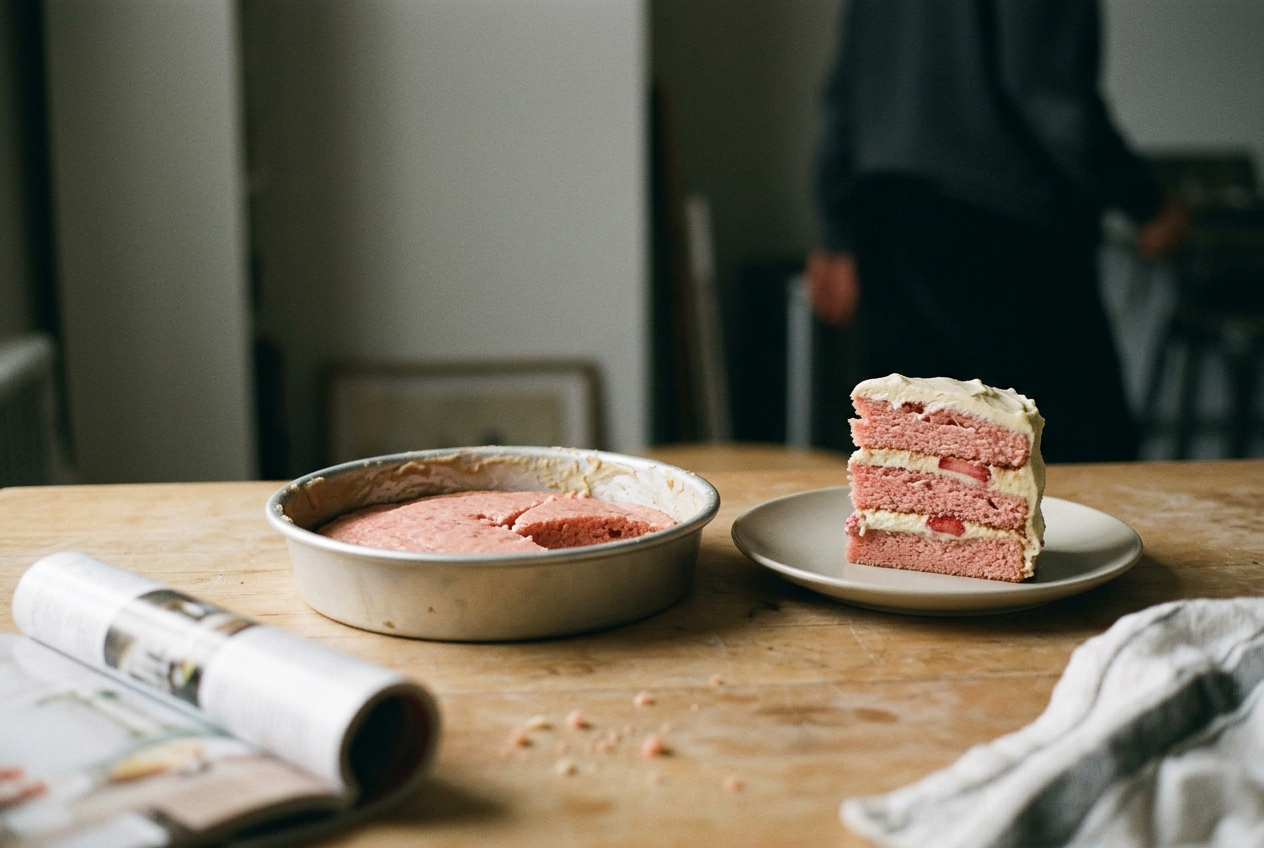
The strawberry cake looked finished before it had earned the right.
In the short synthetic clip I used for this test, strawberries dropped into a blender with two eggs. Sugar followed, then milk, flour and vanilla. The resulting pink batter went into one eight-inch round pan. A cut later, a tall slice appeared with three even sponge layers, pink frosting between them and a crumb fine enough to belong to a conventional birthday cake.
The image was plausible. The sequence was not.
That distinction matters more than whether a stray strawberry changes shape between frames. Visual glitches are becoming less dependable as synthetic video improves, while recipe logic remains stubbornly causal. Flour still needs structure. Cake batter still occupies measurable space.
One shallow pan does not produce three layers because the camera moved closer.
So I treated the clip as a recipe rather than a spectacle. I transcribed each visible ingredient, estimated quantities from the utensils and bowl, then made the batter in the order shown. The test took longer than watching several dozen clips. That imbalance is part of the business model.
Start with the ingredient ledger
The clip never presented a complete written recipe. It offered ingredient names in captions, one at a time, while the hands moved quickly enough to discourage accounting. This is common short-form grammar: each new addition creates motion, the edit supplies momentum, and the finished dish arrives before the viewer has held the whole formula in mind.
I paused anyway.
The visible recipe contained roughly eight medium strawberries, two eggs, about half a cup of granulated sugar, half a cup of milk, one cup of all-purpose flour and a small pour of vanilla. There was no butter or oil. No baking powder or baking soda appeared. The batter filled only the bottom portion of the bowl, yet the final cake contained enough sponge for three substantial layers.
A ledger turns vibes into obligations. Write down everything entering the bowl, including water, oil used on a pan and ingredients that appear only in captions. Record every vessel too. If the clip starts with two eggs and later shows four yolks in the batter, that is evidence.
If chopped fruit disappears before baking but returns intact in the crumb, note it without trying to rescue the edit.
The strawberry cake failed this first pass twice. Its ingredient list did not explain the rise, and its quantity did not explain the final volume.
Measure the cake before judging the pixels
For the first reconstruction, I used 130 grams of hulled strawberries, two large eggs, 100 grams of sugar, 120 milliliters of whole milk, 125 grams of all-purpose flour and a teaspoon of vanilla. These amounts matched the visible scoops closely enough to test the depicted method without pretending the clip had supplied precision.
Blending the strawberries with the eggs introduced some air, but the flour and milk produced a loose batter closer to a thick crepe mixture than a standard layer cake. In an eight-inch pan, it formed a shallow pool. I baked it at 350°F until the center set and a thermometer confirmed it was cooked through.
The result was a thin, dense pink slab with a damp line near the base. It tasted recognizably of strawberry and egg. It was edible. It was not the cake in the final shot.
The failure was visible before the pan entered the oven. Batter volume sets a hard ceiling on cake geometry, even when leavening expands it, and this bowl did not contain enough flour, egg or incorporated air to create the amount of sponge shown. A useful audit therefore compares containers rather than trusting close-ups. Look at the batter depth against the pan wall.
Count the pans. Compare the height of the baked layer with the knife blade or serving plate.
The clip showed one shallow pour. Its final shot required several times that quantity, plus cooling, trimming, frosting and assembly that never entered the sequence.
Check what makes the transformation happen
A model generating cooking footage can reproduce associations between familiar images without maintaining a working account of the chemical transition. Strawberries belong with pink batter. Batter belongs in an oven. Ovens produce cake.
The sequence reads cleanly because each neighboring image makes cultural sense, even though the full chain does not.
Cake is less accommodating. Eggs can provide structure and some lift when whipped, but the clip blended them with wet fruit rather than whipping them into a stable foam. Flour contributes starch and gluten. Sugar sweetens, tenderizes and holds moisture.
Milk adds more liquid. Nothing in the depicted method supplied enough trapped gas to raise that wet mixture into a light sponge.
This is the stage where many audits become too generous. A viewer quietly adds baking powder in their head, assumes the creator omitted a boring step and preserves the clip’s claim. Do not repair the recipe yet. First identify the mechanism it says it uses.
For the strawberry cake, the implied mechanism was oven heat alone. That cannot account for the depicted crumb. The model had guessed the visual destination without representing the route.
This test also catches less obvious failures. An emulsion, a stable mixture of liquids that normally separate, needs the right ingredients and mixing order. Caramel needs enough heat to change sugar rather than merely warm it. Bread needs fermentation or another source of gas.
A glossy cheese pull cannot emerge from every white substance the model has learned to place on pizza.
Make the smallest repair
A failed synthetic recipe can still contain the outline of something worth cooking. The people saving these clips are not foolish for wanting the dish. The final image has been optimized to make wanting easy; the unpaid technical work begins after the save.
For a second pass, I kept the strawberries, eggs, sugar, milk, flour and vanilla, then added baking powder and melted butter. I reduced the milk because the fruit already carried substantial water. The corrected batter baked into a soft, modest strawberry cake with a more open crumb, though the fruit muted the rise and the color faded in the oven.
It still did not produce the tall slice. That required either multiple batches or a larger formula divided among smaller pans, followed by cooling and assembly. The alternative cost was not only extra ingredients. It was more oven time, more washing up and a waiting period before frosting so the layers would not tear or melt the filling.
That gap is useful. A repair shows precisely what the clip externalized onto the viewer. If one added ingredient fixes the result, the post may be careless. If the repair requires a new ratio, different mixing method, extra pans and an omitted hour of work, the video has not compressed a recipe.
It has replaced one.
The platform rewards the reveal, not the method
Short-form ranking systems do not need to understand cake. They observe signals such as whether people finish a clip, replay a confusing moment, share it or save it. A rapid transformation can perform well under those incentives because the beginning creates a question and the polished result supplies closure before scrutiny interrupts the loop.
Synthetic production lowers the cost of manufacturing that closure. An account can generate more dishes without buying ingredients, testing ratios, cleaning a kitchen or waiting for anything to cool. The platform gets another piece of inventory beside which it can place advertising. The account may receive reach, monetization where available, or traffic toward other pages and products.
The viewer pays first in attention, then potentially in groceries and wasted time.
Recipe creators who test their work face the opposite economics. Failures consume food. Clear instructions take space. Cooling time is visually dead.
Corrections weaken the fantasy that dinner moved from blender to plate in seconds, even though those corrections are what make a recipe useful.
The system therefore selects for visual confidence while pushing verification downstream. That does not mean every abbreviated cooking clip is synthetic or false. It means the platform’s visible success signals do not distinguish a tested recipe from a convincing sequence of food-shaped images.
Use the finished dish as evidence
When a clip feels wrong, work backward from the final plate. Count layers. Inspect the crumb. Look for browning, melted fat, set custard or intact pieces that require a specific treatment.
Then compare those features with the ingredients and actions you recorded.
The strawberry slice supplied the strongest evidence against its own recipe. Its pale, even crumb suggested a conventional leavened cake. Its height demanded more batter. The clean frosting bands required fully cooled layers and assembly outside the pan.
None of those facts appeared upstream.
Ignore AI-detection theatrics unless they help. A warped fork proves that a frame is warped. A recipe audit establishes whether the instructions can do what the post promises, which remains useful even when the clip was filmed by a person, generated by a model or assembled from both.
Questions people ask
How can
I tell whether an AI recipe video will work?
Write down every ingredient and action, then compare the batter quantity, cooking method and final structure. Missing measurements are inconvenient; missing causal steps are decisive. A three-layer cake needs enough batter, a source of lift, multiple baked layers and time to cool before assembly.
Do all short cooking videos leave out important steps?
No. Compression can remove repetitive chopping or waiting without changing the recipe’s logic. The warning sign is an omitted step that performs essential work, such as leavening dough, setting a custard or cooling a cake before frosting, especially when the finished texture depends on it.
Is it safe to try a recipe from a synthetic video?
Treat the clip as an idea until you can verify temperatures, cooking times and food-safety steps through a tested recipe. Synthetic footage may depict cooked meat, set eggs or preserved foods without showing the conditions required to make them safe, and visual doneness alone is a poor standard.
Who benefits when an impossible recipe goes viral?
The platform gains watchable inventory, while the posting account may gain distribution, monetization or traffic elsewhere. The cost of verification lands on the viewer and on tested-recipe creators, whose slower work must compete with dishes that never had to survive an oven.
One update a day
Today's story, in your inbox
One story each morning — no hype, no filler, no algorithm deciding for you.