Plan B Is Over the Counter. The Shelf Still Makes You Ask.
New Jersey pharmacies can sell emergency contraception without an age check or prescription. Locked cases, counter placement and split store hours turn that legal right into a timed negotiation.
August 14, 2026 · 8 min read
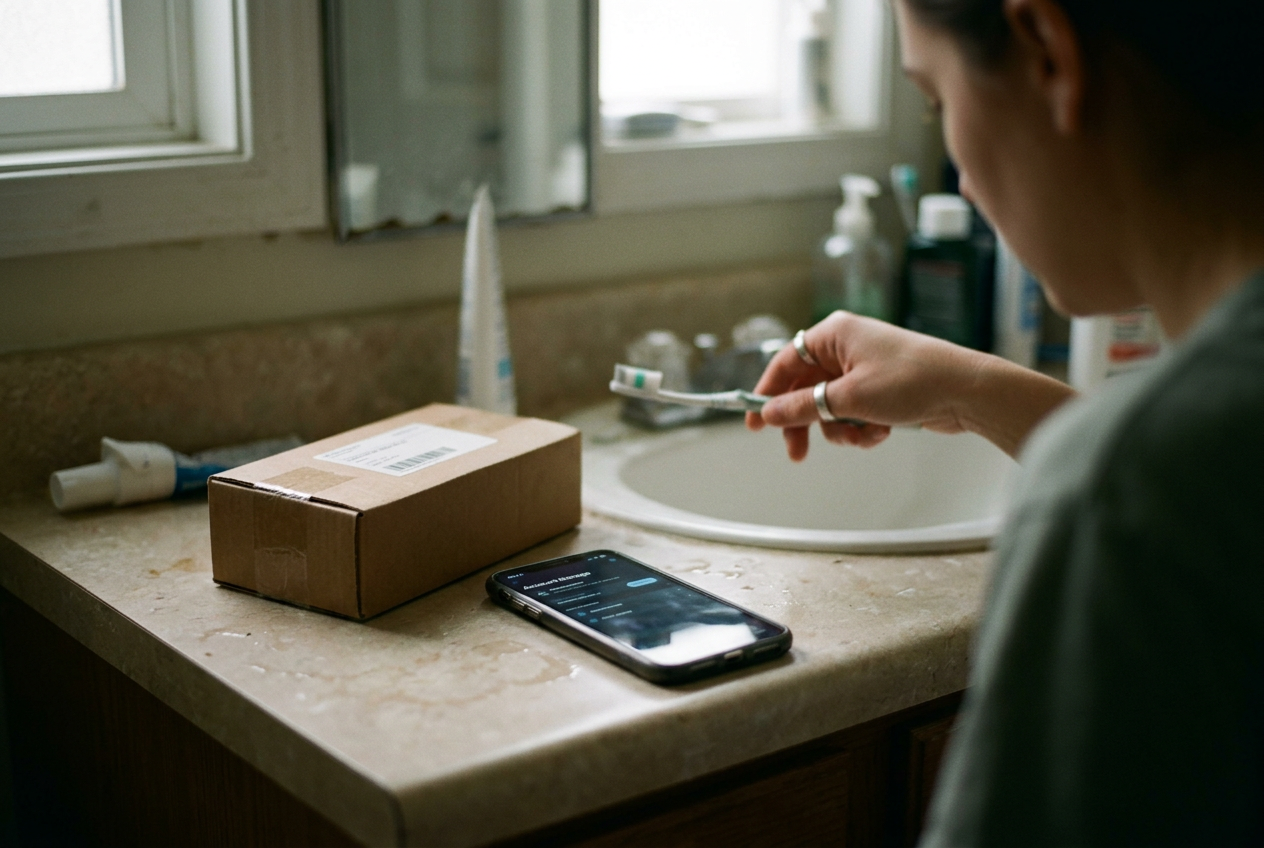
The object at the center of this problem is unimpressive: a small cardboard box containing one 1.5-milligram levonorgestrel tablet. Plan B One-Step is the recognizable brand, though several generic versions contain the same active ingredient at the same dose. The medication is supposed to be taken as soon as possible after unprotected sex or a contraceptive failure.
Its value declines while the customer is being sent from aisle to counter to locked cabinet.
That box has been available over the counter without an age restriction for years. No prescription is required. Federal rules do not require identification, and a customer can buy it for somebody else. In regulatory language, the problem was settled.
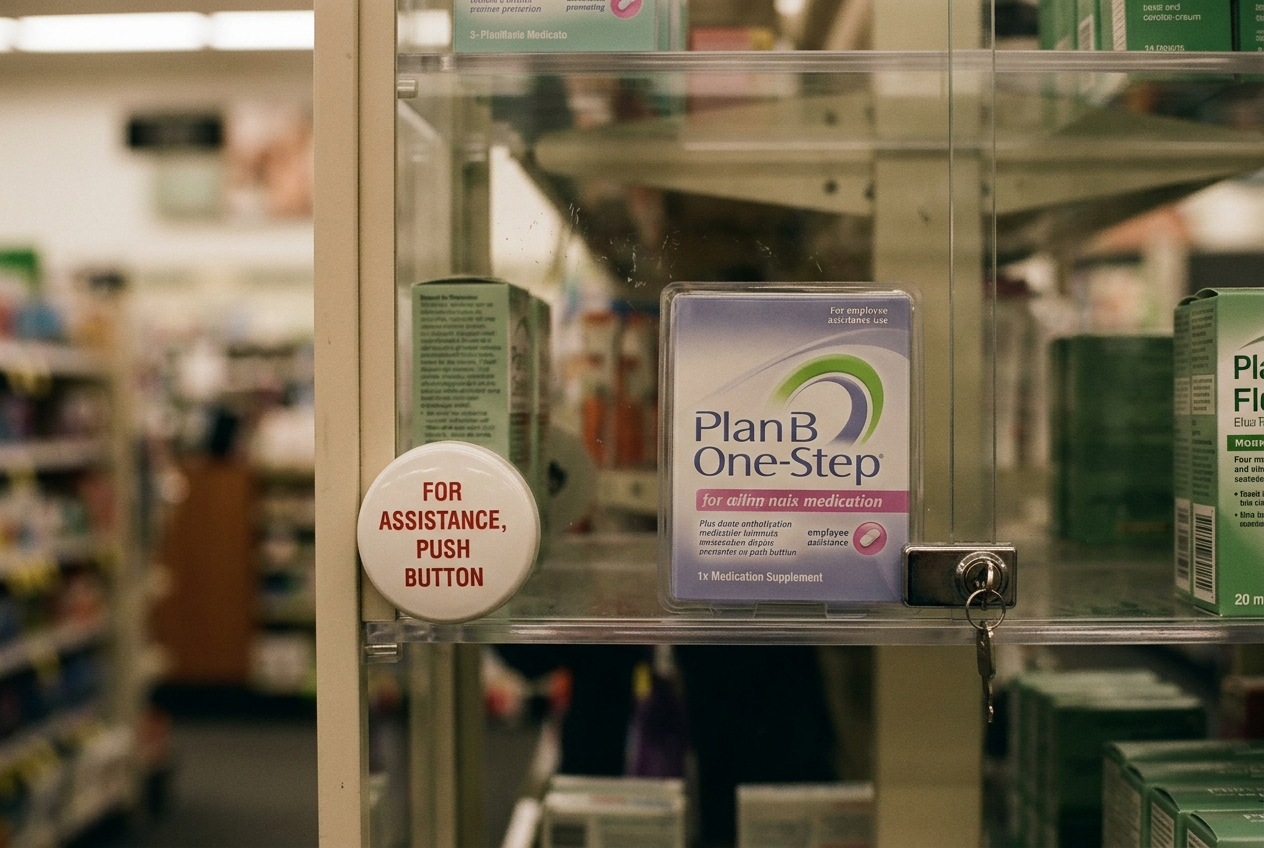
Walk the purchase path rather than reading the rule, though, and access becomes conditional. The box may sit openly in family planning. It may be fitted with an electronic security device. A shelf card may instruct the customer to find an employee.
Some stores keep it behind the front register; others put it behind the pharmacy counter, where a legal over-the-counter purchase becomes dependent on pharmacist or technician availability. The front store might remain open after the pharmacy closes, preserving the appearance of access while removing the person who can retrieve the product.
This variation is often treated as a customer-service flaw. It is more revealing than that. Retailers have taken one federal category, over the counter, and built several local categories inside it: available without asking, available after asking, available only during pharmacy hours, available if the employee understands the age rule. The law governs the box.
Store operations govern the buyer.
The shelf is part of the product
A pharmacy comparison based only on whether Plan B appears in inventory misses the mechanism. “In stock” can mean a box is physically present but inaccessible without an employee, and an online listing cannot show whether that employee works at the front register, inside the pharmacy, or somewhere across a large store carrying keys for multiple locked cases.
Public reporting and pharmacy access studies have repeatedly documented this range of placements, including open shelves, security packaging, locked displays and behind-counter storage. New Jersey’s dense mix of chain drugstores, supermarkets, big-box retailers and independent pharmacies does not produce one consistent route. Policies can vary between retailers, while execution can vary between branches of the same retailer.
The Plan B One-Step box explains some of the retail logic. It is small, portable and expensive compared with many ordinary shelf items. Loss-prevention systems classify products through theft risk, resale potential and replacement cost, then respond with tags, cases or employee retrieval. “Shrink,” the retail term for inventory lost through theft, damage or administrative error, is measured at store level and often managed without much concern for what a locked case does to a time-sensitive purchase.
That does not make the lock neutral. The store saves itself one kind of risk by transferring another to the customer. Retrieval costs time. It also requires disclosure, even if the disclosure is only pointing at a case while an employee walks over.
A person buying toothpaste can abandon one aisle and try another brand. A person buying emergency contraception may be counting backward from a contraceptive failure, calculating whether a partner can see the card charge, or trying to finish the purchase before a ride leaves.
The locked case turns privacy into labor.
Old restrictions survive as store folklore
Age confusion persists because policy history leaves residue. Plan B moved through several regulatory stages before the federal government permitted over-the-counter sale without an age restriction. Retail training, cultural memory and old assumptions did not all update together. Public access checks have continued to find cases in which shoppers encounter unnecessary identification requests or incorrect claims about who may buy the medication.
The current rule is plain: levonorgestrel emergency contraception such as Plan B One-Step and its over-the-counter generics can be sold regardless of age or gender. It is different from ella, a prescription emergency contraceptive containing ulipristal acetate. It is also different from obtaining an intrauterine device through a clinician. Conflating those products creates an opening for employees to apply the wrong requirement to the box in front of them.
A mistaken age check may last less than a minute when another worker corrects it. That minute still tells the buyer that the purchase can be challenged. Someone who expects embarrassment, lacks identification or has previously been refused may leave before discovering the mistake. Access policy tends to count the eventual sale; it rarely counts the customer who sees a counter, anticipates an argument and turns around.
This is why worker anonymity matters in reporting the problem. An individual cashier did not design the federal rollout, choose the case hardware, schedule the pharmacy or write a chain’s training module. Naming a worker would personalize a failure produced by a retail system that gives lightly trained employees authority over a medically time-sensitive transaction, then acts surprised when the rules arrive distorted.
Store hours conceal two clocks
Drugstores often operate on split schedules. The retail floor keeps one set of hours. The pharmacy counter keeps another, with meal breaks, reduced weekend coverage or earlier closing times. That distinction makes sense for prescription dispensing, which requires licensed supervision.
It should not determine access to a product that federal regulators have already moved outside the prescription system.
Yet behind-pharmacy placement reconnects the Plan B box to the very gatekeeper the over-the-counter decision removed. A customer can stand inside an open store, see emergency contraception listed on the retailer’s website and still be unable to buy it because the pharmacy shutter is down. Calling ahead does not resolve every version of the problem. The person answering may confirm inventory without describing placement, or may route the call to a counter that is already busy.
Pharmacist availability creates another ambiguity. A buyer may want a private consultation about medication interactions, timing or alternatives. That is a legitimate service. Mandatory contact is different.
Counseling offered on request supports access; a placement system that forces every customer to approach the pharmacy converts support into permission.
The distinction becomes sharper outside conventional business hours, when emergency contraception may be most difficult to obtain and most useful to have quickly. The product is sold through delivery platforms and online retailers, but shipping time can defeat the point, while same-day delivery adds fees, inventory uncertainty and another company handling intimate purchase data. Convenience is not the same as immediate possession.
The branded box buys recognition, not a cleaner route
Plan B One-Step often carries a price premium over generic levonorgestrel emergency contraception. The brand’s advantage is recognition. A customer under pressure may reach for the name already lodged in public language rather than compare active ingredients on several packages.
The shelf can exploit that urgency without intending to. Brand and generic boxes may be separated, placed under different security measures or held in different locations. A retailer can technically offer a lower-cost generic while making the familiar product easier to identify, or place every version behind a retrieval step that discourages comparison. The customer pays partly for medicine and partly for certainty.
Insurance coverage does not erase the logistics. An over-the-counter product may be covered under some plans only when obtained through a prescription or processed in a particular way, bringing the pharmacy counter back into the transaction. Cash avoids that administrative path but exposes the customer to the full shelf price. Ordering online may lower the cost for advance purchase, which helps people able to plan for a future emergency and does little for someone already inside the window after sex.
Retailers could reduce the friction without waiting for another law. They could keep levonorgestrel emergency contraception on an open shelf near condoms and pregnancy tests, use security tags that cashiers remove at checkout, place clear signs wherever stock is held, and train front-store workers that no age check or pharmacist approval is required. If theft risk makes a locked case unavoidable, access to the key should follow store hours rather than pharmacy hours.
None of this requires a wellness campaign. It requires treating the product’s location as part of whether the product is available.
The small Plan B box makes the contradiction visible. Federal policy says it can leave the store like any other over-the-counter medication. Retail design can still make the buyer locate a key holder, disclose the purchase and hope somebody on shift remembers the rule. Legal access survives on paper while time and embarrassment do the restricting.
Questions people ask
Do you need ID to buy Plan B in New Jersey?
No. Plan B One-Step and over-the-counter generic levonorgestrel emergency contraception have no federal age restriction, and identification is not required. A store employee asking for ID may be applying an outdated rule or confusing the product with a prescription-only form of emergency contraception.
Can a pharmacy keep emergency contraception behind the counter?
Retailers can control product placement and may use counters or locked cases for loss prevention. The problem is practical: placing an over-the-counter medication behind the pharmacy can make it unavailable when that counter is closed, even if the rest of the store remains open.
Does a pharmacist have to approve the purchase?
No pharmacist approval is required for over-the-counter levonorgestrel emergency contraception. A pharmacist can answer medication questions, but a customer should not have to receive counseling or provide an explanation before buying it. Prescription emergency contraception follows a different purchase path.
Why do stores lock up Plan B?
Stores may classify the small, relatively expensive package as a theft risk. A lock can reduce inventory loss, but it also makes customers find an employee and reveal what they are buying. That burden matters more for a time-sensitive, stigmatized product than it does for an ordinary locked cosmetic or electronic accessory.
One update a day
Today's story, in your inbox
One story each morning — no hype, no filler, no algorithm deciding for you.