Ring Closed a Police Request Tool. The Footage Still Moves.
Ring removed police Requests for Assistance from Neighbors. Warrants, emergency disclosures, public posts and a homeowner’s Share button still provide routes to the same camera footage.
August 11, 2026 · 8 min read

The concrete object left behind is a Share button.
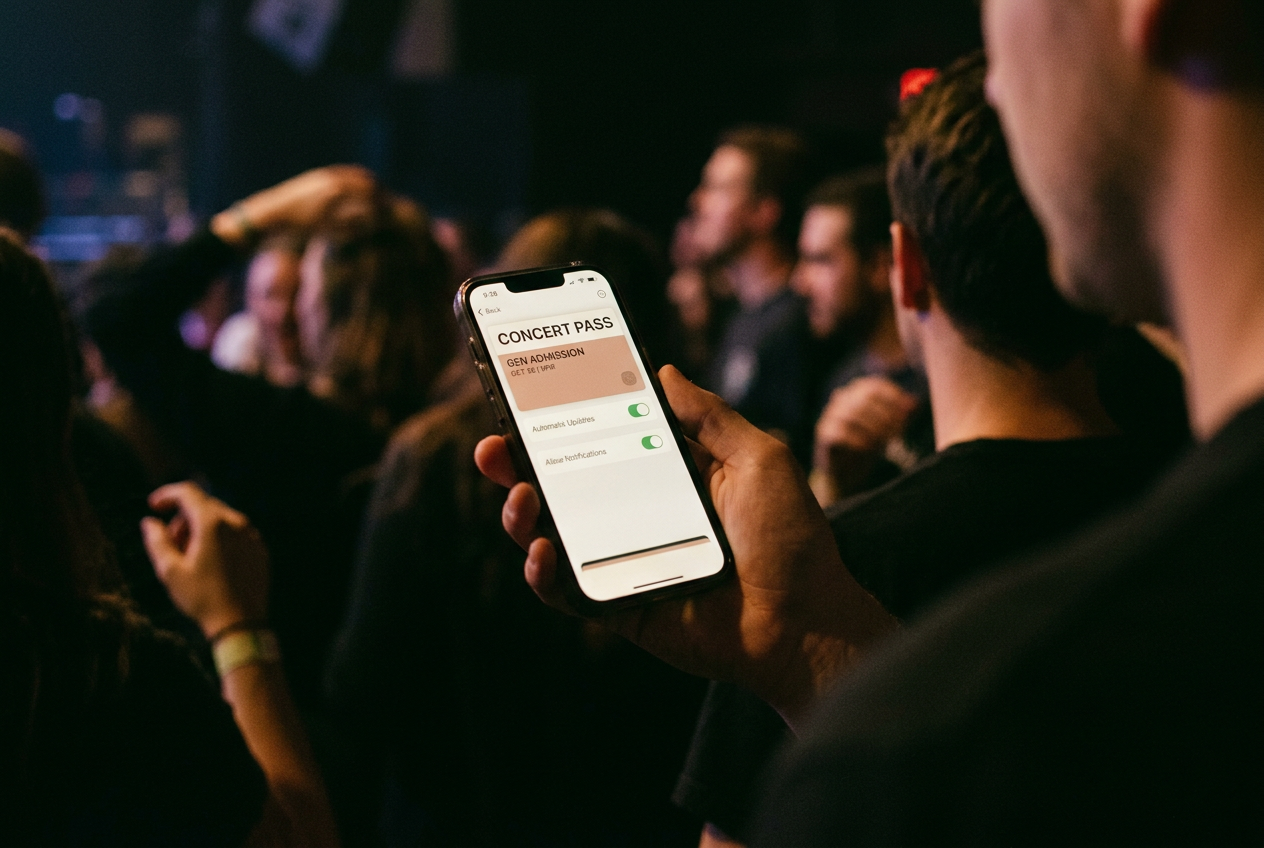
Open a recorded event in the Ring app and the owner can send the clip onward, depending on the available app controls, through a link, a message, a download or another sharing option. Ring’s support documentation presents this as ordinary account functionality. It is ordinary. It is also one of the remaining routes by which privately recorded footage becomes police evidence.
That matters because Ring’s January 2024 announcement was narrower than the headlines it generated. The company ended Requests for Assistance, a feature that let verified public safety agencies use Ring’s Neighbors service to ask users in a selected area for relevant recordings. It did not announce that police could no longer receive Ring footage. It removed one company-operated request channel.
The distinction is bureaucratic, which is where the power sits. A portal determines who can ask, how widely the request travels and how little effort the request costs. Closing it changes the transaction. It does not erase the recording, take it out of Amazon’s systems or disable the owner’s Share button.
The request box that disappeared
Requests for Assistance turned a police canvass into a platform function. Rather than knocking on doors one at a time, an enrolled agency could publish a geographically targeted request through Neighbors, the local social service attached to Ring. Users could decide whether to respond and provide recordings. Ring described participation as voluntary, and police did not receive a list of people who declined.
The tool still gave law enforcement something valuable: distribution. It placed an official request inside software already connected to household cameras, then brought the response mechanism close to the stored clip. Ring supplied the audience, the interface and the legitimacy of appearing as a verified agency. The company did not need to compel anybody for the design to reduce the labor of asking.
Removing Requests for Assistance raised that labor cost. Agencies could no longer use that feature to send one request toward many nearby Ring users. Ring said public safety agencies could continue using Neighbors for public safety information and community updates, but the dedicated footage-request format was gone.
This was a real restriction. It narrowed an especially convenient path and reduced the degree to which Ring itself organized the police canvass. Calling it the end of police access, however, confuses one interface with the larger system around it.
A warrant reaches the company, not the button
Amazon’s law-enforcement guidelines describe a separate route for government demands directed to Ring. Under those guidelines, Ring requires valid legal process before disclosing customer information, except in an emergency, and says it reviews demands for legal sufficiency and appropriate scope.
The required instrument depends on what police seek. Account information that does not contain communications can be available under a subpoena or another qualifying order, while stored video content generally requires a search warrant. A search warrant is a court-authorized demand based on probable cause; in this setting, it can require the provider holding the recording to produce responsive footage.
This route does not depend on the owner tapping Share. It depends on the recording still being stored, the demand identifying material Ring can locate and the demand satisfying the applicable legal standard. Because Ring is a cloud-connected service, footage retained in the account may exist in infrastructure controlled by the company rather than solely on hardware inside the home. That centralized copy is the point of leverage.
Ring says it may challenge demands that are defective or overbroad. Its guidelines also say it generally notifies users before disclosing information unless the law prohibits notice or Ring concludes that notice could create a risk, such as danger to a person. That leaves an important gap between a company policy and an owner’s practical visibility: a customer may receive notice, receive it later or receive none while a binding restriction remains in force.
Police can also submit a preservation request, which asks a provider to retain specified account data while investigators obtain the necessary legal order. Preservation is not disclosure. It can still matter when an account’s normal storage period might otherwise cause a clip to disappear before the warrant arrives. The request freezes the evidentiary possibility first; the fight over access comes after.
None of this restores the old neighborhood request box. It bypasses it.
Emergency disclosure is the company’s decision
Ring’s guidelines provide another path when authorities report an emergency involving imminent danger of death or serious physical injury. In those circumstances, law enforcement can submit an emergency request without the ordinary legal process, and Ring says it evaluates each request individually.
An emergency disclosure is not a standing police feed. The agency must describe the threat, identify the information sought and explain why the requested material relates to the emergency. Ring then decides whether the request meets its standard and whether it has responsive data to provide.
The route is narrower than a general investigation, yet its governing decision initially belongs to the company rather than a judge. Ring receives the account from police, applies its emergency policy and decides whether delay for formal process would carry the claimed risk. Brand documentation explains the criteria and procedure, but it cannot show the public how consistently those judgments are made across individual cases.
The distinction is consequential. A warrant places judicial authorization before disclosure. An emergency request relies on an exception designed for speed, with company review standing between the request and the footage. Ending Requests for Assistance left that exception intact because it lives in Ring’s disclosure rules, not in Neighbors.
Owners can still complete the handoff
The Share button returns the system to its simplest form. Police can ask a resident directly, and the resident can provide a clip voluntarily. An investigator may knock on a door, leave contact information or make a request through channels that Ring does not operate. If the owner agrees, the app makes export and distribution relatively easy.
This route requires no demand to Amazon because the account holder is doing the disclosing. The same applies when somebody downloads a recording and hands over the file. Once a copy leaves the Ring account, changing its settings or deleting the original does not recall copies held by recipients.
Neighbors posts create a related exposure. A user can choose to publish camera footage to a local feed, where other users may view it under the service’s rules. Public safety agencies that remain present on Neighbors can see material made available there like other eligible participants, even though they can no longer issue the retired request through the old tool. A person who posts a clip has already moved it beyond the private event history.
Voluntary does not mean structurally neutral. The person at the door may understand a police request as optional, or may not. A neighbor may upload footage showing people who never agreed to join Ring’s system, because doorbell cameras record visitors, workers and passersby as well as account holders. The owner controls the camera and the Share button.
The recorded person controls neither.
Ring’s documentation emphasizes user choice because choice is the legal and product boundary that keeps this route distinct from compelled disclosure. It says less about the person crossing the frame, whose image can travel from a doorstep to a phone, a public feed or an evidence system without receiving any prompt at all.
The change was friction, not separation
The retired tool mattered because friction matters. Police lost a standardized way to broadcast a footage request to Ring users in a defined place. Investigators must now rely on other methods: identify an account for legal process, assert a qualifying emergency, review material users have posted or persuade an owner to share.
Those routes demand different levels of work and oversight. A warrant carries a legal threshold. An emergency disclosure carries an urgency claim and corporate review. A voluntary handoff can require little more than a conversation and the same Share control designed for sending a clip to family or neighbors.
Treating them as one category called access obscures who authorizes each transfer.
It also obscures Ring’s continuing role. The company no longer supplies the discontinued police request form, but it still designs the camera, stores subscribed recordings in the cloud, sets retention options, maintains sharing tools and answers qualifying government demands. The institution withdrew from one stage of the exchange while remaining present at nearly every technical stage that makes the exchange possible.
The result is less convenient for a broad police canvass and largely unchanged for a targeted one. If investigators know which account may contain evidence, legal process still reaches Ring. If they claim an imminent threat, an emergency channel remains. If an owner wants to cooperate, the clip can leave through the app.
The old portal made police requests visible as a named product feature. Its removal made the boundary cleaner. The underlying routes are quieter, split among legal paperwork, emergency review and an owner’s thumb over Share.
Questions people ask
Can police still get
Ring footage without the owner’s permission?
Yes. Ring’s law-enforcement guidelines say stored video content can be disclosed in response to valid legal process, generally a search warrant. Ring may also disclose information after approving an emergency request involving imminent danger of death or serious physical injury. Those routes do not require the account holder to tap Share.
Did Ring stop working with police in 2024?
No. Ring ended Requests for Assistance, the Neighbors feature that let verified public safety agencies ask nearby users for recordings. Agencies retained other uses of Neighbors, while Ring continued responding to valid government demands and emergency requests under its published guidelines.
Can a
Ring owner still give a video to police voluntarily?
Yes. Owners can use Ring’s sharing or download controls and provide a recording directly. Police can also ask residents outside the Ring platform. Once the owner sends or downloads the file, that new copy is no longer confined to the original Ring event history.
Can police see footage posted to Neighbors?
Material a user chooses to post on Neighbors is available within that service according to its visibility and moderation rules. Public safety agencies participating in Neighbors can view user-posted material available to them, even though the former tool for issuing targeted Requests for Assistance was removed.
One update a day
Today's story, in your inbox
One story each morning — no hype, no filler, no algorithm deciding for you.