Your Mail-Order STI Result Is Only as Good as the Sample
The polished portal can make a lab result look more conclusive than it is. Read the specimen source, timing and follow-up terms before trusting the green check mark.
August 24, 2026 · 8 min read

Start with the least glamorous line on the PDF: SPECIMEN SOURCE: OROPHARYNGEAL SWAB. Oropharyngeal means the back of the throat. That line matters more than the portal’s reassuring color scheme because it tells you what was sampled, while the result beneath it tells you what the laboratory found in that particular material.
A negative throat swab does not clear a genital or rectal infection. A urine sample does not report on a throat that was never swabbed. Yet mail-order testing is sold as a product, often under panel names that imply broad coverage, while infections live in bodies by site and tests operate by specimen. The PDF is where the sales language finally has to meet the laboratory’s narrower claim.
This is a guide to reading that claim and asking better questions. It is not medical advice, and a report cannot replace care from a clinician who knows your symptoms, exposure, pregnancy status, medications and medical history. Severe pelvic or testicular pain, fever, neurologic symptoms, eye symptoms or a serious allergic reaction need prompt care. If HIV exposure may have occurred within the previous 72 hours, seek urgent evaluation for post-exposure prophylaxis rather than waiting for a kit.
Read the specimen before the result
First confirm your identifiers, collection date and specimen source. A name or date-of-birth error may be administrative, but it still needs correction. A source mismatch is more serious. If you sent a throat swab and the report says urine, do not guess which part of the system is wrong.
Contact the testing service and ask it to reconcile the order, accession record and report.
Then find the test method. Many chlamydia and gonorrhea tests use a nucleic acid amplification test, or NAAT, which copies small amounts of an organism’s genetic material until the instrument can detect it. HIV and syphilis screening commonly relies on blood tests that look for antibodies, antigens or both, depending on the assay. The method affects the testing window, the meaning of a reactive result and whether another test should follow.
The reference range is the laboratory’s expected category, often “not detected” or “nonreactive.” It is not a personalized threshold for safety. “Detected” generally means the assay found its target. “Reactive” usually means a screening test crossed its cutoff and may require additional testing before anyone calls the result confirmed.
Return to that OROPHARYNGEAL SWAB line. If oral sex was part of the exposure and the order contains only urine, the missing throat sample is not a minor omission hidden in the fine print. It is an anatomical gap. The same logic applies to rectal exposure, and whether testing at a given site is appropriate should be discussed with a clinician rather than inferred from the panel’s name.
A failed specimen is not a negative specimen
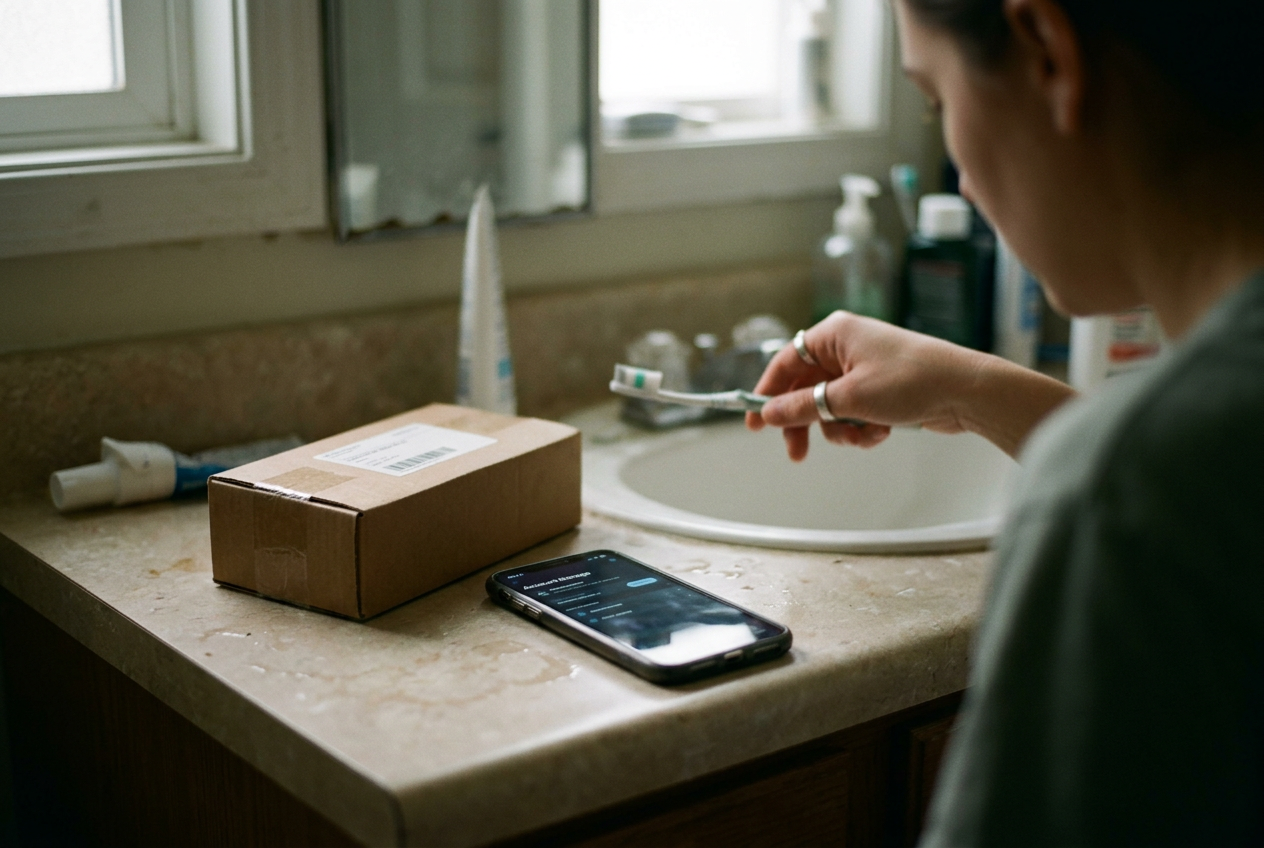
Mail-order collection moves part of the laboratory workflow onto your bathroom counter. You become the person checking the label, handling the swab, filling the tube to the marked level, sealing the package and getting it into transit. Convenience is real. So is the transfer of labor.
Reports may describe a failed sample as rejected, invalid, insufficient, indeterminate or unsatisfactory. Those words are not interchangeable in every laboratory, but none should be quietly translated into “negative.” A specimen can fail because the tube leaked, the quantity was too small, the wrong container was used, transport took too long, labeling did not match the order or substances in the sample interfered with the assay. An internal control, which checks whether the test reaction worked, can also fail.
“Indeterminate” or “equivocal” may mean the signal did not land clearly on either side of the assay’s decision point. It does not mean half-positive. The usual next step may be recollection, repeat testing on the same specimen or a different test, but the right route depends on the infection, method and laboratory protocol.
Ask whether the laboratory tested the specimen at all, why it failed and whether the company will send a replacement collection device without another kit charge. Also ask what happens to the original order if only one sample in a multisite panel fails. A portal can display three completed results and bury the rejected throat swab in a separate tab, which leaves the most relevant exposure looking like an administrative footnote.
The collection date controls the meaning
A report records when you collected the sample. It does not usually know when the exposure occurred unless you supplied that information elsewhere, and the laboratory cannot calculate clinical reassurance from a date it never received.
The testing window is the interval after exposure during which an infection may be present but the chosen marker has not become reliably detectable. That interval varies by infection, specimen and assay. Antibodies take time to develop. Antigens and genetic material follow different timelines.
Treatment taken around the same period can complicate interpretation, as can collecting from the wrong site.
There is no honest universal answer called “how soon after sex.” The useful question names the assay printed on your report, the body site, the collection date and the exposure date. Ask whether the timing could produce a false-negative result and whether repeat testing is recommended. If the service gives a generic window chart, ask whether it applies to the exact method used by its laboratory.
A result can also remain positive after treatment because some molecular tests may detect residual genetic material for a period, even when viable organisms are no longer present. That is one reason a test-of-cure, meaning testing to check whether treatment worked, is recommended in some situations and not others. Do not choose the timing from a kit company’s reorder email.
The OROPHARYNGEAL SWAB line now carries three limits at once: throat only, the named organism only and the biological moment represented by the collection date. “Not detected” can still be useful. It is simply not border control for the entire body.
Screening and confirmation are different jobs
A screening test is designed to identify people who may have an infection and need the next step. Confirmation uses additional testing to resolve or verify that initial signal. The report may show both stages, only the screen or a note saying follow-up is required.
A reactive HIV screening result is preliminary and should be followed through the recommended supplemental testing sequence. Syphilis reports can be especially awkward because laboratories use testing algorithms that combine treponemal tests, which detect antibodies associated with the organism that causes syphilis, with nontreponemal tests that help assess activity and treatment response. Prior treated infection can affect the pattern. A reactive hepatitis C antibody test generally needs an RNA test to determine whether current infection is present.
Positive NAAT results for chlamydia or gonorrhea often do not require routine confirmation before treatment, although a clinician or laboratory may recommend more testing when results conflict with the clinical picture or carry site-specific concerns. Blood testing for herpes deserves separate skepticism: routine screening of people without symptoms is generally not recommended in many settings because false-positive results and difficult interpretation can cause harm.
Read every footnote attached to “reactive,” “positive” or “detected.” Look for “supplemental test,” “confirmation pending,” “reflex,” or “clinical correlation recommended.” Reflex testing means the laboratory automatically runs another assay after a qualifying first result. If the report promises reflex testing but shows no second result, ask whether it is pending, impossible because too little specimen remained, or excluded from what you purchased.
The kit and the clinician may be separate purchases
The box feels like healthcare because it contains medical packaging. Commercially, it may be several transactions stitched together: a retailer or testing platform takes the order, a laboratory performs the assay, and a telehealth group supplies clinicians where its licensing and service arrangements allow. Treatment, prescriptions, confirmation and partner services may sit outside the original price.
That separation partly reflects real constraints. Laboratories test specimens; clinicians interpret results in context and prescribe under state rules. It also gives sellers room to advertise a low-friction kit while placing the time-consuming part, including history-taking, contraindication checks and follow-up, behind another fee, an eligibility screen or a referral elsewhere. The purchase page may say “support included” when the included support is customer service reading the same status page you can see.
Before buying, find out whether a positive or reactive result includes a clinician visit, whether that clinician can prescribe in your state, whether confirmatory testing costs extra and where you are sent if telehealth cannot treat you. Check who handles a rejected specimen. Ask whether the laboratory performing the test is certified under the federal Clinical Laboratory Improvement Amendments, known as CLIA, while remembering that certification addresses laboratory standards rather than proving that a particular panel is appropriate for you.
Privacy also crosses these seams. The seller, laboratory, telehealth practice, pharmacy and payment processor may hold different pieces of the record. Positive results for certain infections may be reported to public health authorities as required by law. Read the privacy notice for the entities doing the work, not only the brand printed on the mailer.
The useful document remains the plain report. Find the specimen source. Match the collection date to the exposure timeline. Identify the method, then check whether the final line is final at all.
The green check mark is interface design. SPECIMEN SOURCE: OROPHARYNGEAL SWAB is the claim you can interrogate.
Questions people ask
Does a negative mail-order STI test mean I am clear?
It means the assay did not detect its target in the listed specimen, subject to the test’s limits. It may not cover other infections, body sites or an exposure too close to the collection date, so check the specimen source and method before treating one negative line as a general clearance.
What should
I do if the specimen says invalid or rejected?
Ask whether any testing occurred, why the specimen failed and whether recollection is required. An invalid or rejected sample is not a negative result; also check whether the company replaces the collection materials, repeats the test without another charge and preserves the completed results from other specimens.
Does a reactive result mean I definitely have an STI?
Not always. “Reactive” often describes a screening result that needs supplemental or confirmatory testing, especially for infections such as HIV, syphilis or hepatitis C. Read the report notes and contact a clinician or the testing service promptly to establish what was completed, what remains pending and what care is appropriate.
Is telehealth follow-up included in the kit price?
Sometimes, but the word “included” may cover only messaging or a limited consultation. Confirm whether a licensed clinician can review your result and prescribe in your state, whether laboratory confirmation costs extra, and what referral is offered when symptoms, pregnancy, allergies or a complicated result put you outside the service’s treatment rules.
One update a day
Today's story, in your inbox
One story each morning — no hype, no filler, no algorithm deciding for you.