Anonymous STI Texts Hide Your Name, Not Necessarily Your Data
An anonymous alert can protect your identity from a partner while leaving routine metadata with the service. Here is what to inspect before pressing send.
August 20, 2026 · 8 min read

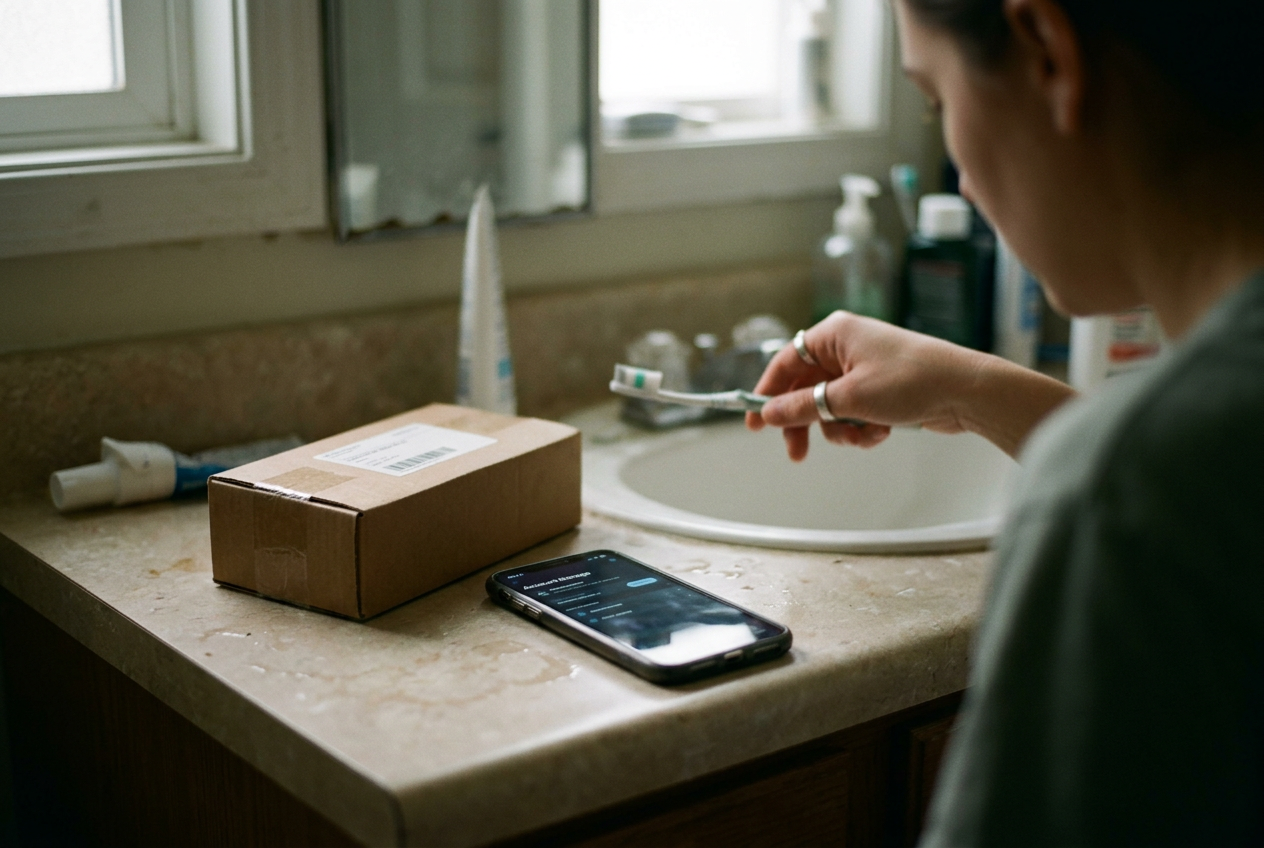
The concrete thing here is an unsent text on TellYourPartner: one phone number entered, one infection selected, the final button untouched. The service, developed by Building Healthy Online Communities, is built for the moment when shame, awkwardness or fear might otherwise stop a notification altogether. That is useful.
It is also where the word “anonymous” starts doing more work than its interface explains.
To the recipient, anonymity generally means the message does not contain your name or number. It does not mean the service knows nothing about the visit, its contractors handled no data, the browser left no local trace, or the recipient cannot infer who sent it from timing and circumstance. Those are separate claims. A large button tends to flatten them into one reassuring adjective.
The established tools take different routes. TellYourPartner sends a standardized notification to a phone number. Australia’s [Let Them Know](https://letthemknow.org.
au/), run through Melbourne Sexual Health Centre, offers notification routes including text and email. inSPOT uses the e-card model, with choices that can make a notice anonymous or more personal.
All three try to remove the sender’s identity from the delivery itself. Their previews, privacy explanations and referral pages reveal how differently that promise can operate.
Start with the message the other person will receive
Do not begin with the logo, the reassuring copy or the claim that the tool is confidential. Begin with the preview.
A message preview tells you whether the notification names a particular infection, says only that the recipient may have been exposed, identifies the service, includes a link, or permits extra text. Those choices alter both privacy and credibility. A highly specific notice may help someone act, while also making it easier to identify the sender from a short list of recent partners. A vague one reveals less but can resemble spam, especially when it arrives from an unfamiliar number with a shortened or unexpected link.
TellYourPartner’s standardized format reduces one obvious risk: you do not have to write the disclosure yourself. That limits the chance of adding a recognizable phrase, an apology only one person would understand, or a detail that identifies the encounter. The unsent text on the screen is anonymous by construction, not by magic. Its language has been stripped of you.
Let Them Know similarly lets the service carry the disclosure, but its infection information and Australian referral context make geography part of the message. That is useful for someone in its intended health system. It may be confusing elsewhere. inSPOT’s e-card approach gives the sender more expressive control, which can make the notice feel less automated, yet every optional note creates another place to identify yourself accidentally.
The preview is therefore a privacy control. Read every word, including the link domain and any footer. If the service lets you add a personal message, assume style can identify you as readily as a name. If no preview appears before contact details are entered, the product is asking for trust earlier than it needs to.
Recipient anonymity and service anonymity are different
The most important technical term is metadata, meaning information about a communication rather than its intimate content. A phone number, IP address, browser type, approximate location, access time and referral page can all become metadata. A service can conceal the sender from the recipient while its web host, analytics provider or messaging contractor processes some of that material.
TellYourPartner’s published privacy material says partner contact information is used to deliver the notification and describes limits on retaining identifying information. Let Them Know says recipient details used for anonymous notifications are not kept as an ordinary contact database. inSPOT’s privacy documentation discusses routine web-server information around visits, reflecting the e-card service’s older web architecture. The wording matters, but so do the omissions.
“Not stored” should lead you to look for a retention period and the stage at which deletion occurs. A number may pass through a text-message gateway, which is a contractor that routes an SMS to a mobile network, even if the notification site does not preserve it in its own user database. “Aggregate analytics” usually means visits are counted in groups, but the policy should still say what technology produces those counts. Silence about a category is not confirmation that the category never exists.
Cookies are small browser files used to remember or measure a visit. Server logs are records a website host generates when a device requests a page. Neither automatically exposes the substance of an STI notification, and both are ordinary web infrastructure, but ordinary data becomes sensitive when it can be associated with a sexual-health service. The sensitivity comes from context.
This is the point hidden by the unsent TellYourPartner text. The recipient may never see the sender’s phone number, while the sender’s browser still contacts the site, its host and any disclosed measurement services. That does not make the tool fraudulent. It makes “anonymous” a description of one relationship: sender to recipient.
Read the policy for verbs, vendors and gaps
A useful privacy policy tells you what the operator collects, why it collects it, who receives it, how long it remains and how deletion works. Marketing language tends to offer nouns such as privacy, safety and trust. The verbs carry the information.
Look for “collect,” “process,” “share,” “retain,” “delete” and “disclose.” Search the page for “analytics,” “cookies,” “IP address,” “SMS,” “email” and “service provider.” A policy that names its messaging and measurement categories gives you something concrete to assess. A policy that promises anonymity without describing delivery leaves the central mechanism offstage.
The comparison is not a clean ranking. TellYourPartner’s narrow, standardized workflow gives the sender fewer opportunities to expose themselves in the message. Let Them Know connects notification to public sexual-health material, although its usefulness depends on the recipient being able to use Australian services. inSPOT offers flexibility and recognizable public-health referrals in participating locations, but its selectable e-card format asks the sender to make more privacy decisions.
Policies also change. Check the document linked from the live send page rather than relying on a screenshot, an old review or a recommendation copied into a forum. A private-browsing window can keep the page out of ordinary local browser history, but it does not make the visit invisible to the site, network operator or employer controlling a device. Incognito is local housekeeping.
It is not network anonymity.
On a shared phone, the larger risk may be much less technical. Autofill can preserve a partner’s number. A confirmation page can remain open. Email notifications may appear on a lock screen.
Browser history, clipboard contents and screenshots can outlast a service’s own retention period, so the cleanest privacy policy in the category cannot control the device in your hand.
Referral information is part of the product
An STI alert is only useful if the recipient can understand it and reach appropriate testing or treatment. The referral page is not decorative fine print. It is the handoff.
TellYourPartner points users toward sexual-health information and testing resources intended for a US audience. Let Them Know provides infection-specific material and links rooted in Australia’s health system. inSPOT has historically organized information through participating locations and local public-health resources. Before sending, open the link that the recipient will receive and check whether it works, names the relevant infection clearly, explains what to do next without moral theater, and offers resources that match the recipient’s country.
Bad referral design pushes the labor back onto the person who has just received an unsettling anonymous message. A dead link, generic homepage or clinic locator that assumes insurance, transport and a familiar health system can turn notification into alarm without access. The sender has completed the platform’s task. The recipient has not completed theirs.
None of these tools diagnoses an infection, verifies a sender’s claim or replaces care from a clinician or public-health service. Their role is narrower: deliver a warning that might otherwise go unsent. Health departments and clinics may also offer confidential partner notification, sometimes through trained staff who can answer questions and connect partners with testing. That option costs more human labor, which is precisely why a free automated form exists.
Make the decision before entering the number
Return to the unsent TellYourPartner text. Before pressing the button, inspect the preview, open its destination link and read the live privacy page. Check whether recipient contact details are retained, whether contractors process delivery, whether analytics are disclosed and whether the resulting message could identify you through timing or specificity.
Then consider the recipient’s device and circumstances. An anonymous text can still appear on a shared lock screen. A controlling partner may monitor messages. Someone who has had very few recent partners may infer the sender immediately.
Platform anonymity cannot repair an unsafe situation, and the service cannot promise social anonymity when the surrounding facts point back to one person.
The alternative is not limited to silence or an automated alert. A clinic or local health department may explain confidential partner-notification options, while a direct message may be appropriate when contact is safe and a standardized text would cause more confusion. The automated service earns its place when distance is the thing that makes disclosure possible. It should not pretend that distance erases the machinery carrying it.
Questions people ask
Can the recipient find out who sent an anonymous STI notification?
The service generally withholds the sender’s name and contact details, but it cannot stop inference. Timing, the named infection, a small number of recent partners or recognizable optional wording may identify the sender even when the message itself contains no direct identifier.
Does private browsing make an STI notification anonymous?
Private browsing mainly limits what the browser saves on the device after the session. The website, hosting company, network and disclosed delivery or analytics providers may still process routine technical data, so it does not expand recipient-facing anonymity into full network anonymity.
Which part of a privacy policy matters most before sending?
Read how the service handles the recipient’s phone number or email address, including delivery vendors and retention. Then check its treatment of IP addresses, cookies, server logs and analytics. A promise that names are not collected answers only one part of the privacy question.
Is an anonymous notification a substitute for medical care?
No. It is a delivery tool, not a diagnosis, test result or treatment plan. The recipient should be given credible sexual-health information and a usable route to professional testing or care, which is why the quality and location of the service’s referral links matter.
One update a day
Today's story, in your inbox
One story each morning — no hype, no filler, no algorithm deciding for you.