A Court Livestream Ends. The Humiliation Keeps Playing.
Remote hearings opened courtrooms to anyone with a browser. They also gave clipping accounts a supply of defendants whose worst minutes can be searched, reposted and monetized for years.
August 26, 2026 · 8 min read
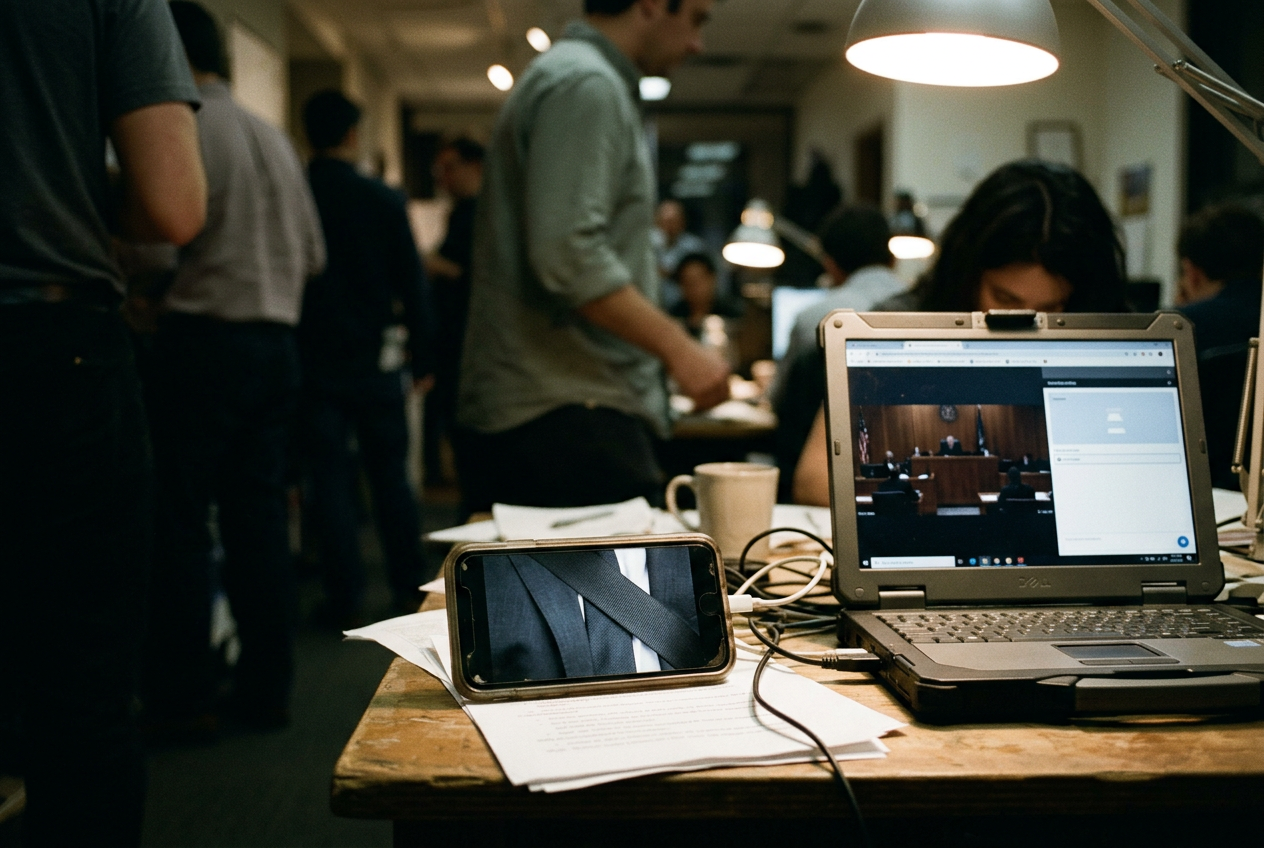
In May 2024, Corey Harris joined a Washtenaw County, Michigan, court hearing from the driver’s seat of a car. A black seat belt crossed his chest. The charge before Judge Cedric Simpson involved driving with a suspended license, and the apparent contradiction was ready-made for a clip: the defendant seemed to be driving while attending a hearing about whether he could legally drive.
The hearing was livestreamed on the court’s YouTube channel. Short versions escaped almost immediately, stripped of the docket, the paperwork and most of the exchange. Harris became the man who logged into suspended-license court while driving. Public reporting later showed a more tangled record involving an earlier order lifting a suspension, an administrative failure to transmit that order and a separate dispute over whether Harris had ever held a Michigan license.
None of that traveled as efficiently as the seat belt.
That diagonal strip of polyester webbing did the work. It gave the clip an instantly legible plot, one a viewer could understand with the sound off. It also exposes the mismatch inside remote public access: courts built feeds to let people observe proceedings, while platforms received those feeds as endlessly reproducible video.
The feed is public, but public does not mean ownerless
Open courts are a basic safeguard. In broad terms, the First Amendment protects public access to many criminal proceedings, while common-law access covers many judicial records. Those rights are qualified, meaning judges can restrict access when a sufficiently strong interest, such as a child’s safety or a fair trial, outweighs openness and the restriction is narrowly drawn.
The right to attend does not automatically create a right to record, broadcast or republish. Federal Rule of Criminal Procedure 53 bars courtroom broadcasting of federal criminal proceedings, and the federal judiciary generally prohibits cameras in trial courts. State systems vary. Some permit cameras under statewide rules; others leave more discretion to judges.
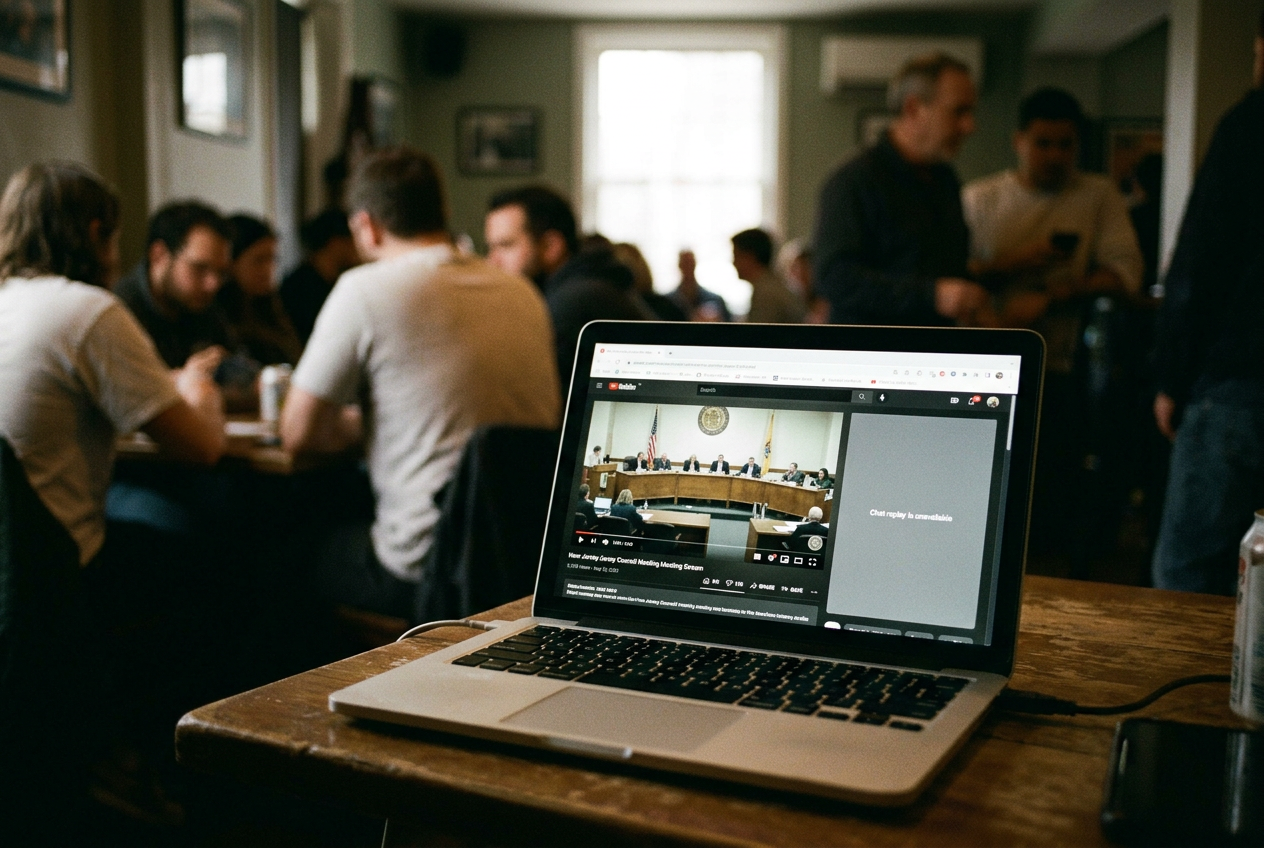
Remote proceedings added another layer because the courtroom could be a videoconference, while the public gallery became YouTube or a court website.
What is binding depends on who issued it and whom it covers. A court rule governs proceedings in that jurisdiction. A judge’s order can bind parties, lawyers and others properly brought within its scope. Instructions displayed beside a stream may state that recording is forbidden, but a warning is not a universal eraser.
Someone outside the jurisdiction can capture the screen, pass the file to another account and place several practical steps between the court and any person it might sanction.
Platform terms are different again. They are contracts enforced by companies, usually through removal, account restrictions or demonetization. They are not court orders. A platform may ban harassment or disclosure of sensitive information without treating a lawfully broadcast arraignment as prohibited content, particularly when the repost is framed as news, commentary or comedy.
The result is a stack of rules with gaps between them. The courthouse controls admission. The judge controls the hearing. YouTube controls the account and recommendation system.
The person holding the screen-recording file controls the next copy, at least until another person downloads it.
How one hearing becomes a permanent object
The first copy can be official. A court sends video from Zoom or another conferencing system to a public player, often YouTube, where livestream settings may preserve an archive after the session ends. If archiving is disabled, viewers can still use built-in phone capture, desktop recording software or a second device pointed at the screen. No specialized equipment is required.
The second copy changes the material. A clipping account trims away scheduling delays and legal argument, adds a caption, zooms toward Harris and leaves the black seat belt in frame. The caption supplies a verdict before the case supplies one. Search systems then connect the clip to his name, the charge and phrases about a suspended license; recommendation systems connect it to viewers who linger on courtroom embarrassment, police footage or public failure.
This is where an access policy becomes a distribution policy without anyone admitting it. The court chose to make a proceeding observable at a particular time. The platform makes the most legible fragment available later to people who never sought court access, and its ranking systems favor the portion that produces immediate recognition. Context carries a time cost.
Humiliation arrives in one frame.
Deletion at the source does not reverse that chain. The court can remove its archived video or ask a platform to take down a copy. A successful removal reaches a URL or account, not every saved file. Reuploads can be cropped, mirrored, subtitled or embedded in reaction videos, changes that make automated matching less dependable and give the footage new claims to commentary or fair use.
Copyright offers no clean reset. Works made by federal employees as part of their duties generally are not protected by federal copyright, while ownership rules for state and local government material vary. Even when a court can claim rights in a recording, a copyright notice does not settle whether a particular excerpt qualifies as fair use, a doctrine allowing some unlicensed uses for purposes including criticism and news. Privacy law is also a poor fit once information has been disclosed in an open proceeding.
The clip economy needs no courthouse contract
No evidence is needed that a particular Harris repost made money to see the commercial structure. Video platforms sell advertising around attention. Eligible creators may receive a share, while pages that cannot monetize a clip directly can use it to build followers, direct viewers toward other accounts or establish a repeatable format. Court provides the footage.
The subject provides the face and stakes. The clipper supplies the crop.
The costs run in the other direction. Courts pay for conferencing systems, captioning, staff time and public-access infrastructure. Defendants, witnesses and family members pay through searchable association with allegations or moments of confusion. A dismissal, correction or expungement can change an official record without changing an autocomplete suggestion, a downloaded compilation or the copy saved in somebody’s camera roll.
This burden is uneven because court is already a forced stage for many of the people visible there. A defendant does not attend an arraignment to develop a public persona. Missing court can carry consequences. Appearing remotely may be the only workable option for someone who lacks transportation, cannot leave work for half a day or has caregiving duties.
Treating the resulting image as voluntary performance mistakes compliance for consent.
Harris’s seat belt was relevant to what Simpson could see and to the charge being discussed. That made it legitimate material for the judge to address. It did not make every future use equally necessary for public oversight. Watching a judge exercise state power is the civic interest.
Keeping a defendant’s most absurd-looking frame in circulation because it performs well is a platform interest.
Courts still design access as if watching were the endpoint
Courts often respond to recording risks with prohibitions. Those rules can deter lawyers, journalists and local observers who expect to return to the same judge. They are weaker against anonymous accounts, overseas operators and aggregators that receive a copy from someone else. Enforcement follows the people easiest to identify, while distribution rewards those hardest to reach.
A better design would separate live observation from permanent availability instead of pretending the two are identical. Courts can disable automatic archives, publish searchable transcripts after reviewing legally protected information and maintain official recordings under defined retention rules. For sensitive calendars, they can use access pages that resist search indexing and make copying harder, though no technical control can prevent a determined viewer from filming a screen.
Delay also matters. A short review window before public posting could catch exposed addresses, medical details and names that should have been sealed, while preserving press access to the proceeding itself. Any delay must be narrow and governed by a public rule; otherwise, an administrative safeguard can become quiet closure. Courts should publish who may watch, what may be recorded, how long official video remains available and what procedure applies when protected information escapes.
Platforms have a separate job. They can treat names in court clips as high-risk personal data, limit recommendations of decontextualized proceedings and connect widely viewed excerpts to later corrections or case outcomes. None of this requires erasing court reporting. It requires acknowledging that an algorithmic push is an editorial act, even when the company prefers the passive language of discovery.
The harder reform is cultural and legal: public access should guarantee the ability to inspect government power, not an unrestricted right to maintain a searchable entertainment archive of everyone subjected to it. That distinction will irritate absolutists. It is still the only one that matches how the machinery works.
The official hearing had an end time. The black seat belt did not. It remains the identifying detail because the platform’s memory preserved the easiest version of the case, while the complicated version stayed attached to court filings and follow-up reporting that required effort to find.
Questions people ask
Is it legal to record a court livestream?
It depends on the jurisdiction, the judge’s orders and the type of proceeding. A public right to observe usually does not guarantee a right to record or republish. Court rules may authorize sanctions, but their reach and enforcement vary, especially when an unidentified viewer captures a stream and sends the file elsewhere.
Can a court make a viral hearing disappear?
A court can remove its archive, seal material when legal standards are met or seek removal of particular copies. It cannot reliably retrieve downloaded files, stop altered reuploads or erase search associations already built around a person’s name. Later corrections may amend the official record while the viral version remains easier to find.
Who benefits when courtroom clips spread?
Platforms gain attention and advertising inventory. Eligible clipping accounts may earn revenue, while others use court footage to gain followers or promote adjacent content. The court and the person shown usually receive nothing from that redistribution, even though public money created the feed and compelled participation created the footage.
Would ending livestreams fix the problem?
It would reduce easy capture but also block people who cannot attend in person, including local reporters, families and members of the public monitoring judges. A stronger approach limits archives, reviews sensitive material and narrows algorithmic distribution while preserving live observation. The point is to protect scrutiny of the court without turning every participant into permanent platform inventory.
One update a day
Today's story, in your inbox
One story each morning — no hype, no filler, no algorithm deciding for you.