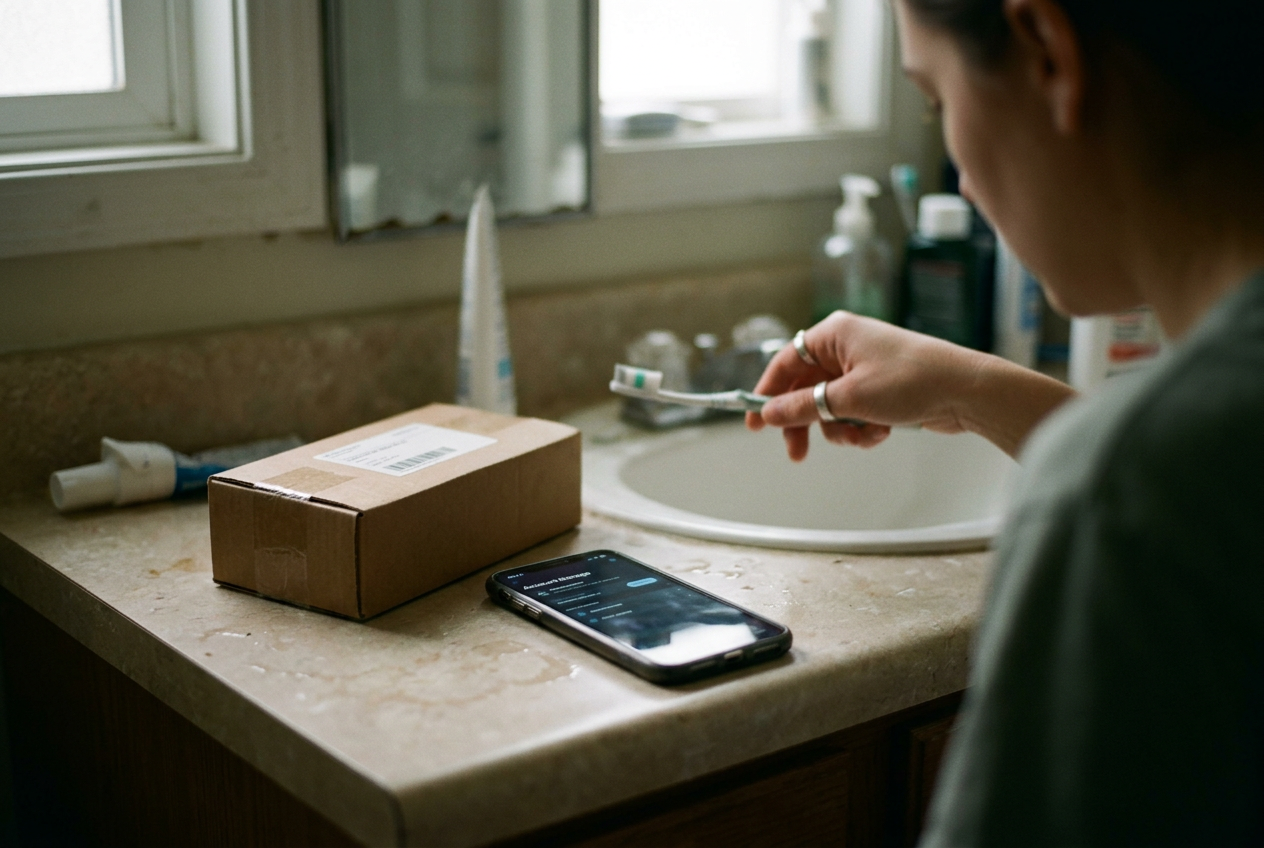
A Negative Fentanyl Test Does Not Clear the Whole Pill
A strip tests a sample, not a promise. Here is how uneven pills, dilution errors and limited detection can turn a useful warning tool into false reassurance.
August 11, 2026 · 8 min read
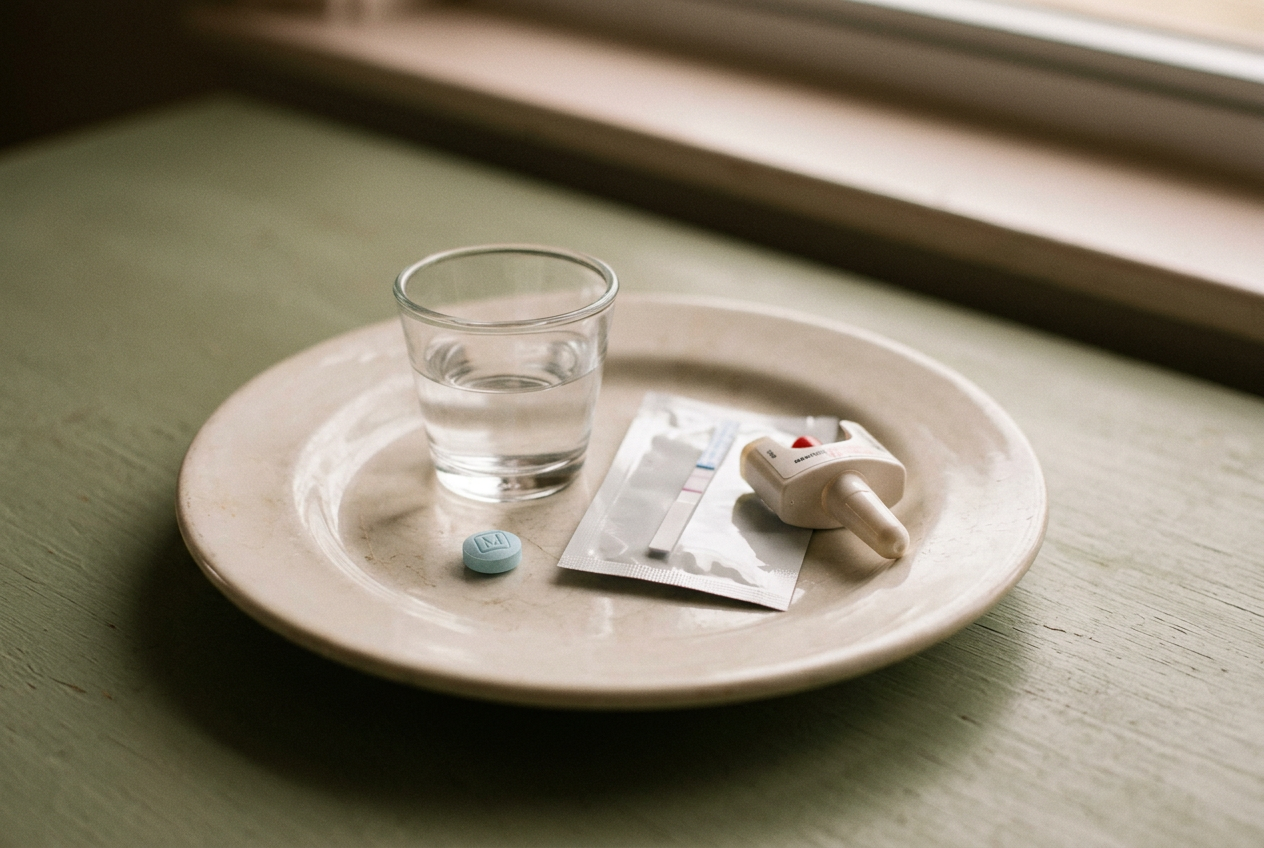
Put one chalky blue tablet on a clean plate. It has an M stamped on one side and 30 on the other, the familiar appearance of a prescription oxycodone tablet. Its color, stamp and tidy edges tell you almost nothing about what is inside.
A fentanyl test strip can add one useful fact. It cannot turn that tablet into a known product.
That distinction matters because the strip is often asked to perform a job it was never built to do: certify a pill as safe. The result is binary, cheap and easy to photograph, which makes it feel more conclusive than it is. One line can alter a decision. It cannot describe the chemical mixture that produced the line.
This is a practical harm-reduction explainer, not medical advice. Strip designs and instructions differ, so the directions supplied with your kit take priority.
What the strip is detecting
Most fentanyl test strips are lateral-flow immunoassays, meaning liquid moves along a membrane where antibodies react with a target drug. Many common strips were adapted from urine testing rather than designed to analyze street drugs from first principles.
For common competitive test strips, a control line shows that the liquid traveled correctly. The result pattern may feel backward: two lines generally mean negative, while only the control line generally means positive. A faint test line may still count as negative under a manufacturer’s instructions. No control line means the test is invalid, whatever else appears.
Check the package. Do not import a line-reading rule from another brand, and do not read the strip long after its stated window because drying can change its appearance.
A positive result means the tested liquid triggered the strip’s fentanyl assay. It does not tell you how much fentanyl is present, whether the amount is evenly distributed, or how potent the pill may be. Sensitivity to fentanyl analogs, drugs chemically related to fentanyl, also varies between products.
A negative result has narrower meaning than people want from it. The tested liquid did not trigger that strip under those conditions. The sample may contain no detectable fentanyl, or the fentanyl may have been elsewhere in the pill, below the strip’s detection threshold, poorly extracted into the water, or outside the range of compounds that particular strip recognizes.
The blue M30-style tablet is still chemically unidentified. The strip has answered one limited question about one prepared sample.
The pill is the sampling problem
Counterfeit tablets are mixtures of powders compressed under pressure. Industrial pharmaceutical manufacturing uses controlled formulas, validated equipment and repeated quality checks to keep active ingredients within tight limits. An illicit pill press does not arrive with that system attached.
If fentanyl is distributed unevenly through a batch or tablet, a shaving from one edge may not represent material near the center. The strip can work as designed and still return a result that gives false reassurance, because the failure happened before the liquid reached it.
Testing the whole tablet gives the most representative sample. Drug-checking programs commonly advise crushing the entire pill into a uniform powder, mixing it thoroughly with water, and testing a correctly diluted portion according to the kit’s directions. That costs time, destroys the tablet’s original form and may not fit what someone planned to do with it. Those inconveniences are real.
They are also why testing a tiny crumb is a weaker compromise rather than an equivalent shortcut.
If the whole pill cannot be prepared, combining scrapings from several parts may reduce the chance of missing a concentrated area, but it does not eliminate it. The remaining tablet is not cleared. Neither are other pills from the same bag, even when they share the same stamp and color.
Testing one blue M30-style tablet says nothing certain about the tablet beside it. Pills pressed in the same batch can vary, and pills sold together may have come from different batches.
Dilution can distort the answer
More powder does not automatically produce a better test. Some substances can cross-react when the liquid is too concentrated, binding in a way that creates an apparent positive result even when fentanyl is absent. Public drug-checking guidance has documented this problem with concentrated samples of drugs including methamphetamine and MDMA on some strips.
That does not make an unexpected positive safe to dismiss. It means the sample should be retested at the dilution specified by the manufacturer or harm-reduction program, using a new strip and clean equipment. Guessing the water ratio defeats the point. Different strip products may require different preparation.
Too little material creates another uncertainty. So can expired strips, damaged packaging, contaminated containers, incorrect dipping depth or reading the result outside the stated time. A test without a visible control line is invalid, not negative. Repeat it with a fresh strip.
Storage matters as well. Heat and moisture can damage lateral-flow tests. A strip carried loose for months in a bathroom, wallet or hot car does not deserve the same confidence as one kept sealed within the conditions printed on its packaging.
A strip cannot name the rest of the pill
Even a well-prepared negative test does not identify oxycodone. It does not detect every opioid, and it does not generally tell you whether the sample contains benzodiazepines, xylazine, stimulants, nitazenes or other compounds unless a separate test was designed for that target.
Nor does it measure potency. A positive strip cannot distinguish a trace from a potentially lethal concentration. A negative strip cannot tell you whether another ingredient carries its own overdose risk.
This is the structural bargain behind test-strip distribution. Strips are inexpensive, portable and fast enough to reach people outside laboratories, while fuller drug checking may require spectroscopy, trained staff and a local program willing and legally able to handle samples. The cheap tool spreads because the better infrastructure remains scarce. Its limits then become the user’s problem to interpret.
The strip is still worth using. A smoke alarm does not identify every gas in a room, but a triggered alarm changes what you do next. Trouble begins when an untriggered alarm becomes proof that the room is safe.
What to do with an unexpected result
Treat an unexpected positive as actionable information. The lowest-risk choice is not to use the pill. Set it aside where nobody could mistake it for a tested-negative sample, and seek confirmatory drug checking through a local harm-reduction service if that is available.
A second test can help identify preparation error, but repeating the same weak sample does not fix weak sampling. Use a fresh strip, clean container and the correct dilution. If the pill was sold as a stimulant and the first result was positive, guidance from the strip maker or a drug-checking service can help determine whether a more diluted retest is appropriate.
An unexpected negative also deserves scrutiny. If a sample was believed to contain fentanyl but the strip says otherwise, check the control line, expiration, storage, preparation and brand instructions. Do not decide that prior information was wrong merely because one strip stayed negative.
If someone chooses to use despite uncertainty, layers matter more than confidence. Keep naloxone nearby and make sure another person knows where it is and how to use it. Avoid using alone or at the same time as the only other person present. Alcohol, benzodiazepines and other sedatives can compound respiratory depression, the dangerous slowing or stopping of breathing.
Use less rather than treating a negative strip as permission to take more. Allow time before taking anything further. Where available, overdose-prevention centers, supervised consumption services and never-use-alone phone lines add a human response that a test strip cannot provide.
If a person cannot be awakened, has very slow or irregular breathing, or develops blue or gray lips or fingertips, call emergency services and give naloxone. More than one dose may be needed. Provide rescue breathing if trained, and stay with the person; legal protections for people reporting an overdose vary by location.
The blue tablet remains on the plate. A test can change the decision around it. It cannot convert the stamp into a guarantee.
Questions people ask
Does a negative fentanyl test mean the pill is safe?
No. It means the prepared sample did not trigger that strip under those testing conditions. Fentanyl may be unevenly distributed, below the detection threshold or outside the strip’s recognition range, while other dangerous ingredients will remain undetected.
Should I test every pill from the same bag?
Testing one pill cannot clear the others because counterfeit tablets may vary within a batch or come from different batches despite looking identical. Testing each pill gives more information, while crushing and mixing an entire tablet usually produces a more representative sample than testing one edge.
Can fentanyl test strips give false positives?
Yes. Some strips can cross-react with highly concentrated samples of substances such as methamphetamine or MDMA. Follow the product’s dilution instructions and repeat the test with fresh equipment rather than assuming the positive is false; confirmatory drug checking is stronger where available.
What should I keep with fentanyl test strips?
Keep the printed instructions, clean mixing equipment and unexpired naloxone together, stored within their labeled temperature and moisture limits. A charged phone and another person who knows the overdose plan are more useful than a second untouched strip beside the blue M30-style tablet.
One update a day
Today's story, in your inbox
One story each morning — no hype, no filler, no algorithm deciding for you.