A School Team Photo Can Become a Face Search Index
Photo platforms can turn a gallery of student athletes into a database searchable with a selfie. The crucial limits sit in access settings, biometric consent screens and contracts parents rarely see.
August 14, 2026 · 8 min read
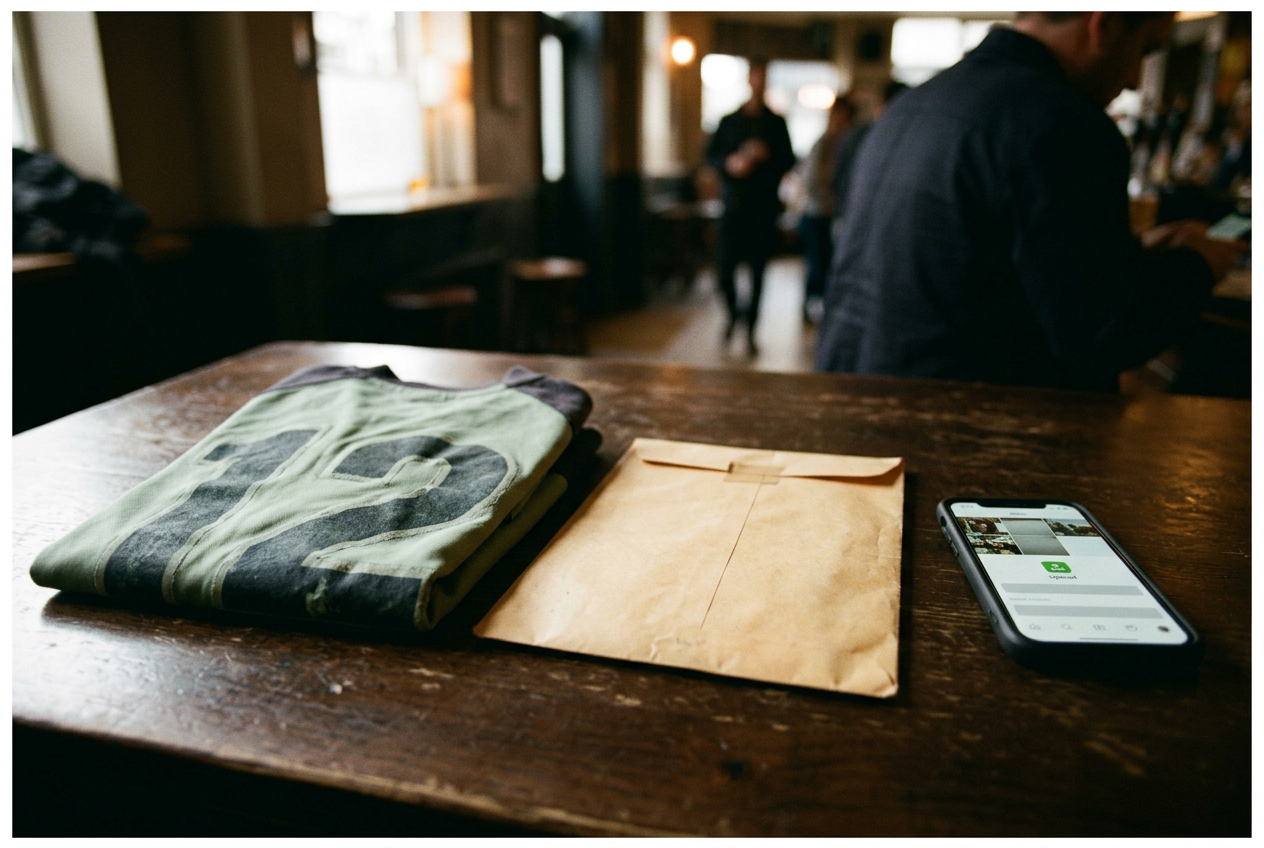
The important object is a button beneath a PhotoDay gallery. FaceFind, as the company calls the feature, asks a customer to submit a selfie so the platform can locate photographs containing a matching face. It saves a parent from paging through rows of athletes in numbered polyester jerseys, looking for one child among warmups, team poses and half-obscured action shots.
That convenience also reveals what happened upstream. Before the button could return a match, software had to analyze faces in the photographer’s uploaded images and make them comparable to the face in the selfie. The team photo is no longer only a photograph. Inside the sales system, it can function as searchable biometric material.
PhotoDay is not alone in selling this kind of shortcut. GotPhoto documents a face-search feature for finding images, while Waldo Photos describes facial recognition as part of its photo-delivery system. The brands differ in workflow and policy language, and individual photographers can configure jobs differently, but the commercial proposition is steady: let software identify the likely subject, put the relevant images in front of the buyer and reduce the distance between recognition and checkout.
The question parents need answered is not whether a platform says a gallery is private. It is who can enter it, what they can search once inside and which document binds the company after the season ends.
The selfie is a search key
Facial recognition sounds more mysterious than the mechanism warrants. The system detects a face, measures features or relationships within it, and produces a mathematical representation commonly called a face template or faceprint. It then compares that template with templates derived from other images and returns likely matches.
The software is not looking for a jersey number. It is trying to establish similarity between faces. That distinction matters because uniforms change, while a biometric identifier, meaning a bodily characteristic used to recognize a person, is difficult to replace when mishandled.
In PhotoDay’s documented FaceFind flow, the customer supplies the reference image. The company presents this as an opt-in search tool. That tells us who initiates a particular search, but it does not by itself answer every question about the athletes already visible in the gallery. A parent can consent to analysis of their own selfie.
The same parent may be shown a group photo containing several other minors, each of whom became part of the searchable image pool when the photographer uploaded the job.
This is the quiet shift hidden beneath the FaceFind button. Consent at the point of search can cover the person pressing it without proving that every face being searched came with equivalent permission. A feature-specific disclosure may explain what happens to the submitted selfie, yet say less about the source images, the face templates generated from them or the authority of the photographer to place those images in the system.
A platform can reduce this risk by limiting analysis to opted-in subjects, isolating each athlete’s images before facial matching or deleting templates on a short, stated schedule. Those controls cost something. They add administrative work, create more places for a photo job to fail and weaken the frictionless sales pitch. A button is cheaper than a consent chain.
Private does not mean person-specific
School photo galleries are often described as private because they are not openly indexed on the web. That is useful, but incomplete. A gallery protected by an access code remains available to anyone who obtains the code, and codes move through team emails, text threads, forwarded registration messages and screenshots.
Once admitted, a visitor’s power depends on the platform’s settings. Some jobs may allow ordinary browsing. Others may offer selfie-based matching. The practical difference is large: browsing asks someone to inspect a gallery image by image, while face search lets that person present a reference photograph and ask the system to do the sorting.
The reference photograph does not have to originate in the sports platform. Unless a service imposes and verifies tighter conditions, a searchable face can be supplied from another image available to the person using the feature. Brand documentation may instruct customers to upload their own selfie or obtain permission, but an instruction is not the same as a technical restriction, and a checkbox cannot establish that the uploader is a parent, guardian or even the person pictured.
The photographer also has privileged access. Depending on the service and contract, studio staff can upload, organize, tag, sell and remove images. The platform company processes the files to operate the gallery, while subprocessors, meaning outside vendors hired to handle functions such as hosting or payment infrastructure, may receive data within the limits described by the governing policy and vendor agreements.
Law enforcement does not receive a magic FaceFind login merely because facial matching exists. Privacy policies generally describe disclosure in response to legal demands, safety concerns or other lawful requests, rather than offering police an ordinary customer search product. Still, a promise to disclose only when legally required has a different force from a promise that the data does not exist. Retention creates something that can be requested.
The FaceFind button therefore answers only the smallest version of “who can search.” It identifies the customer-facing searcher. It does not display every administrator, service provider, retention system or legal pathway behind the screen.
The binding language is scattered
Parents usually encounter a school flyer, registration email or gallery notice. None necessarily contains the complete deal. The relevant language may be divided among the photographer’s release, the platform’s terms of service, its privacy policy, a separate biometric notice and a contract between the school or league and the photography business.
These documents do different jobs. A privacy policy can create enforceable promises and can support consumer-protection claims when a company’s conduct contradicts its disclosures, but it is not a statute and does not erase duties imposed by state law. Product pages and help-center articles explain operation; unless incorporated into an agreement, they are weaker than the contract and should not be mistaken for binding limits. A school’s general permission to photograph an event also may not describe facial matching with enough precision to resolve biometric consent.
State law can change the stakes. Illinois regulates the collection and storage of biometric identifiers through its Biometric Information Privacy Act, including requirements involving written notice, purpose, duration, consent and retention policy. Texas and Washington also regulate certain biometric practices, though their enforcement structures and definitions differ. Other states cover biometric data through broader consumer privacy laws.
Whether a particular sports-photo workflow falls within a statute depends on the technology used, the data retained, the parties involved and the jurisdiction. “We use facial recognition” does not settle the analysis. Neither does “we do not identify people by name.” A system can still compare a face template and return a matching gallery even if the result is an order page rather than a student record.
Federal law supplies fewer easy answers than school branding suggests. The Family Educational Rights and Privacy Act covers education records maintained by qualifying schools and their agents; it does not automatically turn every photograph held by an independent vendor into a protected education record. The Children’s Online Privacy Protection Act addresses online collection from children under 13, but many sports-photo transactions are structured around adults purchasing images. Those laws matter.
They are not a universal privacy shield over every team gallery.
Follow the sale
The business incentive is plain in the brands’ own feature descriptions. Volume photographers handle large batches of similar images, and customers abandon galleries when finding the right athlete takes too long. Facial matching turns identification into navigation. The buyer reaches the relevant poses faster, and the photographer gets a cleaner route to prints, downloads and packages.
That does not make the tool illegitimate. It does mean the privacy cost is attached to a sales optimization rather than an educational necessity. A school or league can organize photos without building a face-search layer. Photographers can use unique QR cards, roster-based access, individual links or manual grouping, all of which bring their own errors and labor but avoid asking every customer-facing gallery to behave like a small recognition system.
The strongest protections are mechanical. Separate access for each athlete limits exposure better than one code for an entire team. Verified guardian accounts constrain searching better than a warning beside an upload field. A published deletion schedule is more useful than a broad assurance that data is kept only as needed, especially when the company does not define who decides what “needed” means.
Parents should also distinguish deletion of the submitted selfie from deletion of the face template, gallery source images, backups and transaction records. Those are separate objects. A policy that addresses one may leave the others under a general retention clause tied to business, security or legal needs.
Return to the numbered jerseys. The photographer needed the team photo to sell a team photo. Face search required something more: images prepared for comparison, a reference face and enough retained structure to return results. If the school notice only says photographs will be taken, it has described the camera and skipped the index.
Questions people ask
Can anyone search a private school sports gallery by face?
Not necessarily. Access depends on the photographer’s settings, the gallery link or code, and whether facial matching is enabled. But “private” may mean only that a visitor needs a shared credential; it does not guarantee that each family can see or search only its own athlete.
Does uploading my selfie let the platform analyze other students’ faces?
A matching tool must compare the submitted face with faces represented in the gallery’s searchable pool. Your consent can authorize use of your selfie, but it does not automatically establish consent for every other minor whose image was uploaded and processed for matching.
Are privacy policies legally binding?
They can create enforceable commitments and regulators may act when companies misrepresent data practices, but the answer also depends on the terms, state law and the school’s vendor contract. A marketing page or help article explains a feature; it is not necessarily the document controlling retention, disclosure or consent.
What should a parent look for before opening the gallery?
Look for who receives access, whether face search is optional, what happens to the selfie and derived face template, and when both are deleted. If the notice discusses photographs but never mentions biometric matching, it has not explained what the FaceFind button does to that team photo.
One update a day
Today's story, in your inbox
One story each morning — no hype, no filler, no algorithm deciding for you.