A Campus Protest Can Be Rebuilt From Your Wi-Fi Trail
Universities already hold the records needed to retrace a demonstration. The real safeguards are dull but decisive: deletion schedules, access controls and rules against joining the data.
August 11, 2026 · 8 min read
In June 2024, masked protesters occupied Building 10 at Stanford, home to the university president’s and provost’s offices. Arrests followed. Public reporting on the resulting cases described investigators using digital records, including campus network information, alongside video and other evidence as they worked to identify people involved.
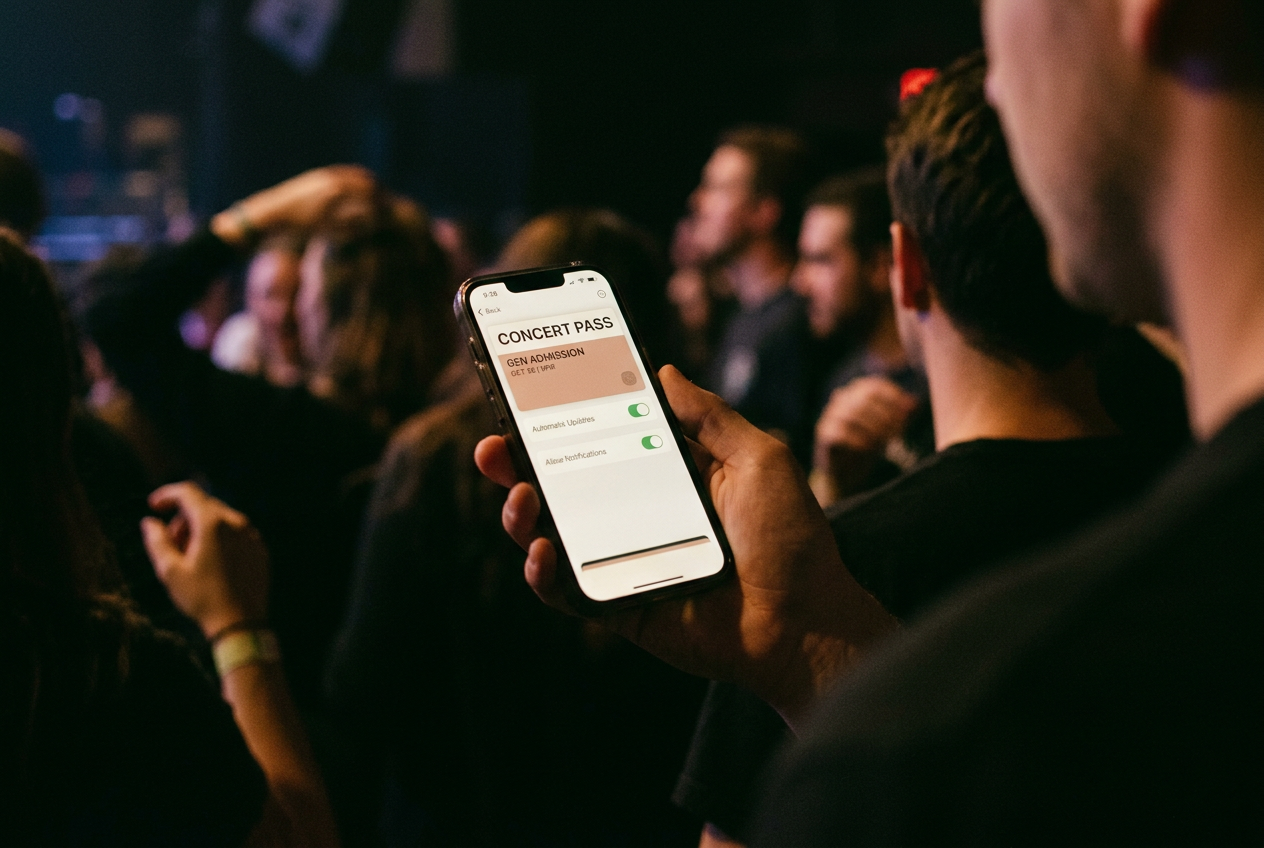
Keep one object in mind: a phone sitting in a student’s pocket, set to rejoin campus Wi-Fi. It does not need spyware. It does not need to open an app. If it authenticates to the network, the university may record which account connected, when it connected and which access point handled the connection.
The protester can cover a face. The phone remains eager to introduce itself.
That is the mechanism underneath the campus surveillance argument. Universities have spent years turning access, safety, attendance and convenience into logged events. A demonstration creates an institutional reason to join those events together.
The important word is “can.” Evidence that a university possesses network logs does not prove administrators routinely track students across campus, and an access-point record is not a magical indoor GPS coordinate. The serious inquiry starts after the capability is established: how long is each record kept, who can retrieve it, what threshold permits access and whether anyone audits the search afterward.
The network already knows your account
Enterprise campus Wi-Fi commonly uses 802.1X, an authentication system that checks a user’s university credentials before admitting a device. Behind it, a RADIUS server, which handles network login requests, may record an account identifier, device information, connection time and the access point involved.
An access point covers an area rather than a precise square of flooring. Walls, signal strength, network congestion and the device’s own behavior complicate any location claim. Still, a sequence of associations can place a device near one building, then another, especially when investigators already know the demonstration’s route and its time window.
Modern phones often randomize their MAC address, the network identifier attached to a device, to reduce passive tracking. That defense has limits on an authenticated network. A randomized address may remain stable for a particular network, while the login itself can bind the connection to a university account. Privacy features designed for wandering through shopping districts do less when the network asks for your school credentials at the door.
The Stanford phone matters because it exposes how little special equipment an institution needs. Campus IT must keep some operational logs to troubleshoot outages, detect compromised accounts and manage capacity. Those purposes are ordinary. The political consequence appears when records created for network administration become evidence in a disciplinary or criminal inquiry.
That transfer can happen without a control room full of people following dots on a map. An investigator supplies accounts, devices, locations or a time range. IT staff query retained logs. Camera footage narrows the window.
The resulting timeline looks more authoritative than any one source deserves because several imperfect systems appear to agree.
The student ID becomes a timestamp
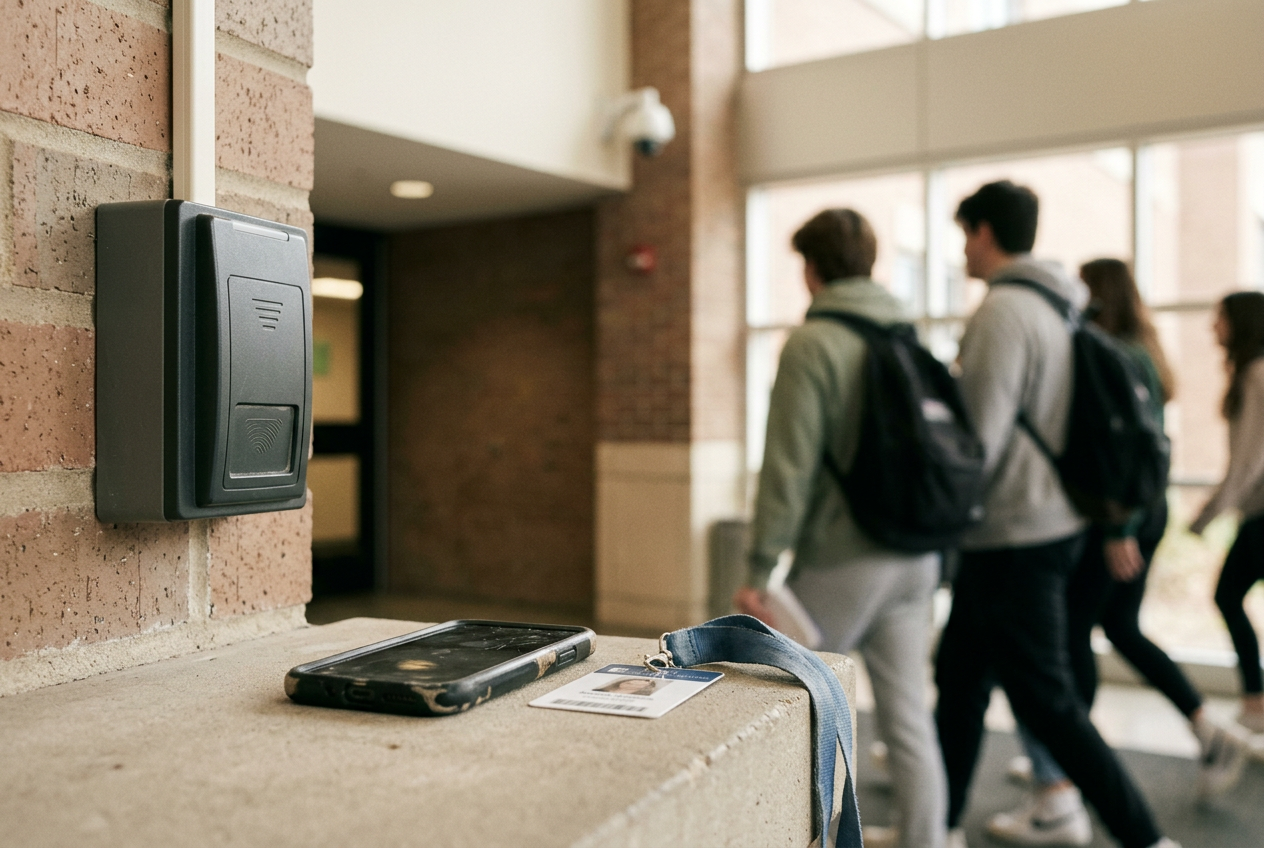
A campus card is sold as convenience in plastic form. It unlocks a residence hall, admits someone to a library and pays for lunch. Each use can also create a record linking a credential to a reader and a time.
During a protest, card access data can establish that a credential opened a particular exterior door before an occupation, or that it was used elsewhere while an account holder was supposedly inside. Neither conclusion is complete. Cards are lent. Doors are held open.
Readers fail. People enter behind other people, a practice access-control vendors call tailgating when they are trying to sell universities more hardware.
The card record becomes stronger when paired with the phone in the pocket. A Wi-Fi association near the building can support the swipe. Video may show clothing or a bag. A learning platform login, parking record or university app event can add another timestamp, although access to those systems may sit with different departments and under different policies.
This is why the campus protest map is rarely one map. It is a stack of records built for separate institutional jobs, joined after administrators decide that an incident warrants the labor. The joining is the consequential act. A database entry created to unlock a dorm is mundane; matching it against network and camera records turns it into an account of movement.
Universities have reasons to preserve such data. Security offices investigate assaults and theft. IT teams need diagnostic history. Card administrators handle disputed transactions.
The incentive problem is that storage is cheap, deletion requires coordination and a future investigation always sounds more defensible than a present limit. Nobody gets praised for deleting the log that might have become useful.
Cameras supply the recognizable body
Video fills gaps left by network and card systems. A fixed camera can establish clothing, direction of travel and group composition even when it cannot produce a reliable face. Footage from building entrances can connect a credential event outside with activity inside. Recordings from nearby streets may extend the timeline beyond the university network.
Facial recognition is not required. Investigators can compare a jacket, shoes or backpack across clips, then use an authenticated digital event to propose a name. That method carries obvious risks. Common clothing is common.
Timestamps drift. Image quality deteriorates. Once a name enters the file, ambiguous footage can start to look confirmatory rather than uncertain.
The systems also differ in ownership. Campus police may control one camera network while facilities manages another and a private vendor stores footage from residence halls. Local police can request records. Prosecutors can seek them through legal process.
At public universities, records laws add another layer, though privacy and law-enforcement exemptions may restrict disclosure.
Vendor contracts matter here because institutions often promise privacy in broad language while outsourcing the practical decisions about storage, backups and administrative access. A university cannot meaningfully claim that footage disappears after a set period if a contractor retains recoverable copies or if nobody tests the deletion process.
FERPA is not a universal shield
The Family Educational Rights and Privacy Act governs disclosure of education records at institutions receiving federal funds. It is regularly invoked as if it places every student-related datum inside a sealed vault. It does not.
Whether a Wi-Fi log or card swipe counts as an education record can depend on who maintains it and why. FERPA also permits access by school officials with a legitimate educational interest, subject to institutional criteria, and contains exceptions for health or safety emergencies. Records created and maintained by a campus law-enforcement unit for a law-enforcement purpose are excluded from FERPA’s definition of education records.
That leaves a great deal riding on internal classification. The same underlying event, a credential appearing at a door, may sit in an administrative access system before a copy enters a police case file. Students trying to understand the boundary are often sent through privacy notices written broadly enough to cover routine operations, safety investigations and compliance with legal demands.
The useful documents are less glamorous: retention schedules, data inventories, access-control matrices and audit policies. A privacy statement may say information is kept only as long as necessary. A retention schedule decides whether “necessary” means days, an academic term or an open-ended period tied to backups and investigations.
Retention turns infrastructure into memory
A university does not need to monitor a protest live to reconstruct it later. It needs records that survive long enough for someone to ask.
That delay changes the politics. During a demonstration, administrators may insist that ordinary campus systems remain ordinary. After property damage, an arrest or pressure from trustees and politicians, the institution’s definition of an acceptable search can expand. Data collected under one expectation meets a new institutional appetite.
The phone in the pocket is useful because its records may persist without the student doing anything conspicuous. The card swipe sits quietly beside it. Camera footage waits on a server. Retention converts these systems from momentary utilities into institutional memory, while fragmented responsibility lets each department claim it holds only one harmless piece.
Real restraint would be legible before the protest. Network records would have a published deletion period. Sensitive queries would require written authorization tied to a defined investigation. Staff access would be logged and reviewed.
Vendors would face the same deletion rules as the university. Requests from outside police would appear in transparency reporting unless law barred disclosure.
These measures cost staff time and remove future options. That is precisely why institutions resist them. The incentive is to preserve discretion, promise responsible use and decide later what responsibility means. A university facing public pressure usually values a searchable past more than a student values an abstract assurance that nobody is looking right now.
The decisive record may never be dramatic. It may be one line showing that a familiar phone authenticated near a building at the wrong time. Whether that line becomes a clue, a disciplinary exhibit or nothing at all depends on rules most students never see.
Questions people ask
Can campus Wi-Fi show exactly where a student was?
Usually not by itself. An access-point association can place a device within a coverage area at a particular time, but walls, signal behavior and overlapping access points limit precision. Investigators can make the inference stronger by comparing the log with card access, camera footage or other timestamped records.
Does turning off location services stop campus Wi-Fi tracking?
Location services and Wi-Fi authentication are different. A phone that joins an authenticated campus network may generate connection records even when app-level location permissions are disabled. Turning off Wi-Fi changes that interaction, but this piece does not assume every device connects or every university retains the same fields.
Can a university give these records to police?
It may disclose records in response to valid legal process, and campus law-enforcement records can fall outside FERPA’s education-record protections. The answer depends on record ownership, institutional policy, applicable state law and the form of the request. A university may also choose to demand stronger process than the minimum required.
What policy most limits protest surveillance?
Short, enforced retention periods remove the raw material before a later controversy creates pressure to search it. Narrow access rules, query audits and public reporting matter too, but they govern data that still exists. Deletion makes the institution give up the option rather than promise to use it politely.
One update a day
Today's story, in your inbox
One story each morning — no hype, no filler, no algorithm deciding for you.