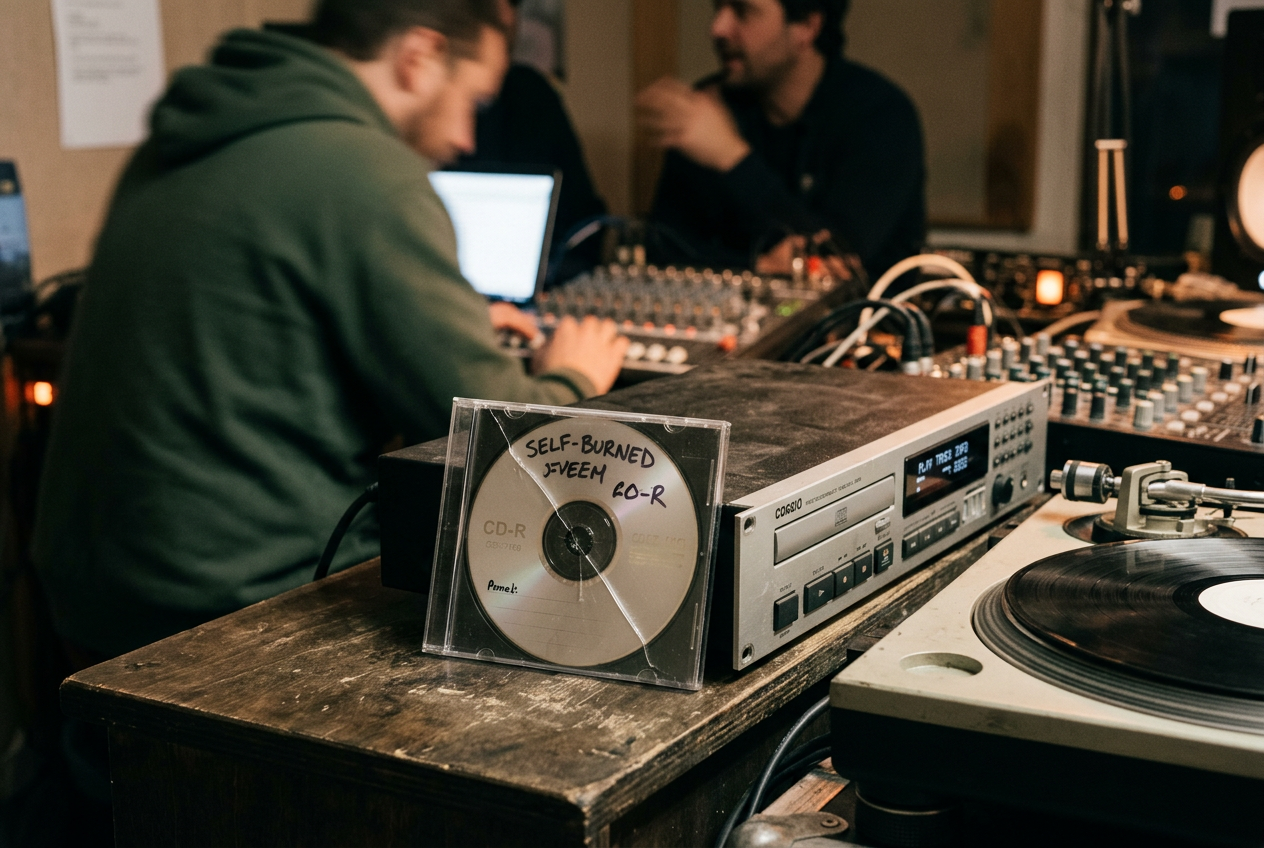
A Sold-Out New Jersey Show Can Still Pay Bands Gas Money
The crowd sees a full room. The settlement sees rent, sound, security, promotion, guarantees and a shrinking pool of cash.
August 11, 2026 · 7 min read
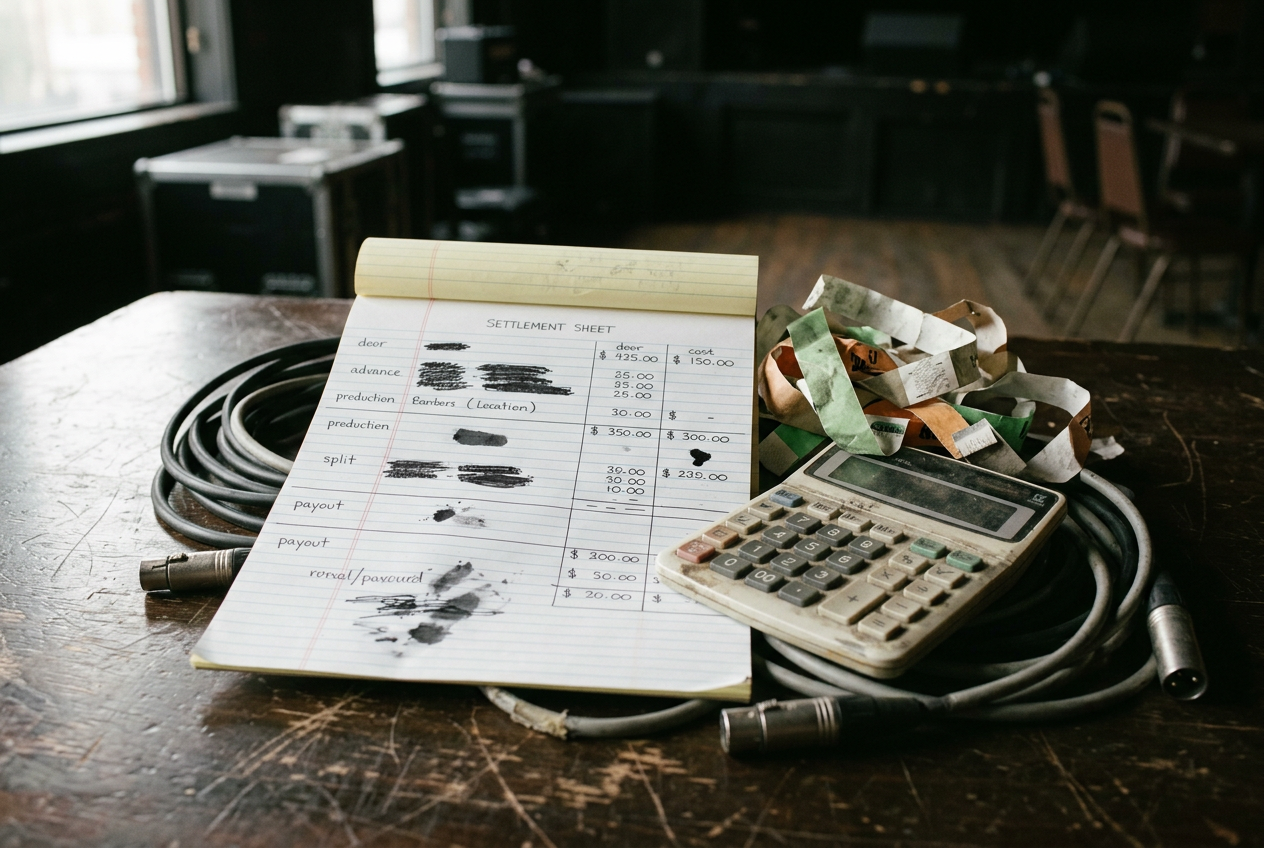
The useful object is not the flyer with SOLD OUT pasted across it. It is the settlement sheet, the plain document where ticket revenue meets every promise made before doors opened.
For one New Jersey all-ages show, we reconstructed that sheet from the public facts available around the event and the standard costs documented across independent live music. The listing establishes a face-value ticket and a full room. It does not reveal the private contract, worker pay or final artist disbursement, so those figures remain variables rather than being dressed up as reporting.
That limitation matters. A promoter can post the packed-room photograph. Nobody posts the spreadsheet showing that capacity is not the same as paid attendance, the ticket price is not the same as usable revenue, and four bands splitting what remains are performing several different versions of unpaid work.
Start with gross potential
At the top of the reconstructed settlement sheet sits “gross potential.” That is capacity multiplied by the face value of a ticket. It is the biggest number the show can theoretically produce, which makes it catnip for anyone explaining from outside why the bands must have done fine.
The number is also fictional before the first expense appears.
A room can be sold out while holding back admissions for artists, crew, photographers, volunteers or accessibility needs. Some tickets may carry discounts. Advance and door tickets can have different prices. If the promoter absorbs ticketing charges instead of adding them at checkout, part of the advertised price goes directly to the vendor that processed the sale.
“Sold out” describes inventory. It does not certify that every body inside paid the highest listed amount.
The relevant line is adjusted gross receipts, meaning the ticket money the promoter can count after refunds, taxes and any fees taken before settlement. That is the pool available to pay for the night. Merchandise is normally separate unless a venue contract imposes a merchandise commission, and bar revenue usually belongs to the room. At an all-ages show, the bar may be a weak subsidy anyway, which is one reason these events can look culturally necessary and financially irritating to venue operators.
This distinction already rearranges the room. The audience thinks it bought a performance from the bands. Contractually, it may have bought admission from a promoter who must first pay several businesses and workers required to make the performance possible.
The room gets paid before the room feels full
Rent is often the heaviest fixed charge. Fixed means it does not become friendlier because advance sales were bad. The promoter owes it for access to the room, utilities, cleanup and the inconvenience of letting a hundred or more people repeatedly test the same bathroom fixtures.
Some spaces quote a flat rental. Others use a venue fee, a percentage of ticket sales or a minimum spend tied to the bar. The labels differ, but the function is stable: the building moves its risk onto the show. A sold-out night makes that charge look reasonable.
A half-full one does not reduce it.
The reconstructed sheet then meets production. A DIY bill still needs a public-address system, microphones, stands, cables and someone able to stop the vocals disappearing when the guitar amps arrive. If the room supplies sound, the expense may be bundled into rent or listed as a production charge. If it does not, the promoter hires equipment and an engineer separately.
Either arrangement gets paid before any artist backend, the percentage of remaining ticket income promised after agreed expenses.
Security follows. New Jersey all-ages rooms do not become exempt from occupancy limits, insurance requirements or basic crowd management because the bands made their own flyers. The number of guards or door workers may be set by the venue, its insurer or local rules. Their hours extend beyond the set times because somebody opens the building, checks the exits, works the line and waits for the last amplifier to leave.
Those workers should be paid. Cutting their rate is not a moral alternative to a bad settlement, and the romantic version of DIY has leaned too heavily on friends whose compensation was entry, pizza or future reciprocity. The issue is that their labor comes from the same narrow ticket pool unless a grant, donor or profitable bar operation supports the room.
On the sheet, rent, sound and security do not care that the show sold out. They were waiting for the gross before the first ticket moved.
Promotion charges the show twice
Promotion looks cheap because social platforms made distribution appear free. The promoter posts the flyer, the bands repost it and everyone agrees to behave as a small advertising agency for several weeks.
The work is not free. Artwork takes time. Printing costs money. Ticketing pages need to be built.
Local calendars and press contacts need accurate information. Paid social posts may be used when organic reach stalls, although platform advertising is a poor substitute for a scene’s own network and often sells the promoter access to people who already follow the bands.
A promoter may charge a stated fee, recover documented advertising costs or take a percentage after expenses. A band self-promoting the show can avoid one invoice by swallowing the labor itself. The settlement improves only because somebody has agreed not to bill for hours worked.
This is the first hidden economy on the page. A profitable-looking DIY show often depends on labor that has been removed from the accounting rather than eliminated. One person answers messages at midnight. Another drives to collect rented equipment.
A band member designs the poster, handles advance sales and then plays a set. The room fills because the payroll does not.
Promotion also changes who carries failure. Renters, engineers and ticketing services generally receive agreed payments. Artists and independent promoters are more likely to occupy the residual position, which means they divide whatever survives. They are presented as the attraction while functioning as the shock absorber.
A guarantee is a floor, until it becomes the whole house
A band guarantee is the fixed minimum promised for performing. On a multiband all-ages show, guarantees can protect touring acts from leaving with nothing after fuel, tolls and vehicle costs. They also reduce the money left for everyone else.
The order matters. After adjusted ticket receipts, the promoter deducts approved show expenses. Guarantees are then paid according to the deal. If a headliner has a guarantee plus a backend, it receives the larger guaranteed amount first and may collect an additional share once the show reaches an agreed threshold.
Support acts may receive smaller fixed payments with no percentage at all.
This is where the SOLD OUT line on the public listing loses its swagger. A full room can cover the building, production crew, security and promotion, then satisfy the guarantees while leaving little backend. Divide that remainder among several bands, and divide each band’s share among its members, and the per-person result can resemble reimbursement rather than wages.
Travel sharpens the point. A payment to a band is not personal income waiting to be spent. It may need to cover gas, tolls, parking, food, equipment repairs and rehearsal-space rent. Touring artists can also owe a booking agent a commission calculated from performance income, depending on their agreement.
The audience bought a night out. The musicians may have financed a work trip.
The mechanism rewards scale, but DIY rooms are deliberately short on it. They keep ticket prices within reach, admit younger audiences and book artists who cannot fill larger venues. Raising the ticket price might improve the sheet, though it can also exclude the people who sustain the scene and make advance sales less certain. Increasing capacity changes the kind of room.
Adding a bar subsidy changes the age policy. The apparent fixes often remove the feature being protected.
Sold out is a cultural result, not a wage statement
The reconstructed settlement sheet does not prove that every cost is abusive. Rooms have rent. Engineers have skills. Security work carries responsibility.
Promoters should not be required to lose money as evidence of pure intentions.
It shows something less flattering about the structure. Most expenses are fixed or protected, while artist compensation absorbs the uncertainty left by a deliberately limited-capacity room and a deliberately affordable ticket. Success means the event covered its obligations. It does not mean the people on the poster earned a meaningful hourly rate.
This arrangement works because the show produces other forms of value. Bands build an audience. Promoters establish trust. Venues become identified with a scene.
Attendees get access before the music moves into larger rooms with worse sightlines and higher fees. Those benefits are real, but they also make underpayment easier to tolerate because everyone can imagine cash arriving later.
Sometimes it does. Often the scene supplies talent, taste and proof of demand until a better-capitalized operator packages the result. The underground becomes a product after years of people accepting thin settlements to keep the room alive.
Back on the sheet, the arithmetic remains ordinary. Ticket money enters once. Nearly every essential participant reaches for it. The artist share comes last, already carrying the cost of getting there.
Questions people ask
How can a sold-out show make so little money?
Sold out only means the available ticket inventory is gone. The usable gross may be reduced by holds, discounts, taxes or absorbed ticketing fees, while rent, sound, security and promotion remain due regardless of how triumphant the room looks.
Does the venue take all the money?
Usually no. The room may collect rent, production charges, bar revenue or an agreed percentage, but engineers, security workers, ticketing vendors, promoters and guaranteed artists can also be paid from the event. The problem is less one villainous cut than several protected costs drawing from one small pool.
Why do bands agree to play for gas money?
A show can offer audience growth, merchandise sales, future bookings and access to a scene that larger venues ignore. Those gains may justify an occasional thin payment, but repeated low settlements shift the cost of maintaining live culture onto musicians and the unpaid labor around them.
Would higher ticket prices fix DIY shows?
They could increase gross receipts if demand held, but affordability is part of what makes an all-ages room useful. A higher price can reduce attendance or exclude younger listeners, so durable alternatives usually require cheaper space, outside subsidy, transparent expenses or fewer layers taking money before the artists.
One update a day
Today's story, in your inbox
One story each morning — no hype, no filler, no algorithm deciding for you.