Black Adam’s Superman Cameo Was a Promise DC Couldn’t Keep
Henry Cavill’s return lasted one mid-credits scene. Black Adam shows how studios borrow excitement from sequels they have not approved, then leave audiences holding the abandoned setup.
September 6, 2026 · 7 min read
The red cape in the smoke
Black Adam ends twice. The first ending belongs to the film that audiences paid to see. Teth-Adam defeats Sabbac, destroys the throne and appoints himself Kahndaq’s protector, a settlement broad enough to support another movie but firm enough to close this one. Then the credits start, and the studio takes the ending back.
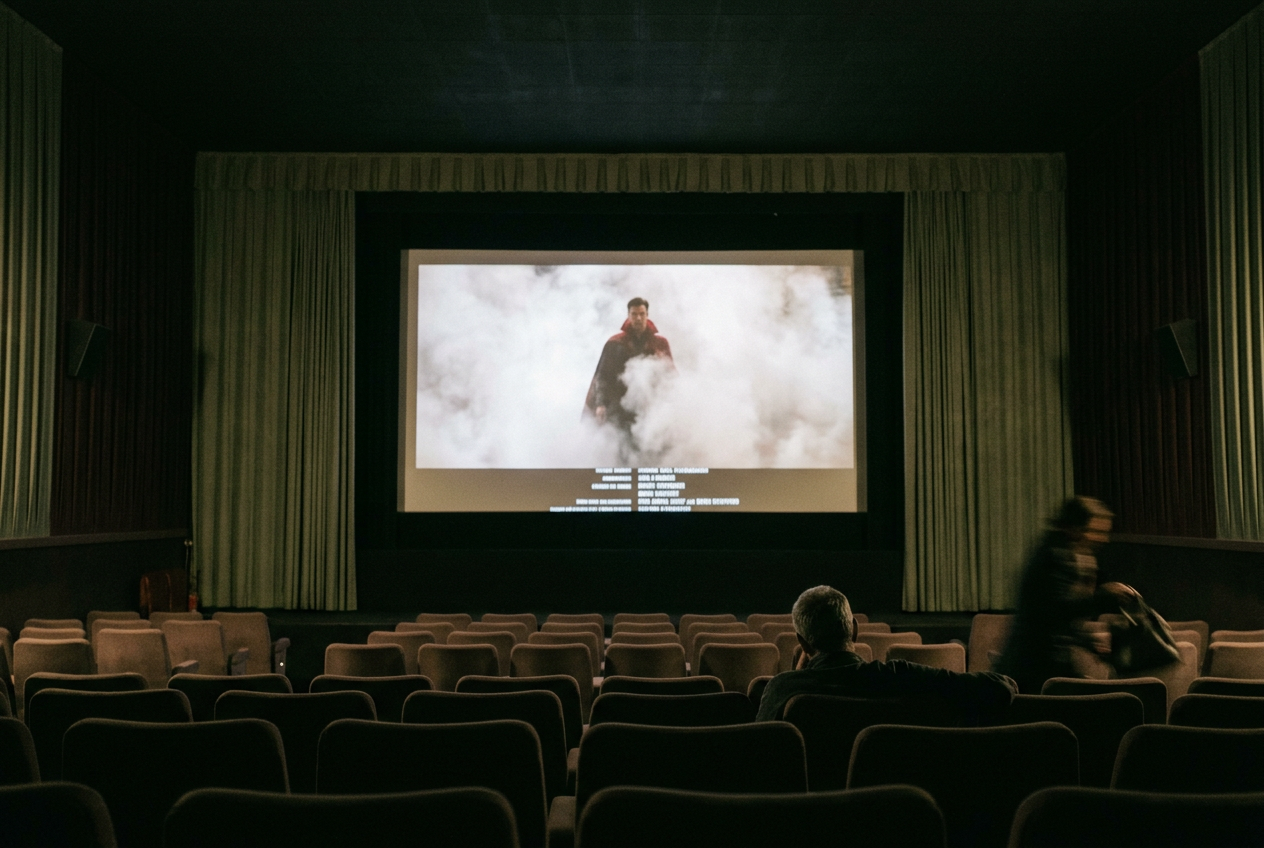
A drone enters the ruined palace. Amanda Waller appears as a hologram and warns Adam to remain inside Kahndaq. He points out that nobody on Earth can stop him. White smoke fills the courtyard.
A red cape appears, followed by Henry Cavill’s Superman, who tells Adam they should talk.
That cape is the concrete object on which Black Adam’s franchise plan hangs. It carries more authority than anything in the preceding two hours because Cavill’s return had meaning outside the frame: an actor associated with a disputed version of DC’s screen universe was apparently back, Superman and Black Adam were apparently headed toward a confrontation, and the existing franchise had apparently found its next organizing conflict.
None of those apparent facts belonged to the movie. They were financing intentions dressed as narrative information.
The sequence is usually described as fan service, which is too flattering. Service implies delivery. Black Adam offered a meeting that had not been written into a finished sequel, attached to a franchise structure that was already being reconsidered. After the film’s release and Cavill’s public announcement that he would return, DC’s new leadership moved toward a different Superman project.
The red cape remained in the courtyard. The conversation did not happen.
Viewed now, the tag has the peculiar deadness of an advertisement left running after the product was canceled. Its failure is not that plans changed. Film production always changes. Its failure is that Warner Bros.
presented corporate preference as completed story, collected the promotional value immediately and left the cost of nonperformance outside the accounting.
A cheap promise attached to an expensive movie
A post-credits scene can be produced late, withheld from early screenings and built around a brief appearance that requires far less money than the feature it implies. The underlying movie needs a script, a director, available stars, a release slot and a budget in blockbuster territory. The tag needs enough material to trigger recognition.
That difference makes the format useful to a studio operating under uncertainty. A cameo preserves franchise optionality, meaning the studio keeps open the possibility of a future project without committing to make it. If audiences respond, the tag can be treated as proof of demand. If executives change direction, the scene can be ignored while the current release keeps whatever attention the promise generated.
The risk moves in one direction. The studio gains headlines, social clips and speculation during opening week. The performer becomes publicly attached to a return that may not survive internal planning. Filmmakers inherit continuity they did not choose.
Audiences spend several minutes waiting through credits, then carry an unresolved piece of corporate strategy into the next release.
Black Adam made this mechanism unusually visible because its tag displaced the movie’s own dramatic priorities. The film had spent its running time introducing the Justice Society, arguing over who gets to define a hero and positioning Kahndaq as a country tired of outside powers deciding what protection should look like. Superman’s arrival shrank all of that. The supposed future was a fight between two recognizable men.
The tag also changed how the film was discussed. Its formal problems, including action scenes flattened by constant slow motion and a political premise that retreats whenever it approaches consequence, became secondary to Cavill’s body in the smoke. The next movie colonized the review of the current one before that next movie existed.
This is why the post-credits scene has become franchise debt. The current film borrows excitement against a later installment. If that installment appears, the debt may be paid through an actual conflict, developed character work and an ending. If it does not, the setup remains on screen as evidence that the studio sold continuity before it secured production.
The archive of movies that did not happen
Black Adam is not an isolated continuity accident. It is the cleanest specimen.
Eternals used one tag to introduce Eros and Pip aboard the surviving Eternals’ ship, then used another to place Dane Whitman beside the Ebony Blade while an unseen Blade addressed him. The scenes do not extend the film’s completed argument about obedience and creation. They open separate accounts, each dependent on other projects, performers and executive decisions. Years later, those minutes remain promissory material rather than completed screen stories.
The Marvels closes with Monica Rambeau waking in an alternate reality where Beast appears, then adds Kamala Khan recruiting Kate Bishop for a younger team. Those hooks operate on different branches of the franchise and ask the viewer to treat recognition as progress. A familiar character enters. A name is spoken.
The corporate map expands, although no one has yet traveled anywhere.
Marvel did not invent unresolved serialized storytelling, and a cliffhanger can be a real ending when it completes an emotional movement while leaving consequences open. The distinction is visible in the scene itself. A narrative cliffhanger changes what the characters understand. A franchise tag changes what the audience expects the studio to manufacture.
The ending of Spider-Man: Across the Spider-Verse postpones resolution, but its final movement belongs to the story being told: Miles has reached the wrong universe, Gwen assembles allies and the central conflict tightens. Black Adam’s red cape arrives from another contract negotiation. Remove it and the film’s resolution remains intact. Remove the ending of Across the Spider-Verse and the film has been amputated.
Studios benefit when those forms are treated as interchangeable. It lets a marketing attachment borrow the legitimacy of serialized drama, even though the attachment may have been designed to test audience appetite rather than complete a character’s arc. The audience is told to read corporate possibility as narrative destiny.
The interest comes due in the next movie
An abandoned tag damages more than continuity trivia. It trains viewers to discount the next promise.
For a franchise, anticipation is an asset only while the audience believes setups will be honored. Each discarded cameo lowers the value of the following one, which encourages the studio to compensate with a more famous face, a louder reveal or a deeper piece of intellectual property. The escalation can conceal the loss of trust for a while. It cannot repair it.
The damage also reaches backward. Black Adam now ends on a character who will not lead into that version of the future, so the final image directs attention away from the film’s surviving material and toward an abandoned branch. The Justice Society could reappear elsewhere. Kahndaq could matter again.
Yet the scene the studio selected as the release’s final sales instrument was the red cape, and that selection records what executives thought would move attention at the time.
There is a less extractive alternative. Guardians of the Galaxy Vol. 3 finishes the emotional business of its central group before its credits tags show a new team configuration and Peter Quill’s quieter life on Earth. The scenes leave doors open, but they do not require another movie to explain why the current one stopped.
Closure comes first. Optionality stays optional.
Studios could also wait until a follow-up has a director, a workable screenplay and a production commitment before advertising its conflict inside another film. That would reduce flexibility, which is exactly the point. A promise should constrain the company making it. At present, it mostly constrains the audience’s understanding of what counts as an ending.
Black Adam’s Superman scene lasts only long enough to establish recognition and intent. The smoke clears. Cavill steps forward. The film cuts away before either character must say anything that a future screenplay would be required to honor.
The efficient part is the cut.
Questions people ask
Why do movies still use post-credits scenes?
They generate attention at relatively low production cost and let studios test interest in characters or conflicts before approving a full movie. A successful tag can dominate release-week discussion, even though the sequel it implies may lack a finished script, stable leadership or committed financing.
Was
Henry Cavill supposed to return after Black Adam?
Cavill publicly announced his return as Superman after appearing in the film, but DC’s new leadership soon pursued a different version of the character. Black Adam’s tag therefore records a genuine plan at one moment, not a secured sequel or a durable commitment.
Are all post-credits scenes bad storytelling?
No. A tag can add a joke, show an aftermath or leave room for another story after the current film has delivered an ending. The problem begins when recognition substitutes for resolution and the scene asks an unapproved future production to complete dramatic work the released movie avoided.
What makes a post-credits scene franchise debt?
The film borrows audience excitement from a promised continuation and spends that attention during the current release. If the continuation is canceled or redesigned, the studio keeps the promotional benefit while viewers are left with an unresolved setup that no finished story will repay.
One update a day
Today's story, in your inbox
One story each morning — no hype, no filler, no algorithm deciding for you.