Dating App Incognito Mode Still Lets the App Watch You
Tinder, Bumble, Feeld and other apps sell control over who sees your profile. That switch rarely stops location use, activity logging or account-level data collection.
August 23, 2026 · 8 min read
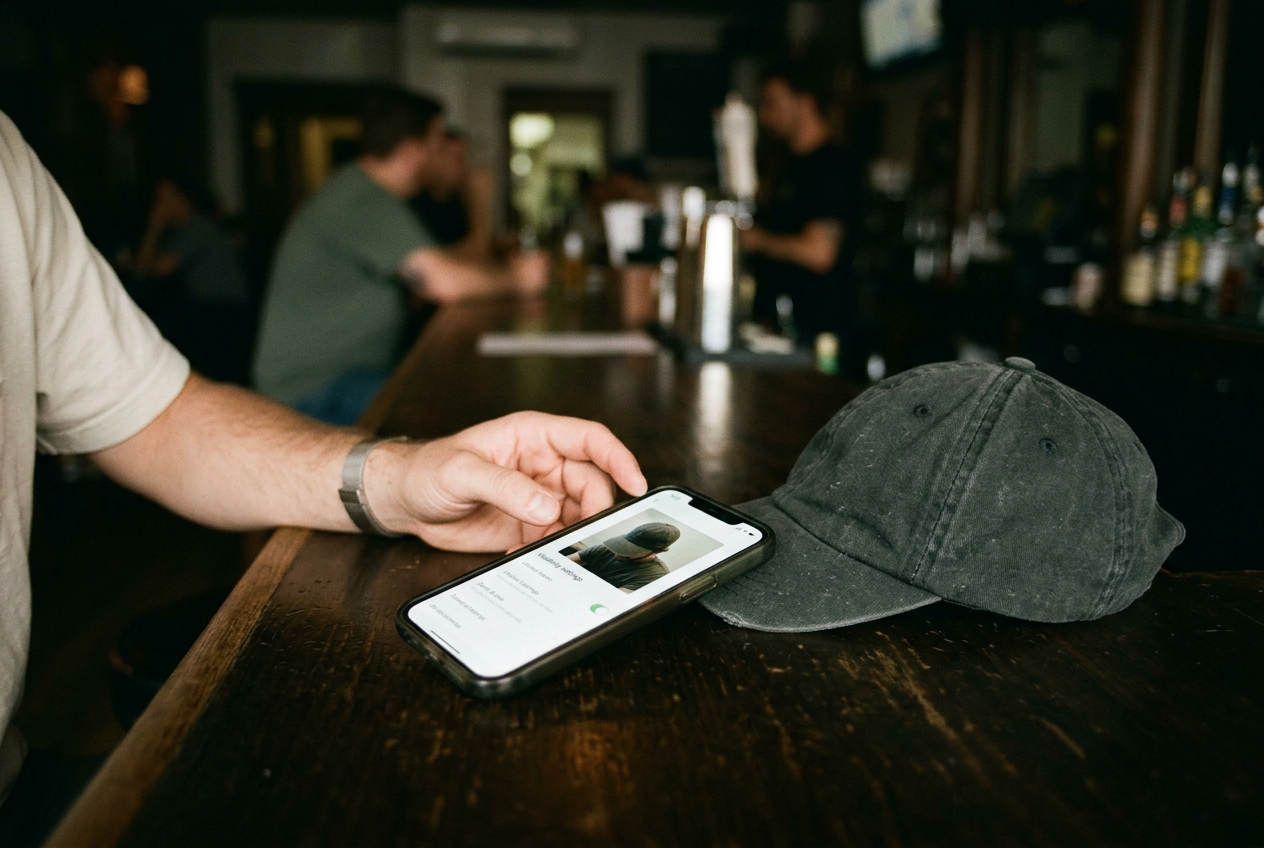
The concrete object in this test was a black cotton baseball cap, worn low in the main profile photo I used while opening the public-facing privacy controls on Tinder, Bumble, Hinge, Grindr and Feeld. The cap was useful because it stayed recognizable while the apps changed the terms around who could see it: everyone nearby, only people I had liked, existing matches, or nobody new.
The photo barely changed. The audience did.
That distinction is what dating apps sell when they sell incognito mode. You are buying control over distribution inside the dating pool, much as you might limit an Instagram story to close friends. You are generally not buying invisibility from the platform operating the pool, processing your swipes and deciding which account should appear next.
This is reporting based on hands-on evaluation of public controls and published support and privacy materials, not professional privacy, safety or legal advice. Interfaces and subscription bundles can vary by device, region and account.
The switch controls people, not infrastructure
Bumble’s paid Incognito Mode offers the cleanest version of the pitch. Turn it on and the app says your profile will be shown only to people you have already liked. The black cap can still appear, but only after I make the first move through a positive swipe. Bumble also offers Snooze, a separate control that temporarily removes a profile from circulation while preserving existing connections.
Tinder’s Incognito Mode follows the same broad model: only people you have liked can see you in recommendations. Its separate discovery control, often labeled “Show me on Tinder,” can remove the profile from the recommendation stack while leaving existing matches and conversations available. Feeld’s Incognito setting likewise limits visibility to people you have already liked or otherwise signaled interest in, subject to the product’s current rules and subscription tier.
These controls matter. A queer person testing an app in a hostile town, a teacher who does not want to encounter students’ parents, or somebody leaving a controlling partner may have strong reasons to keep a dating profile out of the general stack. Requiring payment for that control turns exposure into the default and selective visibility into an upgrade. The company has found a customer who is willing to pay for less reach, which is an unusually honest description of the product.
Hinge takes a different public-facing route. Its Pause control stops the profile from being shown to new people while allowing continued conversation with existing matches. That is useful for taking a break, but it is not the same as browsing while visible only to people you choose. Grindr’s visibility controls reflect its grid-based design, where distance, online presence, profile views and Explore searches can expose a person through several surfaces rather than one swipe stack; some stronger browsing controls sit inside paid tiers.
Across all five apps, the first question is therefore narrow: can another user see the profile with the cap? Incognito mode may change that answer. It says little by itself about what reaches the company.
Location keeps doing its job
Dating apps organize people partly through location. Some use precise location, meaning coordinates derived from a device, while others display or calculate a broader area. A distance can be hidden from other users while the underlying location still reaches the service. Hiding the number on a profile is a presentation choice.
Stopping location collection is a permissions choice, and the latter may reduce or break nearby discovery.
Travel and virtual-location features complicate this further. If an app lets you place your profile in another city, that chosen dating location does not necessarily replace the location, internet address or device information collected for security, fraud detection and service operation. The cap can appear in Chicago while the account session still carries signals showing that the phone is elsewhere.
Operating-system permissions give the user another layer of control. iOS and Android can limit whether an app receives precise or approximate location and whether it can access location in the background. Those settings are outside the dating app’s incognito switch. An app may also infer a rough area from an IP address, the numerical address used by an internet connection, even when direct location permission is restricted.
None of this means every company employee is following a dot on a map. It means profile visibility and data collection are separate systems with separate purposes, controls and retention rules. The interface encourages users to collapse them into one soothing word: privacy.
The profile disappears; the account continues
During the evaluation, switching visibility modes did not present itself as an account shutdown. Matches remained. Messages remained where the product said they would. The account still needed authentication, moderation and fraud controls.
Likes had to be recorded so the app could reveal the black-cap profile to the right person later.
That continued operation creates data. Activity logs can include swipes, matches, message metadata, purchases, reports, blocks, login times and interactions with app features. Metadata means information about an action rather than its content, such as when a message was sent or which accounts exchanged it. Device identifiers and diagnostics can help an app detect spam, investigate crashes or recognize a returning device.
They can also support measurement and advertising, depending on the company, account settings and applicable law.
Apple’s App Tracking Transparency prompt addresses certain tracking across other companies’ apps and websites. It does not switch off first-party analytics, meaning measurement performed by the service you are using inside its own product. Declining cross-app tracking while leaving a dating profile active is therefore not equivalent to becoming anonymous to the dating company.
Deletion is another control entirely. Pausing, snoozing or hiding discovery leaves the account in place. Deleting the app from a phone usually removes local software, not the account held by the company. Account deletion begins a different process governed by retention periods, safety obligations, payment records, disputes and backups described in the relevant privacy policy.
Incognito mode does not claim to do that work.
Why invisibility became a subscription feature
Dating platforms need enough visible people to keep the product useful. They also know that visibility carries unequal costs. People managing stalking, workplace exposure, sexuality, gender identity or non-monogamy may treat discovery as a safety risk rather than an awkward social moment.
The commercial move is to keep broad circulation as the default, then place finer audience control in a premium bundle. This works because the app already controls distribution. Restricting who receives a profile does not require the company to collect less data; in some cases, it requires continued collection so the system knows who the user liked and who may now see them.
That is the mechanism underneath the friendly eye icon and the paid toggle. The platform sells a rule inside its recommendation system, not an exit from its surveillance capacity. The user pays. The company keeps the account, the billing relationship and much of the behavioral record needed to run the feature.
Free alternatives exist, but they cost convenience. Pausing discovery blocks new circulation rather than permitting selective browsing. Removing location permission may degrade nearby matching. Using less identifiable photos or profile text can reduce recognition while making the account feel less personal, and determined people may still identify somebody through context, screenshots or shared contacts.
No setting can control what another user records after receiving a profile.
For people facing a specific threat, the practical distinction matters more than the branding. A paid incognito switch can reduce incidental discovery by coworkers, relatives or strangers in the stack. It cannot promise protection from existing matches, people you choose to like, screenshots, compromised accounts, legal demands or the platform itself. The black cap is harder for the crowd to see.
It is still sitting on the company’s server.
Read privacy controls as separate doors
A useful review starts with the exact exposure you need to reduce. Profile discovery governs who receives your card. Distance display governs what another user sees about proximity. Device permissions govern some access to location, contacts, camera and photos.
Analytics and advertising settings address parts of measurement. Blocking controls one account. Account deletion addresses continued participation, subject to the service’s retention terms.
Apps scatter these doors across subscription pages, safety centers, phone settings and privacy policies, which makes a single incognito label feel broader than it is. Checking each layer takes time and may cost profile functionality or subscription money. For someone under pressure, that burden is not trivial.
The paid switch may still be worth using when selective visibility solves the immediate problem. It is not worth buying under the impression that the company stops seeing you. Before paying, read the feature description literally. If it names “people,” “members,” “recommendations” or “the grid,” it is probably describing user-to-user exposure.
Look elsewhere for location permissions, advertising choices, data requests and deletion.
Questions people ask
Does incognito mode hide my dating profile from everyone?
Usually not. On apps that offer selective incognito browsing, people you like may still receive your profile, while existing matches can often keep seeing or messaging you. A pause or snooze control may stop new discovery more broadly, but the exact effect depends on the app and current account settings.
Can a dating app still track my location in incognito mode?
It may still receive location or infer a rough area while incognito mode is active, because the mode normally changes profile distribution rather than device permissions. Check the phone’s location settings separately, and remember that restricting location can affect nearby recommendations without erasing location signals such as an IP address.
Does deleting the dating app delete my data?
Usually, removing the app from a phone does not delete the account. Account deletion must generally be started inside the service or through its support process, after which some information may remain for stated retention, security, transaction or legal reasons. Review the current privacy policy and deletion screen before assuming the profile is gone.
Is paid incognito mode worth it for privacy?
It can be useful when the immediate goal is avoiding casual discovery by people you have not chosen. It is a visibility tool, not anonymity from the company or guaranteed protection from screenshots and existing contacts. The value depends on the threat you are managing, the app’s exact rules and whether a free pause control already meets the need.
One update a day
Today's story, in your inbox
One story each morning — no hype, no filler, no algorithm deciding for you.