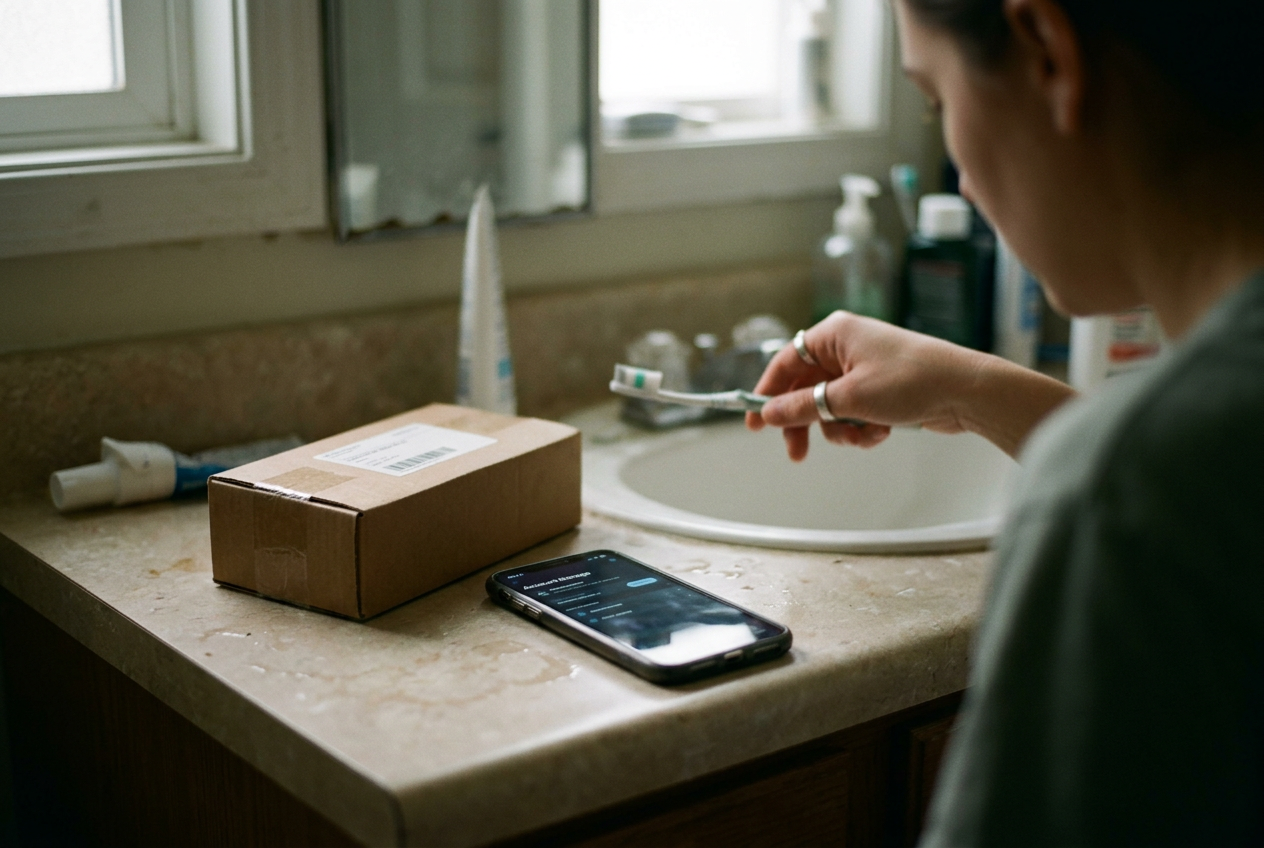
Drug-Checking Strips Are Easy to Buy and Easy to Misread
A strip can detect a target drug under specific conditions. Its foil pouch, expiration date and maddeningly faint lines decide whether the answer means anything.
August 11, 2026 · 8 min read
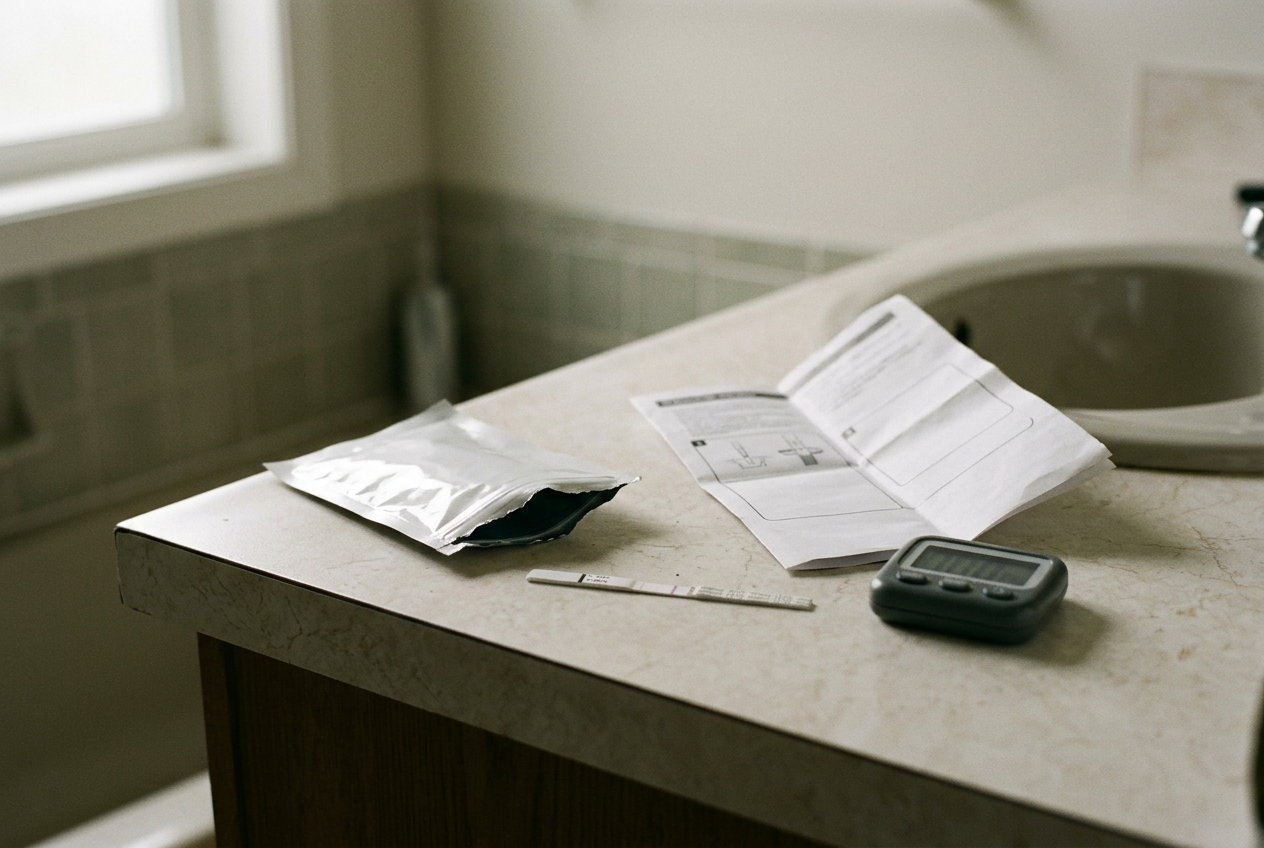
The object on my counter was an individually wrapped fentanyl test strip in a white foil pouch. The wrapper carried more authority than its size deserved: product name, lot code, expiration date, storage range, single-use warning. Inside sat a narrow strip with a printed immersion limit. The longer instructions had been folded separately, where a person in a hurry could miss them.
This is the central problem with retail drug checking. The chemistry has moved out of a laboratory, but the procedural burden has followed it home. A cheap strip looks as casual as a receipt. It is closer to a tiny assay, a test that produces a reaction only when the sample, timing and storage conditions stay within the manufacturer’s rules.
The strip is not difficult to use. It is easy to use incorrectly.
Start with the pouch, not the sample
An expiration date is not decorative compliance text. Test strips contain biological reagents, substances that react with the target compound, and those reagents can lose performance after heat, moisture or time has worked on them. The printed date generally assumes that the strip remained sealed and was stored within the range listed by its manufacturer.
That does not mean a strip becomes chemically useless at midnight after its expiration month. It means the maker no longer stands behind its stated performance. Harm reduction is already an exercise in incomplete information. Adding an expired test because it was lying in a drawer is a bad trade.
Check the seal. Read the storage range. Keep the strip in its original wrapper until use, and do not use a pouch that is torn, wet or already open. Bathrooms and cars are poor storage spaces because humidity and temperature swing hard there, even when the room or glove compartment feels ordinary at the moment you retrieve the packet.
The foil pouch on my counter had survived unopened, but its format encouraged precisely the wrong instinct: tear first, look later. Once opened, the strip should be used according to the instructions rather than returned loose to a bag for another night. The lot code also matters. It identifies the manufacturing batch if a supplier or harm-reduction program issues a warning, although marketplace listings do not always make that chain of accountability easy to follow.
Retail availability has put more strips within reach. It has also shifted quality control onto the buyer, who must decide whether an unfamiliar seller stored a temperature-sensitive product properly before dropping it into the mail. A local harm-reduction program can offer something the cheapest listing cannot: current instructions, product-specific training and a route back if the result looks wrong.
The dilution rule is part of the test
A fentanyl strip commonly uses a competitive lateral-flow assay, a format in which the target drug blocks formation of the test line as liquid travels along the membrane. That mechanism explains the result pattern, but it also explains why improvising the sample can break the test.
Too concentrated a solution may produce a misleading result with some strip formulations because other compounds can interfere at high concentrations. Too dilute a solution may push the target below the strip’s detection threshold. Different products can specify different preparation ratios, and instructions may change according to the substance being checked. There is no trustworthy universal splash of water.
Use the quantities and container described by the manufacturer or the harm-reduction organization supplying that exact strip. Do not substitute instructions remembered from a different packet, even if both strips look identical. Keep the liquid below the marked immersion line, hold the strip in place for the stated interval and read it only inside the specified window.
This is where tiny packaging becomes a public-health interface, and often a poor one. Some directions are printed for trained or clinical use. Others rely on diagrams that make dilution look self-evident while placing exceptions in dense text. If the instructions are missing, incomplete or incompatible with the strip in front of you, do not reverse-engineer them from a social post.
Replace the kit or take it to a drug-checking service.
The preparation container matters as well. Residue from another substance can contaminate the sample, while soap or cleaning products may interfere with the chemistry. Use clean equipment specified for the test, avoid touching the reactive end and keep the testing liquid separate from drinks or anything else that might be consumed. The strip is single-use.
Rinsing it does not reset the reaction.
One line can mean positive
Most familiar home tests train people to read two lines as positive. Many fentanyl strips reverse that visual grammar because the assay is competitive. On the pouch from my counter, the control line showed that liquid had traveled through the strip; the test line appeared when the target was not detected at or above the test’s cutoff.
For many products, one control line with no test line means a presumptive positive. Two lines mean a presumptive negative, and a faint test line still counts as a line if it appears within the stated reading window. No control line means invalid, regardless of whatever happened in the test area.
“Presumptive” matters. It means the result indicates what may be present under the test conditions, rather than establishing a final laboratory identification. The strip does not report concentration. A dark line is not a purity score, and a faint one does not map neatly onto how much fentanyl is present.
Reading the strip after the allowed window can introduce evaporation marks or other changes that the manufacturer never validated.
Take a clear photo during the reading window if you may need to show the result to a harm-reduction worker. Do not keep staring until the strip gives the answer you wanted.
The sample is smaller than the bag
Even a correctly performed negative test describes only the material that reached the strip. Powders and pressed pills may not be evenly mixed. A dangerous compound can cluster in one section, a distribution problem sometimes described as the chocolate-chip effect: testing one crumb does not establish what sits elsewhere in the batch.
A representative sample reduces that blind spot, but it cannot erase it. Drug-checking programs may give product-specific guidance on sampling or offer methods with broader analytical capacity. A strip used on residue from one corner of a bag provides less information than people often imagine, particularly when the contents have separated during handling.
The strip also detects only what it was designed to detect, including any listed analogs or cross-reactive compounds covered by that formulation. A fentanyl result says nothing dependable about xylazine unless a separate xylazine test was used. Neither strip identifies every unexpected drug, adulterant or contaminant. Coverage varies, and packaging should state the target rather than letting the buyer infer it from the general phrase “drug checking.”
That makes a negative result useful but narrow. It can lower uncertainty about one target in one tested sample when the procedure worked. It cannot establish identity, dose, purity or safety. A positive result is also incomplete: it does not reveal how much target compound is present or predict what a particular body will do with it.
The strip is one layer, not permission
The safest response to a positive result is not to use the material. A harm-reduction service may be able to confirm the finding, provide more capable checking or explain local disposal options. If someone uses despite the result, established overdose precautions still matter, including having naloxone available, avoiding solitary use and calling emergency services when a person cannot be awakened or is breathing abnormally.
A negative strip should not make those precautions disappear. Tolerance changes. Mixtures behave unpredictably. The sample may not represent the whole supply, and the test may not cover the compound causing harm.
Drug checking works best as one layer beside naloxone access and an honest plan for getting help, not as a ritual that converts an unknown product into a known one.
The white foil pouch eventually ended in the trash with its used strip and discarded solution. Its expiration date had been valid. The control line had appeared. Those facts established that the test met two necessary conditions.
They did not turn the result into a certificate.
This is harm-reduction information, not medical advice. Product instructions and local guidance take priority because strip designs, detection targets and procedures differ.
Questions people ask
Can
I use a drug-checking strip after its expiration date?
An expired strip may still produce lines, but the manufacturer no longer guarantees its performance, especially if storage conditions were uncertain. Replace it with an in-date, sealed strip. If an expired test is the only result available, do not treat either outcome as reliable reassurance.
Does a faint second line mean fentanyl is present?
For many competitive fentanyl strips, any visible test line within the manufacturer’s reading window indicates a presumptive negative, even when faint. Designs vary, so compare the result with the instructions for that exact product. A missing control line makes the test invalid rather than positive or negative.
Does a negative result mean the drugs are safe?
No. A negative result addresses one target, in the portion sampled, above that strip’s detection threshold. It cannot establish dose, purity or the absence of other substances, and uneven mixing can leave fentanyl elsewhere in the material. Keep normal overdose precautions in place.
What should I do with a positive result?
The safest option is not to use the material. A local harm-reduction or drug-checking service may help interpret or confirm the result. If exposure may have occurred and someone is unresponsive or breathing abnormally, give naloxone if available and contact emergency services immediately.
One update a day
Today's story, in your inbox
One story each morning — no hype, no filler, no algorithm deciding for you.