Google Closed One Police Location Dragnet. Others Remain
Google dismantled the location-history database behind geofence warrants. It did not stop police from finding other companies willing or required to place your phone on a map.
August 13, 2026 · 8 min read

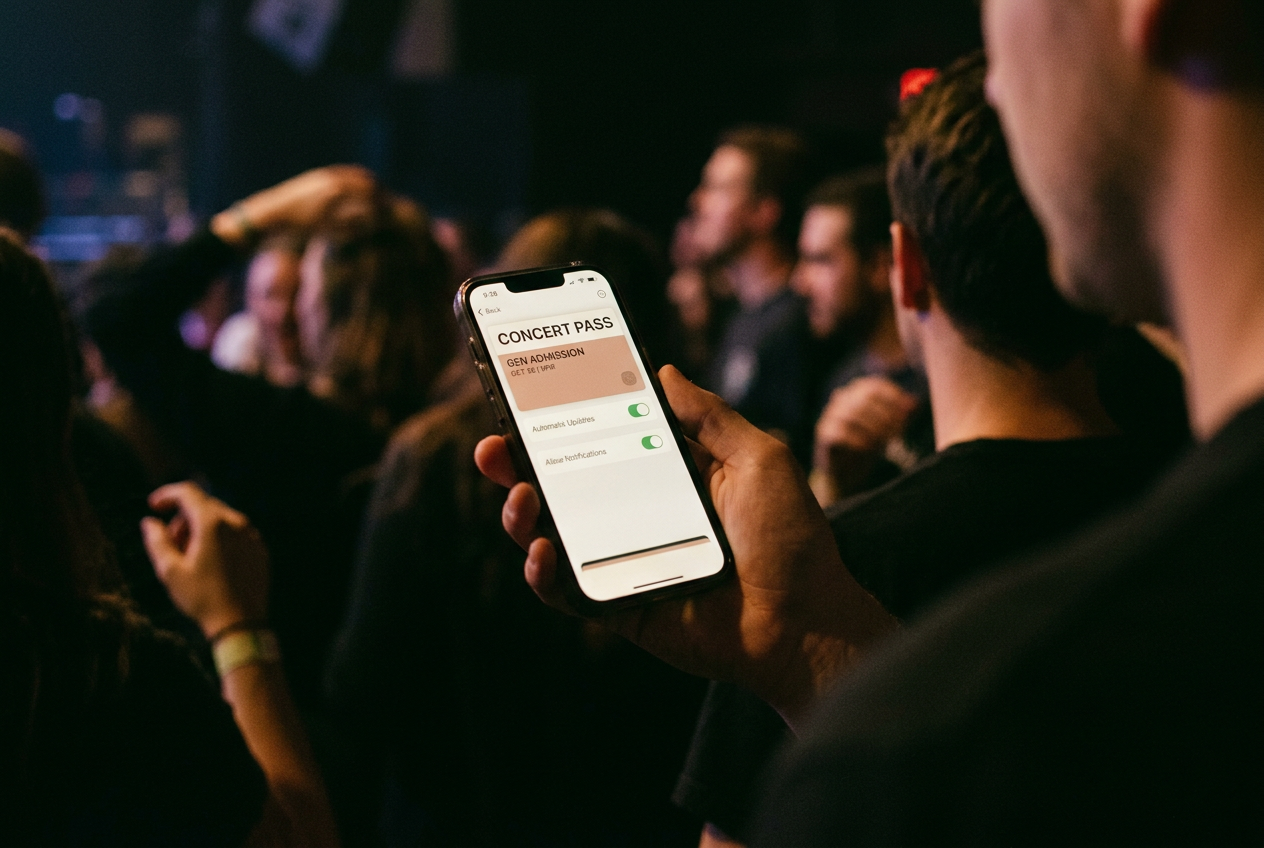
Start with a black phone, screen locked, zipped into the inside pocket of a coat for the ten-minute walk from a pharmacy to a bus stop. Nobody opens Google Maps. The phone still checks cell towers, encounters Wi-Fi networks, receives satellite signals and lets permitted apps request its position. Moving one Google record onto that phone changes who can retrieve one version of the walk.
It does not make the walk disappear.
That distinction got blurred when Google changed Maps Timeline, formerly called Location History. Timeline can preserve places and routes for users who enable it. Police had learned to seek that centralized history with a geofence warrant, a demand requiring Google to identify devices found within a defined place and period rather than asking for records tied to a known suspect.
Google announced in December 2023 that Timeline would move from its servers to users’ devices, with encrypted backup available, and later confirmed that the new architecture would leave it unable to produce the same geofence results. This was a real change. A database that cannot be queried centrally cannot perform the old reverse search.
It also works rather well for Google. Decentralization reduces a genuine privacy risk while removing a costly legal and reputational problem from the company’s desk. Google no longer has to be the courthouse clerk for every agency that draws a box around a crime scene and asks which customers wandered through it.
The press-release version ends there. The phone in the coat pocket keeps walking.
What Google closed
A conventional warrant starts with a person or account and seeks evidence connected to that target. A geofence warrant starts with coordinates and time, then works backward toward people. Under the process described in litigation and public reporting, Google could return anonymized device identifiers found inside the boundary, provide additional movement data after investigators narrowed the pool and eventually disclose subscriber information for selected accounts.
The method made bystanders structurally useful. A resident asleep nearby, a delivery driver passing through and somebody collecting medicine could enter the same candidate list before police knew anything about them. Particularity, the constitutional requirement that a warrant specify the place to search and things to seize, becomes difficult when the government’s opening proposition is that it does not know whose records it wants.
Courts never settled on one national rule. The Fifth Circuit held in 2024 that geofence warrants are unconstitutional general warrants, while the Fourth Circuit reached a different conclusion about whether obtaining Google’s data amounted to a Fourth Amendment search. Other state and federal courts have produced their own answers. The Supreme Court has not supplied a clean one.
Google’s design change bypassed part of that argument. If Timeline resides on the device rather than in a searchable company database, Google cannot run a server-side query across everyone’s histories. It may still hold ordinary account information or records from other services, and material already disclosed does not evaporate, but the Sensorvault-era pipeline that made Google the default geofence desk is being dismantled.
That is narrower than abolishing location surveillance. It abolishes one convenient custodian.
The apps build their own maps
The pharmacy-to-bus-stop walk may appear in records held by a ride-hailing service, delivery platform, weather app, fitness tracker or family-location service. An app that needs location to perform a function may retain coordinates, routes, pickup points or access logs under its own policies. Those records belong to a different corporate custodian, so Google’s Timeline architecture has no control over them.
Investigators can send legal demands directly to the app company. The required instrument depends on what they seek, where the company and user are located, and how a court classifies the record. A subpoena generally carries a lower threshold and can obtain certain subscriber details. A court order may require specific facts showing relevance.
A search warrant requires probable cause and should identify the evidence sought. The Stored Communications Act, a federal law governing access to stored electronic records, divides data into categories designed before a coat pocket could generate a continuous travel diary.
Location data does not fit those categories politely. After the Supreme Court’s 2018 decision in Carpenter v. United States, prolonged historical cell-site location information generally requires a warrant, even though a carrier holds it. Carpenter rejected a mechanical application of the third-party doctrine, under which information shared with a company receives weaker Fourth Amendment protection.
It did not decide every app record, every duration or every reverse search.
Companies therefore receive demands in a field where constitutional limits, federal statutes and state privacy laws overlap without lining up. Some challenge broad requests. Some disclose what the paperwork covers. Most users learn none of this from a location-permission prompt.
Ad tech sells the shortcut
An app may also include a software development kit, or SDK, a bundle of outside code used for functions such as advertising, analytics or weather. If that code collects location, the resulting data can travel to an intermediary that the phone owner has never heard of. Advertising identifiers, resettable strings assigned to mobile devices, help companies connect activity across apps without displaying a legal name at the start.
That last qualification matters. A location trail attached to an advertising ID can become identifying when one device repeatedly sleeps at a house and spends weekdays at a workplace, or when investigators pair it with records from another source. Public reporting has documented law-enforcement use of commercial tools, including Fog Reveal and Babel Street’s Locate X, that let customers search or analyze location data derived from the mobile advertising market.
Here the legal mechanism can be a purchase rather than a warrant. An agency pays a vendor for access under a contract, much as a marketer might buy an audience product, and the vendor supplies an interface over data assembled elsewhere. The government’s position has often been that commercially available information is available to government customers too. The constitutional objection is obvious: an agency should not be able to buy its way around a warrant requirement that would apply if it ordered the same sensitive history directly.
The Federal Trade Commission has brought actions against location-data companies over the sale or use of sensitive location information, including data capable of revealing visits to medical facilities, religious sites and other protected places. Those cases constrain particular businesses and practices. They do not create a universal ban on government access to commercially traded location data.
For police, the attraction is speed and scale. For brokers, the incentive is equally plain. Data gathered to price advertising becomes more valuable when the list of buyers includes institutions with budgets, compulsory powers and an enduring appetite for retrospective maps.
Carriers still see the network
The phone inside the coat pocket must communicate with cellular infrastructure. Carriers create cell-site location information from the towers and sectors used to handle those connections. It is less like a perfect satellite pin than app-based coordinates can be, but it can place a device within an area and show movement over time.
Carpenter requires police to obtain a warrant for at least the extended historical record at issue in that case. Shorter periods, real-time tracking and specialized demands remain subject to differing court decisions, statutes and agency policies. Police may also seek a tower dump, which identifies devices that connected to a particular tower during a specified period. Like a geofence warrant, it begins with a place and collects a crowd.
A cell-site simulator takes another route. Often known by the brand name StingRay, it imitates a cell tower so nearby phones connect and reveal identifying or location-related signals. Federal policy generally calls for warrants in ordinary use, while state rules and local disclosure practices vary. Google cannot redesign the cellular network out of this equation.
The warrant can move to the pocket
Device-side storage changes the address on the demand. If police have probable cause connecting the black phone to a crime, they can seek a warrant to seize and search it. Riley v. California established in 2014 that officers generally need a warrant to search a cellphone taken during an arrest, recognizing that a phone contains far more than the physical objects found in a pocket.
A forensic search may reach app databases, cached maps, photographs with location metadata, messages, browser records and locally stored Timeline information, depending on the warrant’s scope, the device’s security and what extraction tools can access. Consent, probation conditions and emergency exceptions can change the analysis. Whether authorities can compel a passcode or biometric unlock remains contested and jurisdiction-dependent.
Cloud records provide another route. A navigation service may have destination searches. A ride service may retain pickup history. Account-security logs can include IP addresses, which offer rough location clues.
Google’s encrypted Timeline backup is designed to deny Google the central visibility it once had, but another service may keep its own server copy of the same afternoon for operational, fraud-prevention or advertising reasons.
The practical map is fragmented now. That may slow an investigation, raise its cost and force police to identify the right custodian before sending process. Friction matters. It reduces casual dragnet use.
Yet fragmentation also makes oversight harder, because no single transparency report shows the app demand, broker subscription, carrier warrant and phone extraction that reconstructed one ten-minute walk.
Google closed the largest, neatest drawer. The institution looking for the coat pocket can still search the room.
Questions people ask
Did Google end geofence warrants?
Google ended its ability to answer the familiar Timeline-based geofence demand once users’ location histories moved to their devices. Courts and legislatures can still confront geofence-style demands aimed at other companies, including app providers, carriers or data vendors that retain searchable location records.
Can police buy location data without a warrant?
Agencies have purchased access to commercial location products without first obtaining warrants. Whether a particular purchase violates the Fourth Amendment depends on the data, duration, use and court, while FTC enforcement and state laws may restrict vendors. The legal shortcut exists because buying access has been treated differently from compelling a company to disclose records.
What can a carrier reveal about where a phone was?
Carrier records can show which cell sites handled a phone’s connections, creating a historical movement pattern with varying precision. Under Carpenter, police generally need a warrant for prolonged historical cell-site data, but rules for shorter windows, tower dumps and real-time techniques remain uneven across jurisdictions.
Can police get Google Timeline from the phone itself?
Potentially, if investigators lawfully seize the device and a search warrant covers that evidence. Access then depends on the phone’s lock state, encryption, available forensic tools and the warrant’s limits. The record is no longer waiting in Google’s central drawer; it may be zipped inside the coat pocket with the phone.
One update a day
Today's story, in your inbox
One story each morning — no hype, no filler, no algorithm deciding for you.