
Musician Earplugs Keep the Set Intact. Fit Decides It.
Filtered plugs preserve more of a set than disposable foam, but the filter cannot rescue a bad seal. Fit, insertion and knowing when to leave matter more than the lifestyle case.
August 24, 2026 · 8 min read
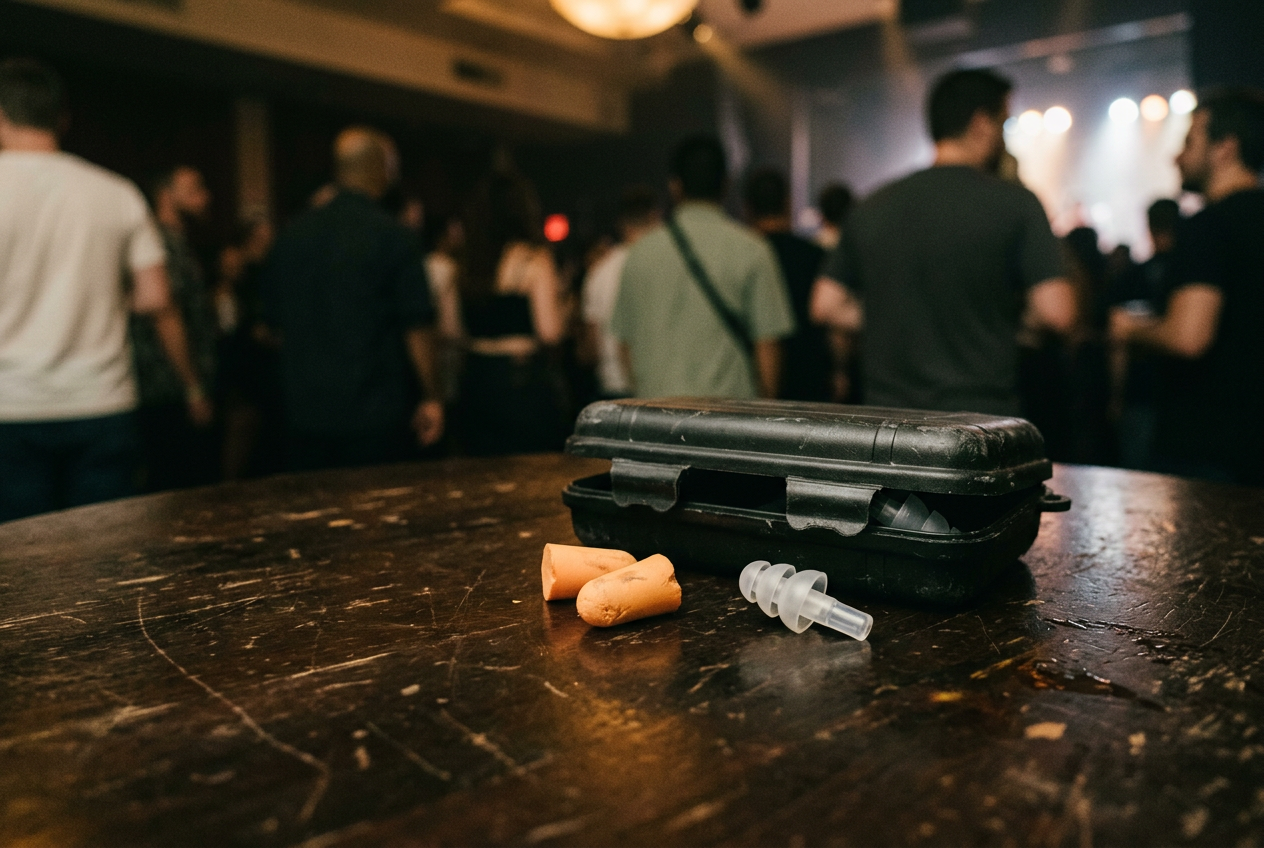
The object to keep an eye on is a clear silicone musician-style earplug with a medium triple-flange tip, a short removal tab and a small acoustic filter seated in its center. It looks discreet enough to lose on a wet club floor, which is one reason its hard plastic case matters more than the packaging would like to admit.
That plug represents the promise sold by the musician-grade category: turn the whole room down without changing the mix. Disposable polyurethane foam makes a less glamorous offer. Compress it, insert it, wait for it to expand, then accept that the hi-hats may now sound as if they have been moved into another building.
The filtered version is better for hearing the set. Foam remains the stronger fallback when the room is punishing, the fit is uncertain or fidelity has become less important than getting through the night. The useful distinction is not premium versus cheap. It is controlled sound versus maximum practical reduction, with fit capable of wrecking either one.
The filter is a tiny acoustic compromise
An acoustic filter is a small channel or membrane that resists sound before it reaches the ear canal. Unlike a solid plug, it aims to reduce frequencies more evenly, which preserves more of the relationship between kick drum, vocal, guitar and cymbals.
That relationship is what people mean when they call a plug “flat.” It does not mean the sound remains identical, and it does not mean every ear receives the reduction printed on a package. The filter, tip and individual ear canal form one system. Break the seal around the silicone tip and low-frequency energy can leak through, leaving the room bright, harsh and only cosmetically safer.
This is why the clear triple-flange plug keeps returning. With the medium tip seated correctly, its stem sits close to the opening of the canal and the three thin skirts make contact without folding over. The set gets quieter while retaining its internal shape. A vocal can still occupy the middle, cymbal decay remains audible, and the bass has pitch rather than becoming a warm pressure with no edges.
A poor fit produces a stranger result. One loose plug can make the stereo image lean toward that side, encouraging repeated adjustment or removal. People often blame the filter because it is the visible piece of technology. The silicone around it is doing the less marketable work.
Test the seal before the first kick
Fit plugs somewhere calm enough to notice failure. For the clear reusable pair, pull the top of the ear gently upward and back, guide the tip inward with a small twisting motion, then stop if there is pain. The removal tab should remain reachable. Deep insertion is not a competitive event.
Once both are in, speak at a normal level and rub two fingers beside each ear. Your own voice will often sound fuller or more internal, an effect called occlusion, which occurs when vibration from speech is trapped in the blocked ear canal. The sensation should be broadly similar on both sides. If one side sounds open, thin or much louder, reseat that plug rather than trusting the filter’s existence.
Do the same check after ten minutes. Jaw movement, sweat and an ear tip that was slightly too small can loosen the seal without producing a dramatic sensation. The clear plug may still look properly installed while sitting just far enough out to change the protection and the mix.
Foam needs a different technique. Roll the plug into a narrow, crease-free cylinder, pull the ear upward and back, insert it, then hold it in place while the foam expands. Squashing the end into a ball and parking it at the entrance gives the appearance of compliance with little of the intended attenuation. Half the foam should not be waving at the bartender.
The noise reduction rating, or NRR, is a laboratory-derived label used in the United States to describe potential attenuation under specified test conditions. It is not a personal guarantee. Real ears, hurried insertion and plugs that work loose create a gap between the box and the basement.
Use the room as the test signal
A basement show exposes fit problems quickly. The ceiling is low, the reflective surfaces are close, and the sound may be built around whatever the available system can survive. With a sealed filtered plug, cymbal wash should retreat without disappearing, while the kick and bass remain distinct enough to follow. If the treble still cuts sharply through one ear, suspect leakage before declaring the product useless.
Foam changes the same room more aggressively. Properly inserted, it tends to remove much of the upper-frequency information that carries vocal consonants, guitar texture and the attack of a snare. The bass may feel dominant, not because the plug has boosted it, but because less of the upper range remains available for comparison. This is protection doing blunt work.
In a club, consistency matters more. Low frequencies reach the body as well as the ear, so a plug can reduce sound entering the canal while the sub still feels physically present. That sensation is easy to misread as proof that the plug is preserving bass perfectly or doing nothing at all. Neither conclusion follows.
Bodily vibration is not a fit test.
Move from the edge of the dance floor toward a quieter area without touching the plugs. A filtered pair should let the room become gradually less dense rather than suddenly revealing that one side was never sealed. Speech between tracks offers another check. Consonants should remain more legible through the filtered pair than through deeply fitted foam, although no earplug can separate a friend’s voice from a wall of amplified sound with the precision of software.
Larger rooms are kinder to the comparison because the system usually has more physical separation and the mix has space to develop. The clear triple-flange plug earns its case here. Detail survives at a level that requires less endurance, and the set feels reduced rather than replaced. Foam can still be the right call near a speaker array, during an especially loud bill or when the reusable pair refuses to seal.
Speech clarity is not a side issue
People remove plugs to order a drink, find a coat or hear a friend. That repeated removal is where a good product often loses to ordinary behavior.
Filtered plugs preserve more of the upper-mid and high-frequency information that makes speech intelligible, so they are easier to leave in between songs and while moving through the room. The advantage is practical. A plug that stays in protects more consistently than a technically stronger one sitting in a pocket beside a receipt and a dead vape.
Still, conversation can be awkward. Occlusion makes your own voice sound louder, which can cause you to speak too quietly, while the other person remains buried under crowd noise. Step away from the speakers instead of pulling one plug. Removing a single side creates uneven exposure and makes the open ear feel temporarily useful, which encourages leaving it open longer.
Foam performs worse socially because it cuts more speech detail and can make casual conversation laborious. That is not an argument against it. It is an argument for treating foam as equipment with a specific job rather than a disposable moral lesson handed out near the door.
Comfort determines whether the plug stays put
The medium triple-flange tip is not universally medium. Ear canals differ between people and often between ears, so a pair that seals on the left may press or leak on the right. Persistent pressure, soreness or pain means the fit is wrong. A smaller compatible tip, a different shape or a professionally fitted custom plug may work better.
Custom musician plugs are molded to the ear and can offer a stable seal with replaceable filters, but they cost far more and require an appointment. They make sense for performers, staff and people in loud rooms every week. An occasional attendee does not need to turn harm reduction into a luxury enrollment scheme before taking any action.
Reusable silicone plugs also need maintenance. Wipe or wash the removable silicone parts according to their instructions, let them dry fully, and keep liquid away from filters that are not designed to be washed. Inspect the flanges for tears and the filter for blockage. Earwax is an unglamorous systems failure.
Disposable foam belongs in the same case as the clear pair, sealed in a small clean bag. It costs little, weighs almost nothing and covers the predictable failures: a dropped reusable plug, a friend with none, a room louder than expected or a silicone tip that begins hurting halfway through the bill.
The limit is exposure, not taste
Earplugs reduce exposure. They do not grant immunity from volume, and a plug that preserves the mix can make a loud room easier to tolerate long after leaving would be wiser. Fidelity has a behavioral downside: the better the set sounds, the less obvious the warning can feel.
Take breaks in a genuinely quieter place, spend less time beside speakers and leave if the sound becomes painful or distorted. Ringing, muffled hearing or fullness after a show are warnings, not proof of a successful night. Persistent symptoms, sudden hearing changes, pain or drainage belong with a qualified medical professional or audiologist, not a product review.
For the clear triple-flange plug, the final test is boring. It must seal on both sides, remain comfortable and stay in from the first loud passage until the room is quiet. If it cannot do that, use the foam pair. The expensive little filter does no work from the case.
Questions people ask
Are musician earplugs better than foam earplugs for concerts?
They usually preserve the balance and detail of music better when their filtered tips seal correctly. Properly inserted foam often reduces sound more aggressively, making it useful for very loud rooms, uncertain conditions or backup, although speech and upper-frequency detail may become harder to follow.
How can
I tell whether my earplugs fit correctly?
Both ears should sound similarly reduced, and the plugs should remain stable when you talk or move your jaw. A sharp difference between sides, obvious treble leakage, loosening or pain points to a fit problem. Reseat the plug, change tip size or use a different design rather than forcing it deeper.
Can I remove one earplug to talk to someone?
Leaving one ear open creates uneven exposure and often turns a brief conversation into a longer unprotected stretch. Keep both plugs in and move to a quieter area. Filtered musician plugs tend to preserve speech cues better than foam, but distance from the sound system still does more for conversation.
Do concert earplugs make loud venues safe for any length of time?
No. Earplugs can reduce sound reaching the ear, but fit varies and exposure still accumulates. Breaks, distance from speakers and less time in the room remain part of the plan. Persistent ringing, muffled hearing, pain or a sudden hearing change warrants professional assessment.
One update a day
Today's story, in your inbox
One story each morning — no hype, no filler, no algorithm deciding for you.