New Jersey Body-Camera Access Could Come With an Editing Bill
New Jersey treats police body-camera recordings as public records, then lets processing determine what reaches the public. A pending fee proposal would give that bottleneck a price tag.
August 11, 2026 · 8 min read
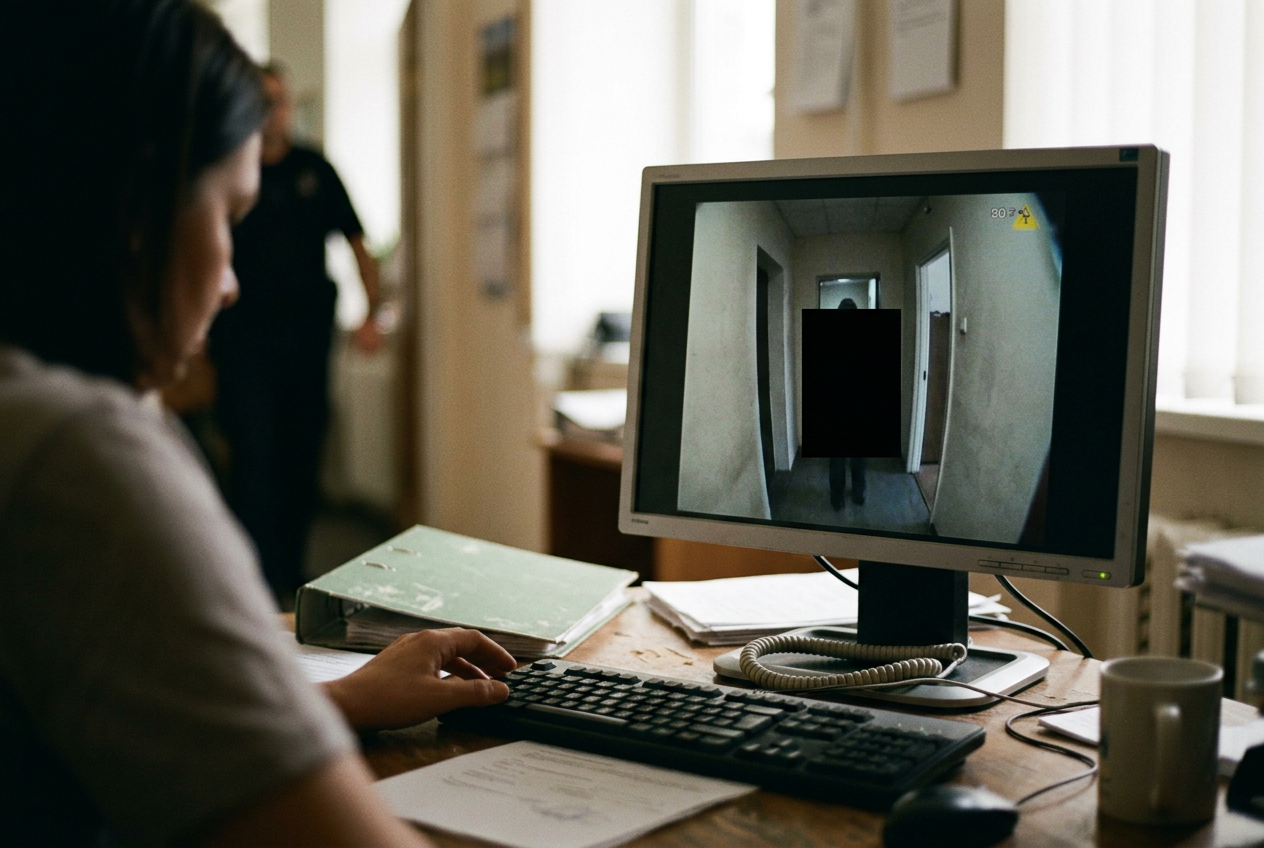
Start with one deliberately ordinary piece of footage: a minute recorded in an apartment hallway, where an officer speaks to a resident, a child crosses the frame and somebody says a full name. Nothing about this hypothetical clip is exceptional. That is the point. It contains the routine collision between public oversight and private life that makes body-camera access difficult long before anyone invokes a dramatic secret.
New Jersey law puts body-worn camera recordings within the state’s public-records system. The Open Public Records Act, usually called OPRA, gives people a statutory route to government records unless a law or recognized exemption keeps them closed. That sounds clean. The file exists, the public asks and the agency supplies it.
The file that leaves the department, however, will rarely be the file the camera made. A records employee must find it, watch it and decide what cannot be released. Software may blur the child’s face. Audio may be muted when the resident says a name, medical information or something protected by another law.
If part of the encounter occurred inside the apartment, privacy arguments become stronger. The final export could be shorter, quieter and covered in black boxes.
That export is the real public record most people meet. Access exists upstream. Editing controls the view downstream.
The request has to survive intake
A body-camera request needs enough information for a custodian, the official responsible for records, to locate the footage. Agencies commonly ask for an approximate date and time, a location, an incident number or the names of people involved. A request for every recording made by a department over a broad period may trigger an objection that it is unclear, overly expansive or operationally disruptive.
This first gate favors people who already know what happened. A criminal-defense attorney may have a report number. A family member may know which officers came to the apartment. A journalist working from dispatch logs can narrow the window.
Someone who saw a troubling clip online, or who knows only that police visited a block one evening, has a harder search problem.
OPRA does not require a requester to explain a political purpose or prove good character. Yet identifying the record can require knowledge held by the same institution being asked to disclose it. The department knows the camera identifiers, shift assignments and dispatch timestamps. The requester often does not.
For the hallway clip, a request that names the building and approximate time may be enough. If it is not, the agency can ask for clarification rather than conducting an open-ended search. That exchange consumes days, and a retention clock may still be running unless the footage has been flagged for longer preservation because it concerns an arrest, force, a complaint, litigation or another covered event.
The deadline is not the same thing as delivery. New Jersey records law sets response periods, and the body-camera framework can allow more time than an ordinary OPRA request in applicable circumstances. An agency can also seek an extension when review takes longer. A timely email saying the department needs additional time is procedurally different from silence, but it does not put the video in anyone’s hands.
Redaction is where discretion becomes labor
Redaction means removing or obscuring protected material before release. With paper, that may involve drawing a box over a line. Video demands continuous review. A face enters, turns and disappears.
A license plate becomes legible for several frames. Dispatch audio supplies an address. A person discusses medication while the camera points at the floor.
The hallway minute therefore needs more than one decision. The child’s identity may receive protection. The spoken name may implicate privacy without justifying removal of the entire encounter. Inside a home, the privacy interest is more substantial than it would be on a public sidewalk, although location alone does not automatically settle every access dispute.
Other rules can protect juvenile information, certain victims, medical details and material tied to active investigations.
Some limits are binding because they come from statutes or controlling court decisions. Others require balancing, particularly when New Jersey’s common-law right of access is invoked alongside or after an OPRA denial. That older route asks whether the requester has an interest in the record and whether disclosure outweighs the government’s reasons for withholding it. It can reach material OPRA does not compel, but it is slower and more dependent on context.
Departments do not all perform this work at the same speed. A large agency may have dedicated records personnel and video software that tracks moving faces. A smaller one may send footage through a vendor or rely on employees who also handle reports, subpoenas and ordinary counter service. The legal entitlement does not erase those differences.
It converts them into waiting time.
Discretion appears in the choice between targeted redaction and categorical denial. If protected information occupies a few seconds, an agency should consider whether it can remove those seconds and release the rest. If officials decide the exempt material cannot reasonably be separated, the requester may receive nothing. Challenging that judgment takes persistence, and sometimes a complaint to the Government Records Council or a lawsuit.
The black rectangle over the child’s face is defensible. A black screen over the full minute requires a better explanation.
The fee changes who can keep asking
OPRA has never meant every complicated request must cost the agency nothing. New Jersey permits ordinary duplication charges in relevant cases and can allow a special service charge when a request requires an extraordinary expenditure of time or effort. That charge is supposed to connect to the work created by the particular request, rather than operate as a general toll for public access.
Video unsettles the line. Searching a database and copying a clean file may take little time. Reviewing an hour-long recording frame by frame, tracking faces and muting protected audio does not. Agencies view that labor as a real expense.
Requesters answer that review and lawful redaction are part of the government’s disclosure duty, especially when the government chose a recording system that produces files needing review.
Pending New Jersey legislation described in public reporting would move that argument toward the agencies by expressly making more review-and-redaction labor chargeable to the person requesting body-camera footage. The proposal is not binding merely because it has been introduced or advanced. Unless enacted and effective, it does not replace current law, existing fee rules or judicial decisions.
If it becomes law, the important change will not be that departments suddenly start editing video. They already do. The change will be who receives the invoice for making a government recording fit for public release.
Return to the hallway minute. Its redaction burden is modest. Now place that minute inside an encounter captured by several officers, each camera starting at a different moment, with children moving through the scene and private speech continuing in the background. A request for the encounter is not one video.
It is a set of overlapping files that must be located and reviewed separately, even when much of the content repeats.
A newsroom may absorb the charge. A civil-rights organization might narrow the request or raise money. A resident asking about police conduct in their own building may abandon it. The price therefore selects which encounters become visible before the public can judge whether the footage mattered.
That selection will not look like censorship. It will arrive as an estimate.
Privacy can protect people and protect departments
Body-camera footage captures people at bad moments, including victims, children, patients and residents who did not choose to become supporting characters in a police record. Broad disclosure can expose the interior of a home, a person’s medical distress or the identity of someone seeking help. Treating every withheld frame as institutional misconduct would turn vulnerable people into collateral damage for transparency.
Privacy exemptions still create room for strategic overreach. An agency embarrassed by an encounter has an incentive to read privacy broadly, redact beyond what is needed and characterize an editing job as too burdensome. The same privacy claim may protect a resident while shielding the officer standing beside them. Those effects can coexist, which is why a written explanation matters.
A useful denial identifies the legal basis, describes the withheld material without revealing it and explains why partial release will not work. A bare citation gives the requester little to challenge. Fee estimates should likewise show the expected hours, the applicable labor rate and the tasks being billed, rather than present one unexplained total.
The state could reduce conflict by requiring consistent redaction logs, clearer estimates and accessible appeal instructions. It could fund regional editing capacity for small departments instead of transferring the full cost to individual requesters. None of that would eliminate hard privacy decisions. It would make those decisions easier to inspect.
For now, the public right sits between the camera’s original file and the department’s final export. The pending bill would put a meter on that space. The last thing the requester may see is still the hallway minute, the child’s face covered and the private name muted, but only after deciding whether the government’s editing bill is worth paying.
Questions people ask
Is
New Jersey police body-camera footage public?
Generally, body-camera recordings fall within New Jersey’s public-records framework, but that does not make every recording fully available. OPRA exemptions, other confidentiality laws and privacy interests can require redaction or support withholding, while the common-law right of access may offer a separate route in some disputes.
How does a department redact body-camera video?
Records staff locate the responsive files, watch them and remove protected information before creating a release copy. That can mean blurring faces or screens, muting names and medical details, or cutting exempt passages while preserving the rest when the protected material can reasonably be separated.
Can
New Jersey police charge for body-camera footage?
Current law permits certain duplication costs and can allow a special service charge for requests demanding extraordinary time or effort, although whether a particular redaction bill is lawful depends on the request and governing rules. Pending legislation would more clearly shift review-and-editing costs to requesters, but it is not binding unless enacted.
What happens when a department denies the request?
The agency should identify the legal reason for withholding the footage and address whether partial release is possible. A requester may pursue the available administrative or court process, but that takes time and can require resources far beyond the effort needed to submit the original form.
One update a day
Today's story, in your inbox
One story each morning — no hype, no filler, no algorithm deciding for you.