New Jersey Police Can Buy the Map Your Apps Helped Build
Contracts reveal a layered market in movement data, from plate-reader networks to people-search tools. The least visible layer begins inside ordinary phone apps.
August 11, 2026 · 8 min read

A map sits at the center of this market. In demonstrations of Babel Street’s Locate X reported by 404 Media, a user draws a polygon around a building, selects a period and receives identifiers for phones observed inside that boundary. One device can then be followed to other places.
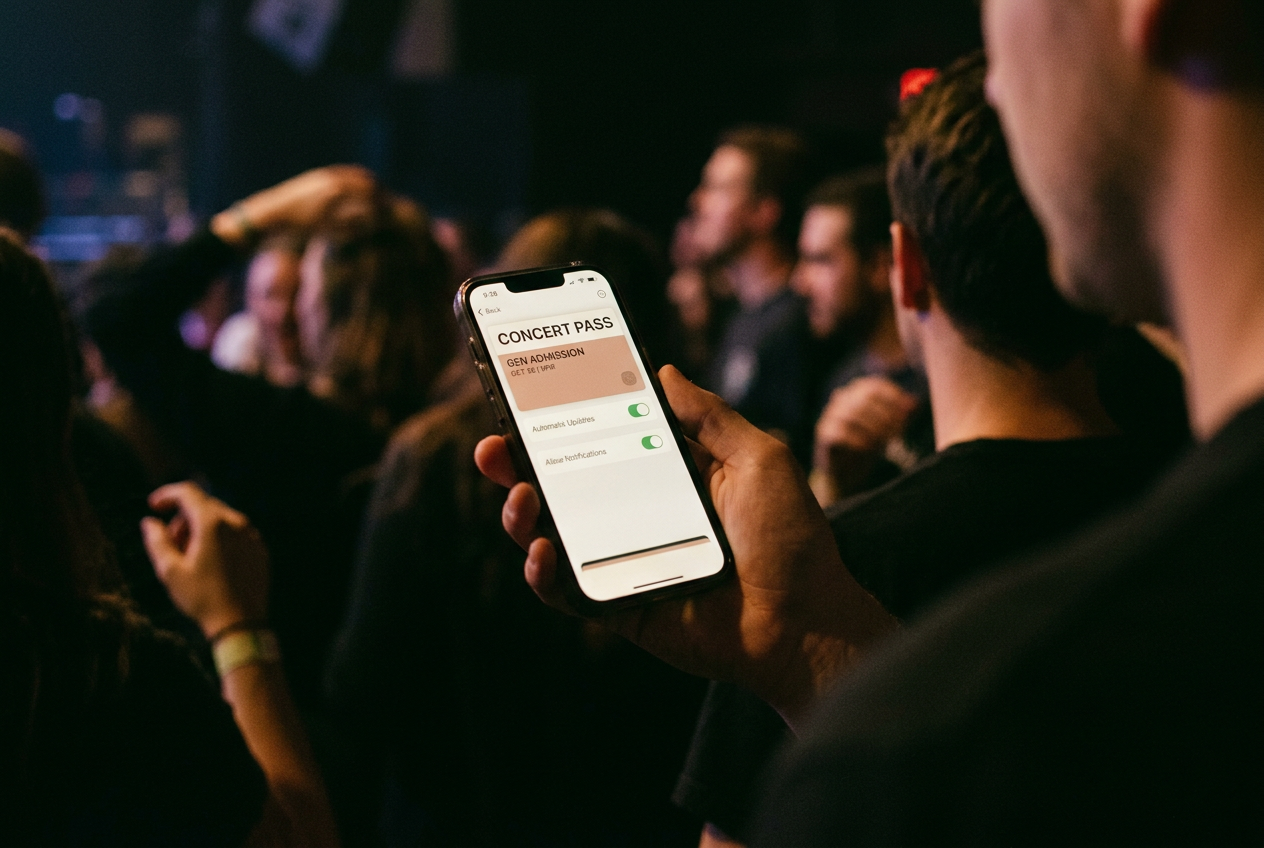
The police department did not install anything on the phone. It did not persuade the owner to download a police app. Somewhere upstream, an ordinary app collected location information through a software component used for advertising or analytics, and several companies handled the record before it appeared in a search product.
That polygon matters because New Jersey’s public records show only parts of this system. Contracts and policies identify commercial tools that let agencies search addresses, vehicle sightings and other location clues. They also reveal a procurement structure capable of accommodating more detailed products without forcing police to build, or publicly describe, the underlying tracker.
The legal protections are strongest where the surveillance relationship is obvious. A phone carrier has records. Police ask for them. A court decides whether the request meets the required standard.
Commercial location data breaks that sequence into companies the phone owner may never have heard of, then presents the result as an investigator’s subscription.
The products do different jobs
New Jersey procurement records, municipal contracts and law-enforcement policies point to several layers of commercially supplied location intelligence. Treating them as one database would be inaccurate. Treating them as unrelated would be convenient for the agencies buying access.
Flock Safety sells automated license plate reader systems, commonly called ALPRs, which photograph passing vehicles and convert plate numbers, timestamps and camera locations into searchable records. New Jersey municipalities have disclosed Flock contracts, while the attorney general’s statewide ALPR policy governs how agencies may collect, retain and share plate data. Because Flock operates as a service, a participating department can search its own cameras and, where sharing arrangements allow, records collected by other customers.
Motorola Solutions’ Vigilant platform and its LEARN database occupy similar territory. They combine plate sightings from law-enforcement cameras with records supplied by commercial collectors, including vehicles equipped to scan plates. The distinction matters. A department may own a roadside camera, but it can also query sightings created elsewhere and sold through a vendor network.
Then there are investigative research products. Public procurement materials disclose access to services such as Thomson Reuters CLEAR, LexisNexis Accurint and TransUnion TLOxp. These products aggregate public records and commercial files, helping investigators connect names to addresses, phone numbers, property, vehicles and associates. An address history is not a minute-by-minute travel log, but it can supply the identity layer that makes another dataset useful.
An advertising identifier means little until someone links it to a person.
The most intrusive commercial products operate beyond those familiar records. Babel Street’s Locate X and Fog Data Science’s Fog Reveal have been documented through reporting, public-record lawsuits and records from agencies around the country. Both have offered searches built from location signals associated with mobile devices. A user can examine devices observed in an area and trace where selected identifiers appeared before or afterward, depending on the product and available data.
Publicly available New Jersey records do not establish that every agency, or any particular agency today, holds an active subscription to Locate X or Fog Reveal. That boundary should stay visible. A vendor demonstration is not a New Jersey deployment, and a procurement pathway is not proof that a search occurred.
The disclosed contracts still map the market around that possibility. New Jersey agencies already purchase hosted searches, participate in vendor-controlled sharing networks and use commercial databases to resolve identities. App-derived location history is not a conceptual leap from that arrangement. It is a more revealing input sold through the same basic model.
The tracker is outsourced
A phone app may request precise location to deliver weather, navigation, local offers or some less persuasive feature tucked behind an “allow” button. The app can include a software development kit, a packet of outside code that supplies analytics or advertising functions. That code may create or receive an advertising identifier, timestamp and coordinates, after which data can pass through brokers, advertising exchanges and resellers.
By the time an investigator sees the polygon around a building, the collection has been stripped of its original setting. There is no weather screen, coupon prompt or consent dialog left. There is a row of observations attached to an identifier, ready to be filtered.
Vendors often emphasize that these identifiers are pseudonymous, meaning they replace a name with a string of letters and numbers. The protection is thin when the same device repeatedly spends nights at one home, mornings at one workplace and occasional hours at a medical office. A home address can be matched to property, utility or people-search records. The supposedly anonymous dot acquires a likely owner.
This is where CLEAR, Accurint and similar tools become relevant even though they are not themselves continuous phone trackers. One product supplies movement. Another supplies identity. Police do not need one company to hold every fact when subscriptions can be used in sequence.
Outsourcing also changes accountability. If police install a tracker on a car, the physical act is legible, and established warrant doctrine applies. If they demand historical cell-site location information from a carrier, the request produces legal paperwork. If an analyst signs into a commercial portal and downloads records already gathered for another claimed purpose, the agency may characterize the act as purchasing information available to customers rather than conducting a search.
That characterization is doing heavy work.
The law has not caught the sales pitch
New Jersey’s constitution has provided stronger location privacy than the federal baseline in important cases. In State v. Earls, the New Jersey Supreme Court held that people have a reasonable expectation of privacy in cell-phone location information and that police generally need a warrant to obtain it from a provider. The United States Supreme Court later ruled in Carpenter v.
United States that police generally need a warrant for at least seven days of historical cell-site location information.
Those holdings are binding within their scope. Neither squarely resolves every purchase of app-derived coordinates from a commercial broker.
That gap should not be mistaken for permission. Courts look at substance as well as labels, and a detailed history of someone’s movements can expose the same private associations whether it came from cell towers or advertising software. Still, until a New Jersey appellate court applies the state constitution to brokered app data, or lawmakers impose an explicit warrant requirement, agencies and vendors can argue over whether buying a dataset counts as obtaining protected location information from a provider.
New Jersey’s ALPR policy supplies more concrete rules for plate data. It limits authorized uses, retention and sharing, and it requires audit controls. Those rules matter because ALPR records can reveal repeated trips to a home, workplace, religious service or political gathering. Yet a policy is binding only on the agencies and systems it covers.
It does not automatically govern a different vendor’s phone-location product.
The New Jersey Data Privacy Act gives residents rights concerning some commercial uses of personal data, including mechanisms to opt out of certain sales and targeted advertising. It is a consumer privacy regime, not a warrant statute, and its exemptions and enforcement structure do not guarantee that a resident can discover or block every transfer into a law-enforcement product.
The result is a legal system organized by the source of the record while the commercial market is organized by what the buyer wants to know. Courts distinguish carrier data, plate sightings, public records and app-derived signals. An investigator sees a person, a period and a map.
Procurement hides the important verbs
Contracts are good at naming products and bad at describing investigative practice. A line item may say subscription, platform access, investigative database or software license. It rarely says that an analyst can draw a polygon around a clinic, identify devices present and follow one home.
The price sheet also captures only the last payment. App developers may receive money or services through advertising and analytics relationships. Brokers combine and resell data. An intermediary packages access for government customers.
The agency pays for the finished search, while the people whose movements generated its value receive a consent screen designed to get them past the interruption.
Public oversight then follows the invoice rather than the data. A records request might uncover the municipal contract with Flock Safety or an annual CLEAR subscription, but a trial account, subcontractor, regional intelligence center or shared login can be harder to identify. Even when a product name appears, it may not reveal which datasets were enabled during the contract period.
That is why the Locate X polygon remains the useful test. New Jersey’s rules should turn on what the search reveals, not whether police owned the camera, wrote the app or paid a broker that kept those details out of the procurement description. Detailed movement history deserves a warrant requirement, use logs, retention limits and disclosure to defendants when it contributes to an investigation.
Without those controls, the state has protected the route through the phone carrier while leaving a commercial side entrance underlit. The data market built the tracker. Police only need the password.
Questions people ask
Can
New Jersey police buy phone location data without a warrant?
No binding New Jersey appellate decision squarely authorizes warrantless purchases of detailed app-derived movement histories. Existing decisions require warrants for important categories of phone location data, but commercial brokers present an unresolved route that agencies may treat differently until courts or lawmakers set an explicit rule.
Which commercial location products appear in New Jersey records?
New Jersey contracts and policies disclose Flock Safety plate readers, Motorola Solutions’ Vigilant and LEARN systems, and investigative databases including CLEAR, Accurint and TLOxp. National reporting has documented app-derived tools such as Locate X and Fog Reveal, but public New Jersey materials do not prove that every named product is currently deployed by a particular agency.
Is license plate data the same as phone location data?
No. Plate readers record a vehicle at a particular camera, while app-derived datasets can contain repeated coordinates associated with a mobile device. Both can reconstruct movement when records accumulate, and commercial sharing expands the area an agency can search beyond sensors it operates itself.
Does deleting an advertising ID erase an existing movement history?
Resetting or limiting an advertising identifier may reduce some future linkage, but it does not guarantee deletion of records already copied by apps, brokers or resellers. The practical problem is visibility: a person usually cannot see every company that received the location signal or determine how each copy was retained.
One update a day
Today's story, in your inbox
One story each morning — no hype, no filler, no algorithm deciding for you.