One Bad Piracy Flag Can Make ISPs Block Google Drive
Italy’s Piracy Shield briefly caught a Google Drive domain. The mistake exposes the bargain inside dynamic blocking: rights holders nominate targets, providers execute, and lawful publishers inherit the appeal.
August 28, 2026 · 8 min read
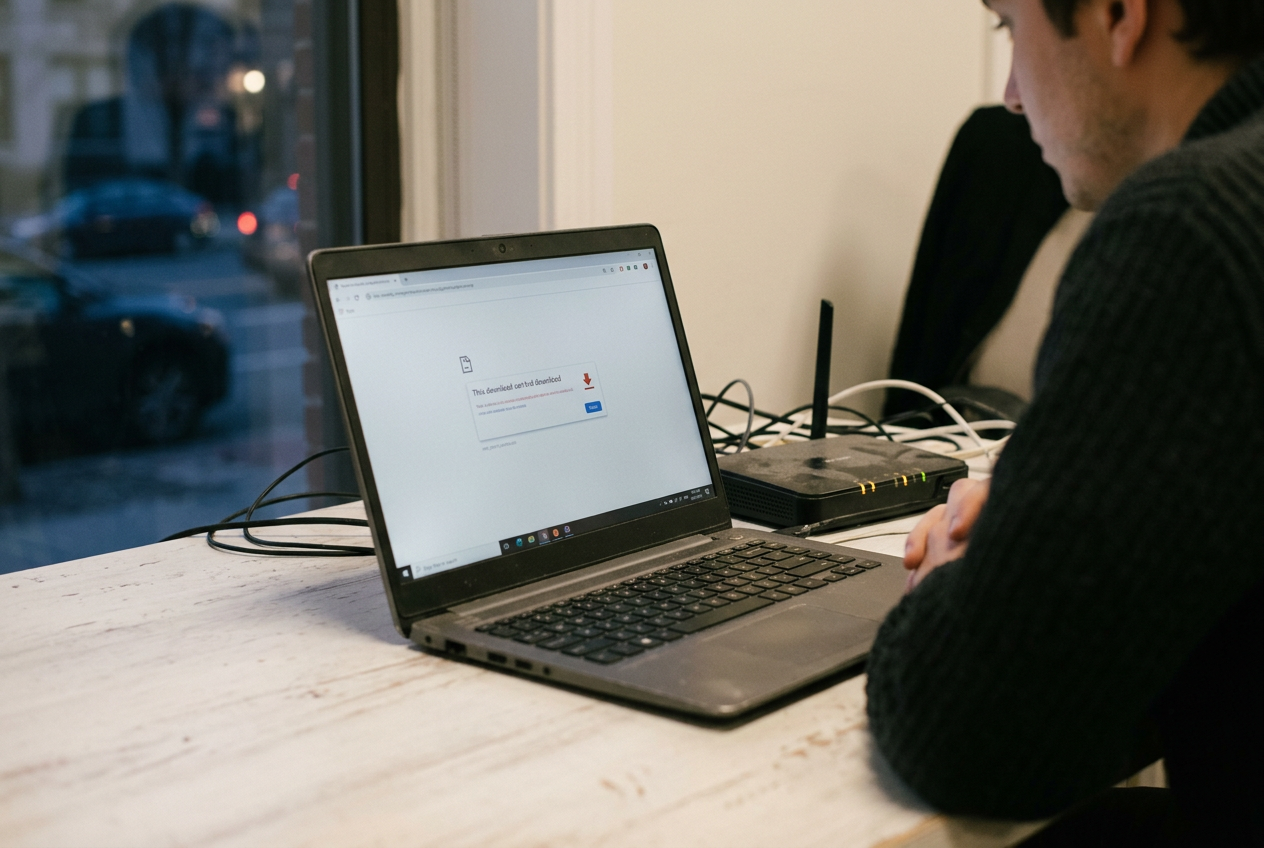
In October 2024, users on some Italian networks lost access to downloads served through drive.usercontent.google.com, part of Google Drive’s delivery infrastructure.
The domain had entered Piracy Shield, Italy’s rapid blocking system for illicit streams. Providers complied. A broadly lawful service became unreachable for several hours because the enforcement machinery had been given a bad target and was designed to move faster than anyone could examine it.
The block was reversed. That is the reassuring version, and it misses the point. Google had the engineers, network visibility and institutional weight to establish that an ordinary product domain had fallen into a copyright dragnet. A small publisher behind the same blocked address would first have to work out why users from one country had vanished, distinguish a state-backed block from a hosting failure, find the responsible authority and persuade somebody inside the chain to care.
That chain is becoming copyright policy’s preferred location. Rights holders once had to pursue uploaders, hosting services or the operators of individual piracy sites. Now they can seek orders against the roads leading there.
The order moves upstream
A conventional copyright case asks whether identified material infringes and who is responsible for making it available. A blocking order asks an internet service provider, or ISP, to prevent its customers from reaching a location associated with infringement. The provider may have no relationship with the site and no role in storing its files. Its value to the claimant is architectural.
It sits between the user and everything else.
Courts in the United Kingdom, Australia, India and European Union jurisdictions have developed versions of this approach. The legal tests differ, but the practical target is familiar: domains, proxy sites, mirrors and sometimes internet protocol addresses, the numerical addresses networks use to route traffic. Search engines can also be ordered to remove listed locations from results. The lawsuit may name major access providers rather than the site operator, who could be anonymous, offshore or ready to relaunch under another name.
The appeal is obvious. Suing one operator produces one judgment. Blocking through the largest providers can affect most residential connections in a country. It also replaces the hard work of proving who uploaded which file with a narrower operational demand: stop your customers reaching this location.
The provider does not need to agree with the allegation. It needs to configure its network before a deadline, then avoid penalties or contempt.
Piracy Shield compresses that logic. Authorized rights holders can submit targets linked to illicit live broadcasts through a platform overseen by Italy’s communications regulator, AGCOM. Providers receive the instruction and have no more than 30 minutes to implement it. That speed suits live sports, whose commercial value is concentrated in the match rather than the archive.
It leaves little room to investigate whether an address also carries somebody else’s work.
Drive.usercontent.google.com was where the compressed timetable led.
The disputed stream was the allegation. Google’s delivery domain became the object that networks could reach.
A domain is not a file
Blocking language tends to flatten the internet into neat containers: one bad site, one domain, one switch. Modern hosting rarely behaves so politely.
A domain name can route users toward a content delivery network, or CDN, which distributes files through shared servers so pages and video load closer to the user. One IP address may support many unrelated domains. A large service can rotate addresses as traffic changes. A piracy operator can shift hosts, create a mirror or place a reverse proxy in front of its origin server.
Infrastructure gets reused because reuse is cheaper and more resilient than assigning every website its own machine.
That creates two common forms of blocking. A DNS block instructs a provider’s naming system, which translates domains into network addresses, to withhold or redirect the answer. An IP block tells the provider’s routers not to pass traffic to a listed address. Domain blocking can miss new mirrors.
IP blocking can hit every innocent service sharing the number. Combining them improves coverage by widening the blast radius.
Rights holders call the answer a dynamic injunction, an order that allows newly identified domains, mirrors or addresses to be added without litigating each one from the beginning. Courts retain formal authority, but updates often move through notices exchanged among claimants, regulators and providers. The list changes faster than the public record. That is the feature.
Returning to court for every clone would make blocking too slow to satisfy the industry buying it.
It also changes the evidentiary moment. The first target may receive judicial scrutiny. Later additions can depend on technical detection and claimant certification, with the network acting before an affected publisher knows there is a proceeding to join. Copyright has not vanished from the analysis.
It has been converted into a permissions system for infrastructure.
The incentives point in one direction
A sports league or studio loses money when an infringing stream remains reachable during the period people want it. Its enforcement team therefore benefits from speed and broad coverage, while the cost of an unnecessary block lands elsewhere. Providers absorb implementation work. Lawful services absorb lost traffic and support complaints.
Users absorb the dead page. Regulators absorb embarrassment, usually after screenshots circulate.
The provider has little incentive to improvise restraint. An order or statutory notice carries legal force; a customer complaint does not. Once the target arrives, overcompliance is safer than delay, particularly where engineers must apply fast-changing lists across consumer networks at scale. A provider that pauses to inspect each address risks becoming the institution accused of helping piracy.
A provider that blocks drive.usercontent.google.com can point to the ticket.
Rights holders do not need malicious intent for the system to lean toward excess. They need a commercial reason to avoid false negatives, while the structure makes false positives somebody else’s emergency. The state supplies compulsion. Network companies supply reach.
Private claimants supply much of the intelligence. Each participant performs a limited task, so responsibility for the combined outcome becomes pleasantly difficult to locate.
This is why calling the ISP a neutral intermediary no longer describes the job. It may remain neutral about the underlying content, but it is operating the sanction. The block occurs before the user sees a disputed page, downloads a file or receives an explanation capable of being contested.
Appeal exists on paper and after the damage
European law does not give rights holders an unlimited hand. In the UPC Telekabel Wien judgment, the Court of Justice of the European Union accepted that providers could face blocking injunctions, while requiring a fair balance among copyright, business freedom and users’ freedom of information. Measures should not unnecessarily prevent lawful access, and users must have a way to assert their rights once implementation is known.
Those safeguards matter. Their timing matters more. A site operator may be able to ask a court to vary or discharge an order, contact a regulator, notify the claimant or press the provider to correct an implementation error. Some orders expressly allow affected operators to apply.
In Britain, blocking litigation has also forced courts to consider who pays providers’ reasonable compliance costs, because deputizing private infrastructure is not free merely because the invoice is hidden from users.
None of this recreates the hearing that did not happen before the block. The lawful publisher must detect the problem, preserve evidence from affected networks and identify whether the failure comes from DNS, an IP rule, a search delisting or the host itself. Cross-border services complicate the diagnosis: the site may work perfectly for its staff while disappearing for customers using particular Italian providers.
Google could do that for drive.usercontent.google.com.
The block still survived for hours, which is longer than a live match and ample time for a download service to look broken. Smaller operators face the same technical puzzle without a global network team. Their nominal right to challenge the measure begins with an unpaid investigation.
Enforcement without the theater of enforcement
Site blocking survives politically because it looks cleaner than prosecution and quieter than platform takedowns. No police visit is required. No user receives an accusation. The browser stalls, the resolver refuses an answer or the connection times out.
A legal conflict has been translated into ordinary technical failure.
That quietness works for every institution in the chain. Rights holders can report broad disruption of piracy access. Governments can claim action without building a public enforcement service. Providers can describe themselves as complying with law rather than making speech decisions.
The lawful site caught underneath gets a troubleshooting page.
There are less reckless designs: narrower URL-level action where the intermediary can technically perform it, independent verification before shared infrastructure is listed, rapid public notice, searchable block registers and compensation when erroneous submissions cause measurable loss. Each safeguard adds time or expense. That is precisely why it tends to disappear from systems sold on speed.
Drive.usercontent.google.com returned.
The ticket had already demonstrated the governing priority: restore lawful access after somebody powerful notices, rather than establish lawful scope before every provider closes the route.
Questions people ask
What is a piracy blocking order?
It is a court or regulatory direction requiring internet providers to prevent customers from reaching online locations associated with copyright infringement. Depending on the jurisdiction and order, providers may block domain names or IP addresses, while search engines may have to remove listed sites from results.
Why can a piracy block affect lawful websites?
Websites often share hosting, content delivery networks and IP addresses. When an order targets shared infrastructure rather than a particular file or page, providers can cut off unrelated services using the same route. Fast dynamic systems increase that risk because new targets may receive less scrutiny than the original site.
Can a lawful site challenge an incorrect block?
Recourse may include contacting the provider, regulator or claimant, or asking a court to vary an injunction. The practical burden still falls on the blocked operator, which must diagnose a country-specific network failure and identify the relevant order before it can use those procedures.
Why are internet providers used to enforce copyright?
Providers are reachable, regulated and positioned between users and online services. Rights holders can obtain wider coverage from a handful of major networks than from chasing shifting site operators, while providers face stronger incentives to obey an order quickly than to investigate collateral damage first.
One update a day
Today's story, in your inbox
One story each morning — no hype, no filler, no algorithm deciding for you.