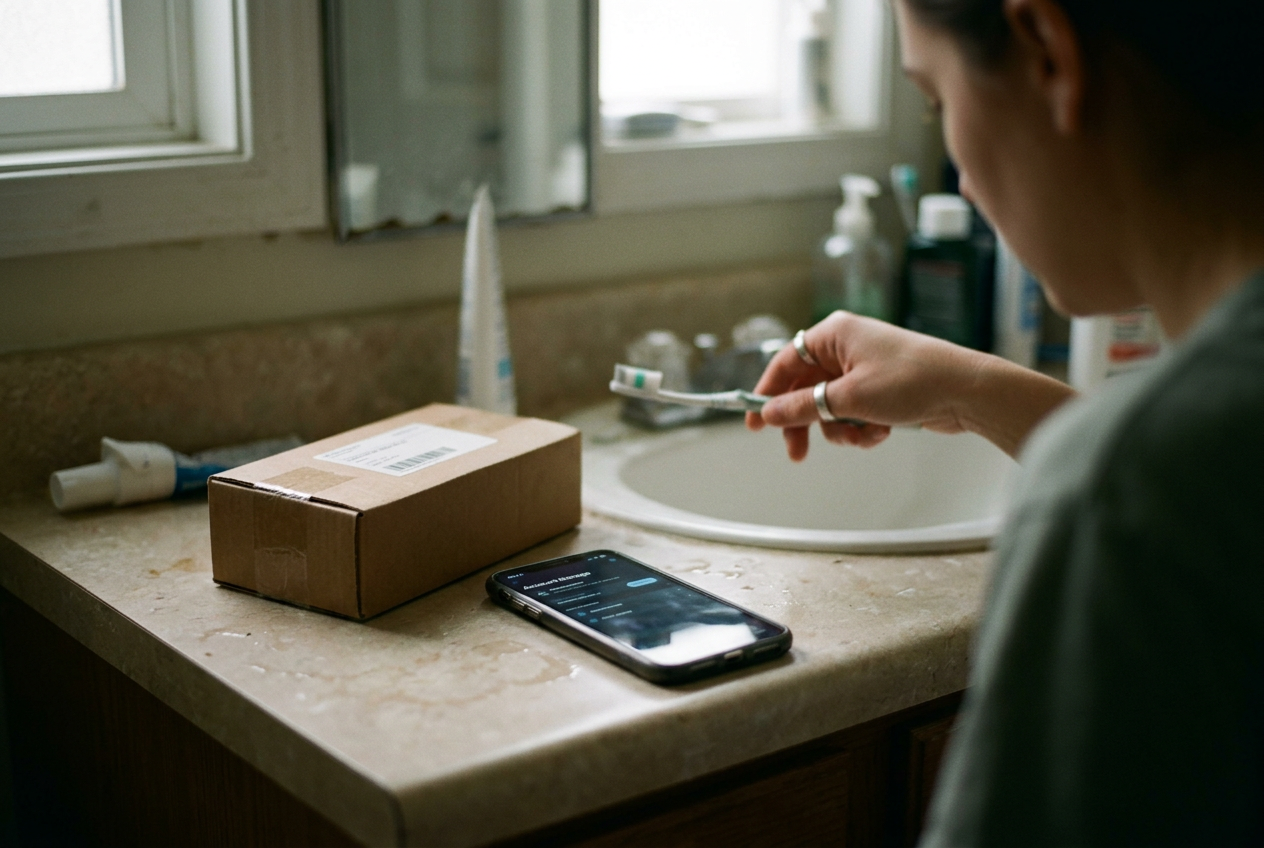
One Fentanyl Test Strip Cannot Clear the Whole Bag
The tiny instruction card explains how to run the strip. It cannot show whether the pinch you tested represents the rest of the supply, or whether dilution distorted the result.
August 11, 2026 · 8 min read
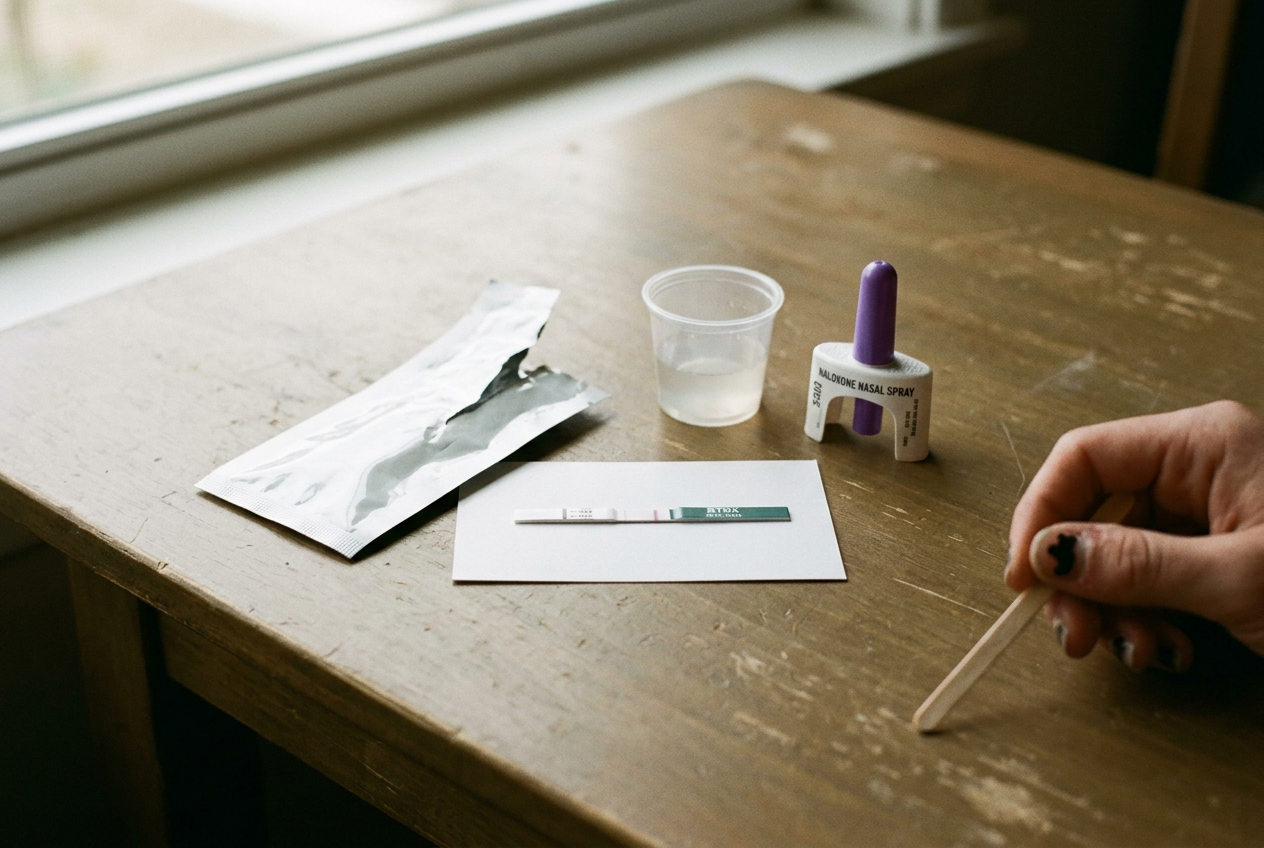
A BTNX Rapid Response fentanyl test strip is a narrow piece of white plastic with two marked line positions, C for control and T for test. Beside it sits a foil pouch and an instruction card trying to compress chemistry, sampling theory and overdose prevention into something smaller than a receipt.
The card can show where to dip the strip and when to read it. It has much less room for the problem that decides whether the result means anything: the liquid in the cup contains only what reached the sample.
That sounds obvious. It is also where false reassurance begins.
Public-health guidance from the Centers for Disease Control and Prevention, the Substance Abuse and Mental Health Services Administration, state health departments and harm-reduction groups generally adds warnings that product inserts cannot carry in useful depth. Fentanyl may be distributed unevenly through powder or pressed pills. Strips do not measure potency. Some fentanyl-related substances may escape detection.
A negative result applies to the tested solution, not every particle left in the bag.
The strip is useful. The fantasy of certification is not.
Start with the strip you have, not generic internet instructions
Fentanyl test strips are lateral-flow immunoassays, meaning liquid travels through the strip and reacts with antibodies that recognize certain chemical structures. Different products can require different water volumes, immersion depths and reading windows. Instructions copied from a social post may belong to another strip.
Check the pouch and insert for the product name, expiration information, storage requirements and timing. Do not use a strip from a damaged or wet package. If a community program supplied it with a separate handout, keep both pieces of guidance together; the manufacturer explains how that assay runs, while the harm-reduction handout may explain how to prepare a drug sample for off-label checking rather than urine testing.
That distinction matters. Many fentanyl strips originated as urine-testing products and were later adopted for drug checking because they were inexpensive, portable and sensitive. Their packaging may focus on operating the device under its authorized or intended conditions, while public-health workers are dealing with powders, crushed tablets and residue from bags. The card beside the BTNX strip is not necessarily withholding a secret.
It was built for a narrower job.
Use the exact dipping and reading directions printed for your strip. If those directions conflict with current instructions from the harm-reduction service that distributed it, ask that service before improvising. More water is not automatically better, and a darker solution is not automatically more informative.
The sample is the real test
A strip cannot detect fentanyl that never enters the cup.
Illicit drug mixtures are not pharmaceutical batches with reliable quality control. Fentanyl can collect in one portion of loose powder, remain in equipment used for another product, or sit unevenly inside a counterfeit tablet. Crushing and mixing may improve the chance that a small sample represents the whole, but it cannot prove uniformity.
Public-health guidance often describes testing the entire amount as the most representative option when that amount can be dissolved and retained without creating another risk. That approach gives the strip access to more of the supply instead of one chosen corner. It may be impractical, unwanted or incompatible with how a person plans to use the drug. Harm reduction has to survive contact with real life.
If the entire amount will not be tested, take material from more than one part and mix the sample thoroughly in the amount of water specified for the strip and substance. For a pressed pill, guidance commonly recommends crushing it first; scraping one clean-looking edge tells you about that edge. Bag residue can also be tested by adding water to the emptied bag, although the result then applies to residue and cannot reconstruct what was elsewhere in the contents.
Return to the white BTNX strip. It does not know whether the cup holds a broad sample or one lucky grain. The chemistry can perform correctly while the sampling fails.
Dilution can prevent one error and create another
The instruction card gives a water ratio because concentration affects how the antibodies behave. Too little water can make some non-fentanyl drugs or cutting agents interfere with certain strips, producing a result that appears positive even when fentanyl is absent. This is often called a false positive, a positive test produced without the target substance.
High concentrations of methamphetamine or MDMA have been associated with interference in some fentanyl strip research and guidance, though the threshold depends on the product. That does not justify eyeballing a heroic splash of water. Excessive dilution may lower fentanyl below the strip’s detection limit, the smallest concentration it can reliably register, and produce false reassurance instead.
Follow the dilution instructions for the exact strip and drug category whenever those are available. A community testing program may tell people to dilute certain stimulants more than opioids because known interference occurs at different concentrations. The useful instruction is product-specific. “Put some in water” is not.
If an unexpected positive appears in a highly concentrated stimulant sample, current guidance may recommend repeating the test with the prescribed additional dilution. That second result needs context rather than wishful editing. A positive should be treated as a reason for caution; a negative after dilution does not turn the remaining supply into a regulated product.
Water quality and container residue can complicate matters too. Use a clean container and the water specified by the instructions. Do not dip beyond the marked line, leave the strip submerged longer than directed or reuse it. The few minutes saved by freelancing are not worth converting a limited tool into an unreadable one.
Two lines usually mean negative, including a faint second line
Competitive fentanyl assays can look backward to people used to pregnancy tests. On many strips, including commonly distributed BTNX versions, one visible control line with no test line indicates a presumptive positive. Two lines indicate a negative result, even when the test line is faint. No control line means the test is invalid.
Read the insert before relying on that pattern because products differ. Read the result inside the stated time window as well. A line that develops long after the window may reflect drying rather than the sample result.
The control line only confirms that liquid moved through the strip and the test ran. It does not confirm that the powder was evenly mixed, that enough representative material entered the cup or that the strip recognizes every fentanyl analogue, a chemically related version of fentanyl. The C line is quality control for the little white strip. It is not quality control for the bag.
A positive result also cannot tell you how much fentanyl is present. The assay is qualitative, meaning it reports whether the target crossed a detection threshold rather than measuring a dose. A very faint exposure and a highly potent mixture can produce the same basic positive pattern. Color intensity is not a safe potency scale.
Photographing the result within the proper window can help when asking a harm-reduction program to interpret an unclear line. Do not ask a filter, image search or stranger in a comment section to overrule an invalid test.
Treat a negative as information, not permission
The CDC’s central warning is blunt: no test is completely accurate, and fentanyl test strips cannot tell you how much fentanyl is present. A negative result lowers one uncertainty about the tested solution. It leaves the rest of the supply, the potency of other opioids and the possibility of substances outside the strip’s detection profile unresolved.
Keep naloxone nearby, make sure someone can recognize an overdose, and avoid using alone. If someone cannot avoid being alone, an overdose-prevention hotline or local virtual spotting service may provide a check-in, depending on availability. Using a small amount first and avoiding combinations with alcohol, benzodiazepines or other depressants can reduce risk, though none of these steps makes an unpredictable supply safe.
Naloxone reverses opioid overdose and should be given when opioid overdose is suspected. Call emergency services where possible, provide rescue breathing if trained, and follow the naloxone package directions. Additional doses may be needed. Local Good Samaritan protections and emergency practices vary, which is one reason community harm-reduction organizations remain more useful than a generic card.
The value of the strip is practical and limited. It can reveal fentanyl that a person did not expect, change what they do next and create a pause before use. Public agencies often distribute strips because this low-cost intervention reaches people outside clinics and formal treatment. That public-health case does not require pretending the assay is a laboratory certificate.
The BTNX strip ends where it began: beside a cup, two possible lines and a small card. The most responsible reading is not “safe.” It is “this sample produced this result under these conditions.” Keep the naloxone on the table.
Questions people ask
Does a negative fentanyl test mean the drug is safe?
No. It means the tested solution did not produce a positive result above that strip’s detection threshold. Fentanyl may be unevenly distributed elsewhere in the supply, the sample may have been over-diluted, and the strip may not detect every related substance. Keep the same overdose precautions after a negative result.
Should
I test the whole bag or only a small sample?
Testing a dissolved, well-mixed amount is more representative than selecting one pinch, and some public-health guidance recommends testing the entire amount when practical. If that is not possible, sample from different areas and follow the distributor’s preparation instructions. One corner of a bag cannot speak for the rest.
What does a faint second line mean?
On many commonly distributed competitive fentanyl strips, any visible test line within the reading window counts as negative, even if faint. Confirm this against the insert for your product. A missing control line makes the test invalid, while a line that appears after the stated window should not be interpreted.
Can a fentanyl test strip tell me how strong the drug is?
No. Standard strips give a presumptive positive or negative result; they do not measure the quantity or potency of fentanyl. A positive result does not reveal the dose, and the darkness of the line should not be used as a concentration guide. Drug-checking services with additional equipment can provide more information where available.
One update a day
Today's story, in your inbox
One story each morning — no hype, no filler, no algorithm deciding for you.