
The Opt-Out Form Wants Your Driver’s License
Removing a people-search listing can mean handing the broker more identifying data. Here is which common routes ask for it, and how to disclose less.
August 11, 2026 · 8 min read
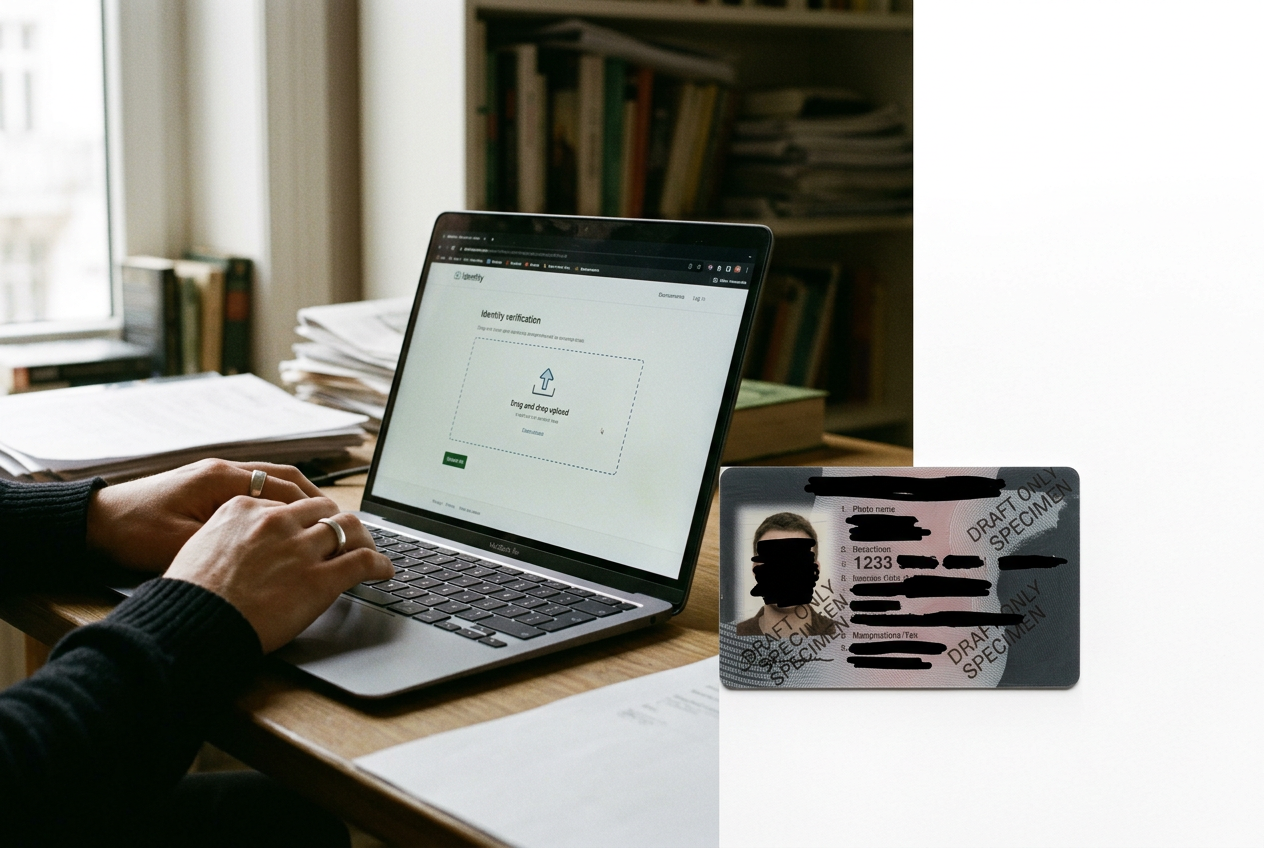
The file on my desktop was called `ID-redacted.pdf`. It was a copy of a driver’s license with the photograph, license number, date of birth, signature and barcode covered, while the name and address remained visible. Across the page sat a watermark naming the intended recipient and month.
That file was not proof that the privacy system worked. It was proof that the burden had moved.
People-search sites and data brokers publish or trade information assembled from public records, commercial sources and other databases. Their removal pages then ask the person exposed by that machinery to perform identity verification, meaning a check that the requester matches the subject of the record. Sometimes that requires little more than clicking an email. Sometimes the form asks for previous addresses, a working phone number or identification that is more sensitive than anything visible on the listing.
The stated reason is defensible. A broker should not let a stranger erase or alter somebody else’s record. The incentive underneath it is less noble. Verification labor costs the broker money, while forms, inboxes and document uploads make the consumer absorb the time and risk.
A request that becomes irritating enough is a request some people abandon.
What the common removal routes demand
I reviewed the public-facing removal paths for several large people-search services and data companies, following each route through its required fields and stopping before any submission that would create a false request. Forms change, and the route shown can vary by location, device or the legal right selected, so treat this as a map rather than a permanent promise from companies that rewrite their interfaces whenever convenient.
Spokeo offered the lightest standard route in the review. Its opt-out flow centered on the profile URL and an email address used to confirm the request. The ordinary route did not require a consumer account or photo identification. That still creates a new link between an email inbox and a listing, unless the email is already in the profile.
BeenVerified routed suppression through a search for the relevant record, followed by an email confirmation. The standard people-search opt-out did not require account creation or an ID upload in the reviewed flow. It did, however, require enough search information to locate the listing, usually a name and location, before the requester could select the record.
PeopleFinders and FastPeopleSearch followed a similar listing-first pattern. Find the page, choose removal, provide an email and complete the confirmation. Neither standard route presented an account requirement or photo-ID demand during the review. CAPTCHA checks, which try to distinguish people from automated software, added friction without asking for another identity document.
Whitepages imposed a different trade. Its standard suppression route used the listing URL and phone verification. That means the requester may need access to a number associated with the record or must provide a reachable number for a verification call or code. No account or license upload appeared in the ordinary suppression path, but a phone number is hardly neutral.
It is a durable identifier, useful precisely because it connects records across databases.
Acxiom’s privacy portal asked for identifying details so the company could match the request against its records, including contact information and address data in the reviewed route. It did not present the same quick, listing-level procedure as a people-search site because Acxiom’s business sits further behind the visible page. The consumer is requesting action against a data profile, not merely removing a URL from public view.
LexisNexis was the outlier for a different reason. Its public-record suppression process is narrower than a general hide-my-profile button and may require a qualifying reason plus supporting documentation. The route can ask for identity and address evidence because the company is evaluating eligibility for suppression, rather than offering every visitor the same self-service deletion switch. That distinction matters before anyone uploads `ID-redacted.
pdf` under the impression that every form labeled privacy leads to the same result.
Google’s Results about you tool belongs in a separate category. Google is usually removing a search result from discovery, not deleting the source record held by a broker. The tool requires a Google account and asks for the contact details a user wants monitored. It can reduce exposure, but the original listing may remain online and may return through another URL.
The verification trap is also the business model
A broker needs enough information to locate the right record. That is the legitimate mechanism. The trouble starts when the company asks beyond the minimum match and gives no useful explanation of what it retains, who reviews it or whether an uploaded document enters another vendor’s verification system.
Deletion also has a built-in paradox. Many companies keep a suppression record, a small retained set of identifiers used to prevent deleted data from being imported and published again. Without that record, the next purchased database could restore the same person. With it, the company has not forgotten the person in the ordinary sense.
It has kept enough information to remember not to remember them.
The best version of that system stores a one-way hash, a transformed value used for matching without preserving the original text, or a tightly limited suppression entry. The consumer-facing form rarely explains the implementation. Instead, it offers a checkbox, a policy link and the institutional equivalent of a firm nod.
This is why broad state privacy forms can feel more invasive than a listing-specific opt-out. The broker must authenticate a request made under a privacy law, yet the company also controls the authentication design, and every additional field lowers the chance of an erroneous deletion while raising the chance that a tired person quits.
Use the smallest key that opens the door
Start at the published listing, not the company’s general privacy portal. A profile-level removal link usually needs less information because the URL already identifies the record. Search the company name with “opt out” or “remove my information,” then verify that the page sits on the company’s real domain. Sponsored results and removal services often position themselves between the consumer and a free form.
Create a dedicated email alias for confirmations. An alias is an additional address that forwards into an existing inbox, letting you filter broker mail without opening a new identity hub. Use a stable alias rather than a disposable inbox, since a broker may send a delayed confirmation or require the same address for follow-up. Do not include your full name in the alias.
Keep optional fields empty. If a form can locate the record from its URL, it does not need a fresh employment history or every address you have occupied. When an address is mandatory, enter the address already displayed or associated with the target record rather than volunteering a current address the broker did not have. The objective is matching, not autobiography.
For phone verification, prefer a number already attached to the listing if you still control it. Supplying a new number can create another association, and some systems reject internet-based numbers anyway. If the available route demands a number you do not want to provide, check for a separate state privacy form or written contact method before conceding.
Treat identification as the last rung. First try the ordinary listing-removal flow, then email support from the confirmation address, and only then consider a document if the company explains why it is required. Ask whether a utility statement or another address document is accepted in place of a government ID. This is practical privacy guidance, not legal advice, and the rights available depend on where you live.
If an ID is unavoidable, expose only the fields the company says it needs. For an address match, that will often mean the name, address and document issuer remain legible while unrelated numbers and machine-readable codes are covered. Put the recipient’s name and the purpose directly on the copy. Store the redacted version locally, inspect the finished PDF to make sure hidden material cannot be selected or removed, and never send the unedited original merely because the upload box appeared official.
That was the point of `ID-redacted.pdf`. Redaction had to flatten the covered areas into the exported file, rather than placing movable black rectangles over live information. A cosmetic box in an editable PDF is concealment theater.
Keep evidence without building another dossier
Save the listing URL, a screenshot, the submission channel and the confirmation email. A small local spreadsheet is enough. Record what identifier you disclosed and whether the page disappeared, because removal from one broker does not delete copies held by affiliates, search engines or competitors.
Recheck after a few weeks and again later. Data brokers refresh records, companies change ownership and suppression systems fail. Do not keep resubmitting every day; repeated requests can complicate support threads without speeding the underlying queue.
Paid removal services reduce the repetitive labor, but they require a concentrated package of names, addresses and authorizations so they can act for the customer. That exchange may be worthwhile for someone facing stalking or sustained harassment. It is still an exchange. The service becomes another company trusted to hold the map.
The least invasive route in this review remained the plain listing URL plus a dedicated email confirmation. The most dangerous moment was not finding a home address on a search site. It was reaching an upload field and feeling that `ID-redacted.pdf` had become the admission price for asking the industry to stop displaying it.
Questions people ask
Should
I send a data broker a copy of my driver’s license?
Only after the less invasive removal route fails and the company clearly states why identification is required. If you proceed, leave visible only the fields needed for the match, permanently redact unrelated numbers and codes, and watermark the copy for that recipient and request.
Do
I need a separate email address for opt-outs?
A dedicated alias is useful because most listing-level removals send a confirmation link and may contact you again. It limits inbox exposure without relying on a disposable address that could expire before the request finishes. Avoid putting your full name or birth year in the address.
Does removing a
Google result delete the broker’s listing?
Usually not. Google can reduce discovery by removing an eligible result from search, while the source page remains on the broker’s servers. Submit the broker’s own removal request as well, then check the original URL rather than assuming an absent search result means the record is gone.
Why does a broker keep information after an opt-out?
A broker may retain a limited suppression record so later data imports do not republish the same person. That can be necessary for the opt-out to persist, but the form should distinguish a narrow suppression entry from continued commercial use. Most consumer portals provide little technical detail about that boundary.
One update a day
Today's story, in your inbox
One story each morning — no hype, no filler, no algorithm deciding for you.