The Secret DIY Venue Address Is Really a Lease Problem
A hidden address can keep a DIY room below the enforcement threshold. It can also conceal who carries the risk when the lease, zoning and insurance describe a different business.
August 11, 2026 · 8 min read

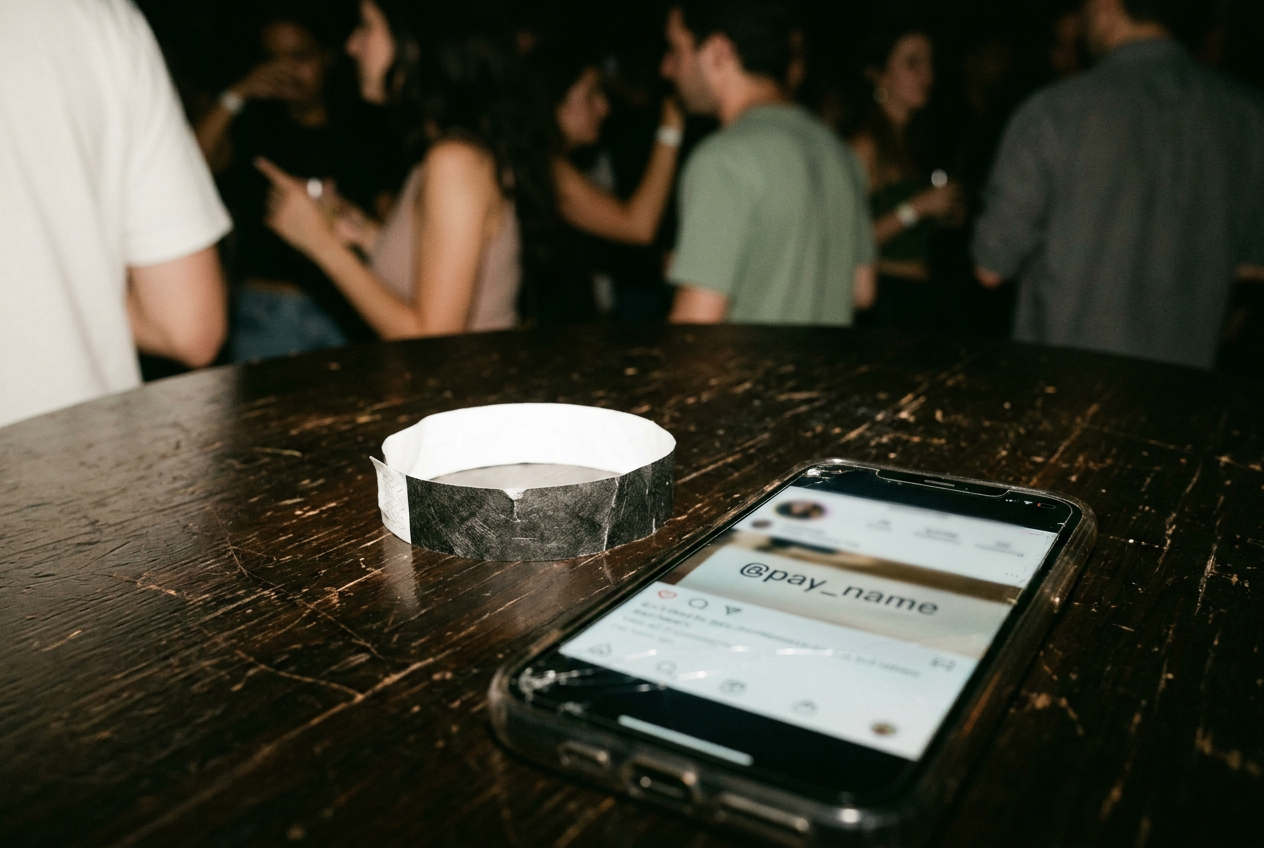
Take the black Tyvek wristband, the tear-resistant spun-polyethylene strip used for disposable admission bands. The door worker wraps it close around your wrist and seals the adhesive tab so it cannot be passed to somebody outside. You received the address by text that afternoon. The event page named a neighborhood, perhaps a subway stop, but no building.
Now this narrow black band is proof that you crossed from the public city into a room trying not to become public information.
Promoters often sell this as intimacy. No tourists. No randoms. No phones held above the crowd.
Sometimes that is sincere. A controlled door can protect queer parties, undocumented workers, young artists and people who have learned that visibility attracts harassment before it attracts institutional support.
The same door also performs regulatory work. It meters arrivals, discourages walk-ups and limits the number of neighbors who can connect bass in the wall to an address on a flyer. The wristband looks like scene etiquette. In practice, it is part of a homemade compliance system for a business whose paperwork may insist that no such business exists.
The lease names a different room
A DIY venue can look obvious from the dance floor and impossible on paper.
The lease may describe an art studio, storage unit, workshop or office. Zoning, the local rules governing what activities may happen on a parcel, may allow fabrication or warehousing while prohibiting entertainment assembly. The certificate of occupancy, a document stating how a building can legally be used and how many people it can hold, may not cover a standing crowd, amplified music or alcohol service.
Those categories matter because a performance changes the building’s demands. A room used by several artists during the week becomes something else when a crowd arrives in darkness, drinks, blocks circulation and tries to leave through the same opening after the final set. Assembly rules may require more exits, illuminated signs, accessible routes, fire protection and toilets than the legal daytime use requires. The exact obligations vary by city and building, but the underlying distinction is blunt: a room containing shelves is regulated differently from a room containing bodies.
The lease sits between that distinction and the people booking the show. Commercial leases often restrict unauthorized uses and push broad compliance duties onto the tenant, while giving the landlord remedies if complaints, fines or inspections threaten the property. A landlord may know that parties occur without putting that knowledge in writing. Rent still arrives.
The ambiguity works until it does not.
This is the politics performed by the lease. The city delegates much of the immediate discipline to property owners, insurers and tenants, then enters through inspections or enforcement when the arrangement becomes visible. The landlord preserves deniability. The promoter carries the event.
The door worker carries the crowd. Artists and guests receive the address after the people with property have distributed the risk.
A hidden address keeps those contradictions from meeting too early.
One complaint can expose the whole stack
Neighbor complaints do more than report noise. They create a record that can connect an event to a property, a property to its permitted use and that permitted use to the lease.
A late-night call may bring police, fire officials, building inspectors or code enforcement, depending on the city and what the caller reports. Once officials enter, the issue can expand beyond volume. They may encounter blocked exits, unpermitted electrical work, alcohol sales, overcrowding or a use that does not match the certificate of occupancy. What began as bass through a bedroom wall becomes an examination of the building.
Secrecy tries to interrupt that chain. Organizers release the location late, prohibit posting it publicly and ask guests not to gather outside. Sound is kept away from street-facing walls. Entry happens in timed waves.
The black wristband lets the door distinguish somebody who stepped out for air from a new arrival who found the block through a repost.
This can work for months or years because municipal enforcement is uneven and frequently complaint-driven. Cities do not inspect every industrial unit on a Saturday night. They respond to visibility, emergencies and accumulated friction. A quiet relationship with the block can therefore matter more to a venue’s survival than online popularity, which is one reason the promoter boasting about a packed secret warehouse is often advertising the very evidence the room cannot absorb.
The model also has a ceiling. Success produces lines, ride-share traffic, cigarette smoke and more strangers asking where the entrance is. A venue can grow its audience or preserve its obscurity, but doing both requires increasingly elaborate gatekeeping. The secret address becomes less a romantic code than a brake applied to the room’s own demand.
Insurance reads the event literally
An insurer does not care that a promoter calls the night a gathering, activation or private function. It cares about the activity, the crowd and the potential claim.
Commercial general liability insurance, which covers certain claims involving injury or property damage, is priced and written around disclosed uses. A policy for a studio may exclude ticketed events, liquor exposure or entertainment. The building owner’s policy may depend on tenants following the permitted occupancy. Artists sometimes carry their own policies, but those do not repair a venue’s false description of the premises.
This creates another layer of strategic vagueness. Tickets become suggested donations. A public bar becomes drinks for members. The event is framed as private even when money changes hands and strangers are admitted after an RSVP.
Those labels may shape presentation, but they do not guarantee that a regulator, court or insurer will accept the organizer’s version after an injury.
The money saved by avoiding a formal venue build-out is real. So are the costs being deferred. Sprinklers, electrical upgrades, accessible bathrooms, professional security, permits and specialized coverage can exceed what a small room earns from modest door sales, especially when artists must still be paid and rent is due every month. Underground venues operate on narrow margins partly because live music has been assigned to buildings whose legal conversion costs assume deeper capital.
Secrecy does not eliminate that bill. It changes who receives it, and when.
Opacity transfers risk downward
The 2016 Ghost Ship fire in Oakland made the stakes impossible to treat as scene folklore. Thirty-six people died in a warehouse used for residences and events, and public investigations documented profound conflicts between the building’s condition, its approved use and what happened inside. Ghost Ship should not be used as a cheap synonym for every informal venue. It showed, with catastrophic force, why cultural value and physical safety cannot substitute for each other.
A legal venue can be badly run. An unpermitted room can contain conscientious people who check exits, limit capacity and maintain equipment. The problem is that secrecy makes those distinctions harder for everyone outside the organizing core to verify. Guests receive a pin, not an inspection history.
Performers receive a set time, not the insurance policy. Door staff may be expected to enforce an improvised capacity without a reliable count or authority to stop the night.
The black wristband answers one narrow question: the person wearing it was admitted. It says nothing about whether the rear door opens, whether the wiring can carry the sound system or whether the landlord will claim ignorance after an incident.
Workers occupy the worst position. The door, bar, sound booth and cleanup shift often run on cash, favors or reciprocal bookings. When enforcement closes the room, the property owner still owns an asset and the city can point to its code. The people who built the night lose scheduled work, stored equipment and whatever money was left in the next event.
Semi-privacy protects the operation while weakening the paper trail that might establish obligations to those workers.
Legality costs more than good intentions
New York’s Market Hotel offers a useful contrast because its history includes both illegal operation and a long effort to reopen through formal approvals. Public reporting by The New York Times, Gothamist and other outlets followed the Bushwick venue through closure, fundraising, construction and the slower work of becoming a room the city could recognize.
That path demanded something secrecy cannot produce: capital that does not need to be repaid from next weekend’s door. Code work takes professional plans, contractors, applications and time without event income. The landlord must cooperate. Inspectors must agree that the completed room matches the approved one.
A small collective can be skilled at booking, sound and crowd care while lacking the money and leverage to negotiate that sequence.
Cities often praise independent nightlife after it becomes exportable culture, then regulate each emerging room as an isolated property problem. A better model would treat small venues as cultural infrastructure: clear temporary assembly pathways, technical assistance, grants for life-safety work, shared insurance pools and zoning that permits low-capacity performance without forcing every room to become a full nightclub. None of this removes the need for exits, accessibility or fire protection. It pays for compliance before punishment becomes the only public investment on offer.
Until then, the secret address remains an unstable operating model. It can protect a community from harassment and keep a fragile room alive. It can also preserve a lease fiction whose benefits rise toward the property owner while its risks settle around the wrists of people inside.
Questions people ask
Why do
DIY venues send the address at the last minute?
Late release limits public circulation, walk-up traffic and the time available for complaints to reach a landlord or city agency before an event. It can also protect vulnerable communities. The practice works as crowd control, but it does not change the building’s approved use or make an excluded event insurable.
Can calling an event private avoid zoning or occupancy rules?
A private label alone rarely settles how authorities or insurers classify an event. They may examine what occurred: how people entered, whether tickets or donations were collected, how many attended, whether alcohol was served and whether the building was approved for an assembly crowd.
Who carries the financial risk when an underground venue closes?
Artists, door workers, bartenders, sound engineers and organizers often lose immediate income, equipment access and future bookings. A tenant may face eviction or penalties. The landlord can also incur costs, but property ownership usually provides more leverage and a more durable asset than the cash economy around one night.
Does a secret address mean a venue is unsafe?
No. Secrecy can reflect privacy needs, hostile neighbors or unaffordable permitting rather than poor safety practices. It does make independent verification harder. A wristband can control entry, but it cannot confirm legal capacity, working exits, suitable insurance or whether the room described by the lease is the room holding the crowd.
One update a day
Today's story, in your inbox
One story each morning — no hype, no filler, no algorithm deciding for you.