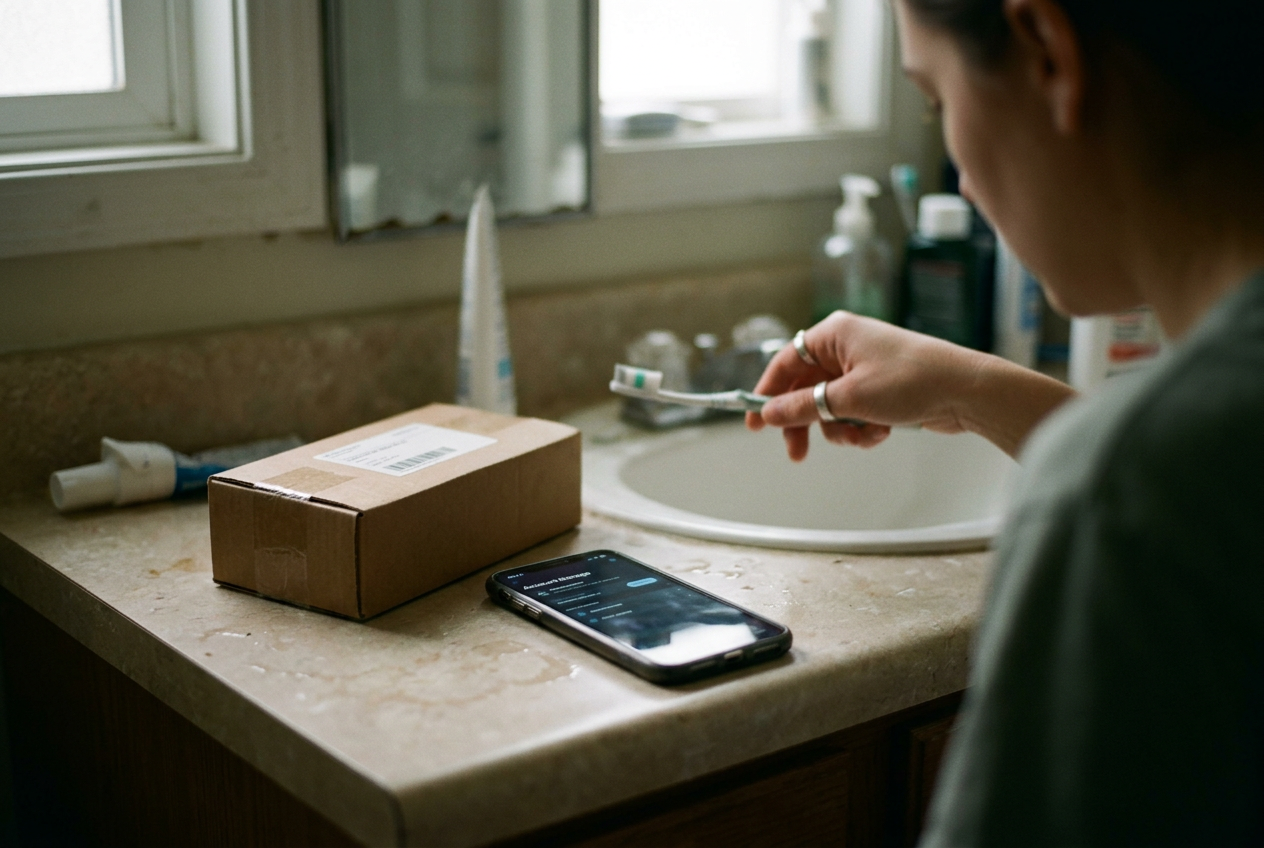
Two Lines on a Fentanyl Test Strip Do Not Mean Safe
A strip can detect fentanyl in the sample that reaches it. It cannot tell you what sits elsewhere in the bag, how potent the drug is, or whether something else dangerous is present.
August 11, 2026 · 8 min read
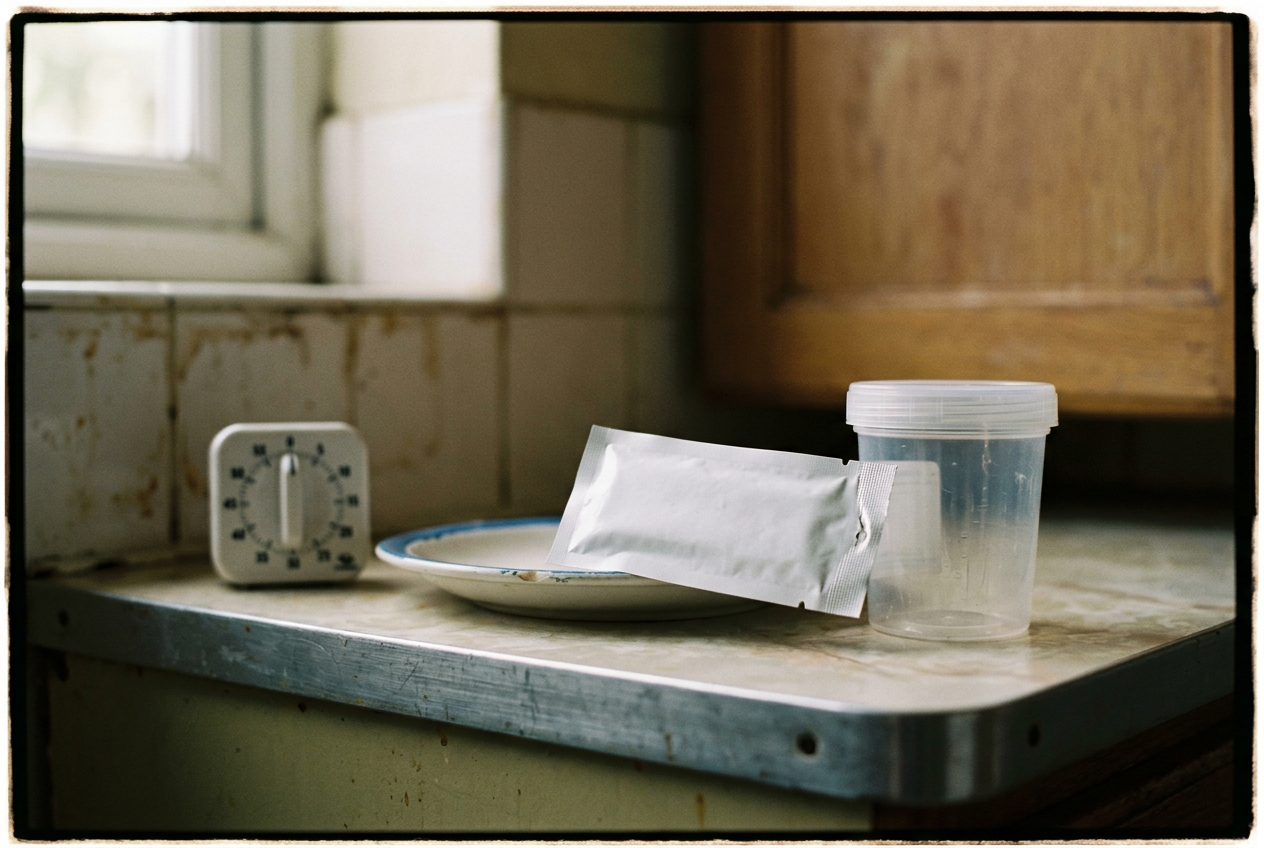
Put one wrapped strip on a white saucer with a chipped blue rim. Add a clean cup, water and a timer. This is an unimpressive little setup for a task carrying so much emotional weight: deciding whether the drug in front of you contains an opioid potent enough to stop breathing.
The strip can answer a narrow question. Fentanyl test strips are immunoassays, tests that use antibodies to react to fentanyl or certain related compounds in a liquid sample. They do not identify every ingredient. They do not measure dose or potency.
They do not inspect anything that never dissolved into the water touching the strip.
That narrowness is not a reason to dismiss them. It is the reason to use them correctly.
Start with the instructions in the package
Many fentanyl test strips were originally designed to test urine, although harm-reduction programs distribute them for checking drug samples. Brands and strip designs differ. So do the amount of water, dipping time and reading window specified by their manufacturers or the program supplying them.
Read those instructions before opening the wrapper. Check that the package is intact and the strip has not expired or become wet. Use a clean container and clean water; residue from another substance or a previously used surface can corrupt the test before it begins.
The blue-rimmed saucer matters here because routine is useful. It gives the strip a clean, flat place to develop, keeps it out of a crowded sink and makes the result easier to read under decent light. It does not make the result more comprehensive. A tidy ritual can still produce partial information.
For a pressed pill, testing the whole pill requires crushing it into a fine, consistent powder and dissolving it according to the strip or drug-checking program’s directions. That sacrifices the intact pill, which is inconvenient, but scraping one edge only tells you about that edge. With powder or crystals, mixing the entire amount into a solution produces a more representative sample than lifting a few grains from the top.
If testing the whole supply is not possible, take material from several parts rather than one visible corner and combine it before adding water. That can reduce the sampling problem. It cannot eliminate it.
Exact dilution matters. A sample that is too concentrated can trigger a false positive with some drugs, including methamphetamine and MDMA, while excessive dilution can push fentanyl below the strip’s detection threshold. Do not improvise a universal water ratio from a social post. Follow the instructions for that strip and substance, or ask the harm-reduction program that supplied it.
Dip the specified end only as far as the marked line and for the stated time. Lay the strip flat on the saucer, start the timer and read it inside the package’s stated window. Results that appear long after that window may be evaporation marks rather than valid readings.
The line logic runs backward
Most fentanyl strips use a competitive test format. Fentanyl in the sample blocks the test line from appearing, which means the result looks backward to anyone trained by pregnancy tests or pandemic-era rapid tests.
On the common two-line design, one visible control line and no test line means presumptive positive. Two lines mean presumptive negative, even when the test line is faint. No control line means the test failed and must be repeated with a new strip. Some products may label or display results differently, so the diagram packaged with the strip remains the authority.
Do not squint a positive into becoming negative. If the first test is positive and the sample could have been overly concentrated, follow the manufacturer’s retesting or dilution instructions or take it to a drug-checking service. A later negative only means something when the retest followed a documented protocol; random extra water is not quality control.
The language matters too. “Presumptive” means the strip indicates what may be present but does not provide laboratory confirmation. A positive result should be treated as fentanyl detected for safety decisions. A negative result should be treated as fentanyl not detected in that particular solution, at that strip’s detection limit, at that moment.
Those are very different claims.
Contamination does not distribute itself politely
Illicit drug production has no reliable batch standard, and cross-contamination can happen during pressing, mixing, weighing or packaging. Fentanyl may be concentrated in one tablet, one clump of powder or residue along a bag seam while another portion contains none detectable by the strip.
This is the mechanism behind the warning that a negative result is not proof of safety. The strip does not scan the bag. It reads the liquid climbing through a narrow piece of paper. If the tested grains contain no fentanyl while an untested clump does, the chemistry can work perfectly and the conclusion can still fail.
Return to the blue-rimmed saucer. Two lines have appeared. The control worked, and the tested solution did not contain fentanyl at a concentration the strip could detect. Nothing on that saucer establishes that the original powder was evenly mixed.
Nothing says a second pill from the same source matches the first. Packaging and appearance are not evidence of consistency either.
This is where consumer language such as “purity test” causes trouble. Fentanyl strips are not purity tests. They provide no percentage, no ingredient list and no assurance that the expected drug is present. A sample can test negative for fentanyl while containing another potent opioid, a non-opioid adulterant or a dangerously high amount of the substance someone intended to buy.
Standard fentanyl strips also do not generally detect xylazine, a veterinary sedative found in parts of the illicit supply, or nitazenes, a group of potent synthetic opioids. Detection of fentanyl analogs varies by product. The strip’s documentation should say which compounds it recognizes; an unlabeled promise that it catches “everything” is marketing, not analytical chemistry.
The common mistakes all enlarge the claim
Some errors are physical: dipping past the fill line, using a dirty cup, guessing the dilution, checking an expired strip or reading it after the allowed window. Others are errors of interpretation, and they are more seductive because the strip itself appears to have worked.
The most common is turning “not detected” into “safe.” Another is testing residue from the outside of a pill rather than crushing and mixing it, as though contamination respects the tablet’s geometry. Testing one item and clearing the rest of a batch makes the same mistake at a larger scale.
A positive result can also be mishandled. Someone may keep retesting until a desired negative appears, especially when money has already changed hands and plans have formed around the drug. That is sunk cost wearing a lab coat. The safest response to a positive is not to use the substance.
A local harm-reduction service can help interpret results and discuss disposal or more capable drug checking.
Professional drug-checking programs may combine strips with methods that identify a broader range of compounds, then use confirmatory laboratory analysis where available. Even those services explain their detection limits. The cheap strip on the saucer is useful precisely because it is portable and accessible, not because it has become a laboratory by force of need.
Build the night around the limits
Testing belongs inside a wider overdose plan. Carry naloxone, the medication that reverses an opioid overdose, and make sure people nearby know where it is and how to use it. Naloxone will not reverse every kind of medical emergency, but it can restore breathing during an opioid overdose and may require repeat doses while emergency help is on the way.
Avoid using alone. If someone becomes unresponsive, breathes slowly or not at all, or develops blue or gray lips or fingertips, administer naloxone, call emergency services and provide rescue breathing if trained. Good Samaritan protections vary by jurisdiction, which is a policy failure worth knowing before the room becomes an emergency.
Mixing substances raises uncertainty further, particularly when opioids are combined with alcohol or other depressants that slow the central nervous system. Lowering the amount taken and avoiding rapid redosing can reduce risk, but neither converts an unknown supply into a known one. Tolerance also changes after a break, illness, incarceration or treatment, sometimes sharply enough that an amount previously used becomes lethal.
None of this makes the strip pointless. Harm reduction works with the world people occupy, not the one institutions find easier to fund. Test strips can reveal fentanyl that appearance, taste and seller assurances cannot. They can interrupt a plan.
They can make naloxone feel less optional. They can also expose how much public-health responsibility has been transferred onto a person standing over a kitchen saucer before going out.
The strip earns its place by making one uncertainty smaller. Keep the other uncertainties visible.
Questions people ask
Does a faint second line count as negative?
On most common fentanyl strips, any visible second line within the specified reading window counts as presumptive negative, even if it is faint. Check the package diagram because products differ. A faint line still does not certify the supply; it only reports that fentanyl was not detected in the tested solution.
Can
I test a pill without crushing the whole thing?
You can test a scraping, but the result describes only that small sample and may miss fentanyl elsewhere in the pill. Crushing and thoroughly mixing the entire pill gives a more representative test. If that is not possible, sample from multiple areas and keep treating a negative as limited information.
What does a negative fentanyl test leave out?
It leaves out untested parts of the supply, fentanyl below the strip’s detection threshold and compounds the product was not designed to detect. It also says nothing about dose, purity or whether the expected drug is present. Two lines are useful evidence, not clearance.
What should I do after a positive result?
The safest choice is not to use the substance. If concentration may have interfered with the strip, follow the product’s documented retesting instructions or bring the sample to a harm-reduction program. Do not keep diluting and retesting until a negative appears, and keep naloxone available regardless of the result.
One update a day
Today's story, in your inbox
One story each morning — no hype, no filler, no algorithm deciding for you.