You Can Skip Face Entry. You Cannot Always Skip the Face Scan
Venue policies treat facial authentication as an optional convenience and facial recognition as security infrastructure. Only the first kind comes with a dependable way around it.
August 11, 2026 · 8 min read
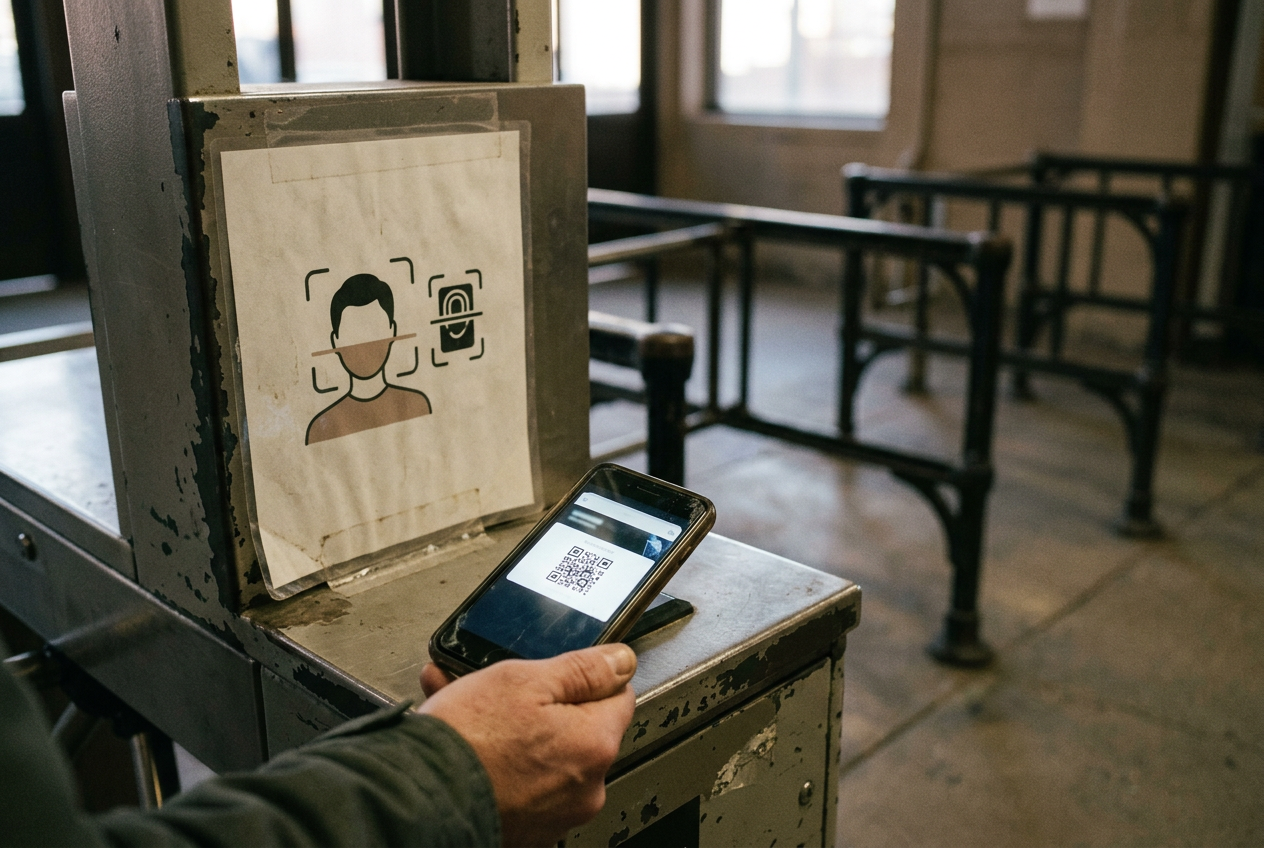
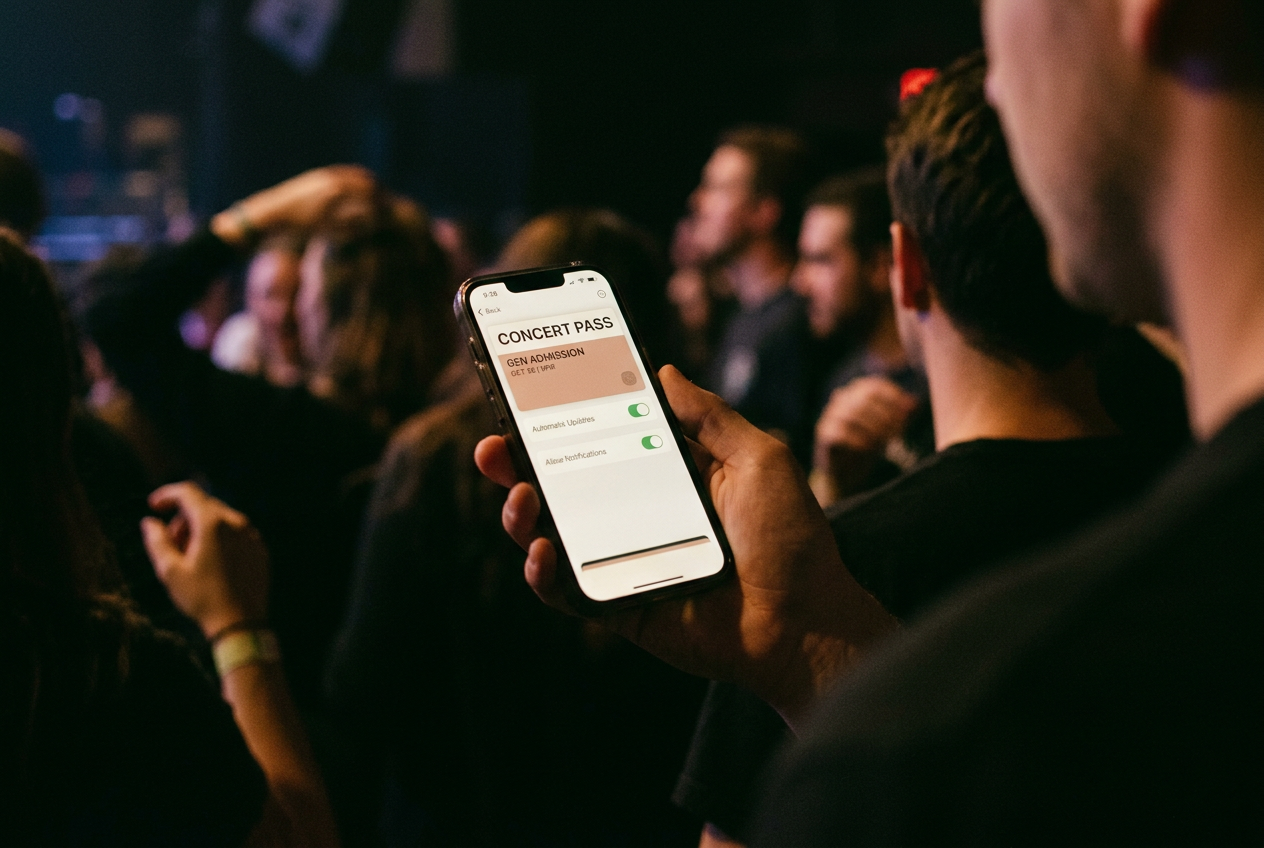
The useful object here is the ordinary mobile-ticket QR code. It sits on your phone, changes as Ticketmaster or another ticketing system requires, and gets scanned by a worker or pedestal at the gate. It is mildly annoying. It is also the clearest available alternative to turning your face into the ticket.
At Citizens Bank Park, that distinction is legible. Major League Baseball’s Go-Ahead Entry lets an enrolled patron walk through a designated lane while a camera matches the person to a stored credential. Facial authentication means a one-to-one match between a live image and an enrolled identity. You choose the feature through the MLB Ballpark app, and if you do not choose it, the QR code remains available.
Carry that same QR code to Madison Square Garden and its meaning changes. It may still open the turnstile, but MSG Entertainment’s privacy notice says the company uses facial recognition at its venues for safety, security and access-related purposes. Facial recognition can search a captured face against a group or watchlist rather than checking only the identity a person volunteered. The ticket can be optional.
The camera is not necessarily asking.
That is the arena-door problem. Privacy notices describe rights over data. Entry policies describe the conditions for occupying the building. When the two disagree, the person holding a ticket discovers which document has teeth.
Madison
Square Garden: the barcode does not settle it
MSG’s public-facing documentation makes the central problem unusually plain. Its privacy materials acknowledge facial-recognition technology at venues, while its guest rules reserve broad authority to screen patrons and control admission. The privacy language may explain categories of information, purposes and request rights, but it does not promise a facial-recognition-free entrance for someone who arrives with a valid ticket.
The facial-recognition notice at the entrance therefore matters more than a preference buried in an account page. It announces processing at the point where refusing has become expensive: you have traveled into Manhattan, the event is starting, your ticket may be nonrefundable, and the institution controls the only useful door. Consent obtained under those conditions has the texture of a coat check ticket. Technically present.
Structurally beside the point.
MSG’s incentive is enforcement. A security system that identifies people the operator has decided to exclude becomes less useful if every excluded person can disable it with a privacy toggle. That explains why venue language separates optional consumer features from safety and security operations, a category broad enough to preserve the operator’s discretion while telling patrons very little about the matching process.
The QR code still proves that you bought entry. It does not prove that entry can occur without another system inspecting your face.
Citizens
Bank Park: a real opt-out, within a narrow box
MLB’s Go-Ahead Entry is the cleanest example of an opt-out that works because the product itself is optional. A patron enrolls, creates a biometric template, which is a mathematical representation derived from facial features, and links that identity to tickets in the Ballpark app. The reward is speed. The league and venue get a faster lane with less stopping, fewer scanning gestures and potentially lower pressure on gate staff.
Decline enrollment and the ordinary ticket remains ordinary. You present the barcode and enter through a standard lane, subject to the same bag and security rules as everyone else. This is meaningful refusal because the alternative appears in the operating procedure, not merely in the privacy notice.
It is still a limited victory. Declining Go-Ahead Entry means declining facial authentication for ticketing. It does not establish that no camera elsewhere in the ballpark captures an image, and it does not bind every security contractor, event promoter or law-enforcement agency that may operate under a different policy. MLB can make a credible promise about its express-entry product because the business case survives refusal.
The fast lane only needs enough volunteers to reduce friction.
This is the first test for any biometric opt-out: after saying no, can you still use the ticket you paid for through a route described by the venue? At Citizens Bank Park, the published answer for Go-Ahead Entry is yes. The QR code survives.
MetLife and
Prudential Center leave the ordinary route intact
MetLife Stadium and Prudential Center publish entry instructions built around mobile tickets, gate screening, bag restrictions and prohibited items. A patron can understand the basic bargain without enrolling a face: load the ticket, present it, pass security. For events drawing heavily from New Jersey, that matters more than a generic privacy control that may apply to marketing profiles but say nothing about the gate.
Neither set of guest instructions, however, should be read as a permanent guarantee that facial processing is absent. Venue technology changes by event, and the building operator is only one layer. A football team, concert promoter, ticketing company, security vendor and app provider can each publish separate terms, creating a policy stack in which the most reassuring document governs the least consequential part of the visit.
MetLife’s and Prudential Center’s standard mobile-ticket routes are therefore better than an entry system that requires biometric enrollment. They preserve a concrete alternative with a familiar cost: you wait, unlock your phone and hold the barcode under a scanner. What their public entry pages do not necessarily provide is an affirmative promise that a person using that route will not encounter facial recognition deployed for security.
That missing sentence is the whole issue. A venue can say biometrics are optional when it means a convenience lane, remain silent about cameras used for another purpose, and still present the result as consumer choice.
The policy request happens after the useful decision
Privacy notices tend to offer account-level actions: access information, correct it, delete it where applicable, or limit particular uses. Those rights can matter. They are poor substitutes for a gate procedure because they run on institutional time, require identity verification and may carry exceptions for security, fraud prevention, legal claims or recordkeeping.
The venue operates on event time. Doors open. The opening act starts. A line forms behind you.
If staff cannot identify a documented nonbiometric route, a request form that might receive a response later does not create one.
This arrangement works for operators because they can place consent where refusal is cheap for them. Facial ticketing can be optional; the venue still has scanners and staff. Security recognition is framed as an operator function, so the patron’s preference does not control it. The same face is treated as voluntary identity data in one paragraph and unavoidable security material in the next.
The distinction is commercial before it is philosophical. Fast entry promises throughput and reduced friction, so venues market it as a benefit and solicit enrollment. Watchlist matching promises control over the room, so venues classify it as protection and retain discretion. One system wants adoption.
The other wants coverage.
What a usable refusal looks like
A real opt-out must exist at the door. The venue should name the biometric system, state whether it performs authentication or recognition, identify the operator, and direct nonparticipants to a specific standard lane without changing the validity of their tickets. It should also explain retention, deletion and whether images or templates move between the venue, team, promoter and vendor.
The roundup produces one clean result and several qualified ones. MLB’s Go-Ahead Entry offers meaningful refusal from that ticketing feature because standard barcode entry remains documented. MetLife Stadium and Prudential Center retain ordinary mobile-ticket routes, though those routes do not amount to a broad no-recognition guarantee. MSG’s documentation acknowledges venue facial recognition without promising that a patron can avoid it and still enter.
Return to the entrance notice at Madison Square Garden. The phone in your hand says you have permission to attend. The sign says the building may inspect your face under rules written by the building. Only one of those parties controls the door.
Questions people ask
Can
I enter an arena without using my face as a ticket?
Usually, if facial entry is marketed as an optional fast lane. MLB’s Go-Ahead Entry preserves standard mobile-ticket scanning for people who do not enroll. Check the venue’s entry guide for a named alternative rather than relying on a privacy-policy opt-out.
Does using a QR code prevent facial recognition?
No. A QR code can replace facial authentication at the ticket checkpoint, but a venue may separately use facial recognition for security or access control. MSG’s documentation demonstrates the gap: the barcode establishes ticket validity while the venue’s facial-recognition policy operates under another stated purpose.
Can
I submit a privacy request before the event?
You can use the controls described in the relevant company’s privacy notice, but that does not guarantee a face-free entrance. Requests may require verification, take time and encounter security-related exceptions. A useful opt-out names the nonbiometric lane and confirms that your existing ticket still works there.
Which policy governs at a concert or game?
Several may apply at once: the venue operator’s rules, the team or promoter’s terms, the ticketing platform’s privacy notice and a biometric vendor’s enrollment agreement. Start with the venue’s current entry guide, then read the policy attached to any facial-entry feature before uploading a selfie.
One update a day
Today's story, in your inbox
One story each morning — no hype, no filler, no algorithm deciding for you.