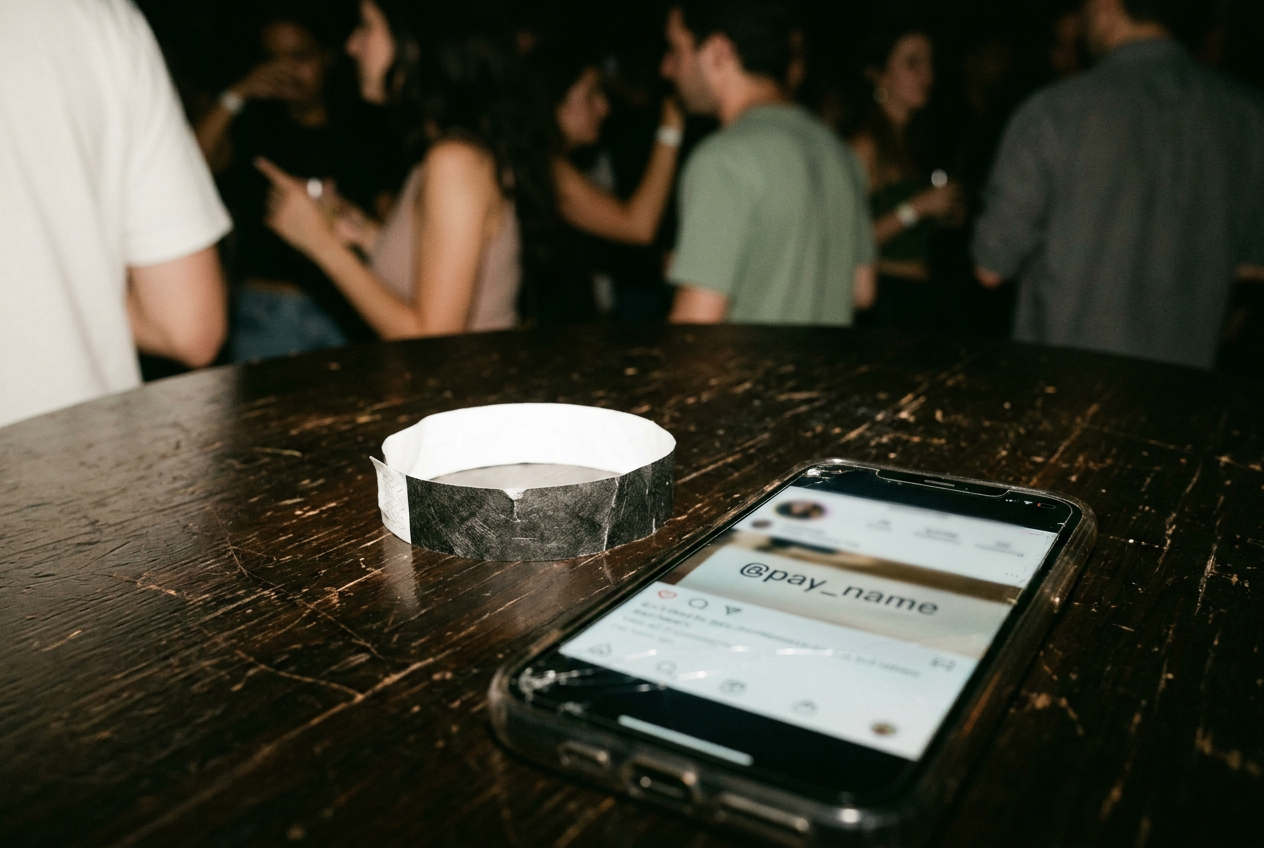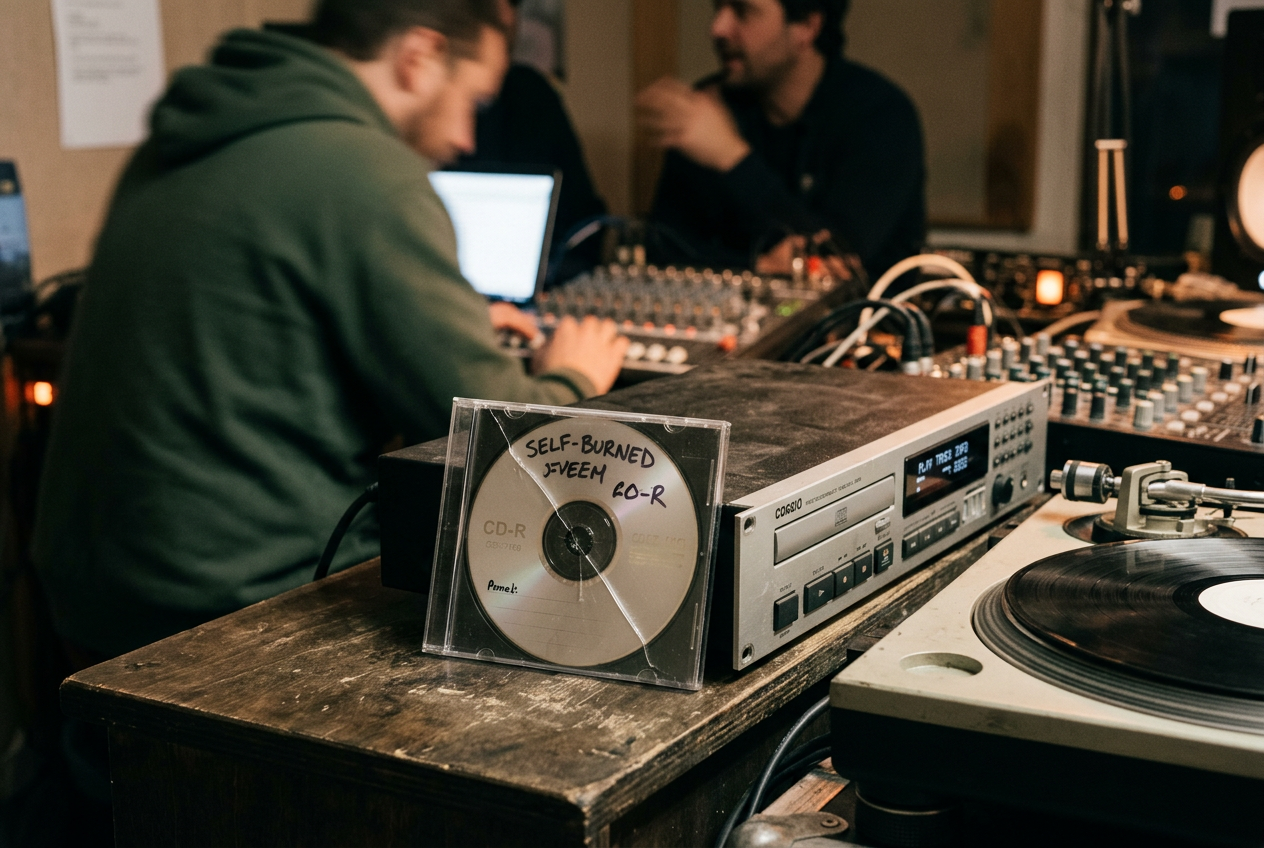
At the Rail, the Best-Sounding Earplug Wasn’t the Best Fit
Reusable musician plugs kept speech and bass legible across the club. The orange foam plug sounded worse, but at the rail its deeper seal mattered more.
September 5, 2026 · 8 min read
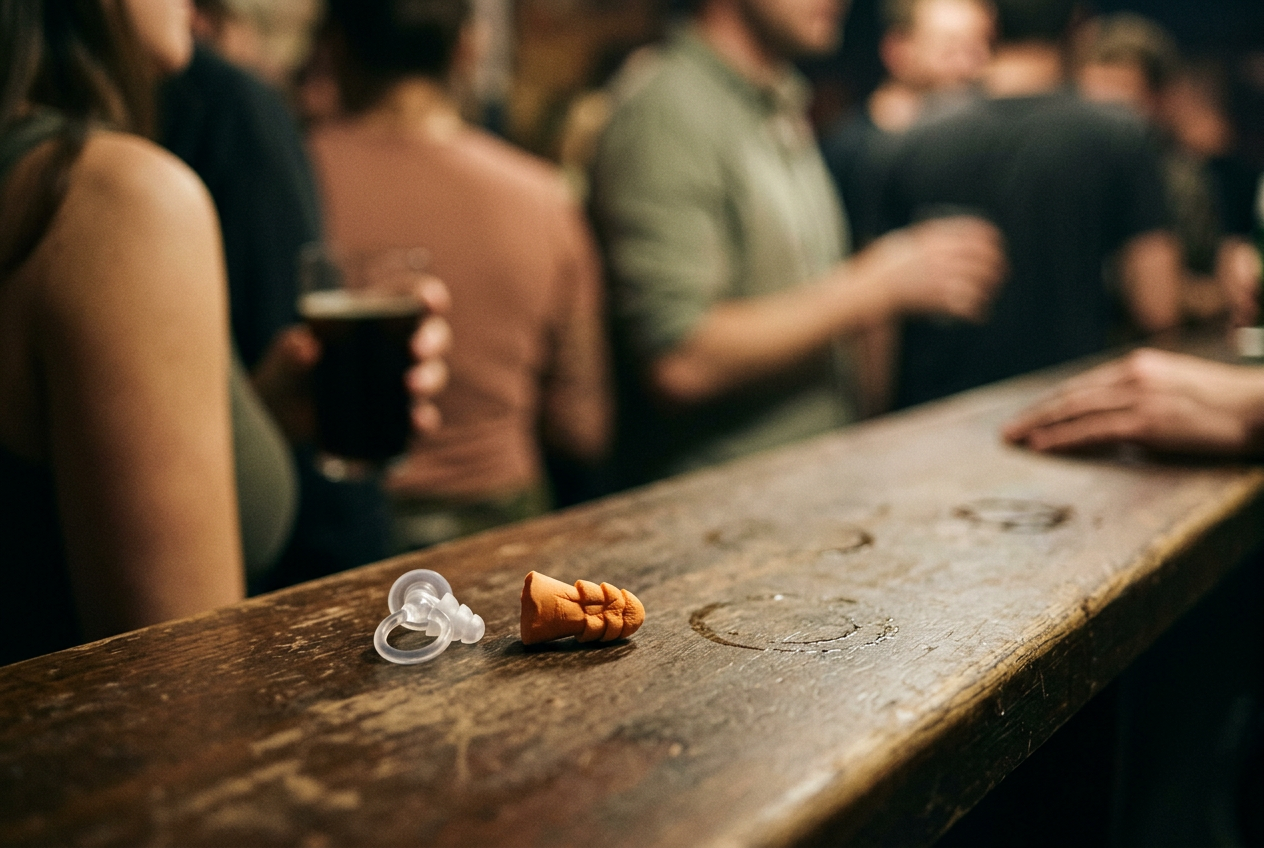
The orange foam plug looked finished before the set began. I had rolled it too early, held it too loosely and watched the cylinder start expanding between my fingers while the room filled around me. By the time it reached my ear canal, one side was smooth and narrow; the other had acquired a crease.
Next to it sat a reusable musician-style plug: clear silicone, a flexible multi-flange tip and a small acoustic filter through the center. The medium tip fit my left ear without an argument. In the right, it needed a backward twist to stop the outer flange from folding. That right plug became the test’s fixed point.
Every judgment about bass clarity or nearby speech depended on whether that small silicone skirt stayed sealed.
I compared the two types from three parts of the same room: the rail, where the loudspeaker system and crowd pressure were hardest to ignore; the bar, where orders and conversations competed with the set; and the back wall, where distance lowered the immediate force but did not make the room quiet. This was a practical listening test, not laboratory measurement. I did not use the exercise to estimate a safe exposure time, and neither should anyone else.
The result was less flattering to the earplug market than a clean winner would be. Reusable plugs can make a club sound much better than foam. Foam can protect more convincingly when it is inserted well. Neither advantage survives a bad seal.
The rail rewards the plug that stays put
At the rail, the reusable pair gave the music back its internal proportions. The kick remained distinct from the bass line, and higher percussion retained enough edge to mark the tempo without becoming painful. Frequency response, the amount a device reduces different parts of the audible spectrum, felt more even than it did through foam. The set still sounded like a mix rather than noise arriving through a closed door.
Speech was possible at close range, though not effortless. I could catch a short sentence aimed directly at my ear, especially between denser passages. That is the musician plug’s sales pitch in its most defensible form: a filter can reduce sound more evenly than solid foam, preserving some of the cues that make music and voices intelligible.
Then the right plug shifted.
It did not fall out. Nothing dramatic happened. The outer flange lost full contact after my jaw moved, and the right side became brighter than the left. A partial leak can be deceptive because the music seems to improve when more high-frequency sound enters, while protection has become less reliable.
The product did not announce the failure. It sounded livelier.
That is the problem underneath most earplug comparisons. Reviewers are encouraged to grade tone as if the object were a tiny loudspeaker. In a club, the more important mechanism is mechanical: an earplug must maintain contact with the ear canal while its wearer talks, sweats and gets jostled. A reusable model with a flattering filter cannot compensate for a tip that is wrong for one ear.
The orange foam plug was less elegant and more stable. Once I discarded the creased one, rolled a fresh plug into a narrow cylinder and held it in place while it expanded, the seal felt deeper and stayed consistent when I moved my jaw. Bass lost definition. Nearby speech became dull enough that I relied more on context and lip movement.
My own voice also sounded larger inside my head, an occlusion effect caused when a blocked ear canal traps vibrations from speaking and chewing.
Foam was the worse listening experience at the loudest point in the room. It was also the option I trusted more there.
The bar is where reusable plugs make their case
Several bodies back, the reusable pair became easier to recommend. The medium silicone tips stayed seated, including the awkward right one, because I was no longer turning my head against rail pressure or brushing an ear with my shoulder. Bass remained substantial but separated cleanly enough that changes in the low end were audible rather than reduced to pressure.
The advantage became clearer when ordering a drink. With reusable plugs, I could understand a bartender after leaning closer and facing them. Foam forced more repetition, and pulling one plug out for a transaction would have defeated the point by exposing one ear to the room. Earplugs are often removed for social convenience, which means intelligibility is part of harm reduction rather than an audiophile luxury.
A plug people keep inserted has a practical advantage over one they repeatedly pocket.
Still, speech performance should not be mistaken for proof of protection. The reusable plug sounded open partly because its filter was designed to pass a shaped, reduced version of the room’s sound. It could also sound open because the seal was incomplete. Without an individual fit test, subjective clarity cannot tell those conditions apart.
The published noise reduction rating, or NRR, comes from a standardized laboratory test and does not promise the same reduction in a moving person’s ear. Packaging turns that figure into a point of comparison because packaging needs a point of comparison. Real canals vary, insertion varies and a tip that seals on the couch may loosen after an hour of talking.
At the bar, the reusable pair won on the terms that decide whether many people will wear protection all night: the set remained enjoyable, conversation required less repair and the plugs could be removed and reinserted without starting with a new compressed cylinder. The tradeoff was attention. I checked the right plug whenever the sound became unexpectedly bright.
The back wall exposes a bad shortcut
The back wall felt calmer. That did not establish that it was safe.
Distance from the main speakers can reduce exposure, but club systems, room reflections and secondary speakers make visual geography unreliable. The back is not automatically a hearing-protection zone, just as the rail is not the only place capable of leaving ears ringing. A phone app may flag a loud environment, but it is not a calibrated professional sound-level meter and cannot certify personal safety.
Here, foam’s disadvantages dominated. Speech became needlessly difficult, the bass lost shape and the pressure of a deep fit felt harder to justify when a reusable plug sat securely. The orange foam plug came out looking slightly softened at the edges from repeated handling. Disposable foam is cheap enough to be treated as communal infrastructure, which is why venues can keep it behind the bar or near the door, but its real value depends on instructions, clean hands and enough time for insertion.
A loose foam plug resting near the entrance of the canal offers reassurance more readily than a dependable seal.
Reusable plugs carry their own maintenance cost. They need to be cleaned according to the maker’s instructions, dried before storage and inspected for damaged tips or clogged filters. They should not be shared. Foam should be replaced when it is dirty, damaged or no longer expands properly, with the package instructions taking precedence over improvisation.
The back wall also made one market distinction look thin. “Musician” describes a design goal, not a guarantee that a given tip fits a given ear or that attenuation will be sufficient for a particular room. Some reusable sets include several tip sizes; that helps, but symmetrical packaging does not mean symmetrical bodies. My left ear accepted the medium flange immediately.
The right required that backward twist every time.
Fit is the product
The roundup verdict changes by position because the room changes the cost of failure. At the rail, I would take correctly inserted foam over a reusable plug that needed monitoring. At the bar and back wall, the reusable pair made it easier to remain protected without flattening the reason I had entered the club. If neither style seals securely, neither is the right option.
Safe use starts before the loudest passage. Insert plugs according to their instructions in a quieter place, where it is possible to notice whether the two ears sound uneven. Keep them in rather than repeatedly exposing bare ears, take breaks away from loud sound and reduce time near speakers. Earplugs lower exposure; they do not erase it.
Pain, persistent ringing, muffled hearing, discharge or sudden changes deserve attention from a qualified hearing professional. People with ear conditions, unusual canal anatomy or repeated fit problems should seek individual guidance rather than forcing a generic plug deeper. A consumer comparison can describe comfort and sound. It cannot diagnose hearing damage, measure personal attenuation or replace a professional fit test.
By the end of the set, the clear reusable pair was back in its case. The last orange foam plug stayed compressed where my fingers had creased it, no longer suitable for another round.
Questions people ask
Are reusable musician earplugs better than foam for clubs?
They usually preserve speech and musical detail better when the tips seal correctly. Well-inserted foam may offer a more stable, deeper-feeling seal, particularly close to loudspeakers, but it muffles more of the information that makes a set and nearby voices intelligible.
How can
I tell whether an earplug has a proper seal?
Follow the product’s insertion instructions and compare both ears in a quieter area before entering the room. Uneven brightness, a plug that works loose when you talk or a sudden increase in clarity can indicate leakage, but only an individual fit test can measure how much sound reduction you receive.
Is the back of a club safe without earplugs?
Not by default. Distance can help, but speaker placement, reflected sound and the room’s overall level matter more than the label attached to your location. Keep protection in, take quieter breaks and treat ringing or muffled hearing afterward as a warning rather than proof that the night was normal.
Should
I remove one earplug to understand someone?
Keeping both ears protected is the safer habit in a loud room. Reusable filtered plugs made close conversation easier in this test, while foam required more repetition; if communication remains impossible, move somewhere quieter instead of leaving one ear exposed beside the sound system.
One update a day
Today's story, in your inbox
One story each morning — no hype, no filler, no algorithm deciding for you.