How Licensing Hearings Closed Fabric Without a Criminal Case
Fabric’s 2016 closure shows how a venue license can become a fast administrative weapon. Noise, police reports and incidents need not produce a conviction to threaten the room.
August 23, 2026 · 8 min read
When Fabric was allowed to reopen in London, one of the most consequential objects in the building was not a sound system. It was the ID scanner at the door.
The scanner came from a revised premises license, the authorization that controls how and when a venue may sell alcohol and admit customers. Following the club’s 2016 closure, Fabric agreed to stricter entry checks, enhanced surveillance and bans for people found carrying or attempting to buy drugs. The deal ended an appeal against Islington Council’s decision to revoke its license after two young men died following nights at the club.
There was no criminal prosecution in which Fabric had been found guilty of causing those deaths. There did not need to be. Licensing is administrative power. It asks whether an authority believes a venue may undermine public safety or other licensing objectives in the future, and it can act on police evidence, complaint histories and patterns that would not amount to a criminal conviction.
That distinction is the mechanism. A city does not have to establish that a club committed a crime if it can make the club’s permission to operate conditional on proving that nothing else will go wrong.
The permit stack hides the pressure point
A music venue does not receive one clean approval from a city. It sits inside a stack of permissions whose files describe different versions of the same room.
Planning records address land use: whether a nightclub belongs in that building and what physical alterations may be made. Environmental enforcement covers statutory nuisance, meaning noise or another recurring interference serious enough to trigger formal action. A premises license governs activities such as alcohol sales, opening hours and admission. Police, licensing officers, residents and other public bodies can submit evidence when that license is reviewed.
These systems overlap without agreeing on what the venue is. The planning file may recognize an established entertainment use. A noise complaint may treat the bass, queue or departing crowd as an intrusion. Police evidence may frame the entrance as a point of crime control.
The licensing committee then receives the assembled record and decides whether continued operation presents a risk.
Fabric occupied converted cold-storage vaults in Farringdon and had traded for years before the 2016 review. Its longevity did not immunize it. The police application focused on drug use, searches and the deaths associated with the club, moving the decisive argument away from whether a nightclub belonged there and toward whether this particular operator could be trusted with one.
That move matters. Land-use recognition is slow and relatively stable. Licensing can be reopened after an incident.
The permit stack therefore gives authorities several routes into the same business, but the premises license is usually the sharpest because alcohol revenue, opening hours and admission capacity determine whether the venue remains economically viable. A room may still exist in planning terms while becoming impossible to operate.
A complaint does not have to prove an offense
Nuisance records often begin with ordinary observations. Music could be heard in a bedroom. Customers gathered on a pavement. Cars arrived after midnight.
People shouted while leaving. Each entry is narrow, but repeated entries build an administrative biography of the venue, one in which recurrence can matter more than the seriousness of any single report.
Complaints deserve investigation. Residents should not have to absorb unlimited noise because a promoter has a good poster. The problem lies in what the record cannot reliably separate: a measured breach from an allegation, a customer from a passerby, sound escaping the building from noise generated on a public street, or a persistent failure from several reports describing the same night.
Once those entries travel into a licensing hearing, they can support a broader claim that management has lost control. Queues become evidence about dispersal. Dispersal becomes evidence about public nuisance. An incident blocks away may enter the venue’s risk profile because the person attended earlier, even though the operator does not control the route home.
Fabric’s case was more serious than a file of irritated emails. Two people died. Police also relied on observations made during visits to the club and argued that its search and security practices had failed to stop drug activity. The point is not to flatten those deaths into paperwork.
It is to see what the paperwork allowed the authority to do next.
The council could assess whether Fabric promoted public safety without proving, through a criminal trial, that the company or its staff had committed an offense connected to either death. Licensing law was built to prevent anticipated harm. That makes it faster than criminal law and less constrained by the criminal standard of proof, which is useful when a venue presents a genuine danger and highly effective when an authority wants immediate leverage.
The hearing brings punishment forward
A license review resembles a court proceeding from the audience seats. There are documents, legal representatives, witnesses and formal submissions. The resemblance can obscure the difference.
A licensing committee is making a regulatory judgment about future operation. It may modify conditions, reduce hours, suspend the license or revoke it. It can consider police intelligence and patterns of conduct without waiting for a prosecution to establish criminal liability. The venue may appeal, but the commercial damage begins while lawyers prepare the papers.
That timing changes the balance. Rent continues. Salaried staff and contractors lose shifts. Promoters reroute events, artists accept other bookings, advance ticket income must be returned or held in uncertainty, and suppliers stop treating the calendar as real.
Even when an appeal later restores a license, the missing nights do not return.
Fabric challenged the revocation, and the appeal ended in an agreement with Islington Council and the Metropolitan Police. The club reopened under new conditions rather than receiving a courtroom ruling that tested every allegation aired during the review. That settlement was rational. It also shows how administrative pressure resolves cases: the operator accepts a more restrictive room because continuing the legal fight risks having no room at all.
The ID scanner at Fabric’s entrance made the bargain physical. Admission became contingent on producing identity for a system designed to record and check entrants. More surveillance was presented as the price of restored trust, while the venue assumed a deeper role in policing conduct that licensing authorities believed it had failed to control.
The venue becomes an enforcement contractor
Strict license conditions transfer public duties onto private nightlife workers. Door staff inspect bodies and bags. Managers preserve CCTV. Operators record incidents, exclude customers and produce documentation when authorities return.
Failure is no longer limited to permitting harm inside the building; it can include failing to demonstrate enough vigilance before harm occurs.
The cost travels downward. The venue pays for equipment, security labor and compliance. Customers surrender more personal information and face longer searches. Workers at the door must make rapid decisions under rules written to satisfy a committee rather than improve the night.
Smaller rooms face the same demands without Fabric’s international profile, fundraising reach or ability to retain specialist lawyers.
This is why the isolated incident has such force in licensing. It does not have to stand alone as proof of culpability. Authorities can connect it to earlier nuisance complaints, police observations or operating breaches, then argue that the combined file reveals inadequate management. The venue must answer the whole biography at once.
A criminal court generally asks what happened and who bears legal responsibility. A licensing hearing asks what might happen next if the city continues granting permission. The second question is wider, cheaper for the state and harder for an operator to defeat, because no security plan can establish that a crowded room will remain free of drugs, violence, noise or human error.
A safer system would separate the records
Cities need a way to intervene before repeated failures become fatalities. They also need to distinguish prevention from preemptive punishment.
That means identifying which complaints were verified, whether noise was measured, where an incident occurred and which license condition the venue could realistically have enforced. Committees should make clear when several reports concern one event, rather than allowing volume to imitate frequency. Police intelligence should be tested for relevance to the operator’s conduct, not admitted as atmosphere.
The economic clock matters too. An expedited hearing protects little if an independent venue has already lost its season, staff and promoters. Interim restrictions should target the alleged failure where possible, rather than using total closure as the opening demand and letting financial pressure produce consent.
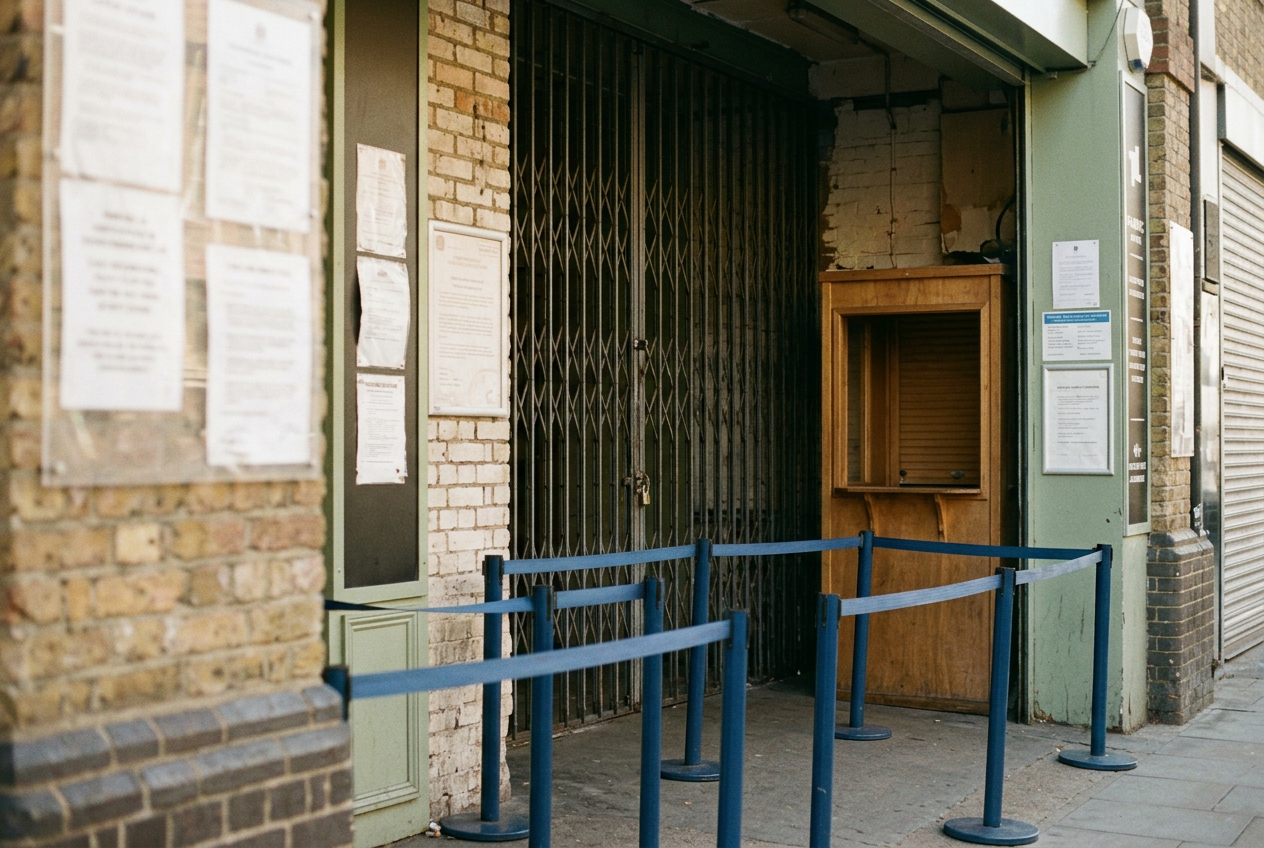
Fabric survived and the ID scanner remained part of the settlement that brought it back. Many venues never reach that stage. Their closure appears in the public record as a regulatory outcome, not a criminal penalty, although the locked door makes the distinction difficult to see.
Questions people ask
Can a city close a nightclub without a criminal conviction?
Yes. A licensing authority can suspend, restrict or revoke a venue’s permission to operate when it concludes that continued trading threatens public safety, contributes to disorder or undermines another licensing objective. The procedure is administrative, so it does not require a criminal conviction against the venue or its staff.
How do noise and queue complaints affect a venue license?
Complaints can create a record of recurring nuisance or weak crowd management, particularly when licensing officers, police or residents submit them during a review. Their force depends on verification and context, but repeated allegations may still support tighter hours, new dispersal conditions, additional security costs or revocation.
Why not appeal a licensing decision in court?
A venue can appeal, but litigation consumes time while rent, payroll obligations and canceled bookings continue. Fabric appealed its revocation, then reached an agreement that imposed stricter operating conditions. For a smaller room, accepting restrictions may be the only financially survivable route back to trading.
What did Fabric have to change before reopening?
The settlement required tougher entry and monitoring measures, including ID scanning, stronger surveillance and exclusion policies for drug-related conduct. Those conditions let Fabric reopen, but they also shifted more responsibility for identification, prevention and evidence gathering onto the venue and its door staff.
One update a day
Today's story, in your inbox
One story each morning — no hype, no filler, no algorithm deciding for you.