The Club Wristband Comes Off. Your Customer File Does Not.
Nightlife identity tools can turn a door check into visit history, venue notes and a flag that follows you. The privacy policy shows how little of that machinery is needed to verify age.
August 18, 2026 · 7 min read
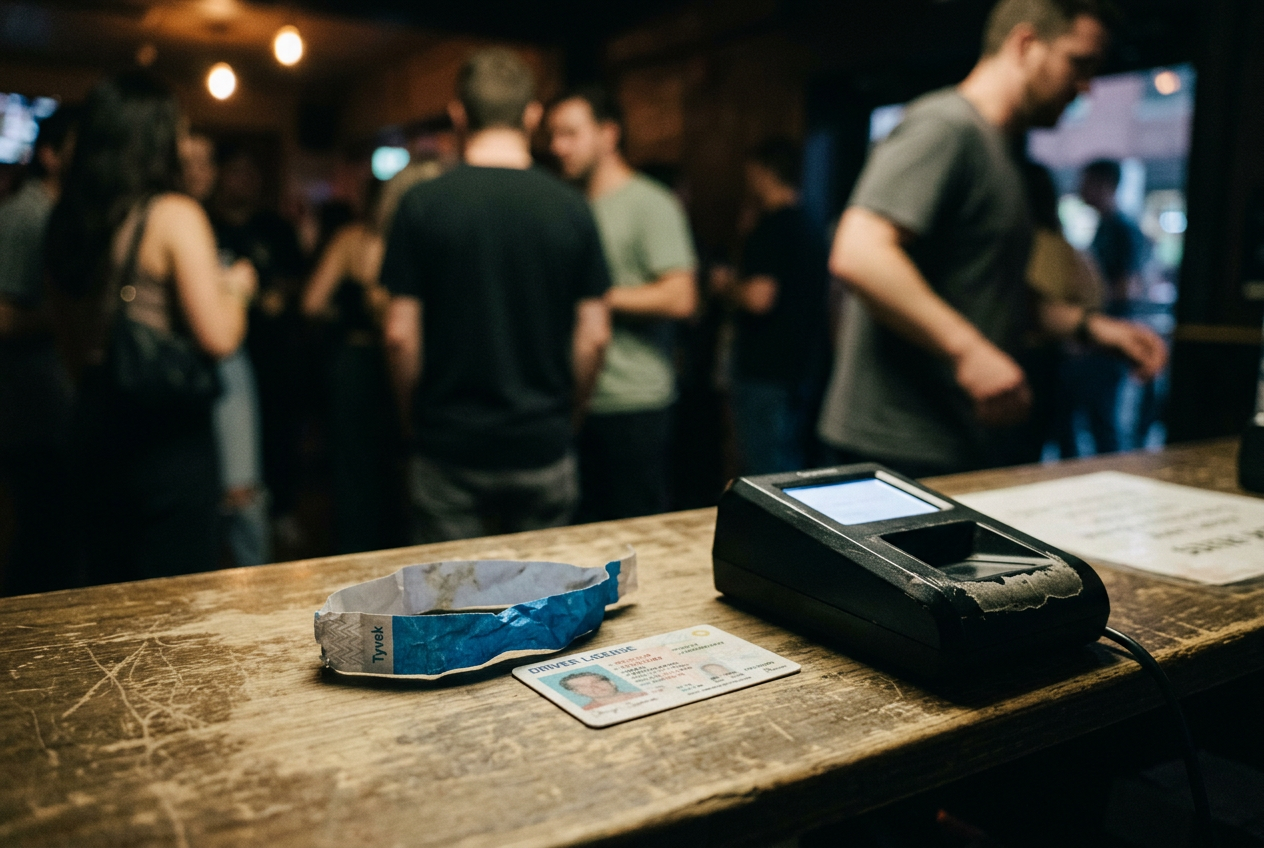
Take the blue Tyvek wristband. A door worker checks your ID, feeds it through a scanner and cinches the band around your wrist. By closing time, the paper is damp and fraying. By morning, it is in the trash.
The record created at the door may last longer. Public documentation for PatronScan, a system marketed to bars and clubs, describes more than an electronic flashlight trained on a birth date. Its products read identification, support patron records and let venues flag people. Its materials also promote tools for sharing certain bans among participating locations.
The scanner answers an immediate question, but the surrounding system can answer a much more valuable one: who came in, when they arrived, whether they returned and whether somebody attached a warning to their identity.
That difference matters. Age verification could end with a yes-or-no result. Nightlife software is built to remember.
The barcode is the beginning
A government ID contains visible information and, in many jurisdictions, a machine-readable barcode. Scanning software parses that barcode, meaning it converts the encoded contents into fields that a computer can sort and search. Depending on the document and product configuration, those fields may include a legal name, birth date, address, document details and other characteristics printed or encoded on the card.
The bouncer does not need most of this. They need to know whether the document appears valid, whether it belongs to the person holding it and whether that person meets the age threshold. A scanner can perform parts of that check without building a durable profile. It could read the date, return an age result and discard the underlying data.
PatronScan sells a broader service. Its public materials describe identity capture alongside entry records, patron management and incident tools. Once the scan is associated with a venue and time, the system has created behavioral data: information about something a person did, rather than a fact printed on the license. One scan says you entered one club.
Repeated scans can reveal a pattern of attendance.
The distinction is easy to miss at the rope because the physical ritual has barely changed. You still hand over a card. You still wait for a light or a nod. You still get the blue wristband.
The interface presented to you is an age check, while the product presented to the venue is a searchable security system.
A scanned portrait also deserves precision. A photograph is personal information. It does not automatically become biometric data, a legal category that can cover measurements used to recognize a face, unless a system analyzes it for identification in a way covered by the relevant law. Privacy notices often leave that technical boundary unclear, and state laws do not draw it in identical places.
The guest list supplies the context
The ID scanner is only one part of the door. Guest-list and reservation platforms can know about the night before you arrive.
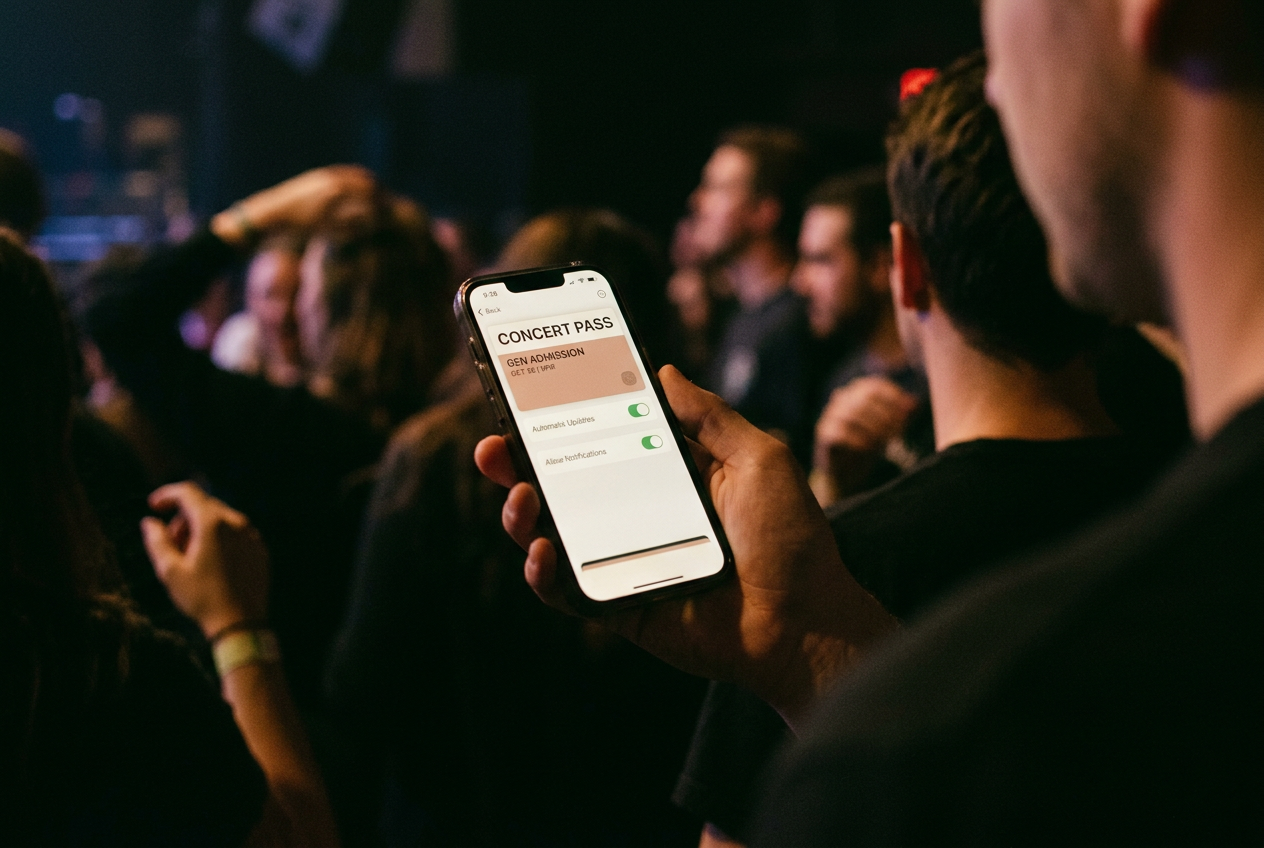
Discotech operates guest lists, tickets and table reservations for nightlife. Its privacy policy describes collecting account and contact information, booking or transaction information, and technical data about devices and use; location information can also enter the picture where the user or device permits it. A guest-list registration can connect a phone number or email address to a particular event, promoter or booking. The ID scan can then supply a verified legal identity at the venue.
Those systems are not necessarily connected in every club, and a privacy policy does not prove that a specific venue has joined them. Still, the matching problem is not difficult when services share stable identifiers such as a name, phone number or email address, whether through an advertised integration, an export or staff looking up the same customer in separate dashboards.
The result is richer than an age record. It can contain intention before the night, arrival at the door and subsequent interactions with the venue. If a person books through one tool, presents an ID to another and later joins a venue mailing list, the club may have several versions of the same customer waiting to be reconciled.
That is why “we collect information you provide” is less reassuring than it sounds. You provided a phone number to join a list. You provided an ID because entry depended on it. You may not have volunteered to turn those moments into a continuous account of your nightlife.
A venue CRM makes the memory useful
SevenRooms shows what happens after identity becomes customer management. The company sells a hospitality customer relationship management system, or CRM, which lets a business maintain profiles about guests and their history with the business. Its public product and support documentation describes guest profiles that can hold contact details, reservations, visit history, spending information, preferences, tags and staff notes.
A tag is small but powerful. It can sort a guest into a category that staff can find later. A note can preserve context that never appears on an ID: who the guest arrived with, what table they preferred, whether they complained, whether staff considered them valuable or difficult. Some entries can improve service.
The same structure also makes subjective judgments durable.
SevenRooms is not an ID-scanning company, and its presence here does not establish that PatronScan sends information to it. It shows the destination the nightlife industry already has for reusable identity. The commercial value comes from continuity. A venue can recognize a repeat visitor, attach spending to a profile and act differently the next time that person books or appears.
The blue wristband cannot do any of that. It proves something for one night and then destroys itself through ordinary use. A profile is valuable because it survives the night.
Security records can become private punishment
PatronScan’s flagging and ban features make the stakes sharper than personalized service. A venue has legitimate reasons to document violence, harassment, fraud or other serious incidents. Staff also make mistakes, work under pressure and rely on incomplete accounts. A durable warning can preserve either kind of decision.
Public-facing product documentation describes tools that allow venues to flag patrons, and PatronScan markets a network through which certain bans can extend beyond one participating location. That can turn a private company’s incident entry into a practical restriction on access elsewhere, without the procedures that accompany a court order or government licensing action.
The policy question is not whether clubs may remove someone. They can enforce conduct rules, subject to applicable law. The harder issue is what happens after removal: what evidence supports the record, who can see it, how long it remains useful, whether the person can identify an error and what review exists before another venue relies on it.
A privacy policy rarely answers all of those questions. It usually identifies categories of information, reasons for processing, classes of recipients and broad retention standards. It may describe access or deletion requests. That is not the same as a clear appeal system for a security designation, particularly where the company says it must retain information for safety, legal or operational reasons.
Here the customer file starts behaving like infrastructure. The affected person may never see the dashboard, the note or the category controlling the decision at the next door.
What the privacy policy binds, and what it does not
A public privacy policy is a notice about a company’s stated data practices. It may create enforceable obligations under consumer protection law if a business makes promises and then breaks them, while state privacy statutes can impose separate duties concerning access, deletion, correction, disclosure and sensitive data. Which rights apply depends on the person, company, jurisdiction and statutory exemptions.
The notice is not permission for anything the vendor can imagine. Nor does tapping “agree,” presenting an ID or entering a venue erase legal limits. Some states specifically regulate scanning identification documents. Biometric laws may add requirements where face geometry or another biometric identifier is created.
Contracts between venues and vendors can allocate responsibility, but those data-processing agreements are usually invisible to the person standing outside.
Brand policies also use flexible retention language. Information may be kept while an account remains active, while a venue needs it, or as required for security, disputes and law. Those standards can be legitimate, but they do not tell a patron when one ordinary visit disappears from every production system, backup and venue export.
The strongest privacy design would separate the tasks. An age-checking tool could return a pass or fail result and discard the raw scan. A security incident database could require documented reasons, limited access, fixed review periods and a route to challenge errors. Marketing and guest recognition could begin only after a separate, voluntary sign-up.
That design costs venues something. They lose effortless history, easier matching and some of the convenience of carrying a warning from one shift or location to another. Staff may need to review more records and resolve more ambiguity. The customer gets data minimization, the practice of collecting only what a defined task requires.
The current arrangement works for vendors because one identity event can support several products. It works for venues because the door becomes a source of customer intelligence. The person in line pays with a government credential that is difficult to replace and impossible to make casual.
At the end of the night, scissors take off the blue wristband. There is no equally visible moment when the profile is cut loose.
Questions people ask
What can a nightclub ID scanner collect?
Depending on the ID, scanner and venue settings, it may read a legal name, birth date, address, document information and other encoded fields. The software can also add data that was never on the card, including the venue, scan time, repeat visits, incident notes and a flag or ban status.
Does scanning an
ID automatically create a biometric record?
No. An ID photograph is personal information, but biometric data generally involves measurements or templates used to recognize a person. If software analyzes a face for identity matching, additional biometric rules may apply, depending on the technology and jurisdiction. A generic privacy notice may not explain whether that analysis occurs.
Can a club share an ID-based ban with other venues?
Some nightlife security products advertise network features that allow certain patron flags or bans to be available to participating venues. Availability does not show that every customer uses the feature. The practical concern is that a private incident record can affect entry elsewhere without a transparent evidentiary standard or obvious appeal route.
Can I ask a nightlife app to delete my data?
Some state privacy laws give eligible residents rights to request access, correction or deletion, and brand policies describe how to submit those requests. Exceptions may cover security, legal claims, fraud prevention and other obligations. A request also may need to go to both the vendor and the venue, depending on which organization controls each record.
One update a day
Today's story, in your inbox
One story each morning — no hype, no filler, no algorithm deciding for you.